“Gaza bleeds, the world fiddles.” Graffiti on the Falls Road, Belfast, perhaps in response to the 112 Palestinians killed in February 2008 (WP | Al Jazeera). For a wide shot, see Hair Peace.
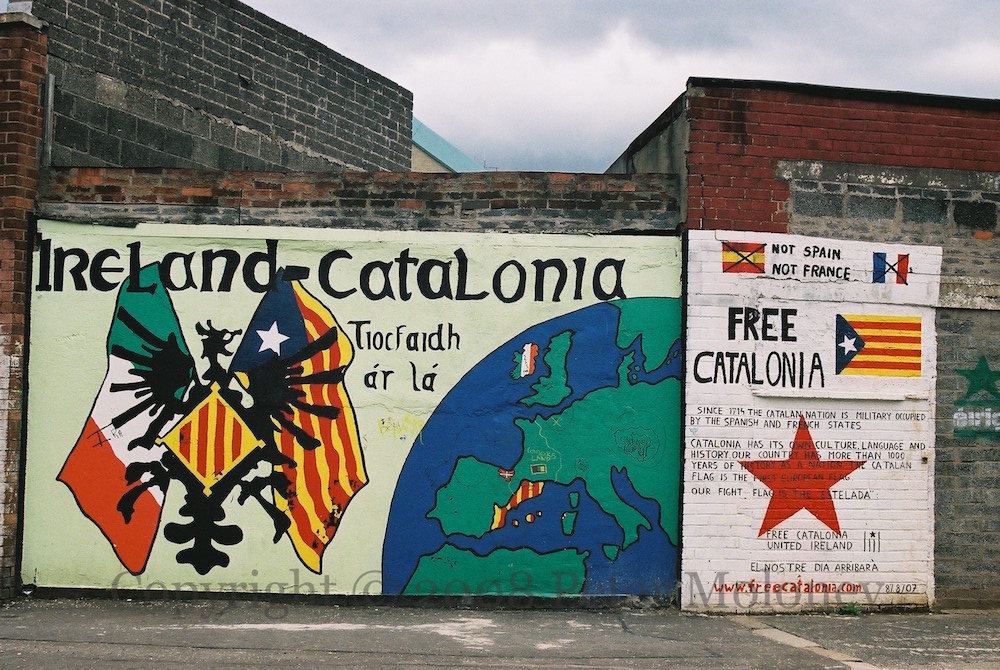
Catalonian independence mural, repainted from the black-background version, previously seen in 1997 and 2004.
“Not Spain, not France. Free Catalonia. Since 1714 the Catalan nation is military [sic] occupied for the Spanish and French states. Catalonia has their own culture, language, and history. Our country has more than 1000 years of history as a nation. The Catalan flag is the first European flag. Our fight flag is the “Estalada”. The white star means the freedom, and the blue triangle stands for the sky of humanity. Free Catalonia! United Ireland! El nostre dia arribarà! Tıocfaıdh ár lá. 11/8/97″
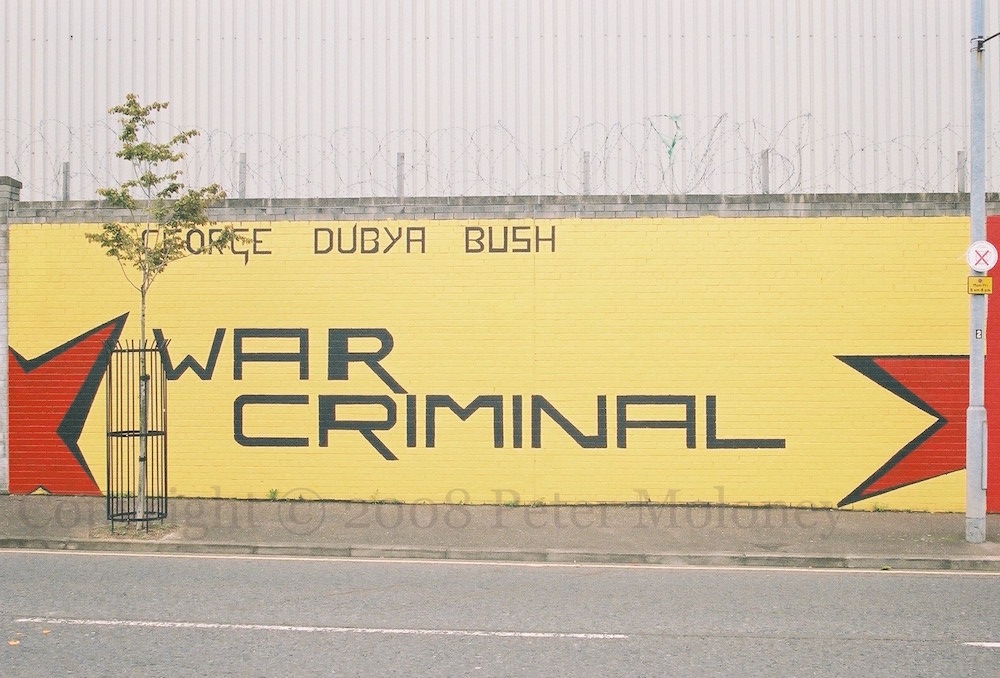
“George Dubya Bush – war criminal”. The WP page on Iraq war casualties cites a variety of sources putting the number of total deaths between 100,000 and 1.2 million. This Northumberland Street mural is from the IRSP.
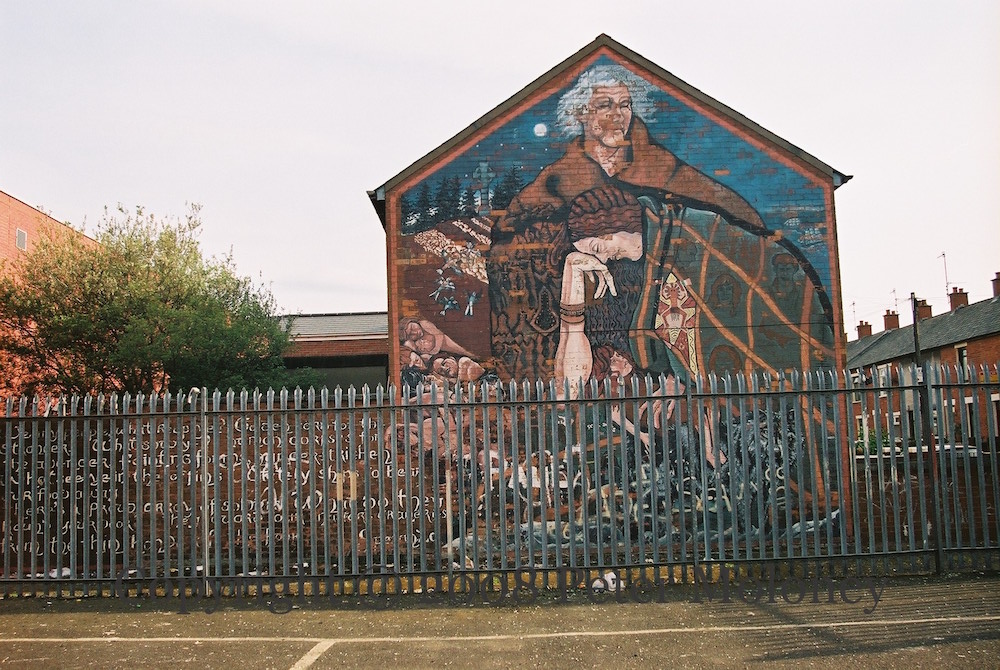
“Weary people, what reap ye? Golden corn for the stranger. What sow ye? human corpses that wait for the avenger. Fainting forms, hunger–stricken, what see you in the offing? Stately ships to bear our food away, [amid the stranger’s scoffing]. There’s a proud array of soldiers — what do they round your door? They guard our masters’ granaries from the thin hands of the poor. – Speranza”
The poetry is the first few lines of The Famine Year by “Speranza”, i.e. Lady Jane Wilde, mother of Oscar.
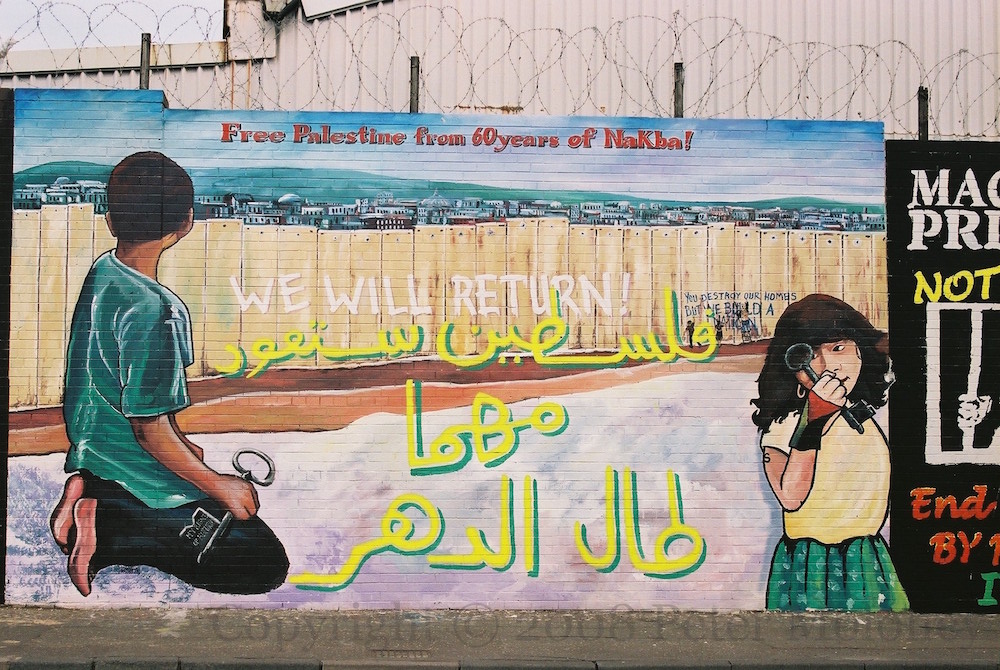
“Nakba” or “Catastrophe” is the Arabic name for the exodus of about 700,000 Palestinian Arabs in 1948, from what would become Israel. Although the mural states “We will return!”, there has as yet been not right of return or compensation for lands seized.
The graffiti in blue on the wall reads “You destroy our homes but we build a nation”.
Please get in touch if you can translate the Arabic.
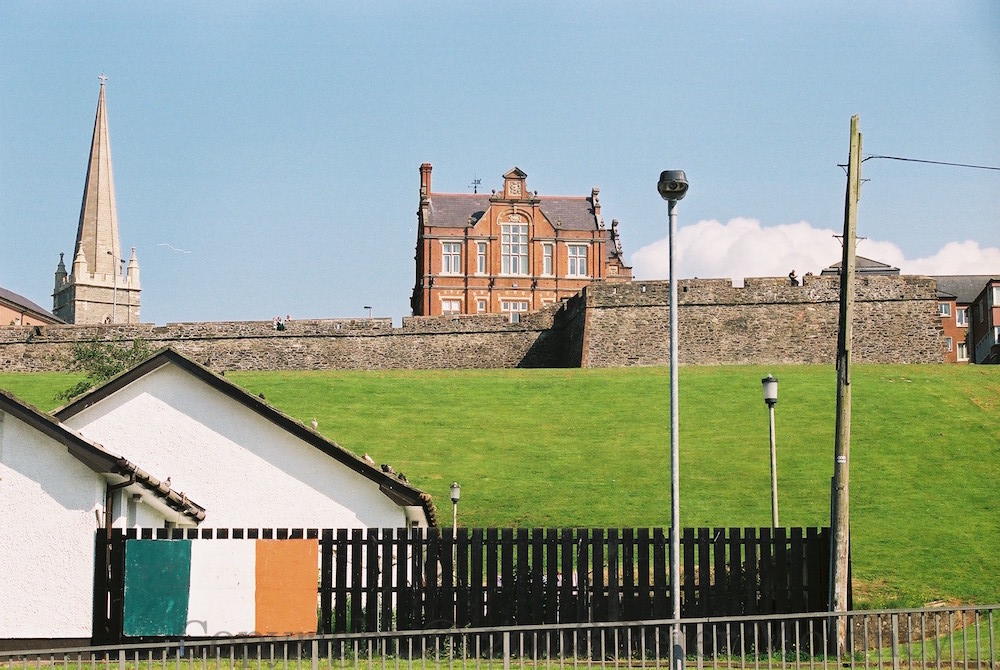
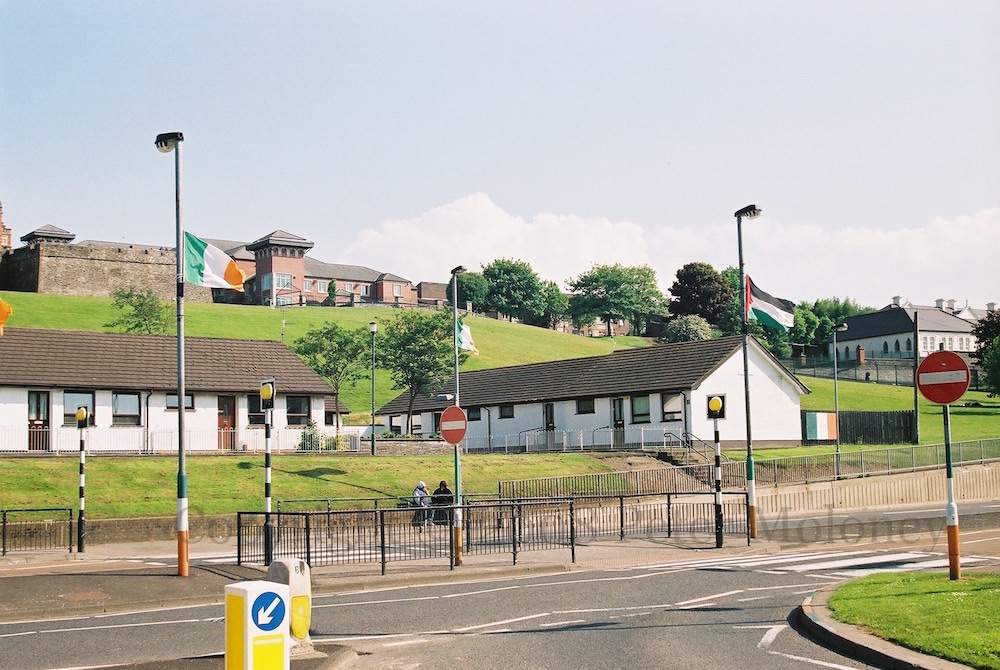
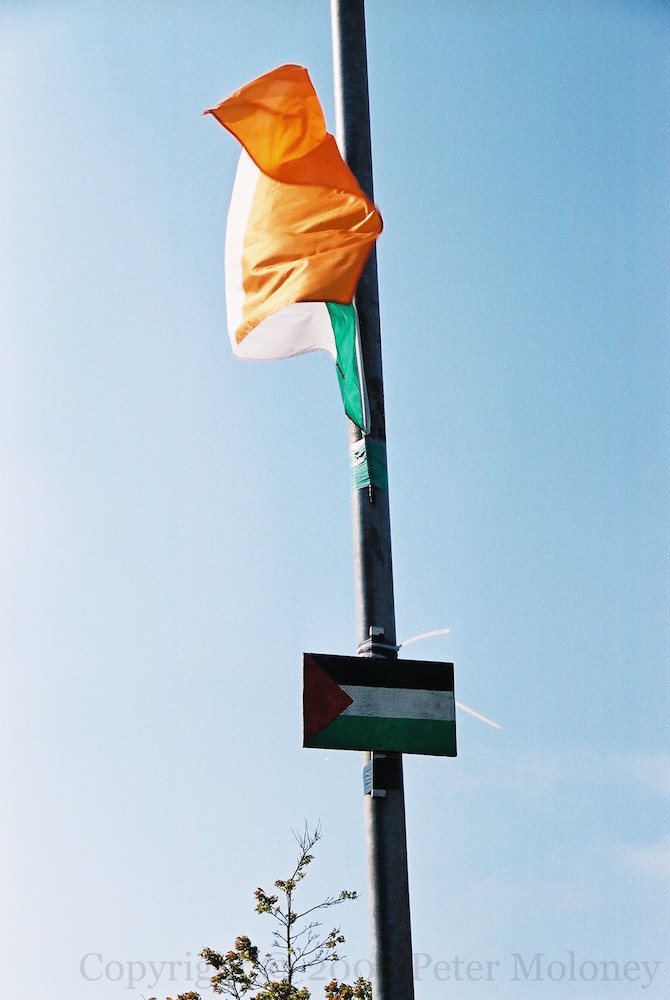
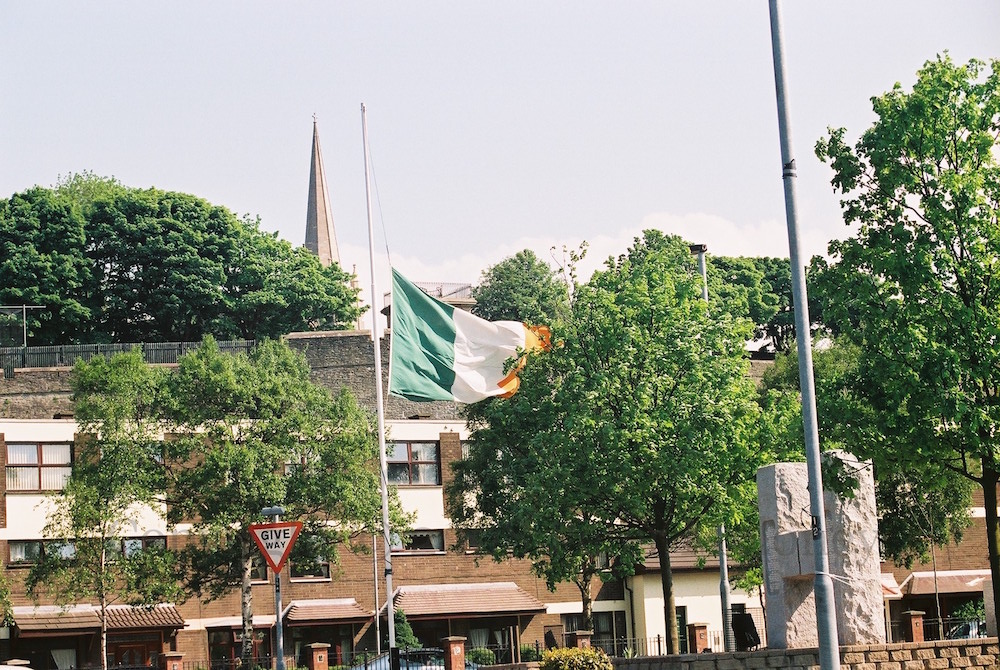
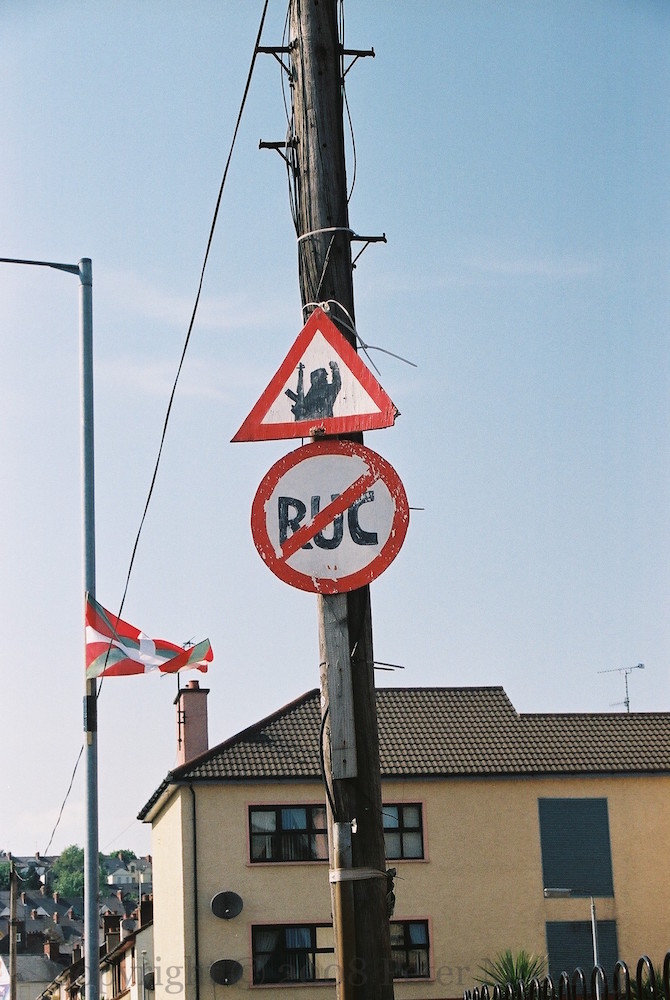
These images are all from the area between the Bogside Inn and the Hunger Strikers memorial. The boards – ‘sniper at work’, ‘No RUC’, and Palestinian flag – are at the bottom of Westland Street.
“Che” Guevara’s father, also called Ernesto Guevara Lynch, was an Argentinian descended from Patrick Lynch, who emigrated from Galway (in 1742?) and married in Buenos Aries in 1749. (Based on these rodovid pages: one | two | three.) Che’s father is the source of the quote at the bottom of the mural: “In my son’s veins flowed the blood of Irish rebels.”
The Irish inscription, ‘Th[ı]ocfadh an réabhlóıdeach a mharú ach ní an réabhlóıd a scríosadh”, means (roughly) “It may be that the revolutionary is killed, but not that the revolution is destroyed.” Fahan Street, Derry. Launched October 13th, 2007 (An Phoblacht).
“Catalonia & Ireland – Saoırse • Llibertat”. Centralised Spanish rule dates back to the Nueva Planta decrees (WP) made by Philip V (shown upside-down in the first zero) between 1707 and 1716. These formed a single Spanish nation and citizenry and ended various regional identities including Catalonian.





 Peter Moloney Collection