Although Titanic was built at Harland & Wolff in Belfast, it was registered in Liverpool. It sank on the night of April 14th, 1912: “Survivors – Men 130 Women 324 Children 56 Crew 195. Perished – Men 638 Women 112 Children 56 Crew 703.”
2010 image of the New Mossley mosaic (2009) in Ballyearl Drive, with various UVF insignia above from previous murals. “This mosaic reflects the cultural & industrial heritage of the area. New Mossley Community Group is proud to be part of this project and hope it gives pleasure to everyone. We would like to thank the Arts Council and Groundwork for their help and support. Unveiled by Jeanette Ervine, Dawn Purvis MLA, Mena Mitchell 17th January 2009.”
The mosaic shows/references Lillian Bland, the first woman to fly solo (1910); Pattersons Spade Mill; Mossley Mill, 50 years old in 2008; the 36th and 16th Divisions of World War I; local youth groups. The work was developed by artist Martin McClure.
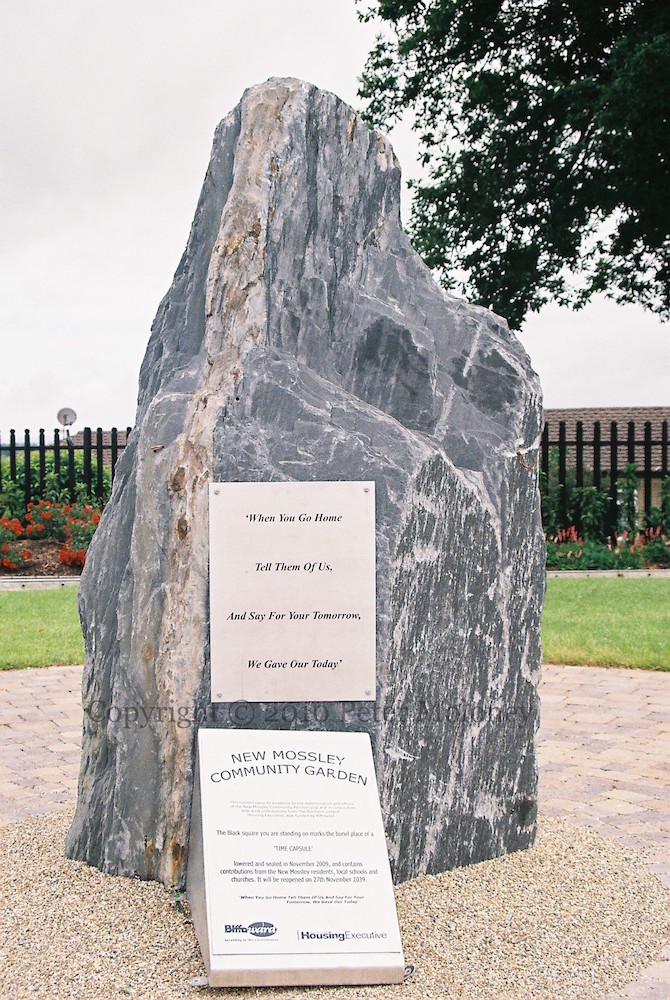
“When you go home/Tell them of us/And say for your tomorrow/We gave our today.” is a WWII epitaph by John Maxwell Edmonds in Kohima Cemetery. It is shown here on a plaque on a stone in New Mossley community garden (also the site of a time capsule).
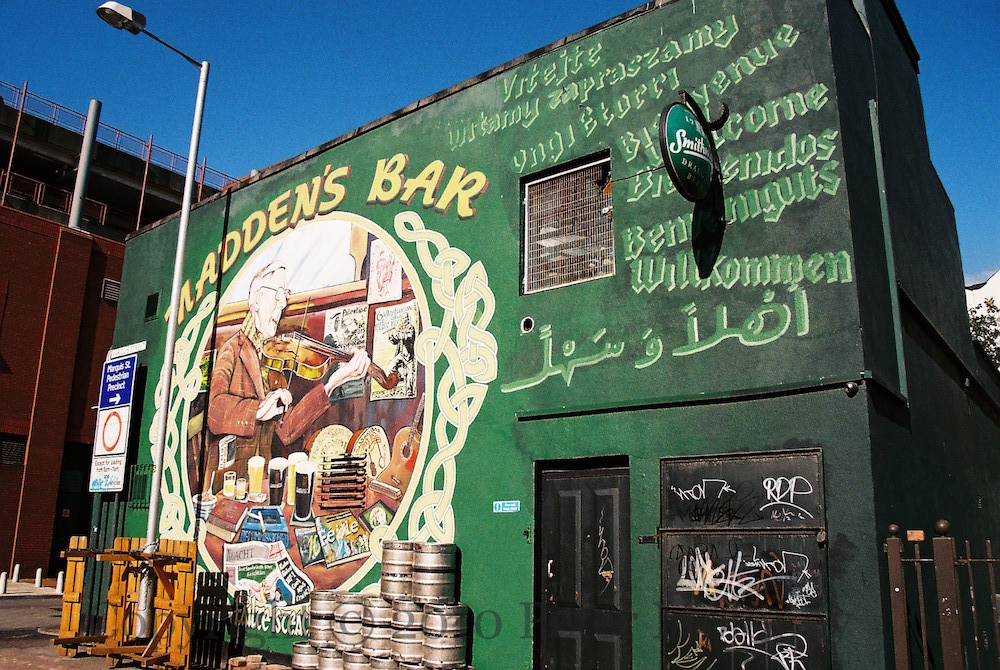
Madden’s Bar in Berry Street (Belfast city centre) has a traditional music session up to three nights a week. The fiddler is Art Lundy – the original photograph is by Frankie Quinn (web).
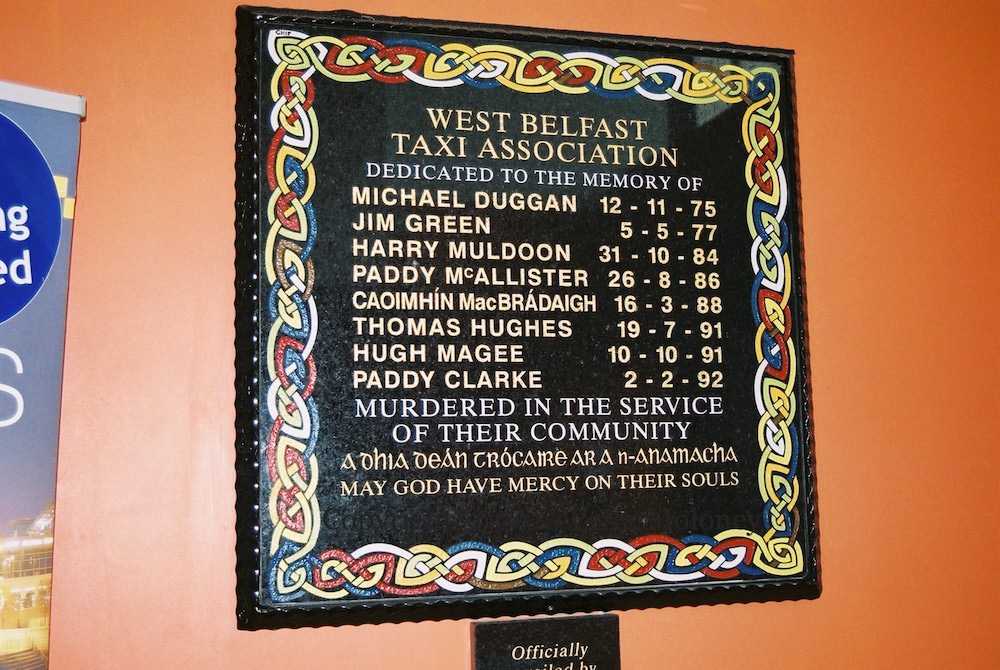
“The people’s taxis”, meaning the people of nationalist west Belfast, as is clear from the imagery surrounding the WBTA terminal entrance: Fionn eating the salmon of knowledge (while standing on the Giant’s Causeway), The Limerick Piper (transposed to Belfast’s Cave Hill) by John Patrick Haverty (1794-1854) (also reproduced in this Ardoyne mural), and a copy of Jim Fitzpatrick’s Sadb.
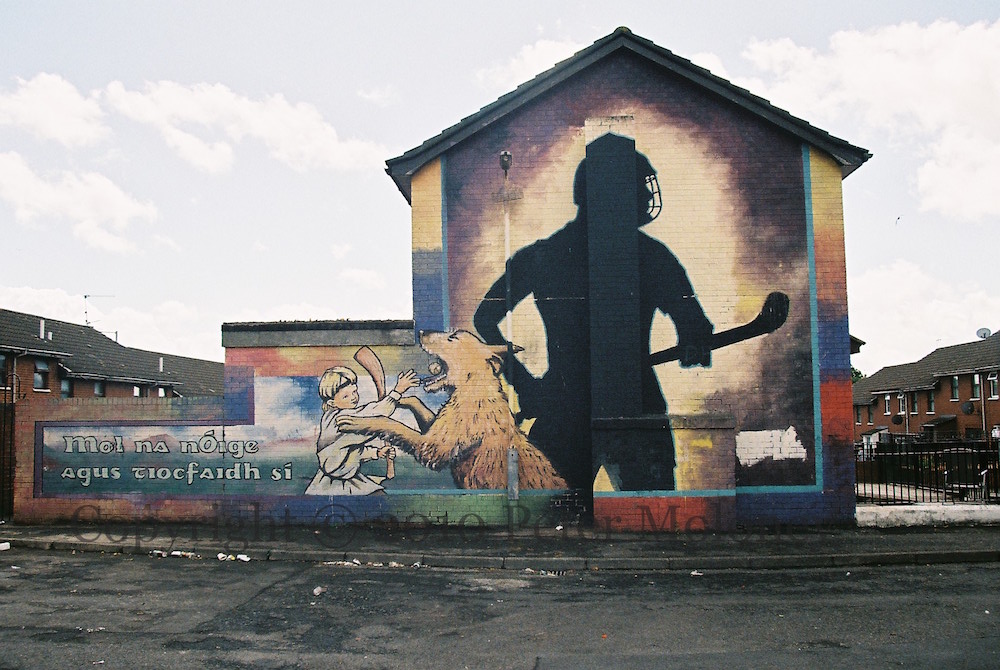
A seven-year old Setanta become Cú Chulaınn (Culann’s Hound) after killing the beast by driving a slıotar (the ball used in hurling) down its throat. “Mol na nóıge agus tıocfaıdh sí” [as written: praise the young [people] and it [sic] will flourish; usually the phrase is “Mol an óıge …” “praise youth …”]