Here is the scene at Mourne Road along the side of the Mace (later a Spar). On the low wall is a ‘Mourneview Youth’ mural (presumably by BlazeFX) – there were previously LVF murals on this wall. In the bricked-up windows are a series of cultural panels, on the Battle Of The Boyne, music, William McFadzean’s VC, fire, faith, defence (WWI), plus one other (perhaps ‘school’?)
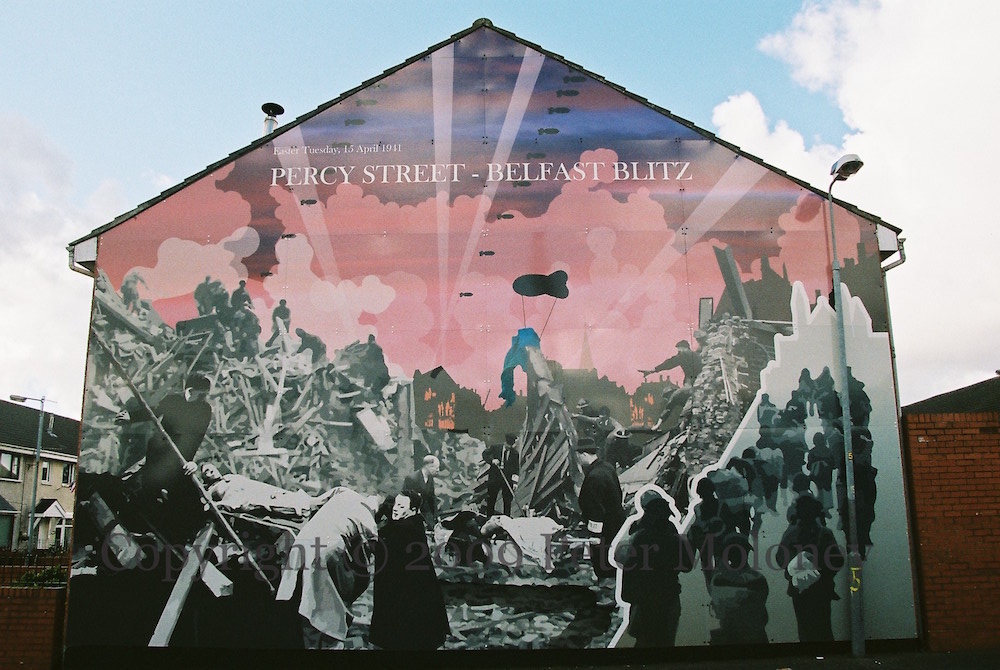
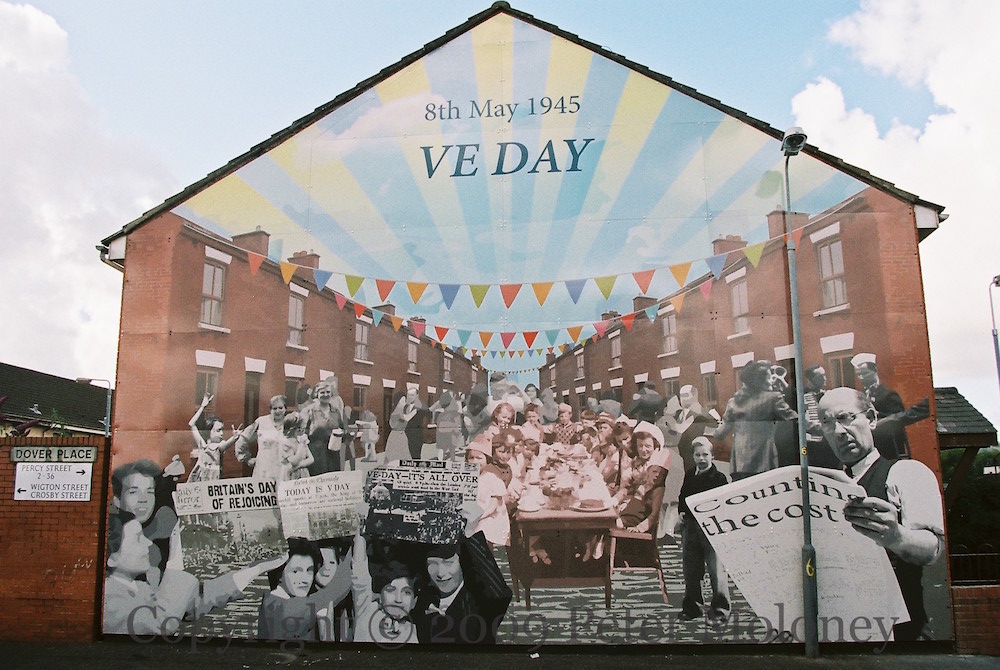
“The area suffered immense loss of life during the Blitz of the Second World War. Having given so much in the fight for liberty during World Wars I and II, these digital artworks by Steven Tunley commemorate experience and history from enlistment in World War I to the Blitz and to the celebration of VE Day. The project was funded by the Re-Imaging Communities programme of the Arts Council of Northern Ireland and delivered by Belfast City Council with the support of the Lower Shankill Community Association. This project would not have been possible without the support and participation of the local community.”
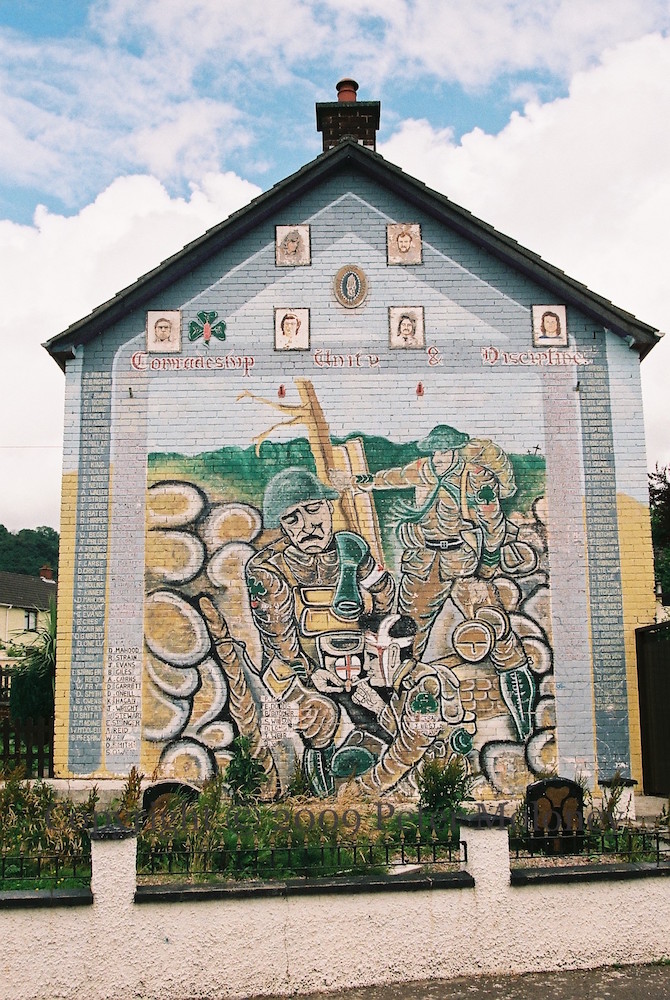
A mixture of modern and latter-day Ulster Volunteers: the names of WWI dead are listed on both sides, while six modern volunteers are portrayed above the central panel of soldiers in a trench. J1835 lists the men in the previous version of the mural as J. Shaw, T. Mawhinney, J. Cordner, C. Logan, S. McCrea, W. Millar.
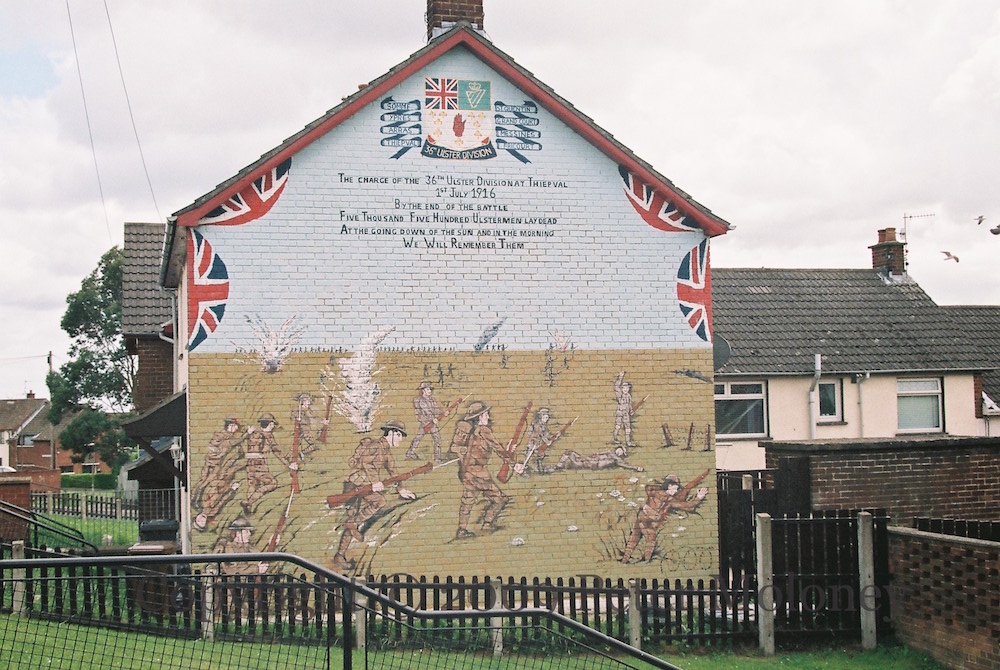
“The charge of the 36th (Ulster) Division at Thiepval, 1st July 1916. By the end of the battle, five thousand five hundred Ulstermen lay dead. ‘At the going down of the sun and in the morning we will remember them.'”
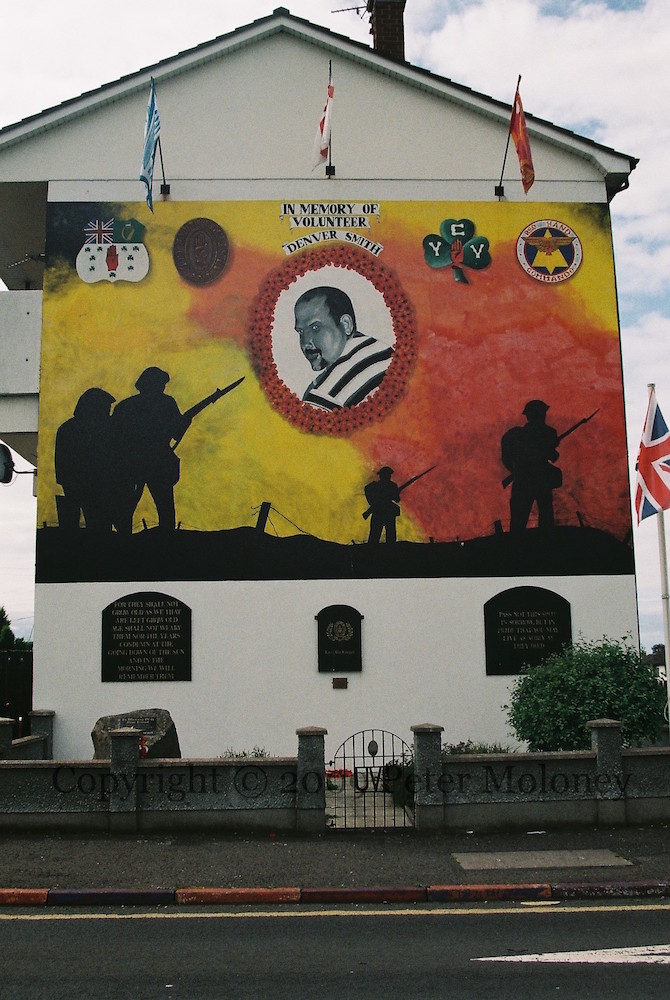
“Lay them away on the hill side/along with the brave and the bold/Inscribe their names on the role [sic] of fame/in letters of purest gold.” The Ulster Tower at Thiepval commemorates the WWI dead of the 36th (Ulster) Division. The words, however, come from a song about James Daly, who was executed by firing squad for taking part in a 1920 mutiny of the Connaught Rangers in India in protest of the activities of the Black and Tans. Above is the insignia of “UVF South Belfast 2nd battalion” and below is a roll of honour for the battalion: “A salute to the brave/to those men we hold dear/they fought for our freedom/south Belfast volunteers.” Compare this mural to the previous (Here Lies A Soldier), which does not include any reference to the Great War.
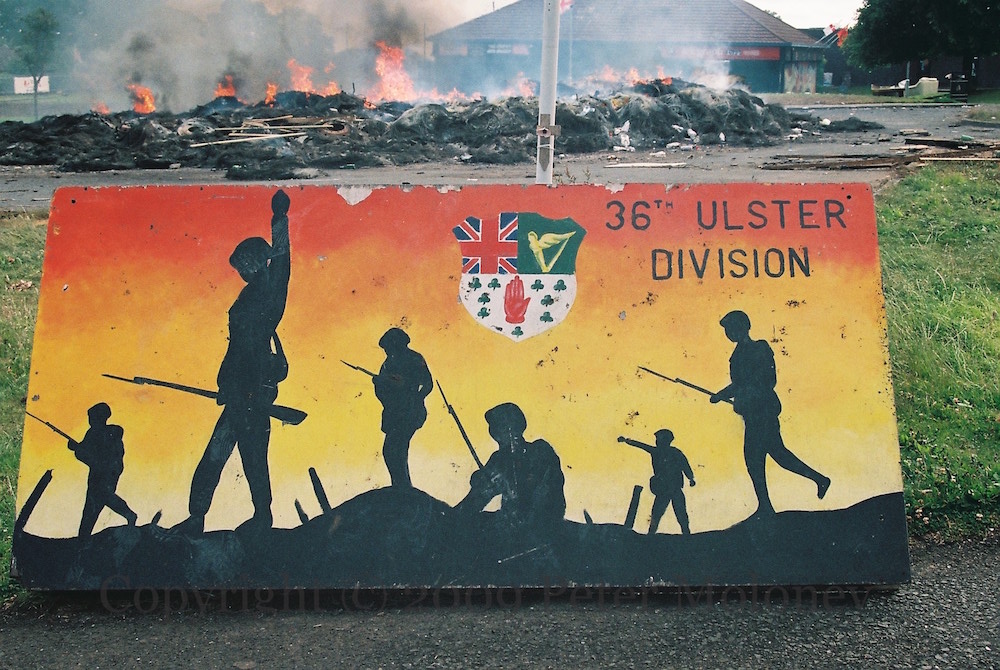
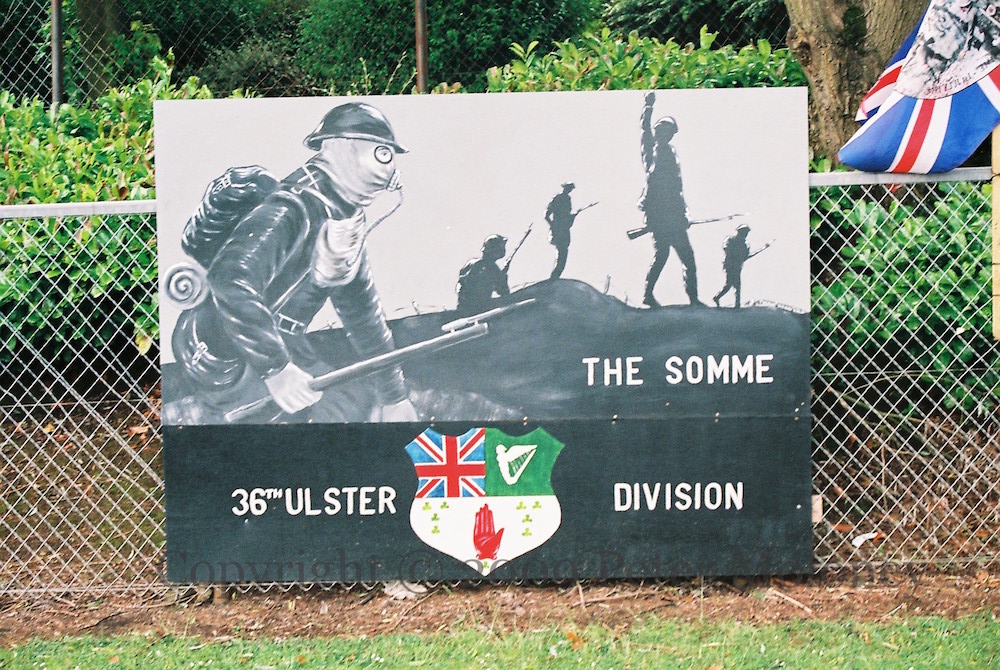
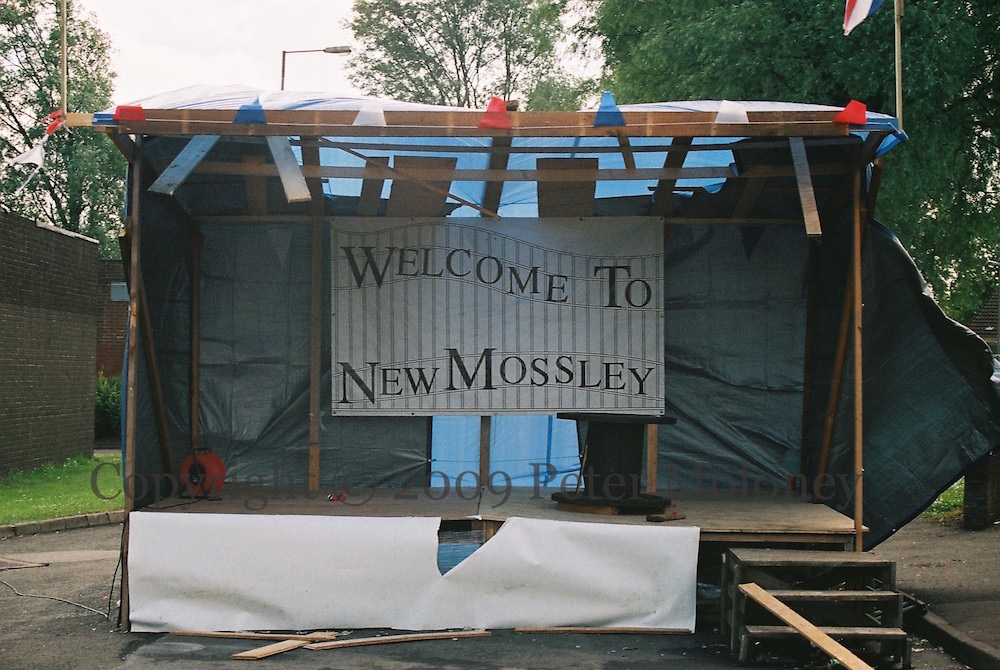
Four small boards from Ballyearl Drive in New Mossley, at the bonfire (see Welcome to New Mossley) and on fencing around an area to be re-landscaped. 36th (Ulster) Division, “Three Scottish soldiers murdered by scum 1971″ (John McCaig, Jospeh McCaig, Dougald McCaughey), and “New Mossley supports our troops.”
The UDR board would next year (2010) travel across the street, to the fencing around the bonfire area as a pitch and playground were built.
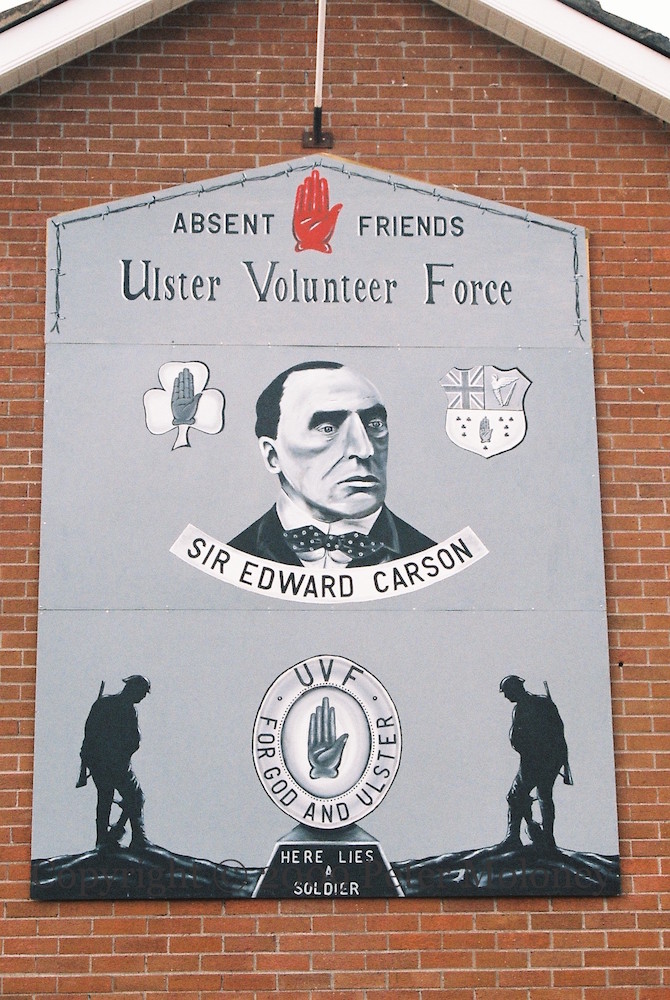
Sir Edward Carson founded the Ulster Volunteers with James Craig in 1912. At the outbreak of the Great War, its volunteers served in the British Army in the 36th (Ulster) Division and died on the fields of Flanders. “Here lies a soldier.”
These are images from Ballyearl Drive around the Twelfth.
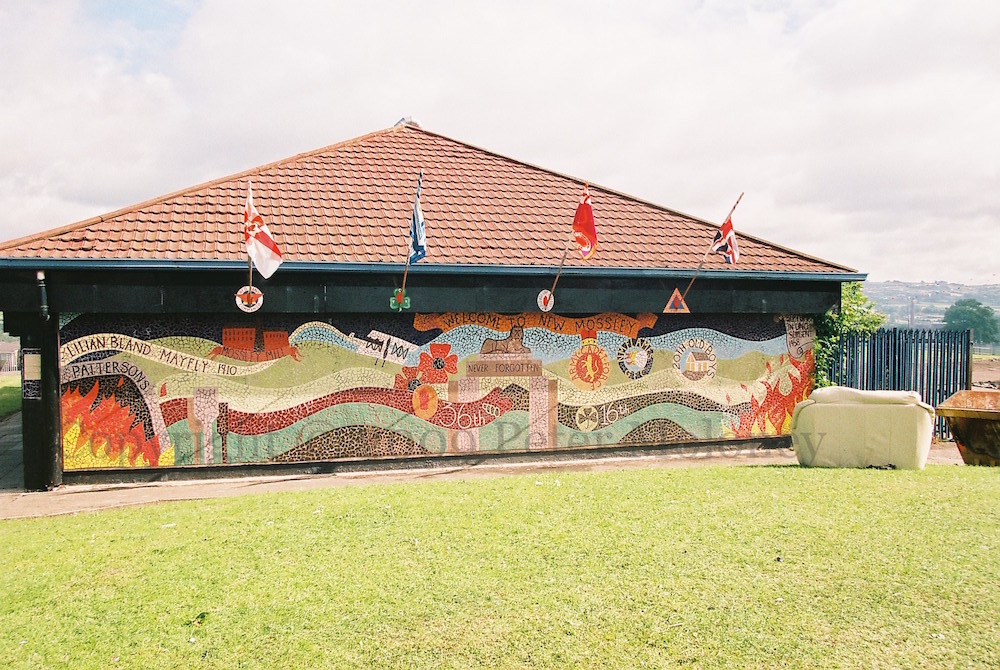
The new moasic includes both the 36th and 16th Divisions. “This mosaic reflects the cultural & industrial heritage of the area. New Mossley Community Group is proud to be part of this project and hope it gives pleasure to everyone. We would like to thank the Arts Council and Groundwork for their help and support. Unveiled by Jeanette Ervine, Dawn Purvis MLA, Mena Mitchell 17th January 2009.”
Included from left to right are Lilian Bland Mayfly 1910, Pattersons [Spade Mill], Mossley Mill, Army Cadet Force, New Mossley Flames and 20th Old Boys (local soccer teams), “Septem in uno surgent” [seven rise as one] is the motto of Newtownabbey, created in 1958 from “the seven ancient villages of Whitehouse, Whiteabbey, Jordanstown, Glengormley, Whitewell, Monkstown and Carnmoney” along with an additional 20 townlands (Belfast Forum).
The UVF/YCV/RHC emblems on the upper border remain from the previous UVF murals.









 Peter Moloney Collection