This is a complete set of images of the UDA’s “Freedom Corner” along Newtownards Road, Belfast. The use of Cuchulainn as a loyalist icon (the mural is in its second incarnation – for the first, see Defender Of Ulster From Irish Attacks) rests on the theory that the people of mythical Ulster are different from those in the rest of Ireland and are related to ancient Scots: Dalaradia was “was a kingdom of the Cruthin in the north-east of Ireland and parts of Scotland in the first millennium.” The “Ulster Nation” flag/shield (which also appears in the final image) is a St Patrick’s cross on a blue background with six-pointed star and red hand, the flag of the Ulster (Northern Ireland) independence movement.
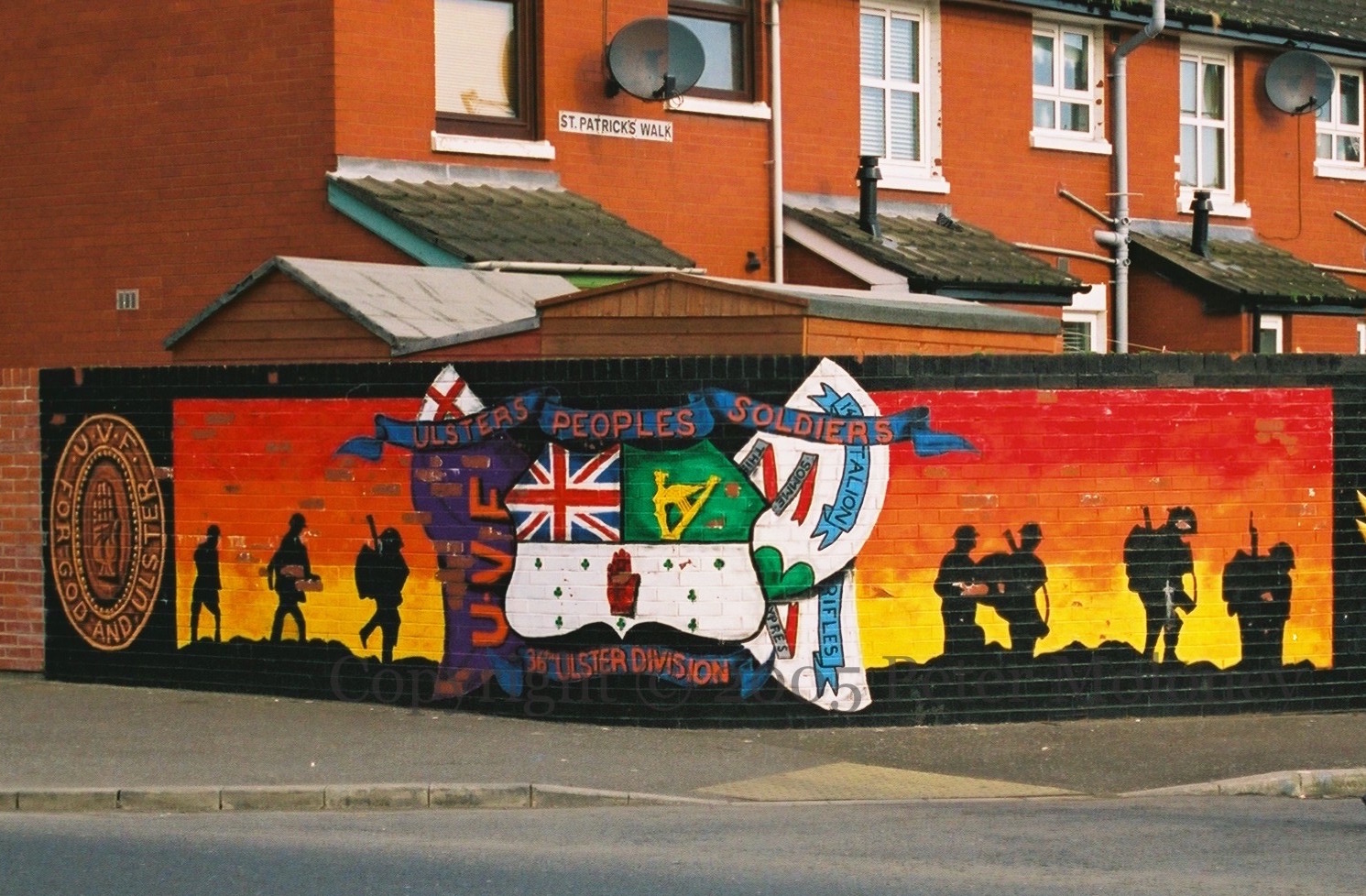
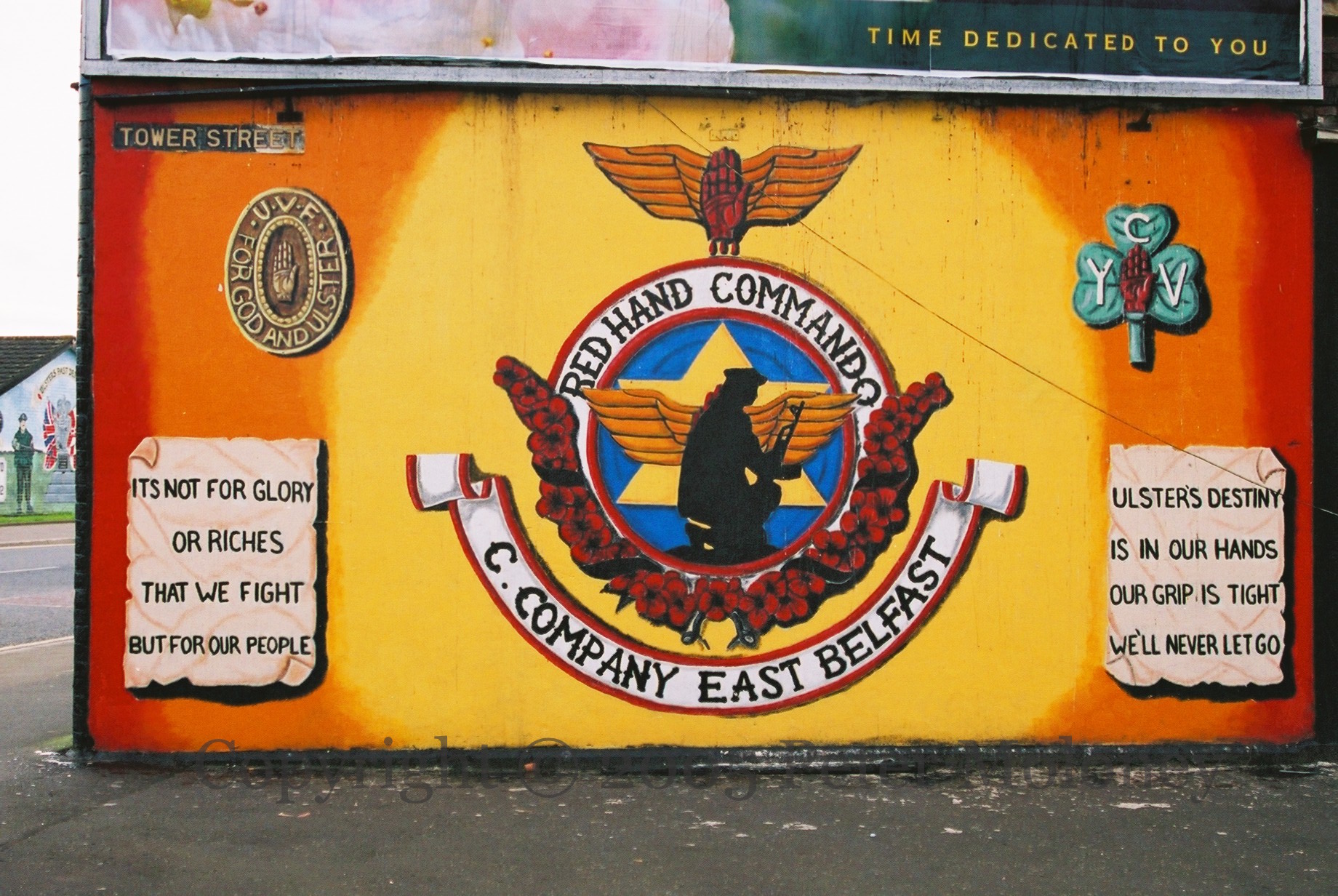
Were it not for the Red Hand Commando emblem to the right (second image) this could be a strictly WWI mural, with the crest of the 36th (Ulster) Division and flags of the Ulster Volunteers and battle honours of the YCV/Royal Irish Rifles 14th battalion. The RHC were formed in 1972. Newtownards Road, Belfast.
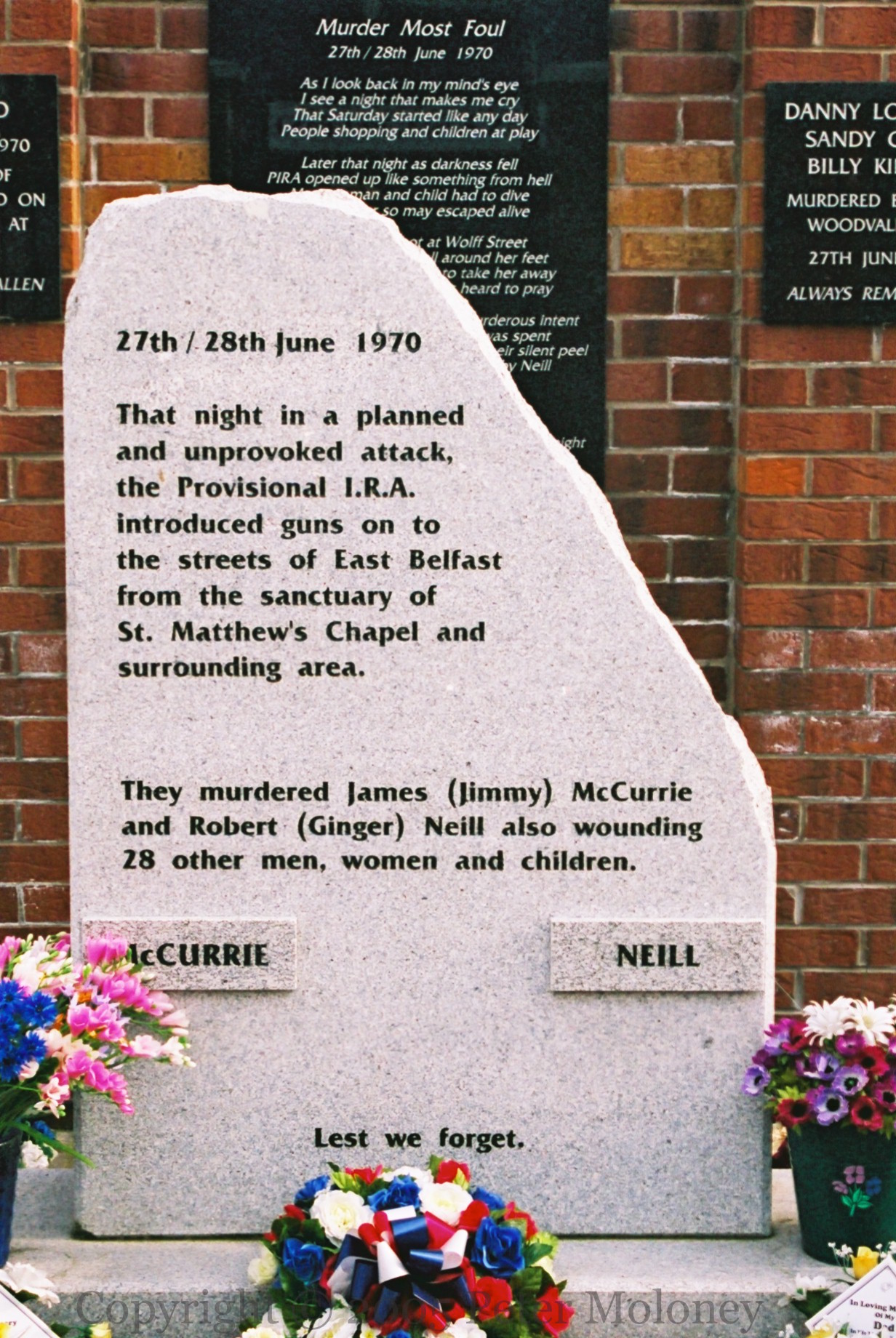
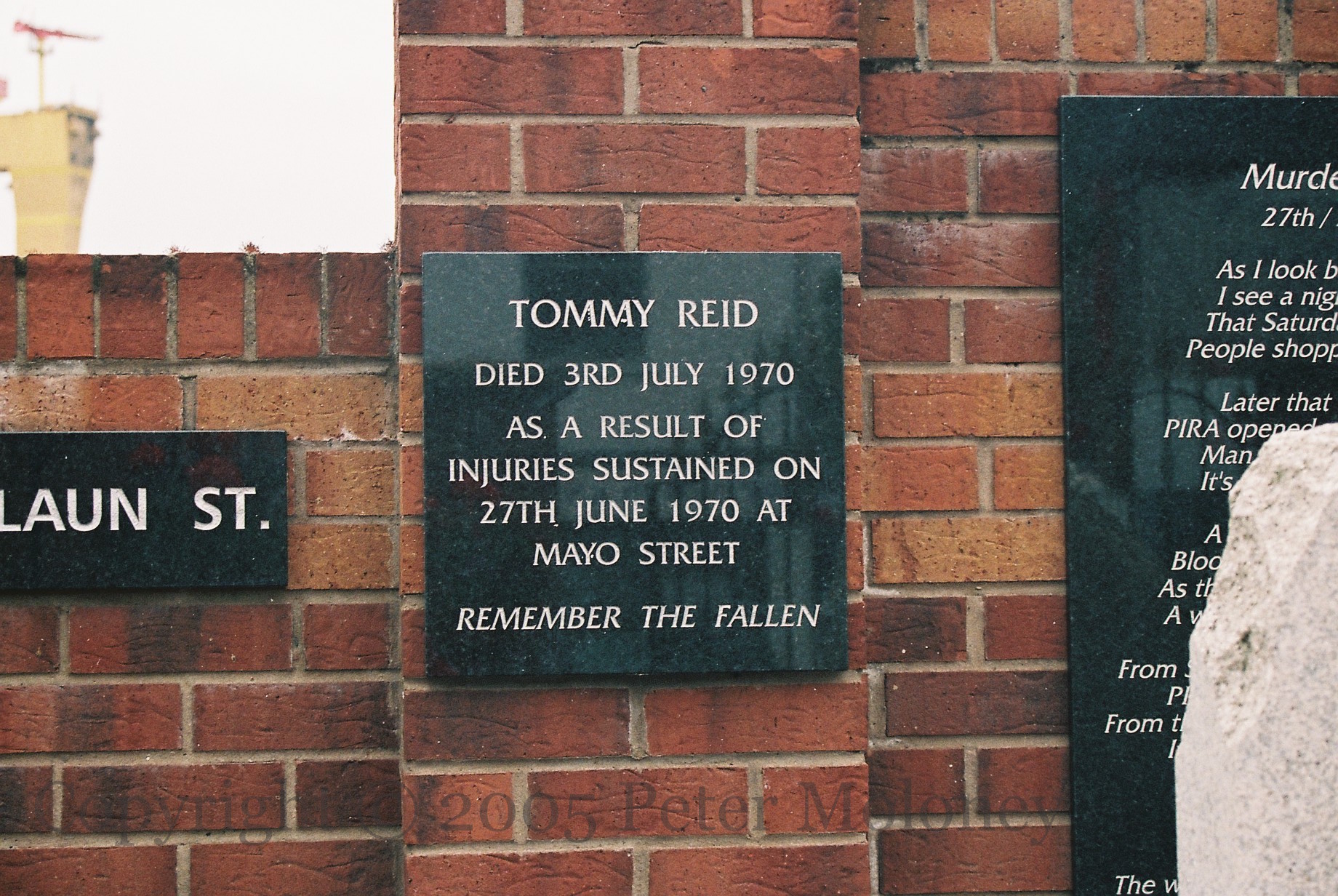
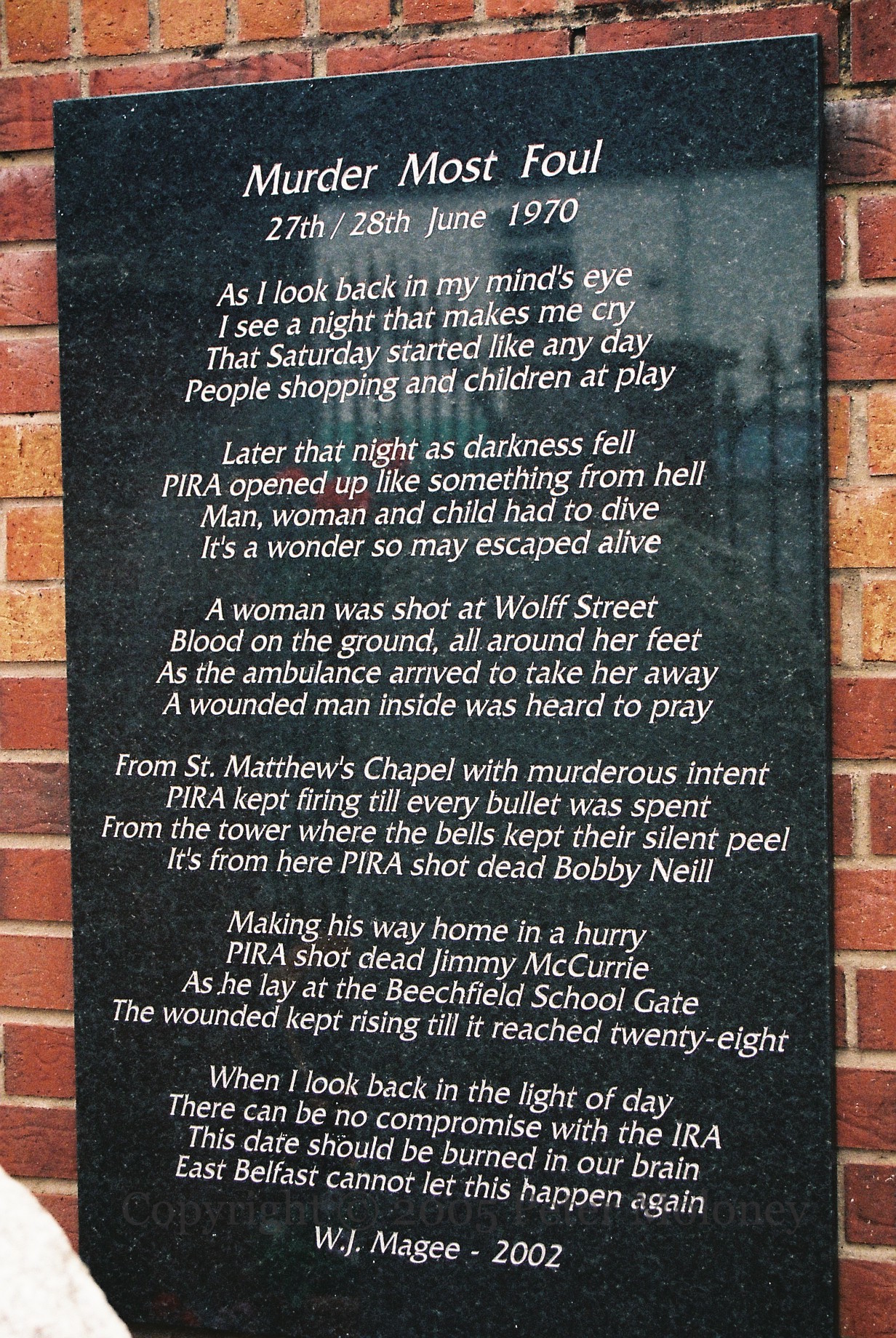
“James McCurrie – Robert Neill memorial garden – commissioned by East Belfast Historical and Cultural Society 2003.” “Murder Most Foul – 27th/28th June 1970. As I look back in my mind’s eye/I see a night that makes me cry/That Saturday started like any day/People shopping and children at play//Later that night at darkness fell/PIRA opened up like something from hell/Man, woman and child had to dive/It’s a wonder so ma[n]y escaped alive//A woman was shot at Wolff Street/Blood on the ground, all around her feet/As the ambulance arrived to take her away/A wounded man inside was heard to pray//From St. Matthew’s Chapel with murderous intent/PIRA kept firing till every bullet was spent/From the tower where the bells kept their silent peel/It’s from here PIRA shot dead Bobby Neill//Making his way home in a hurry/PIRA shot dead Jimmy McCurrie/As he lay at the Beechfield School Gate/The wounded kept rising till it reached twenty-eight//When I look back in the light of day/There can be no compromise with the IRA/The date should be burned in our brain/East Belfast cannot let this happen again – W. J. Magee – 2002”. This is a poetic account of the Battle Of St Matthew’s, in which three people died, including James McCurrie and Robert Neill. Tommy Reid (in the plaque on the left) was hit by a projectile earlier in the day on the Springfield Road and died six days later. Loughins, Gould, and Kincaid (in the plaque on the right) were killed by the Provisionals on the Crumlin Road that same afternoon.
“It’s not for glory or riches that we fight but for our people. Ulster’s destiny is in our hands; our grip is tight; we’ll never let go.” A Red Hand Commando volunteer kneels in a garland of poppies.
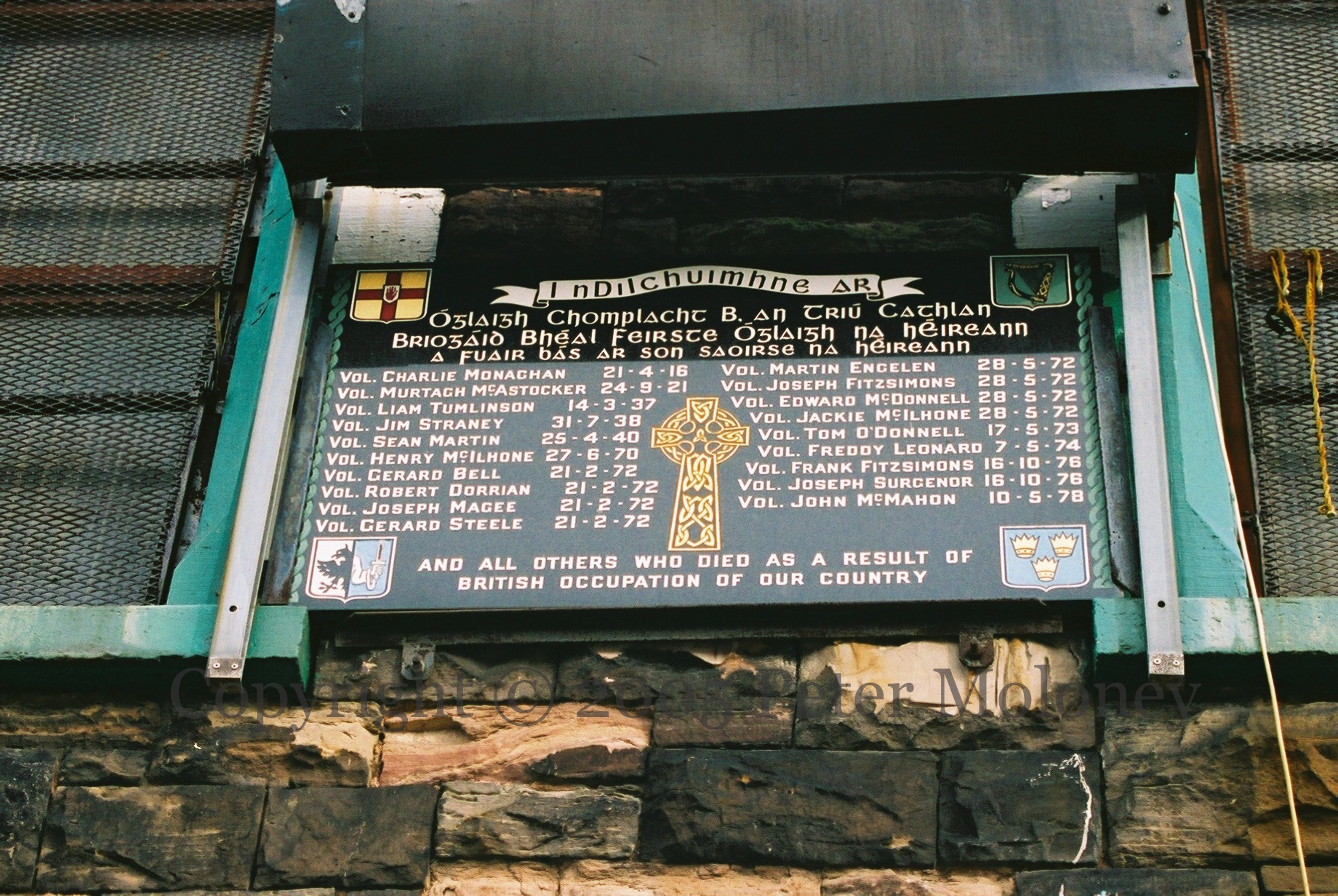
“I ndılchuımhne ar óglaıgh chomplacht B an trıú cathlan brıogáıd Bhéal Feırste Óglaıgh na hÉıreann a fuaır bás ar son saoırse na hÉıreann and all others who died as a result of British occupation of our country.” Roll of honour for IRA volunteers (up to 1978) in and from east Belfast, beginning with Charlie Monaghan/Monahan who died in 1916 the day before the Rising and who would get a mural in 2006 (and another in the Markets in 2017), as would Sean Martin who died in 1940.
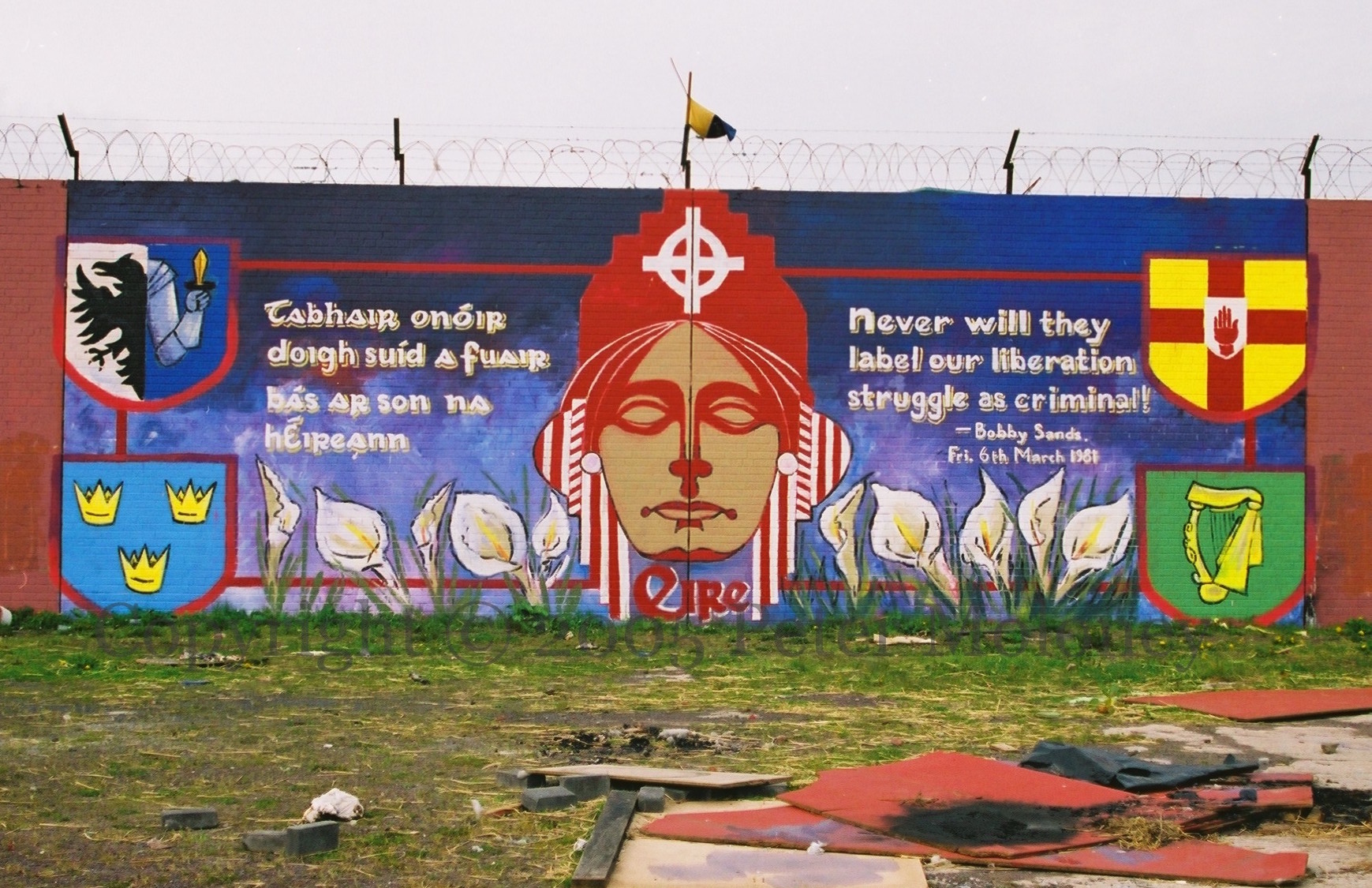
“Tabhaır onóır doıgh suíd a fuaır bás ar son na hÉıreann” [corrupted Irish with the general meaning “Honor … who died for Ireland”]. “Never will they label our liberation struggle as criminal! – Bobby Sands Fri. 6th March 1981”. Another Éıre mural was previously further down the wall on Mountpottinger Road, Belfast.
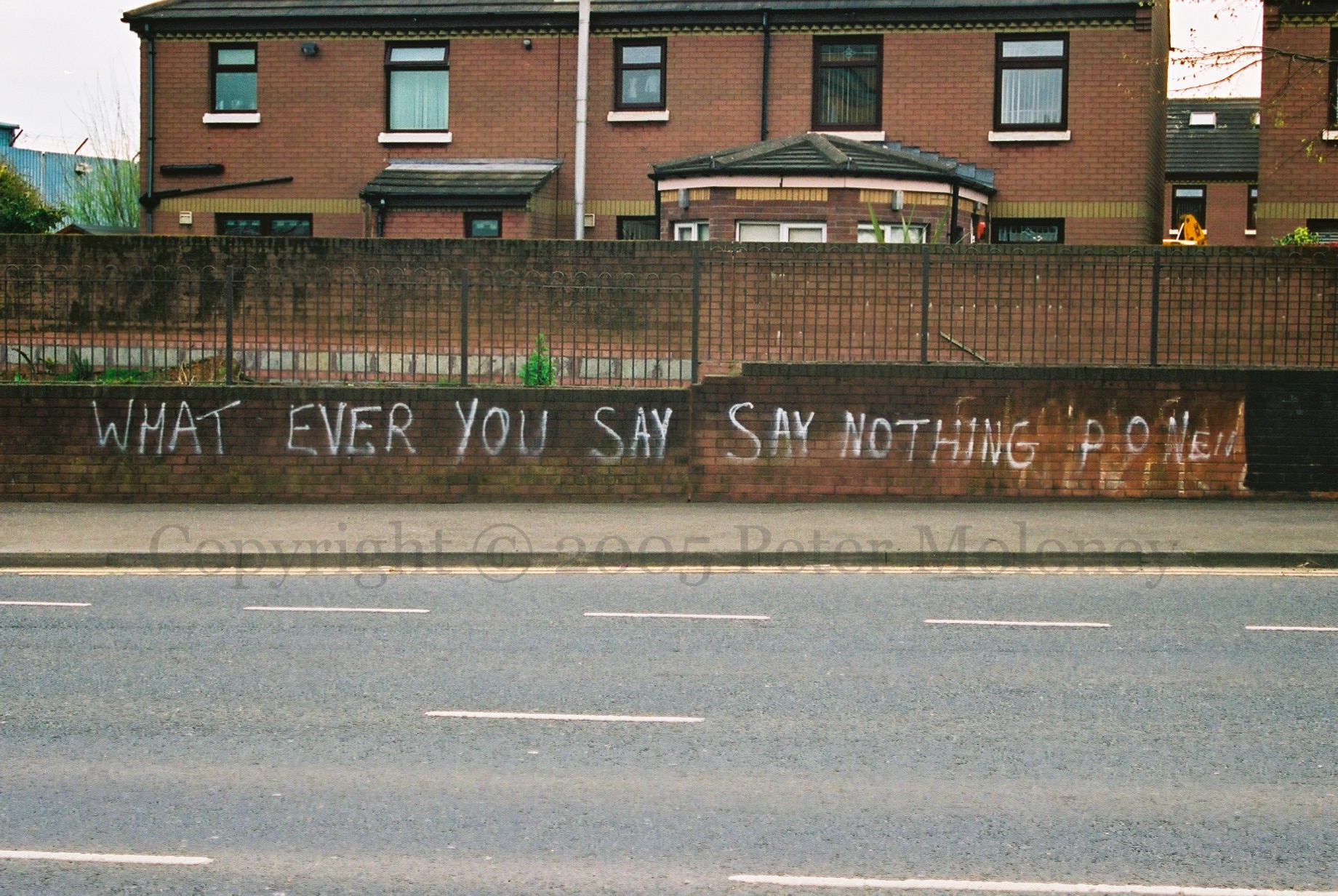
“Whatever You Say, Say Nothing” is the name of a 1975 Seamus Heaney poem from the collection North, and of a 1981 Colum Sands song. “P O’Neill” was the name used by the IRA on its public statements.








 Peter Moloney Collection