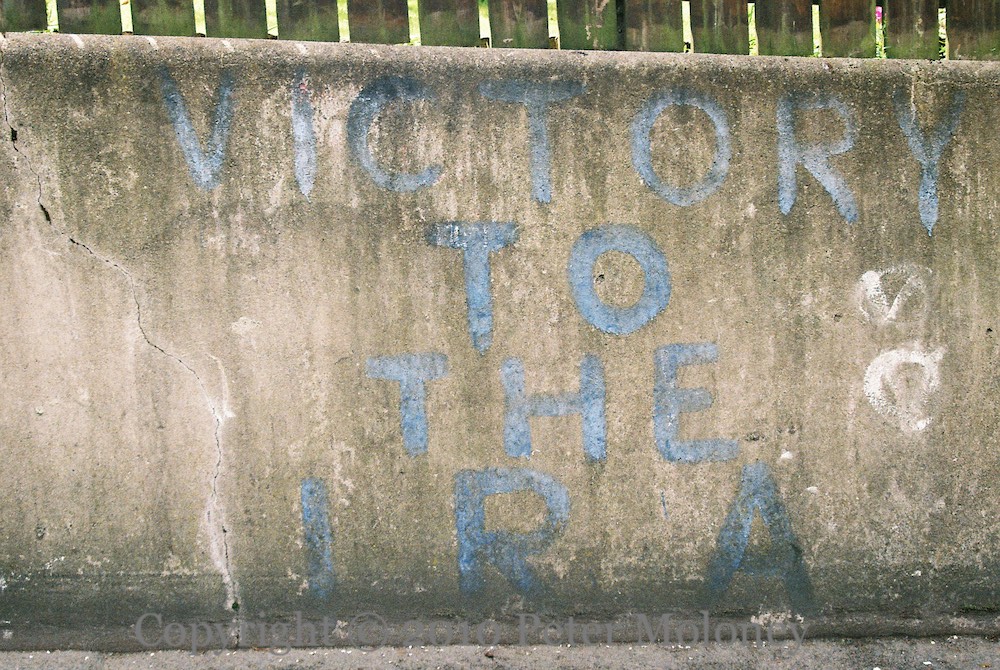
Vintage graffiti in Courtney Hill, Newry.
Click image to enlarge
Copyright © 2010 Peter Moloney
M06021
Vintage graffiti in Courtney Hill, Newry.
Click image to enlarge
Copyright © 2010 Peter Moloney
M06021

“I ndılchuımhne orthu sıúd ó pharóıste N. Muıre a thug a rıabh [raıbh] acu ar son saoırse na hÉıreann. Erected in proud and loving memory of all those from St Mary’s parish, Newry who have fought for Irish freeedom. Ar dheıs Dé go raıbh a n-anamacha. Pobal pharóıste N. Muire a thóg an leacht cuımhneacháın seo.” Pike-men are used on the base as a generic symbol of Irish nationalism, rather than mention of any particular group. In later years, stones to the Signatories and the hunger strikers will be added, along with graveside volunteers in modern garb.
Click image to enlarge
Copyright © 2010 Peter Moloney
M06022 [M06023] [M06024]
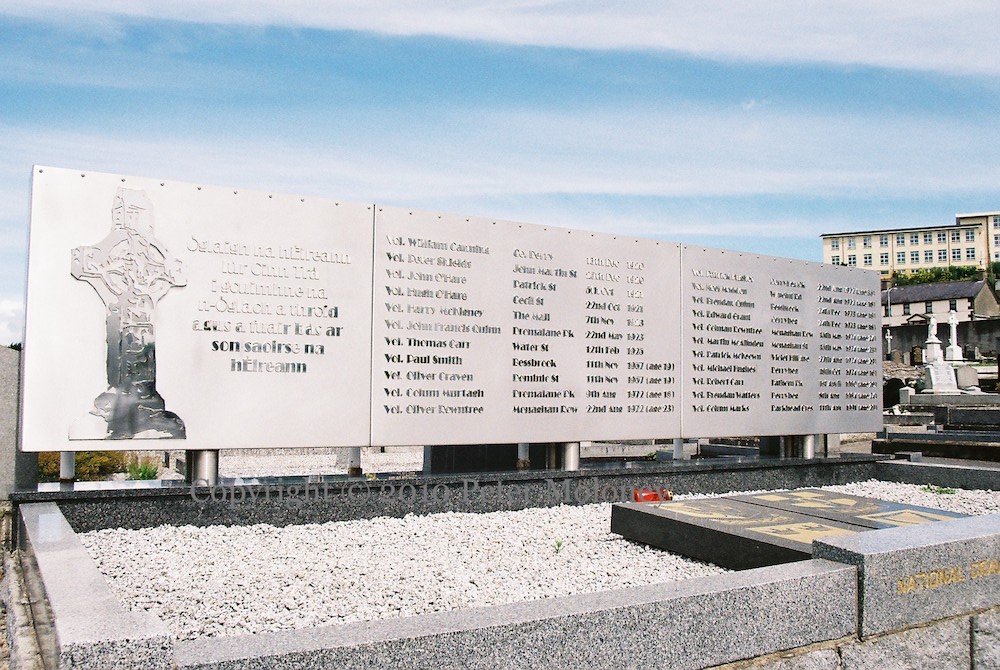
“Óglaıgh na hÉıreann Iúr Cınn Trá [Newry] ı gcuımhne na n-Óglaıgh a throıd agus a fuaır bás [who fought and died] ar son saoırse na hÉıreann”. National Graves Association headstone over the republican plot in St Mary’s cemetery. Old Warrenpoint Road, Newry.
Click image to enlarge
Copyright © 2010 Peter Moloney
[M06027] [M06028] [M06029] M06026 [M06025]
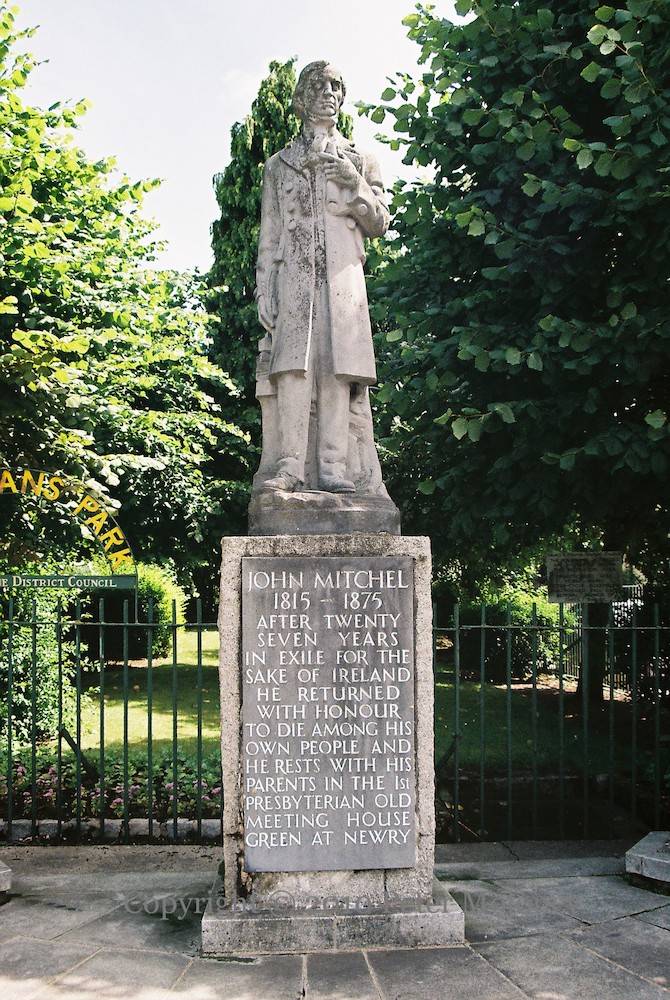
“John Mitchel 1815 – 1875 After twenty years in exile for the sake of Ireland he returned with honour to die among his own people and he rests with his parents in the 1st Presbyterian old meeting house green at Newry.” Mitchel graduated from Trinity at 19 and became an attorney in Newry and Banbridge before becoming a writer and editor for The Nation (the phrase “England’s difficulty is Ireland’s opportunity” comes from an 1845 article) and then The United Irishman. After 16 editions, he was arrested and convicted of treason and sent to penal colonies in Bermuda and Tasmania. He escaped to the USA, where he was an ardent supporter of slavery. When slavery was abolished, he again took up the cause of Ireland, returned to Ireland, won the Westminster seat for Tipperary but was barred, as a felon, from taking it, and died unexpectedly at age 59 (WP).
John Mitchel Place, Newry
Click image to enlarge
Copyright © 2010 Peter Moloney
M06030 [M06031] [M06032]


“Provo puppets still administering British rule”, “Vote police, vote partition”. 32CSM stencilling in Marcus St, Newry.
Click image to enlarge
Copyright © 2010 Peter Moloney
M06033 M06034

A tall Irish tricolour flies over the Sınn Féın office in Patrick Street, Newry.
Click image to enlarge
Copyright © 2010 Peter Moloney
M06042
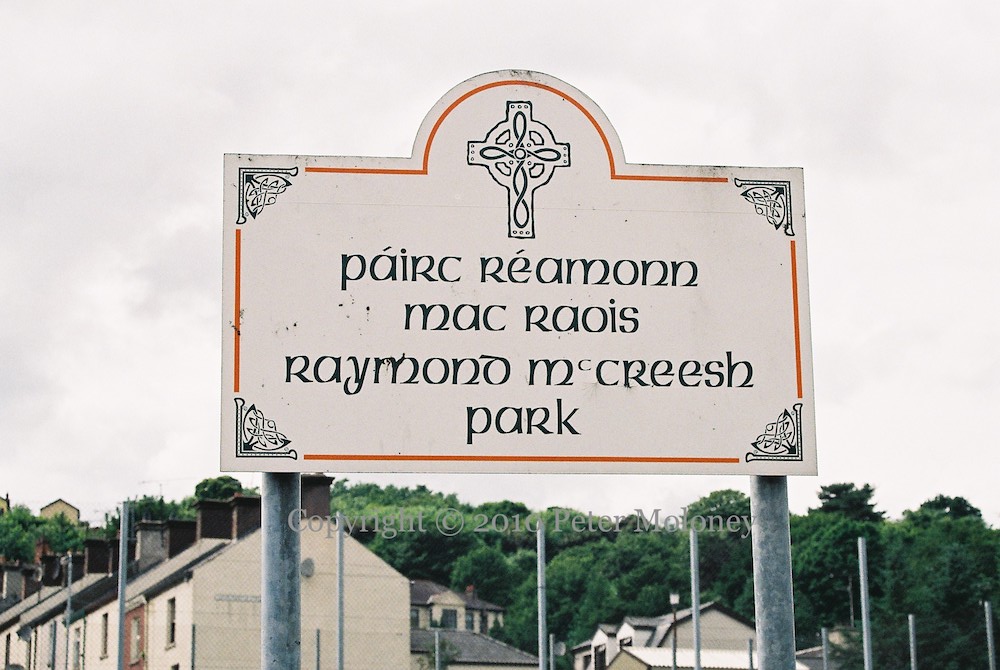
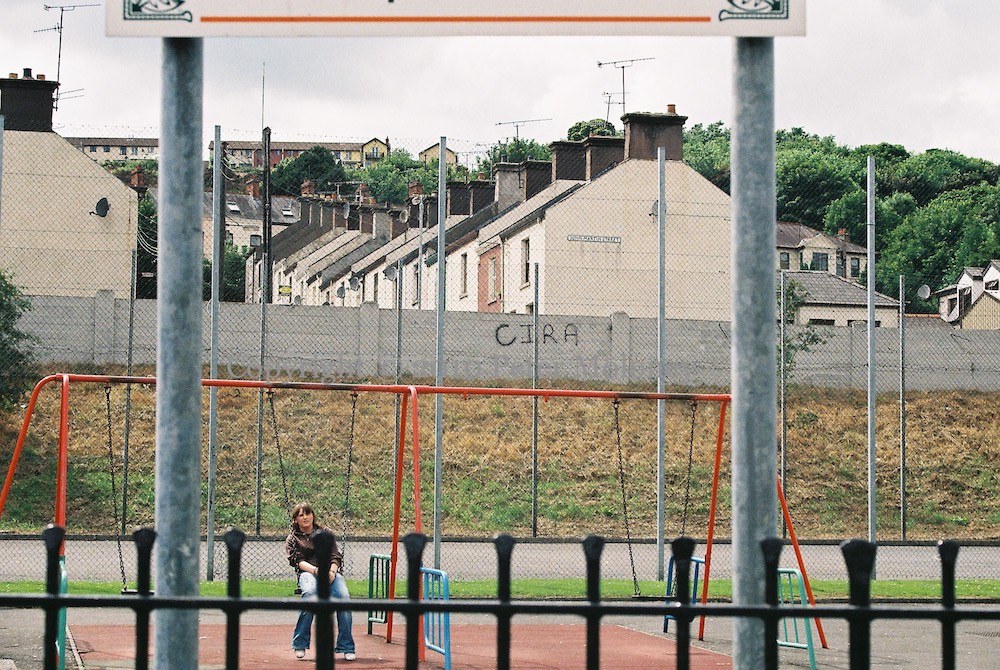
Páırc Réamonn Mac Raoıs, in Patrick Street, Newry, is named after the third 1981 hunger striker to die, Raymond McCreesh, who was from Camlough and went to St Colman’s grammar in Newry. The park was named in 2001 and was the subject of appeals to various ‘equality’ commissions (Newry Times). With “CIRA” graffiti on the back wall.
Click image to enlarge
Copyright © 2010 Peter Moloney
M06043 M06044
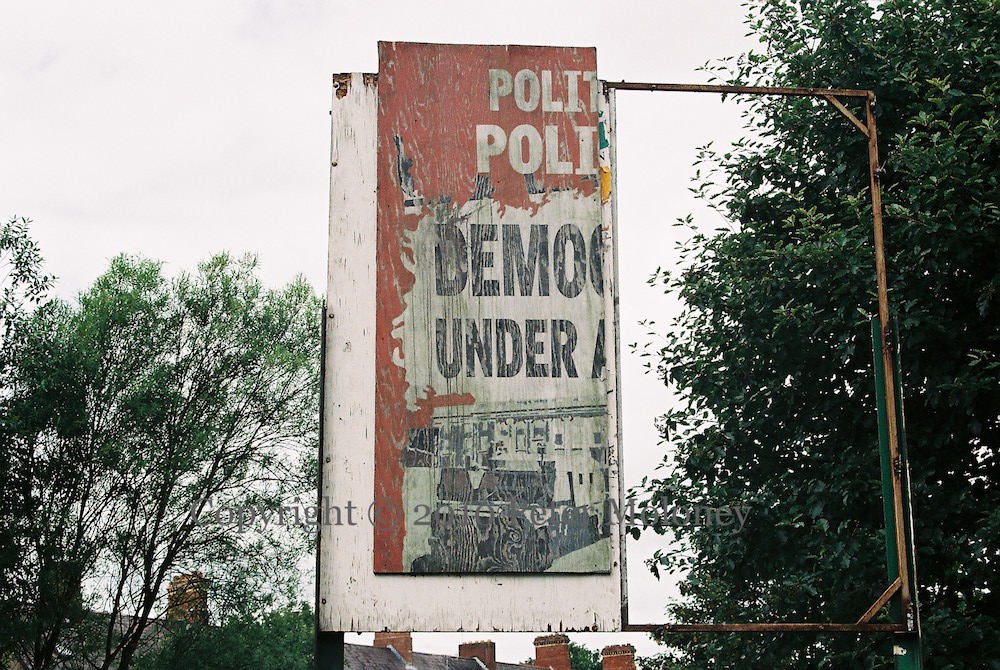
“Political policing – democracy under attack”. Clanrye Avenue, Newry. Here is a clear image of the poster.
Click image to enlarge
Copyright © 2010 Peter Moloney
M06040

Emmerdale character Lisa Dingle was arrested for punching a policeman and imprisoned for three months in a 2010 storyline (WP). She had a supporter in Clanrye Avenue, Newry.
Click image to enlarge
Copyright © 2010 Peter Moloney
M06041
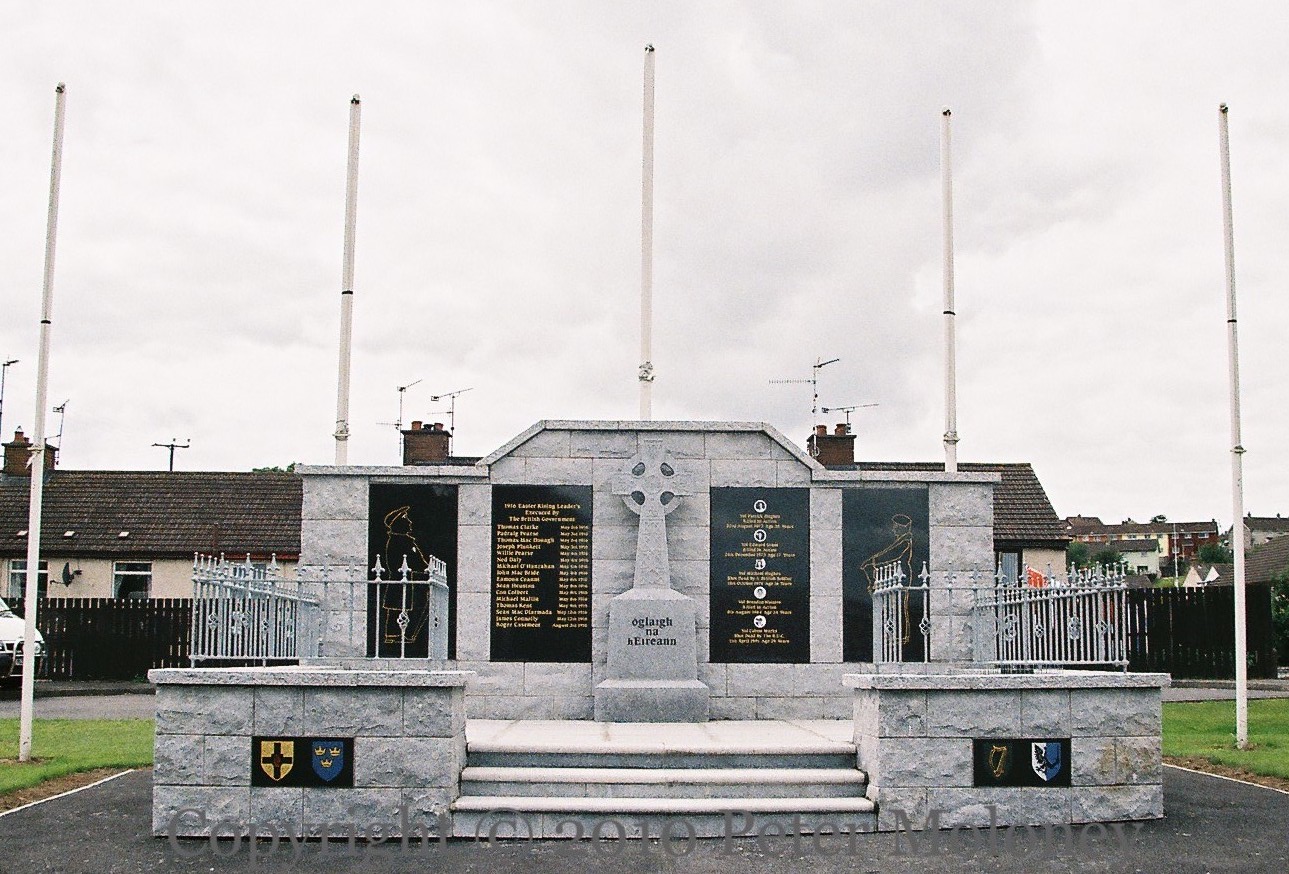
Monument in Newry’s Derrybeg estate. The central panels are to (left) the “1916 Easter Rising leader’s [sic] executed by the British government” and (right) Newry IRA volunteers Patrick Hughes, Edward Grant, Michael Hughes, Brendan Watters, and Colum Marks.
Second Avenue, Newry
Click image to enlarge
Copyright © 2010 Peter Moloney
M06039 [M06038] [M06037] [M06001] [M06002] [M06003] [M06004]
 Peter Moloney Collection