
The Ballymena version of Eddie The Trooper carries a UFF flag and stalks a barren landscape, free from corpses or tombstones.
Queen Street, Ballymena
Click image to enlarge
Copyright © 2012 Peter Moloney
M08017 [M08018] [M08019]
The Ballymena version of Eddie The Trooper carries a UFF flag and stalks a barren landscape, free from corpses or tombstones.
Queen Street, Ballymena
Click image to enlarge
Copyright © 2012 Peter Moloney
M08017 [M08018] [M08019]
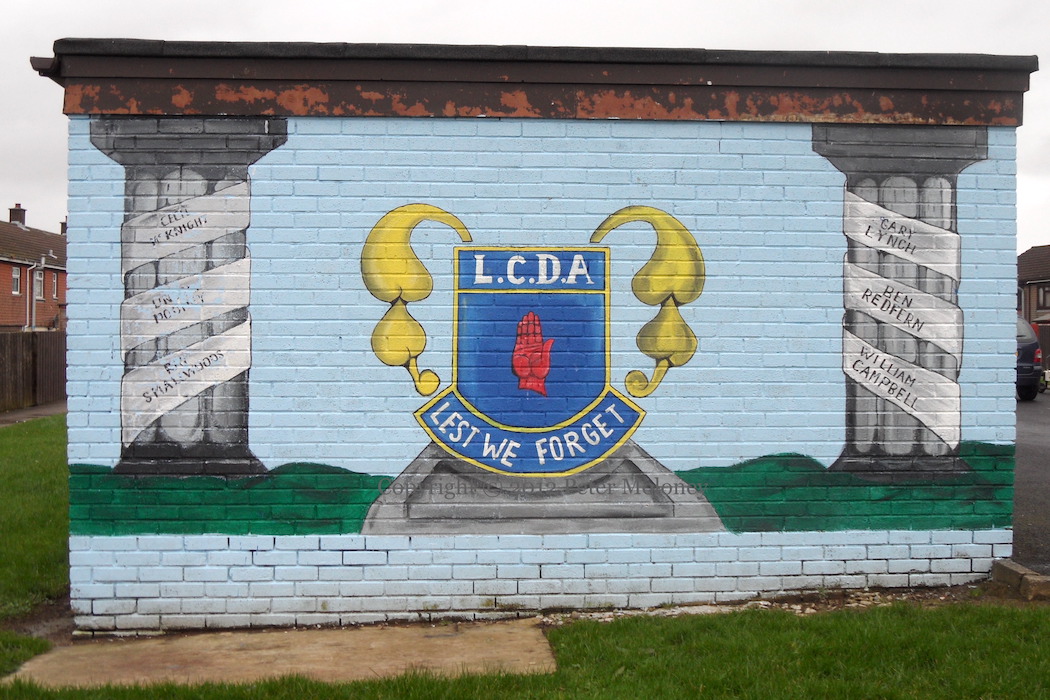
… or “LCDA” for short. There’s no information about the group on-line, so it’s not clear if it is/was a predecessor to the UDA (as e.g. with the WDA) or the local battalion of the UDA. Feedback is welcomed.
On the columns are the names of volunteers Cecil McKnight, Lindsay Mooney, Ray Smallwoods, Gary Lynch, Ben Redfern, and William Campbell.
Click image to enlarge
Copyright © 2012 Peter Moloney
M08009 [M08010] [M08011] [M08012]
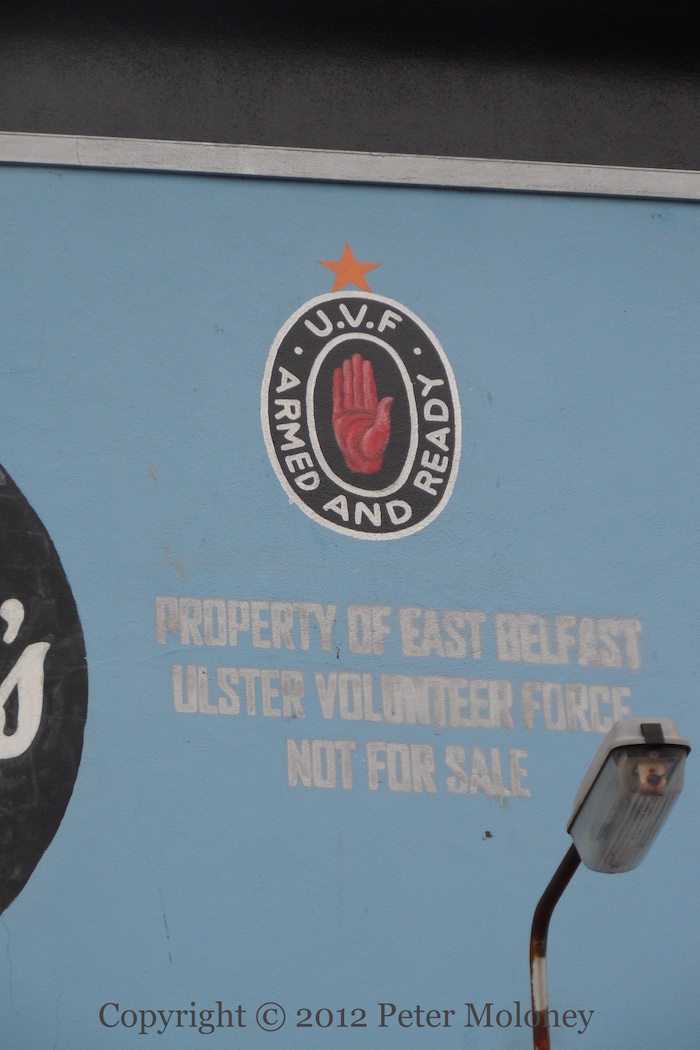
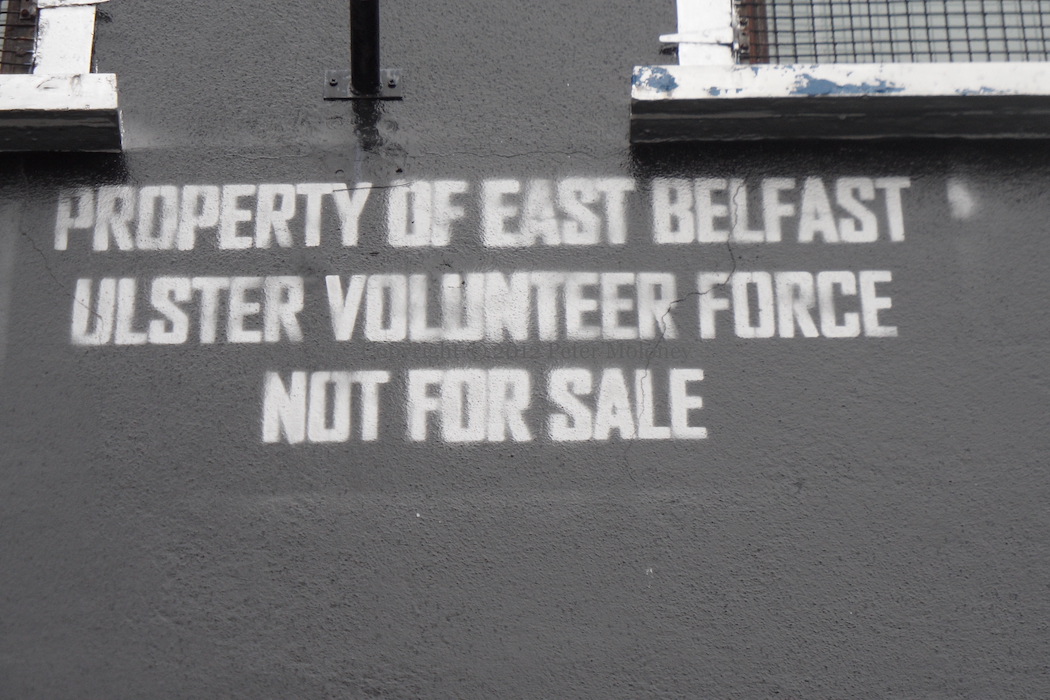

These stencilled notices are on the outside of the Belvoir Bar in east Belfast: “Property of east Belfast Ulster Volunteer Force – Not for sale” alongside a plaque to “fallen comrades” Robert Bennett, Roy Walker, Joseph Long, James Cordner, and Robert Seymour. It seems that the bar has been shuttered since 2011 (Belfast Telegraph).
Click image to enlarge
Copyright © 2012 Peter Moloney
M08006 M08007 M08008 [M08008a] [M08051]
[M12129]
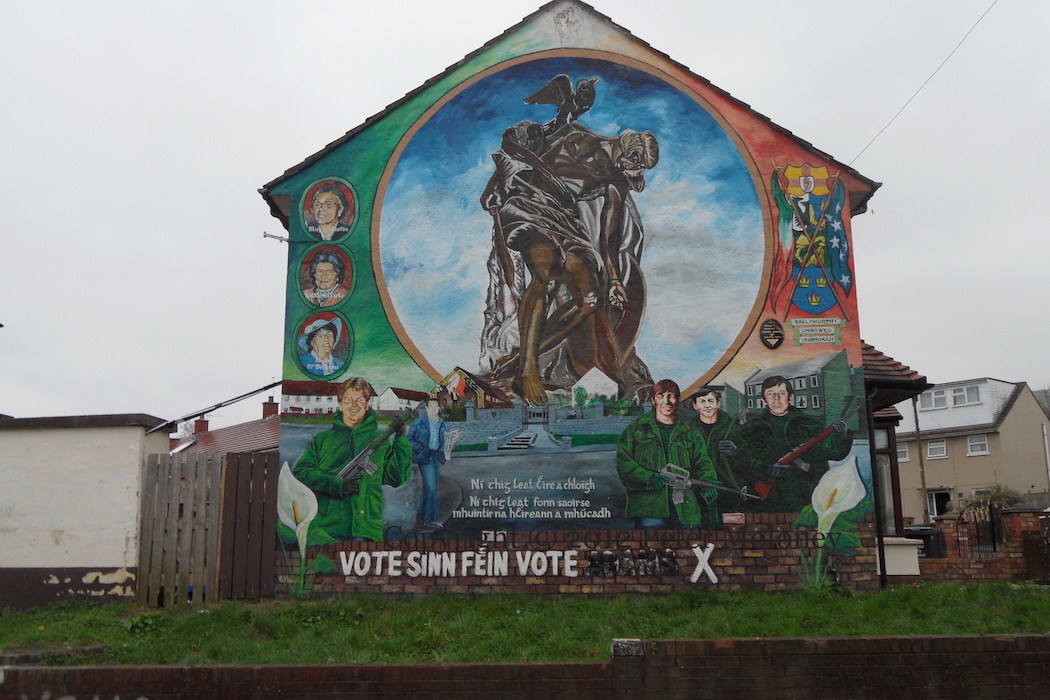
“Ní thıg leat Éıre a chloígh, ní thıg leat fonn saoırse mhuıntır na hÉıreann a mhúc[h]adh.” [You cannot subdue Ireland; you cannot extinguish the desire for the freedom of the Irish people.]
Shown in the distance below Cú Chulaınn are (left and middle) the mural of McCrudden-O’Rawe–Jordan and memorial garden on Divismore Way and (on the right) the Springhill shops.
The male figures in the foreground are unnamed but the four in jackets are presumably Stone, McWilliams, McCracken, and Dougal after their mural in Springhill Drive was blanked; the female activists on the left of Cú Chulaınn are Mary Austin, Kathleen Clarke, Annie McWilliams. “This mural was unveiled by Gerry Adams MP 2nd May 2010.” “Vote Sınn Féın Vote Adams“
Click image to enlarge
Copyright © 2012 Peter Moloney
M07989 [M07990] [M07991] [M07992] [M07993] [M07994] [M07995] [M08048] [M08049] [M08050]
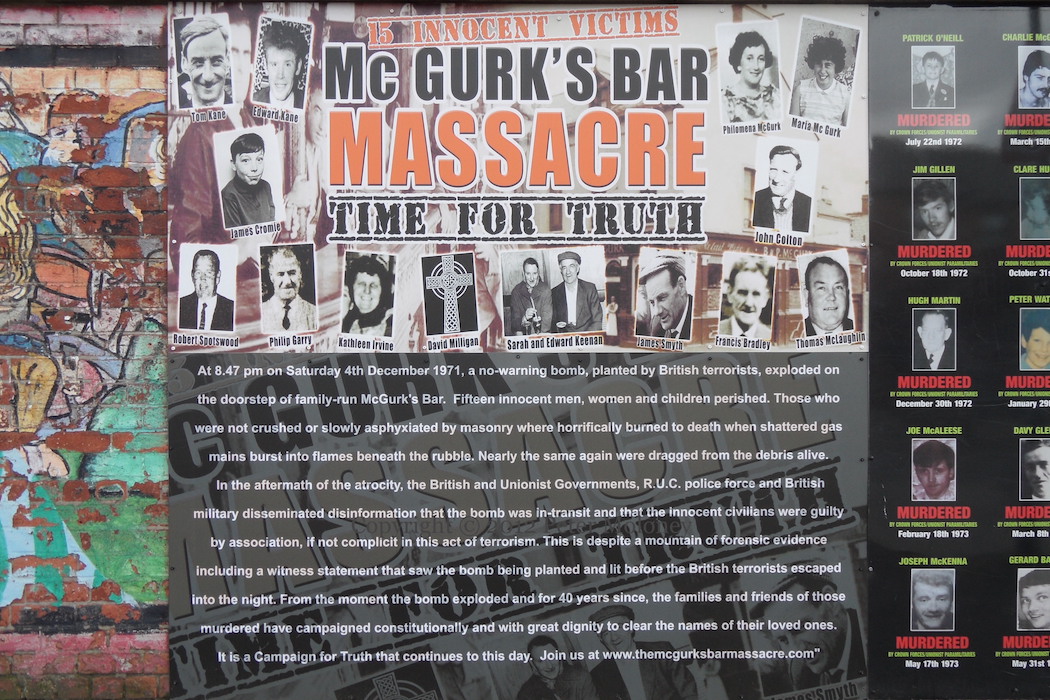

Two boards are added to either end of the many panels of the portraits of victims and the plastic bullet board (State Sponsored Killings) in Beechmount Ave/Ascaıll Ard Na bhFeá.
“At 8:47 pm on Saturday 4th December 1971, a no-warning bomb, planted by British terrorists, exploded on the doorstep of family-run McGurk’s Bar. Fifteen innocent men, women and children perished. Those who were not crushed or slowly asphyxiated by masonry where horrifically burned to death when shattered gas mains burst into flames beneath the rubble. Nearly the same again were dragged from the debris alive. In the aftermath of the atrocity, the British and Unionist Governments, RUC police force and British military disseminated disinformation that the bomb was in-transit and that the civilians guilty by association, if not complicit in this act of terrorism. This is despite a mountain of forensic evidence including a witness statement that saw the bomb being planted and lit before the British terrorists escaped into the night. From the moment the bomb exploded and for 40 years since, the families and friends of those murdered have campaigned constitutionally and with great dignity to clear the names of their lived ones. It is a Campaign for Truth that continues to this day. Join us at themcgurksbarmassacre.com” “
“Springhill–Westrock Massacre. Belfast’s Bloody Sunday. Time for truth! On the 9th July 1972 a team of British Army snipers took up firing positions in Corry’s timber yard overlooking the nationalist Springhill/Westrock estates. Within less than an hour five civilians lay dead and two critically wounded. Among the dead were three teenagers, a father of six and a priest on his way to administer the last rites to the dead and injured. There has never been a proper police investigation, and not one solider has spent a single day in prison in connection with their deaths. The families deserve, and demand the comprehensive facts be told by the British establishment. The truth costs nothing.”
Click image to enlarge
Copyright © 2012 Peter Moloney
M07801 [M07802] [M07807] [M07807a] [M07807b] [M08355]
M07803 [M07804] [M07805]


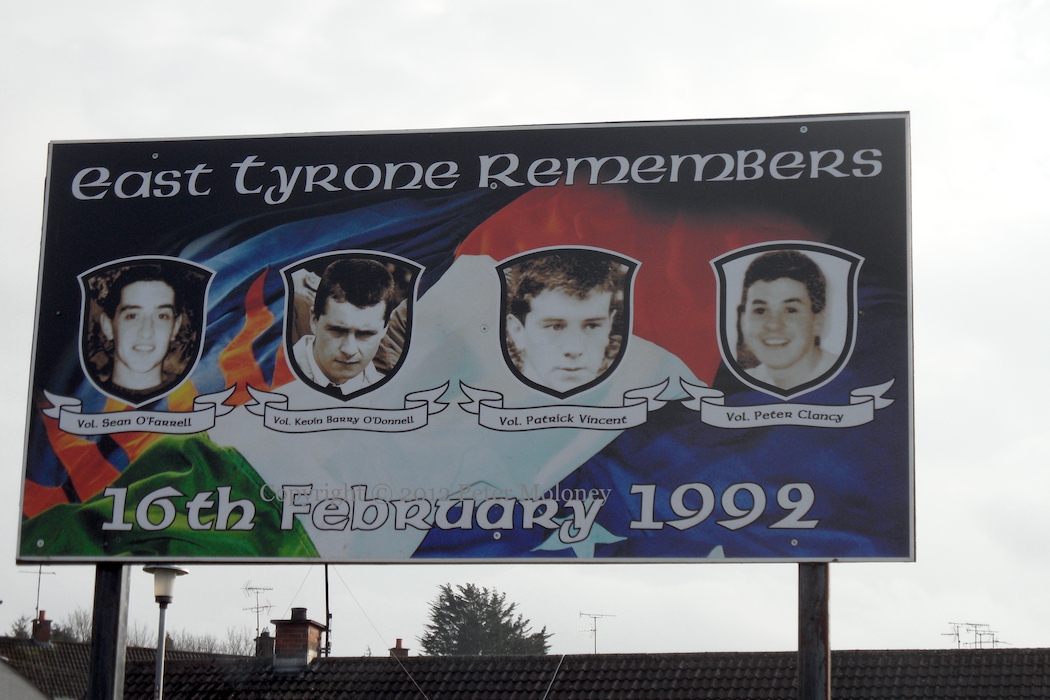
East Tyrone remembers IRA volunteers Patrick Vincent, Sean O’Farrell, Peter Clancy, and Barry O’Donnell, who were killed by the SAS after attacking Coalisland RUC station with a machine gun mounted on the back of a lorry on February 16th, 1992 as they were switching from the attack vehicles to getaway cars in Clonoe (WP). With republican graffiti: “End strip searches in Maghaberry jail on republican POWs”.
Lisnahull Road, Newell Road, Donaghmore Road, Dungannon
Click image to enlarge
Copyright © 2012 Peter Moloney
M07935 [M07936] [M07937] [M07938] [M07939] [M07940] [M07941]
M07942
M07943 [M07944] [M07945] [M07946] [M07947]


“In memory of the innocents cruelly killed and injured in [a UVF car bomb] explosion on 17th March 1976” outside the Hillcrest Bar, Dungannon. Josephy Kelly, Andrew Small, James McCaughey, Patrick Barnard. “Mary Queen of Ireland pray for them.”
Donaghmore Road (and lily in Newell Road) Dungannon
Click image to enlarge
Copyright © 2012 Peter Moloney
M05884 M05877
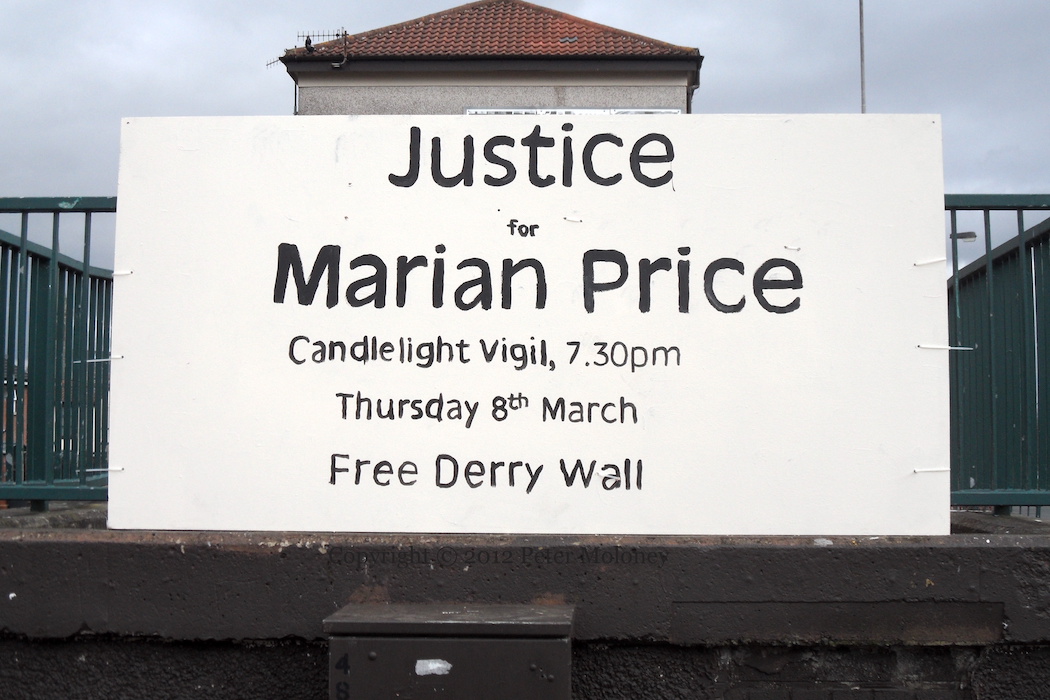

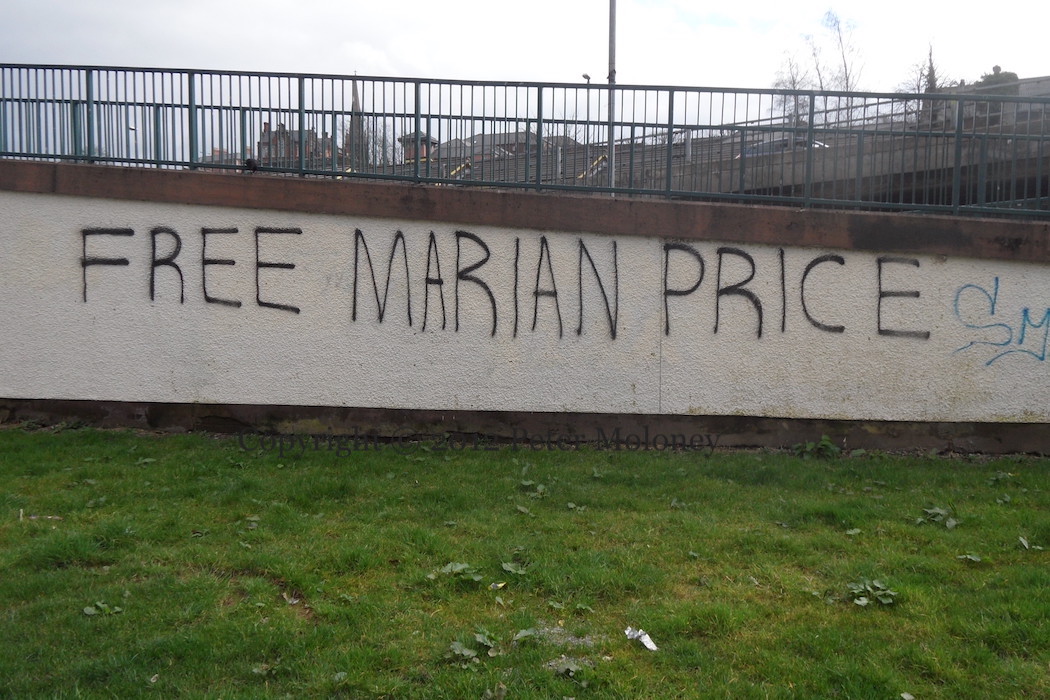
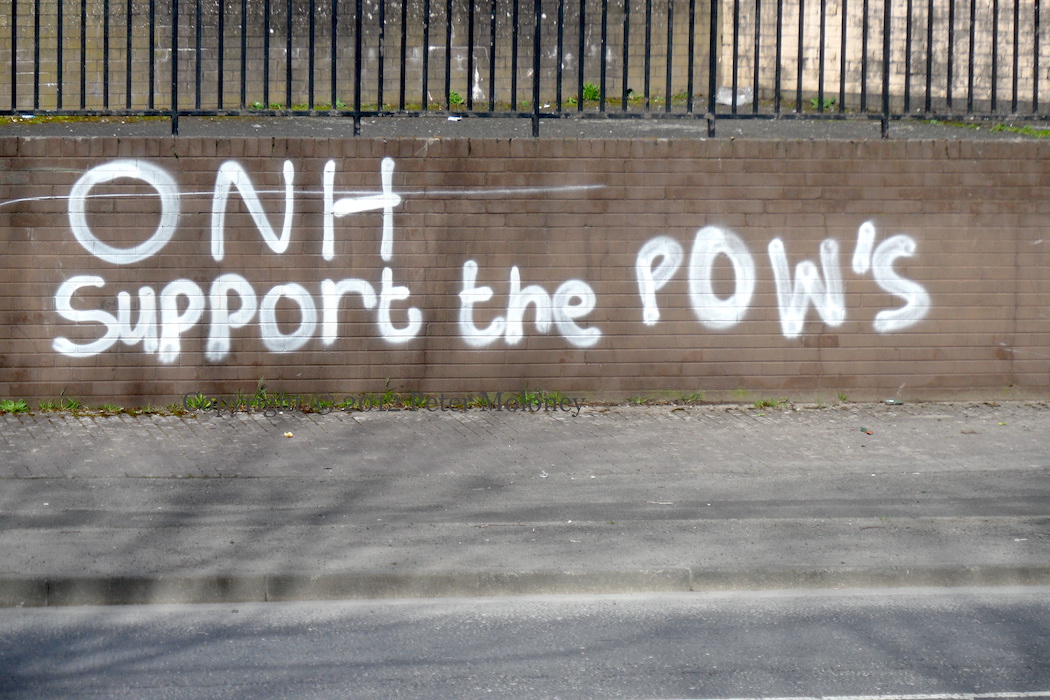
“Justice for Marian Price, Candlelight Vigil, 7.30 pm, Thursday 8th March, Free Derry Wall.” For background, see Free Marian Price.
Lecky Road, Durrow Park, Durrow Park, Foyle Road, Derry
Click image to enlarge
Copyright © 2012 Peter Moloney
M07919 M07920 M07921 M07922

“In proud and loving memory of Óglach Mickey Devine died 20th August 1981 in the H-Blocks of Long Kesh, after 60 days on hunger-strike. Mickey was waked and buried from this house, the family home of his sister Margaret, also died 30th March 2005.”
Rathkeele Way, Derry
Click image to enlarge
Copyright © 2012 Peter Moloney
M07808 [M07809] [M07810]
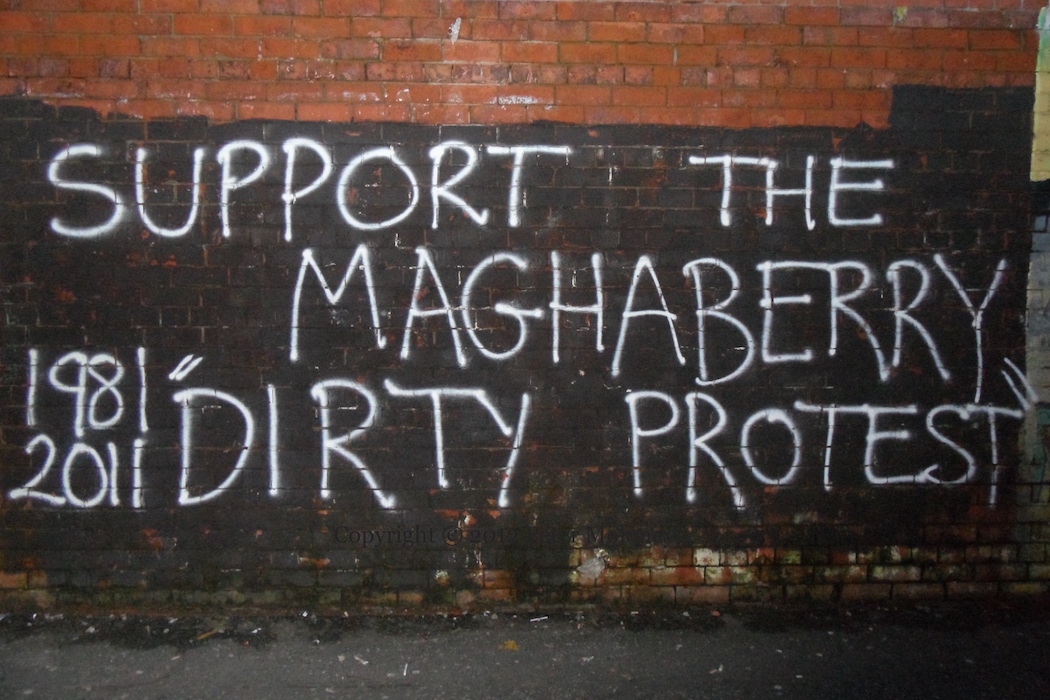
The 1981 hunger strikes – as the culmination of the blanket protest and no-wash or “dirty” protest – are put in parallel with the dirty protest against forced strip searches in Maghaberry prison, involving throwing urine and excrement onto prison landings, as well as not washing or shaving (BBC).
Beechmount Avenue, Belfast
Click image to enlarge
Copyright © 2012 Peter Moloney
M07806

