Londonderry History

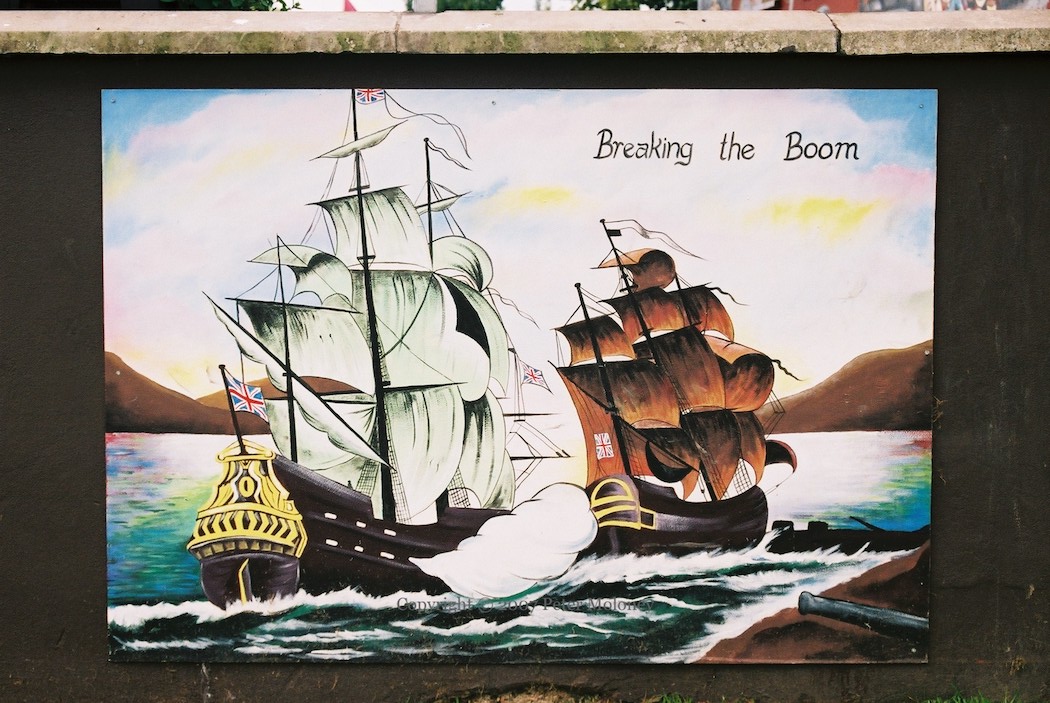
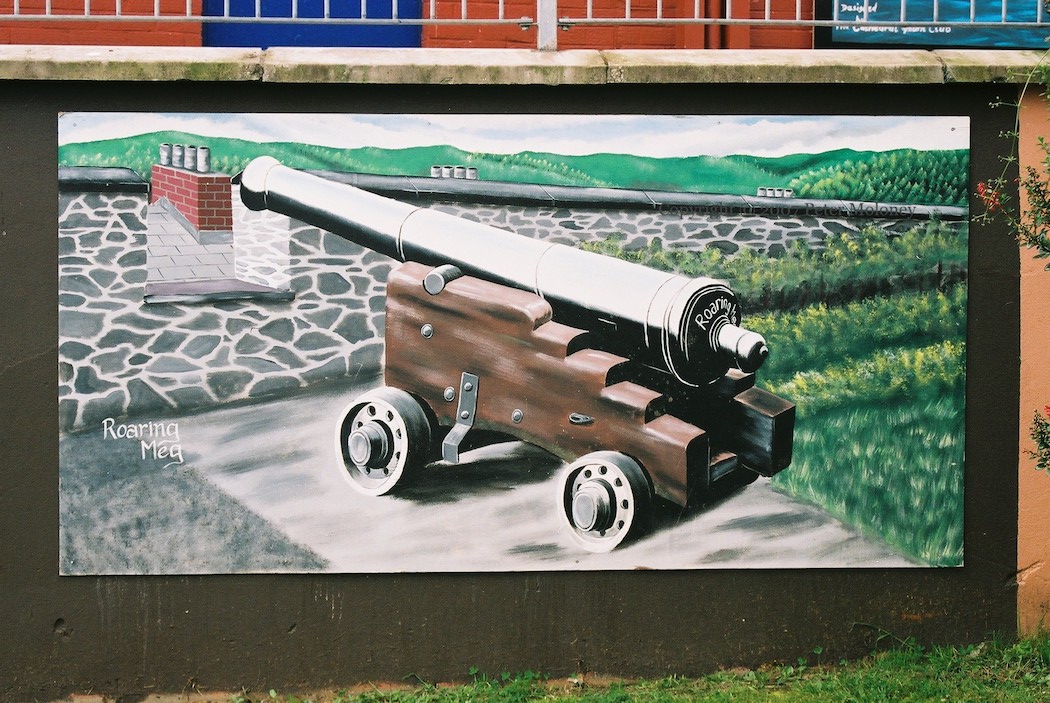
From left to right: the apprentice boys crying “No surrender!”; the breaking of the boom; the Guild Hall; Walker’s statue; and Roaring Meg, a cannon in the Double Bastion. Dopey Dick, the orca, is on the wall of the building to the right (see the news report in the Digital Film Archive).

These are paintings on boards, replacing the five wall-paintings seen in 2005.

Outside the Cathedral Youth Club in the Fountain.

Click image to enlarge
Copyright © 2007 Peter Moloney
M03913 M03912 M03911 M03910 M03909 M03914
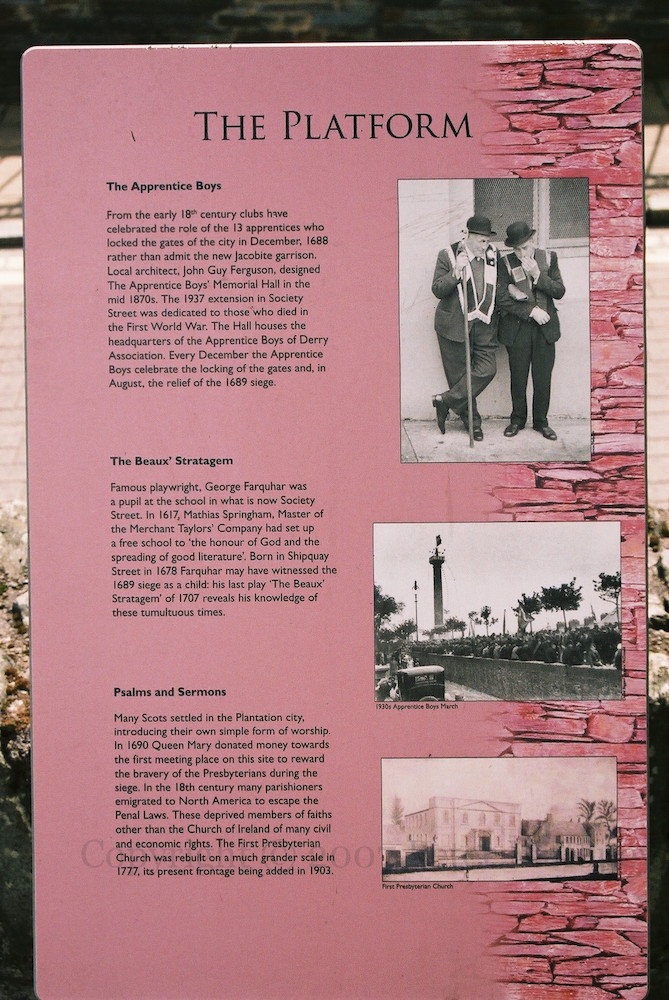
The Platform

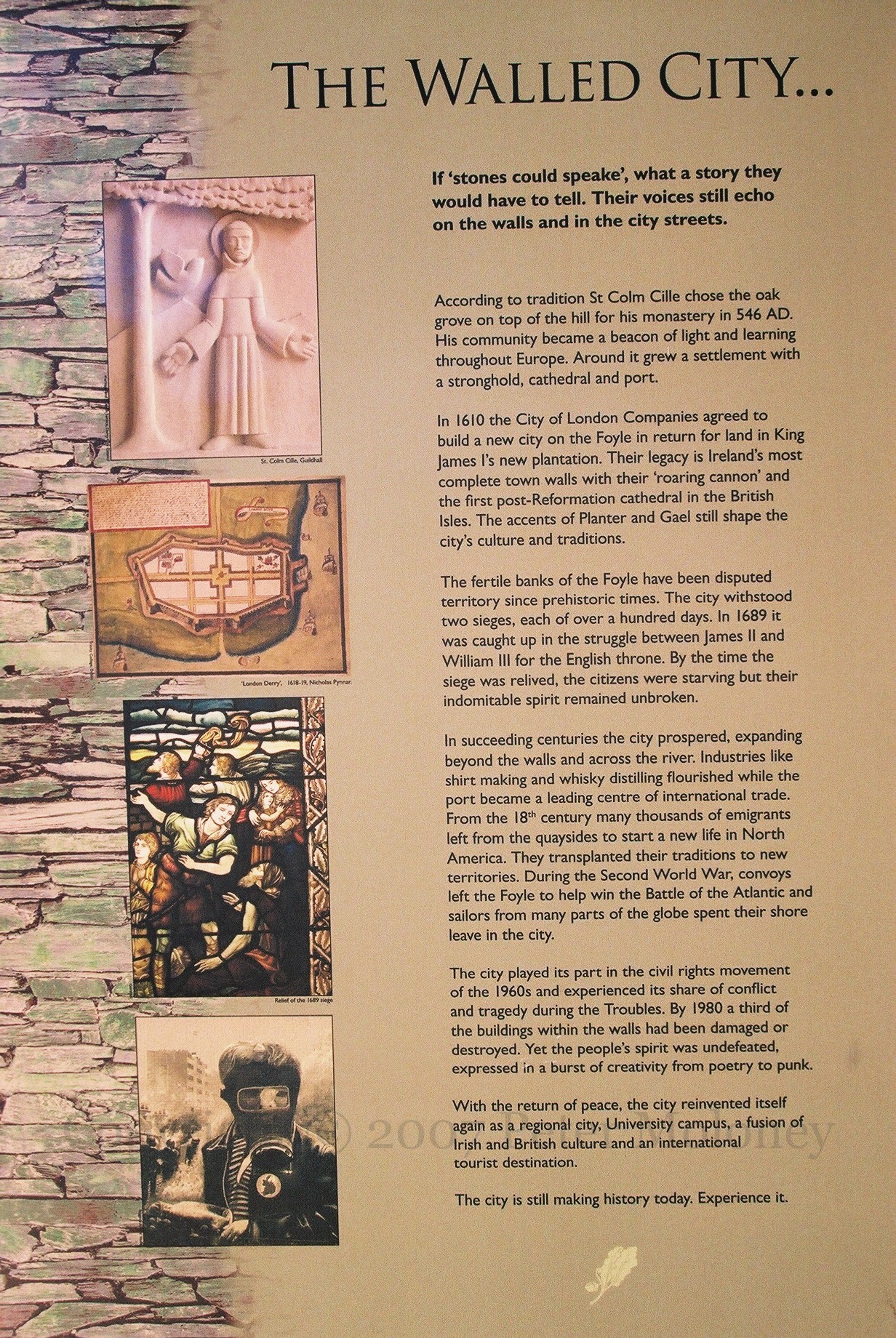
One of the tourist information boards along with walls of Derry; this one describes the history of the area around the Presbyterian church and the Apprentice Boys Memorial Hall, including George Farquhar and his play The Beaux’ Stratagem. The platform in question is not a viewing platform for Orange parades but a gun platform in the walls of Derry.

Magazine Street Upper, Londonderry

Click image to enlarge
Copyright © 2007 Peter Moloney
M03868 [M03867]

The People’s Gallery

The People’s Gallery is a series of murals by the Bogside Artists along Rossville Street and Lecky Road in Derry. Although the sign says there are 12 murals, at the time there were in fact only 11 (as this page at the official web site says), though a twelfth would be added in 2008. For images of all 12 murals, see the Gallery’s Visual History Page.

Click image to enlarge
Copyright © 2007 Peter Moloney
M03920

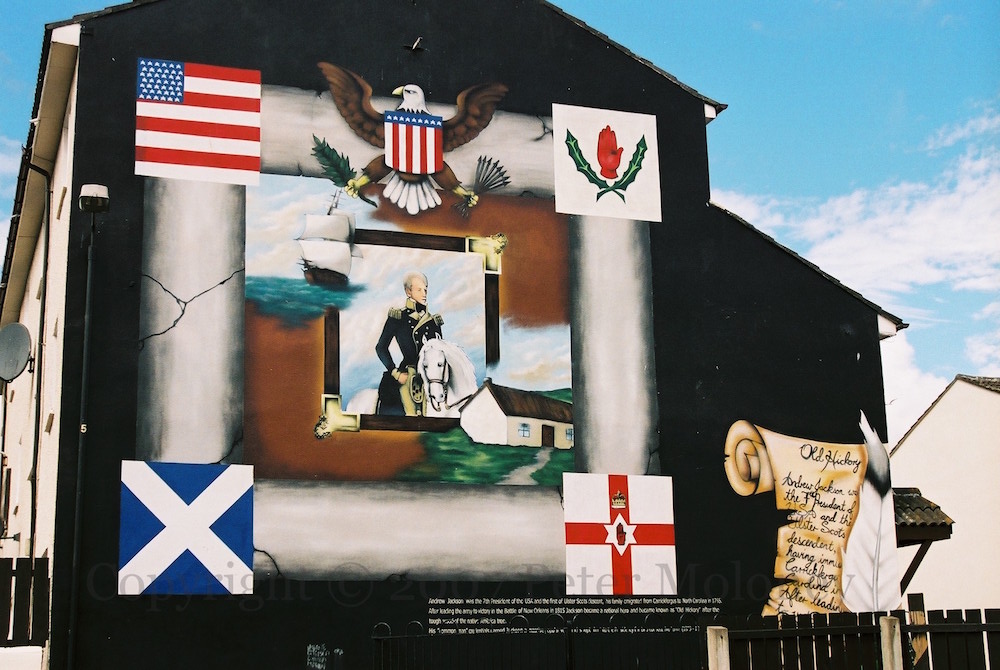
Andrew Jackson

The information along the bottom reads: “Andrew Jackson was the 7th President of the USA and the first of Ulster-Scots descent, his family emigrated from Carrickfergus to North Carolina in 1765. After leading the army to victory in the Battle Of New Orleans in 1815 Jackson became a national hero and became known as “Old Hickory” after the tough wood of the native American tree. His “common man” credentials earned Jackson a massive popular vote and swept him into the Presidency for two consecutive terms (1829-1837).” He also hated the British, owned slaves, and signed the Indian Removal Act of 1830, which led to the infamous “Trail of Tears” (Irish Times).

See also the Visual History page on Ulster-Scots murals.

Click image to enlarge
Copyright © 2007 Peter Moloney
M03818cr M03819 [M03817]

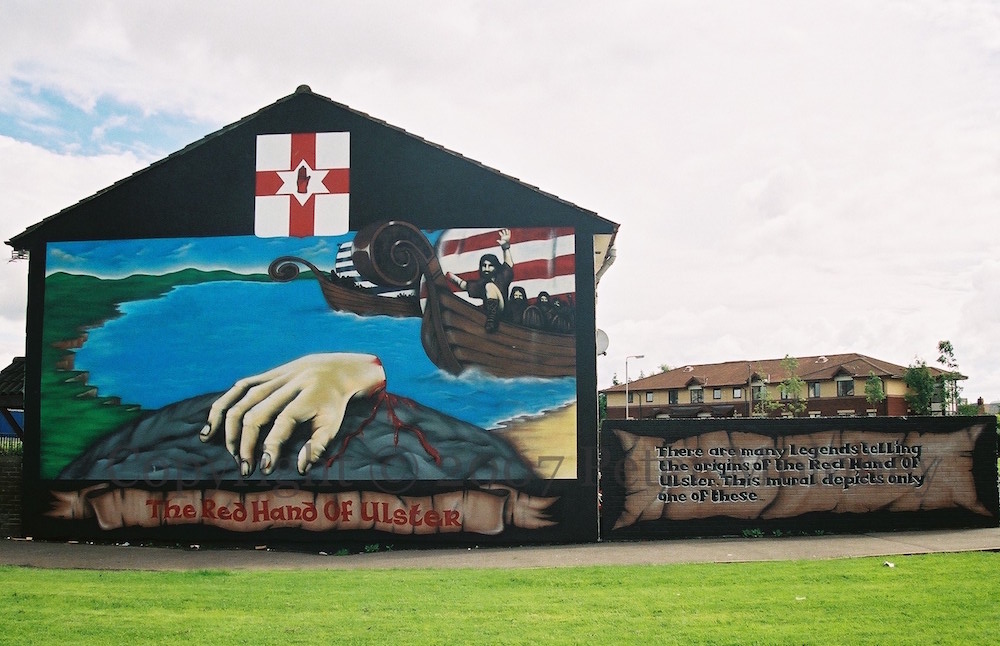
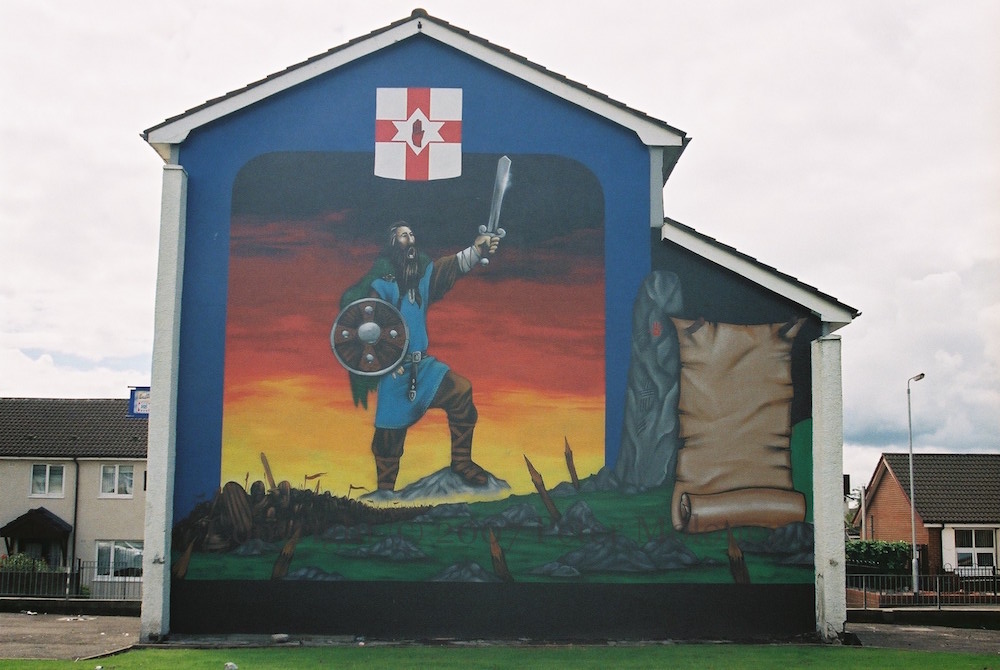
The Red Hand Of Ulster

“There are many legends telling the origins of the Red Hand Of Ulster. This mural depicts only one of those.” In this case, the myth is that Ulster was offered as a prize to whoever could reach it first and was won by throwing a severed hand onto the shore.

Replaces the Lower Shankill UFF mural (M02478).

Click image to enlarge
Copyright © 2007 Peter Moloney
M03814 [M03816] [M03815]