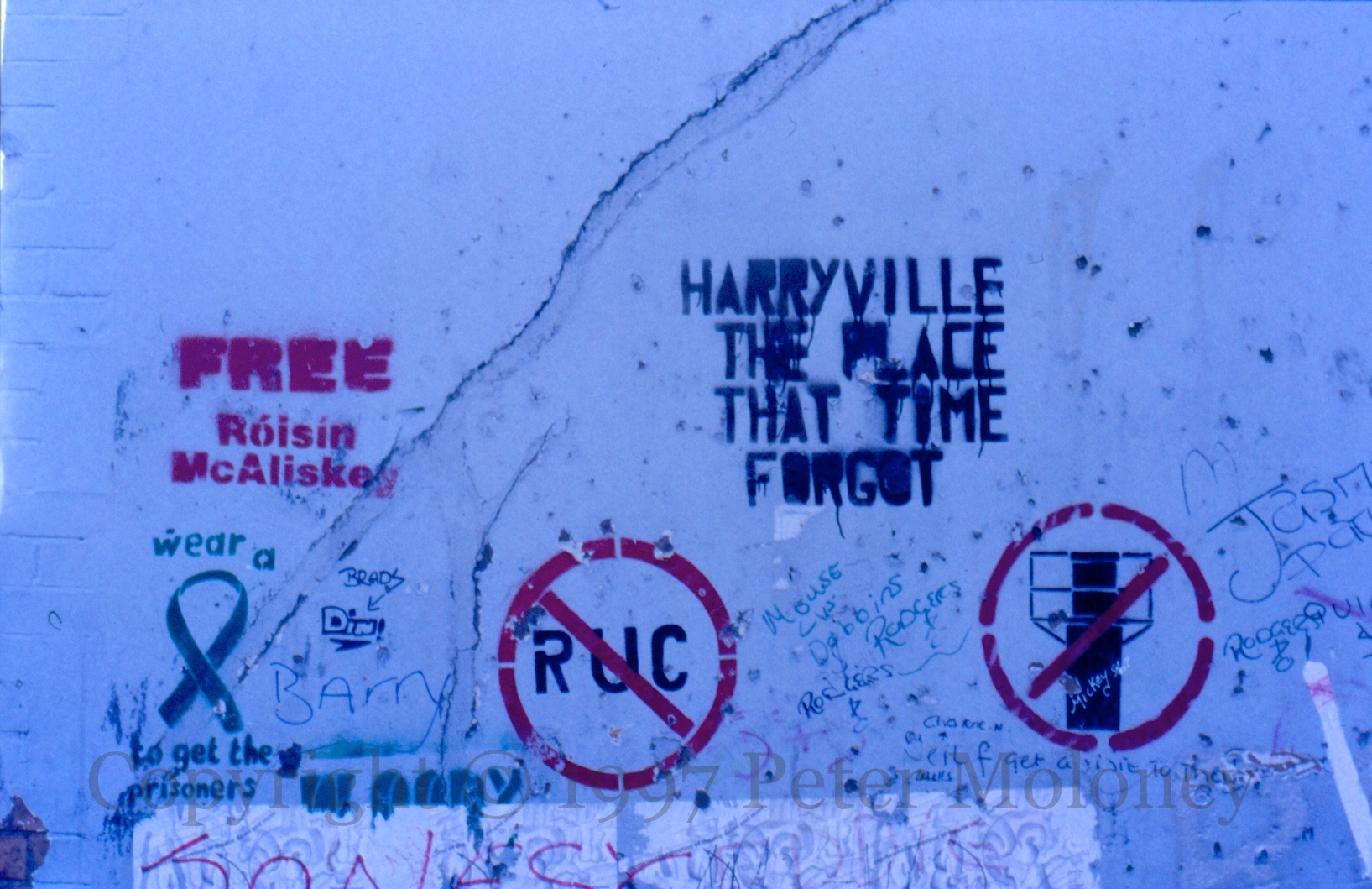
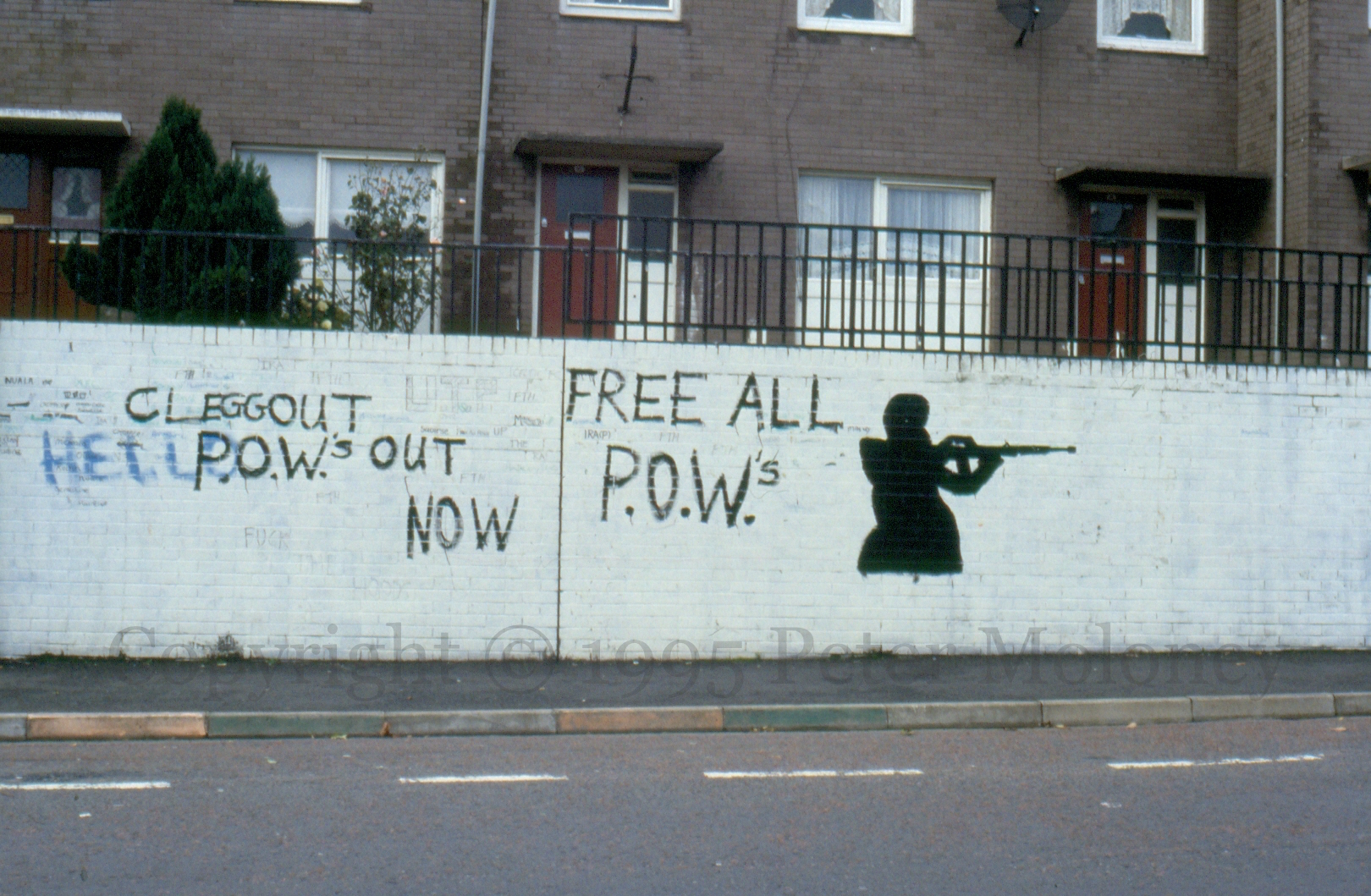
Harryville is an area of Ballymena with a small Catholic population which needed police protection to attend mass. The Independent called it “the town where hatred burns stronger than hope“. With “No RUC”, “No watch towers”, “Free Róisín McAliskey“, and a green ribbon for the campaign to free POWs.
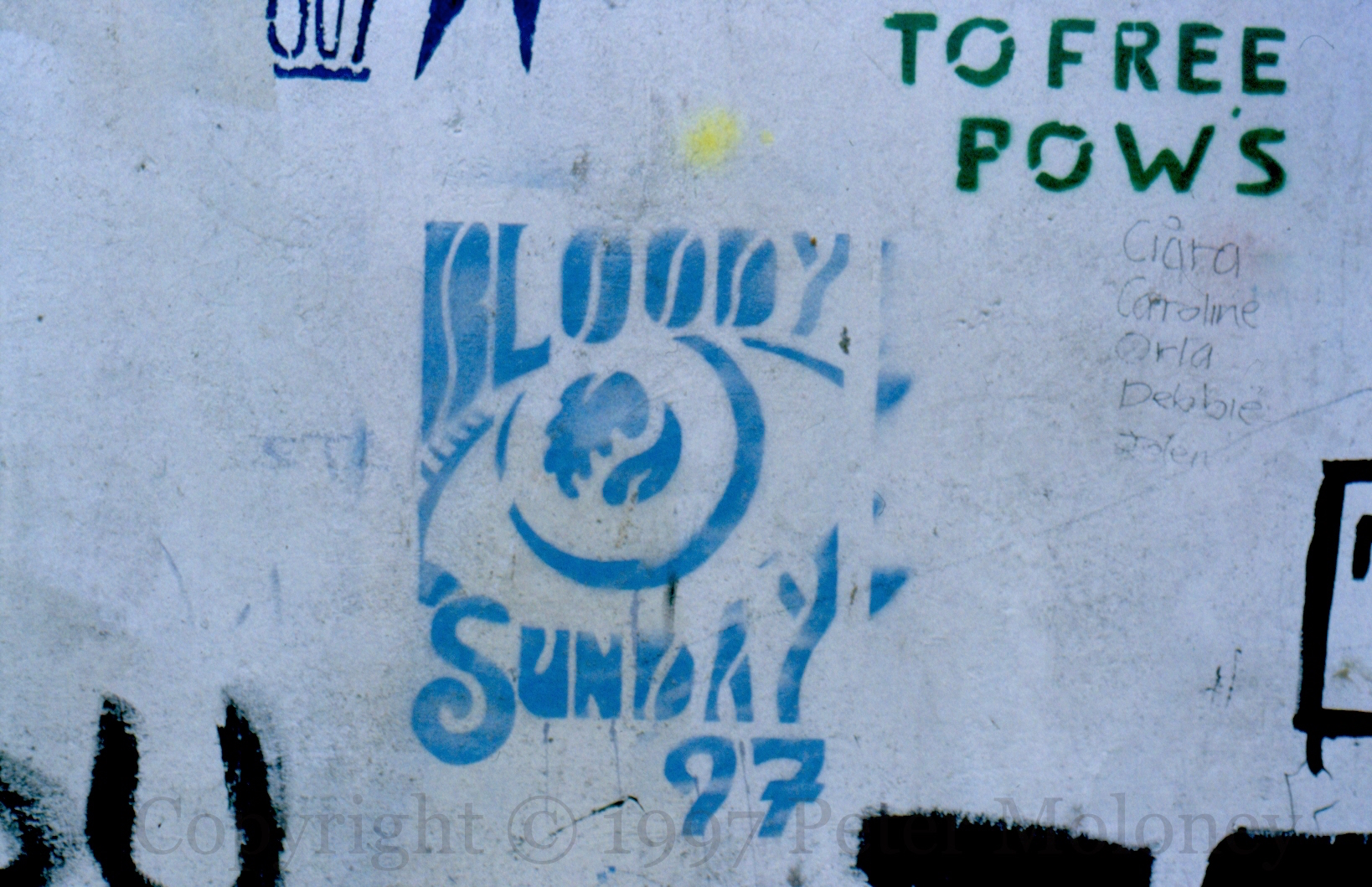
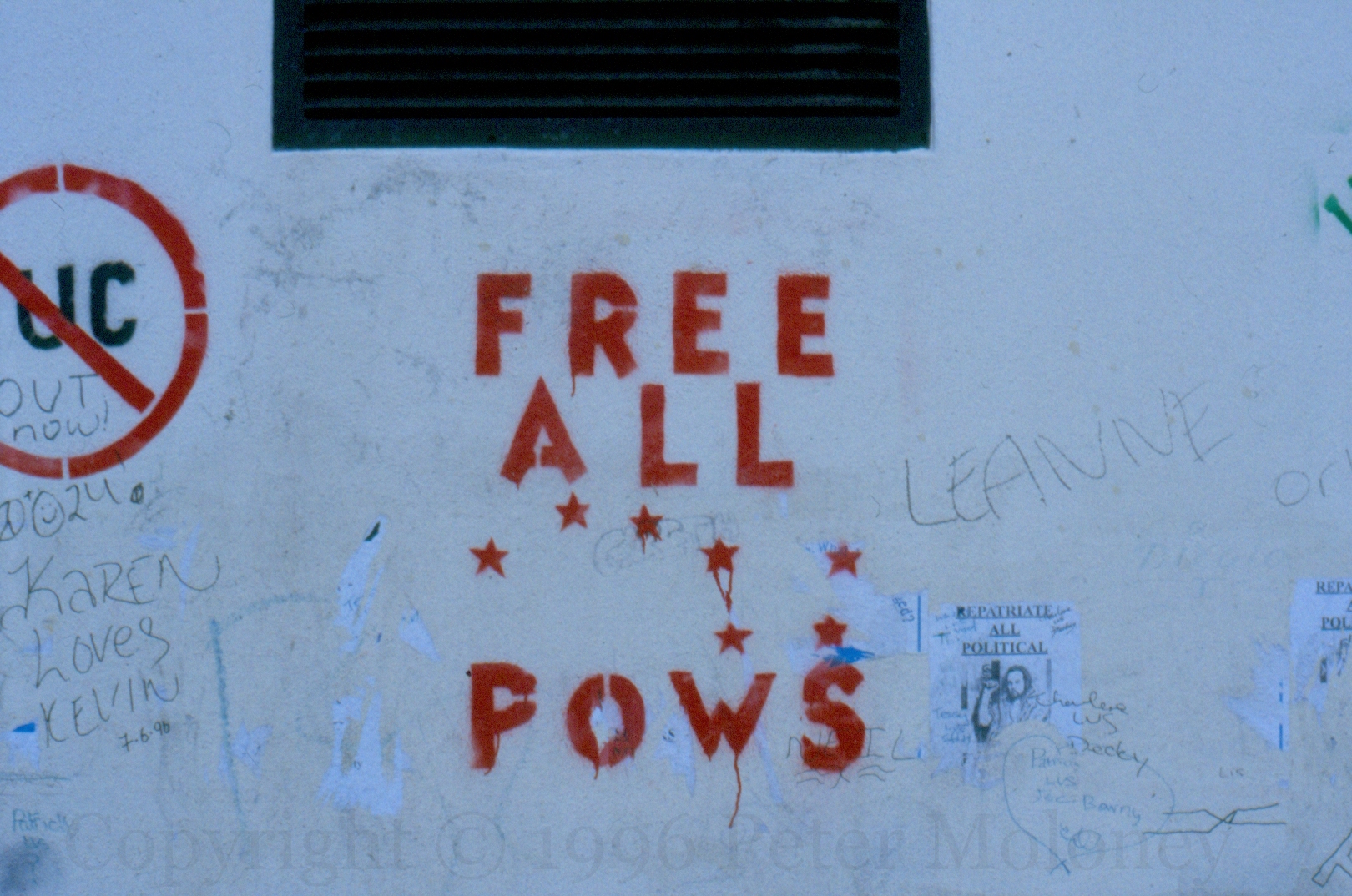
Stencils in Lecky Road, Derry. Above, a giant eye for the 25th anniversary of Bloody Sunday. Below, “Free Róısín McAliskey”. McAliskey (daughter of Bernadette Devlin McAliskey) was arrested in 1996 in connection with an attack on a British Army base in Germany and held until March 1998. The “No RUC” features a skeleton and appears to be hand-drawn.
Freedom (“saoırse”) for all political prisoners in English, German (“Lasser sie alle politische gefangener jetzt frei”), and French. With images of Long Kesh and Armagh.
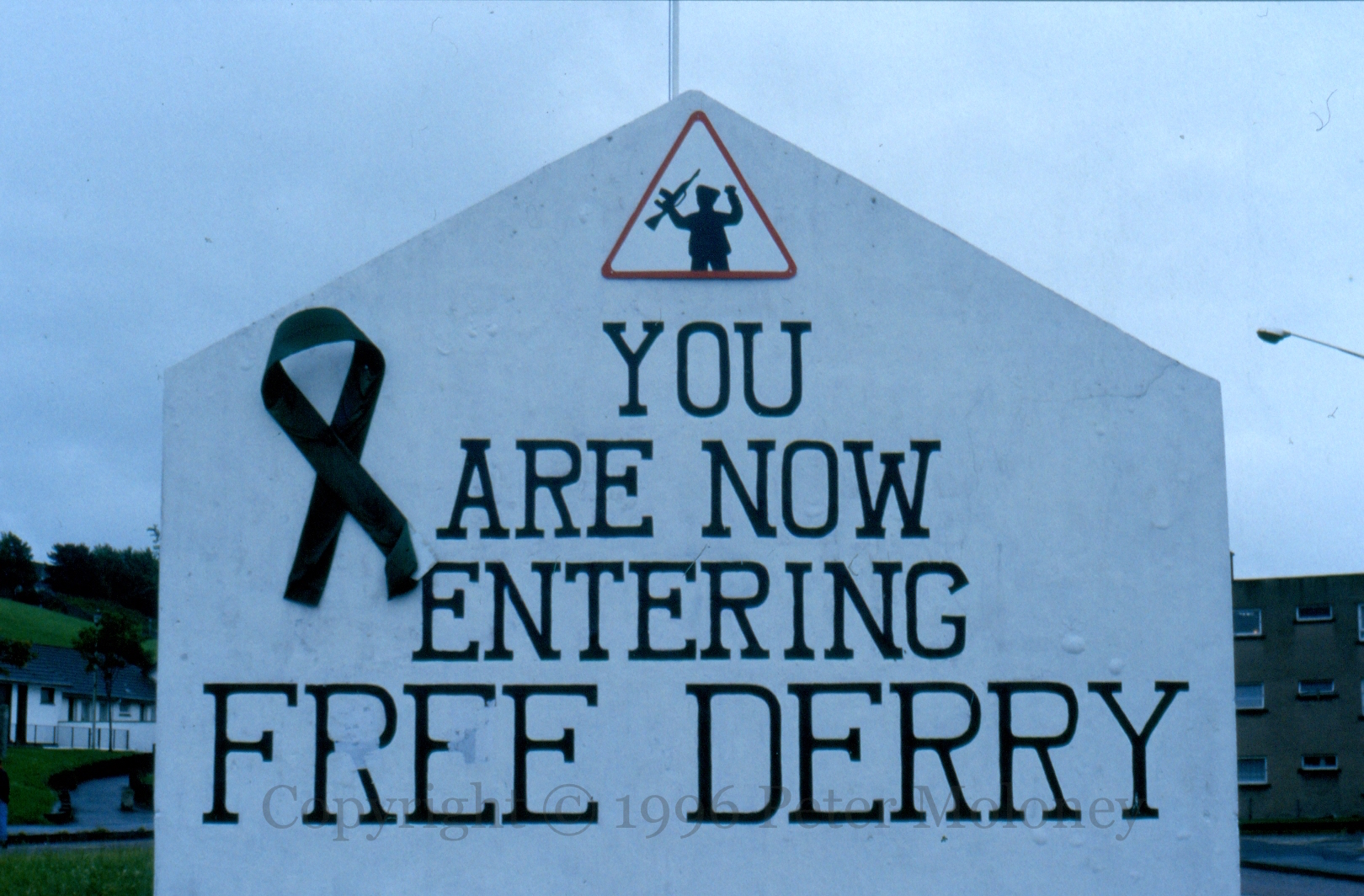
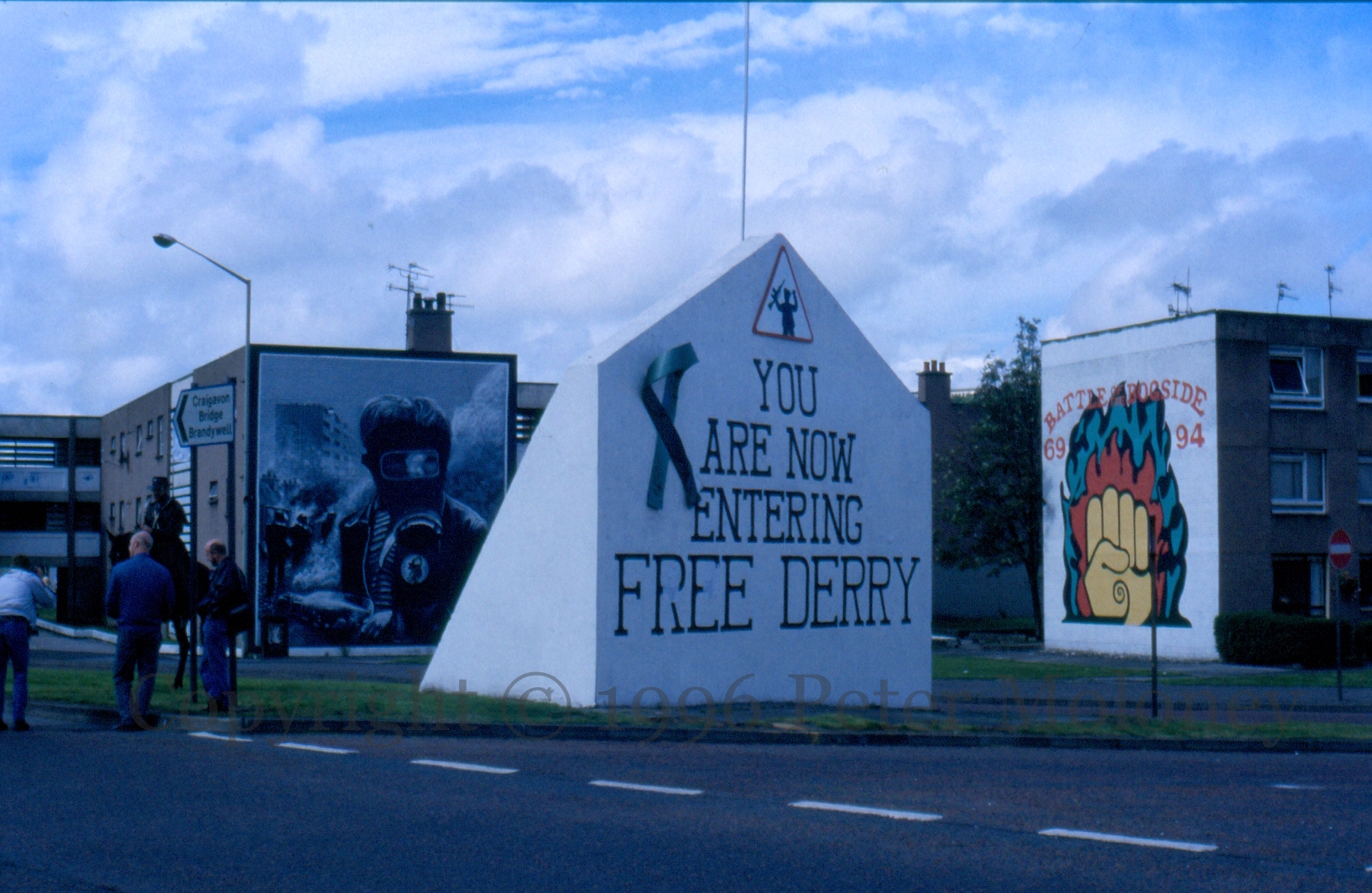
Free Derry Corner with both a green ribbon for the release of POWs, and a celebrating volunteer on a red triangle (warning) road sign. Visible in the wide shot are The Petrol Bomber and Battle of the Bogside.
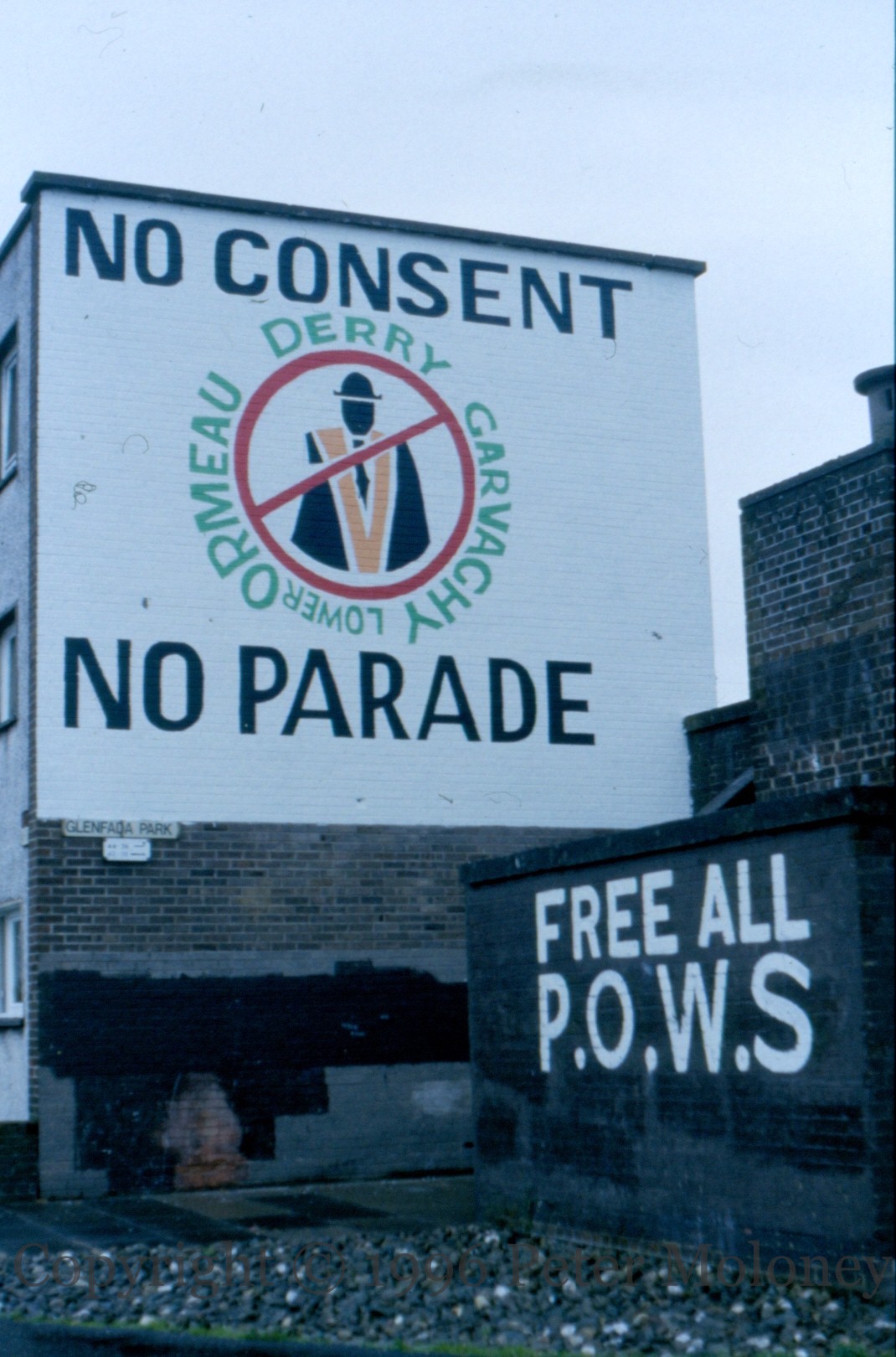
Parading was the central on-the-ground issue of the post-Agreement years (BBC). Resistance to Orange Order parades marching through CNR areas was led by local groups: in Derry, by the Bogside Residents’ Group, in Portadown, by the Garvaghy Road Residents’ Coalition, and in lower Ormeau by Lower Ormeau Residents Action Group. In each case, residents were appealing directly to the local lodges and to the police. (The Parades Commission would be established in 1998.)
In 1995, there was a three-day stand-off on the Gavraghy Road that resulted in a silent march without bands (CAIN). The police initially re-routed the 1996 march but reversed the decision at the last minute, citing the threat of loyalist violence, and forced residents off the street in order to accommodate the parade.
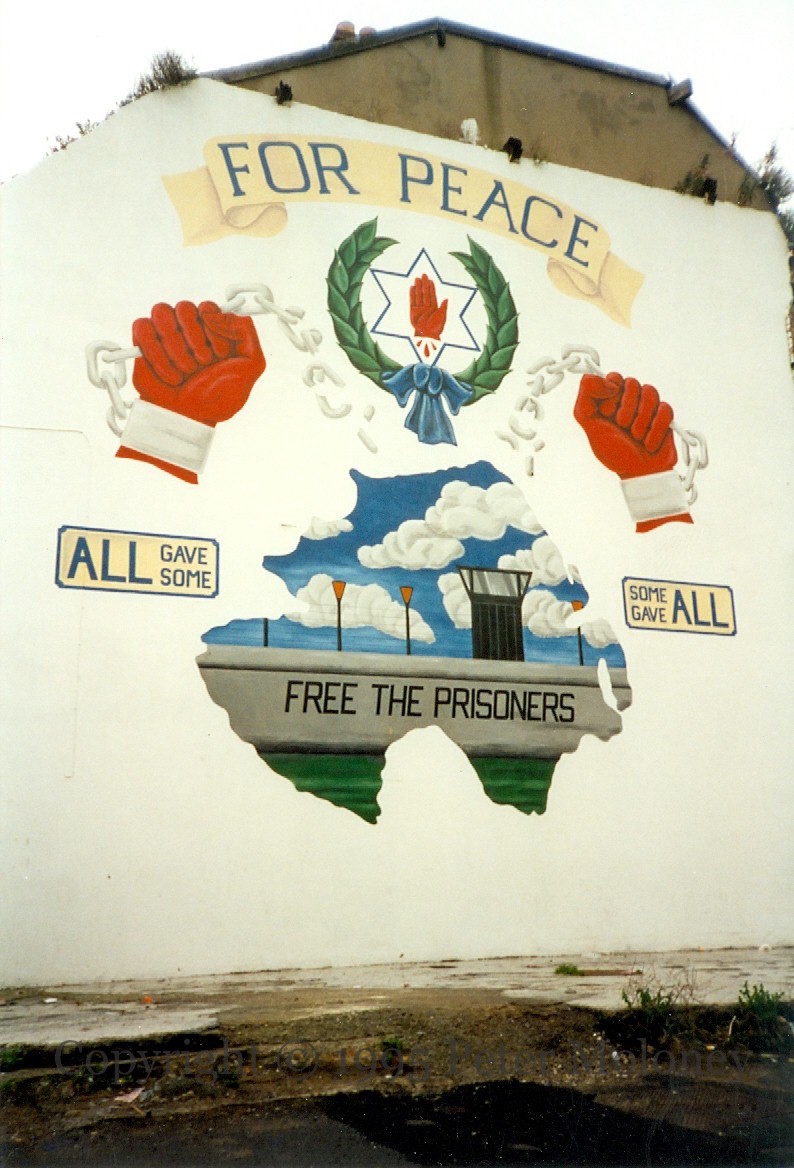
A pair of manacled red fists break free of their chains and the Maze/Long Kesh is depicted in the outline of Northern Ireland. “Free the prisoners”, “All gave some, some gave all.”