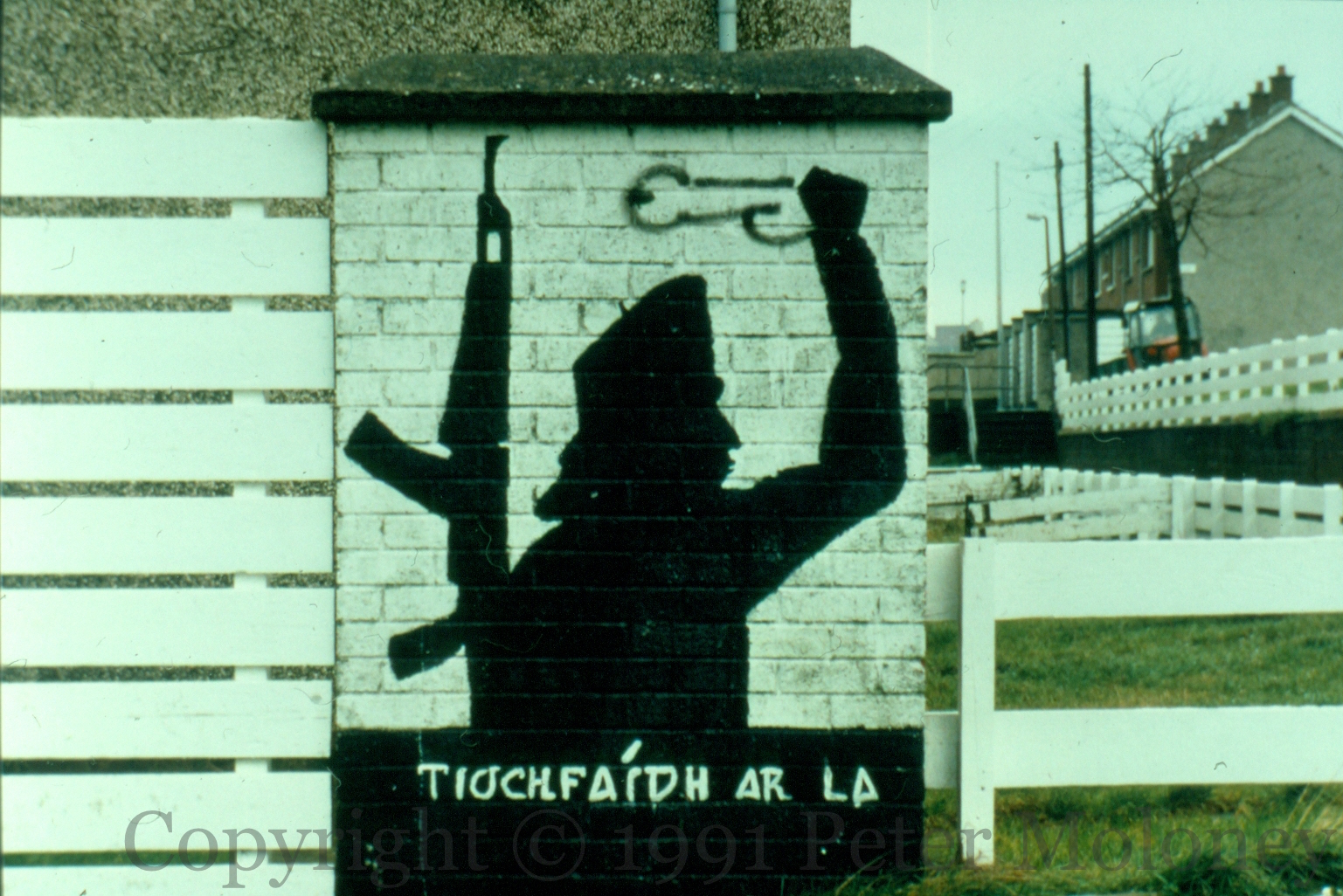
“The weaponry has changed …” from the rifles used by James Connolly’s ICA of 1916 to the AK-47 of the Bobby Sands-inspired IRA of 1991, “… but the cause stays the same.” Both weapons are crossed with the pike of Emmet’s 1798 against a Tricolour. Also present are a hat (see History Ireland) and a beret.
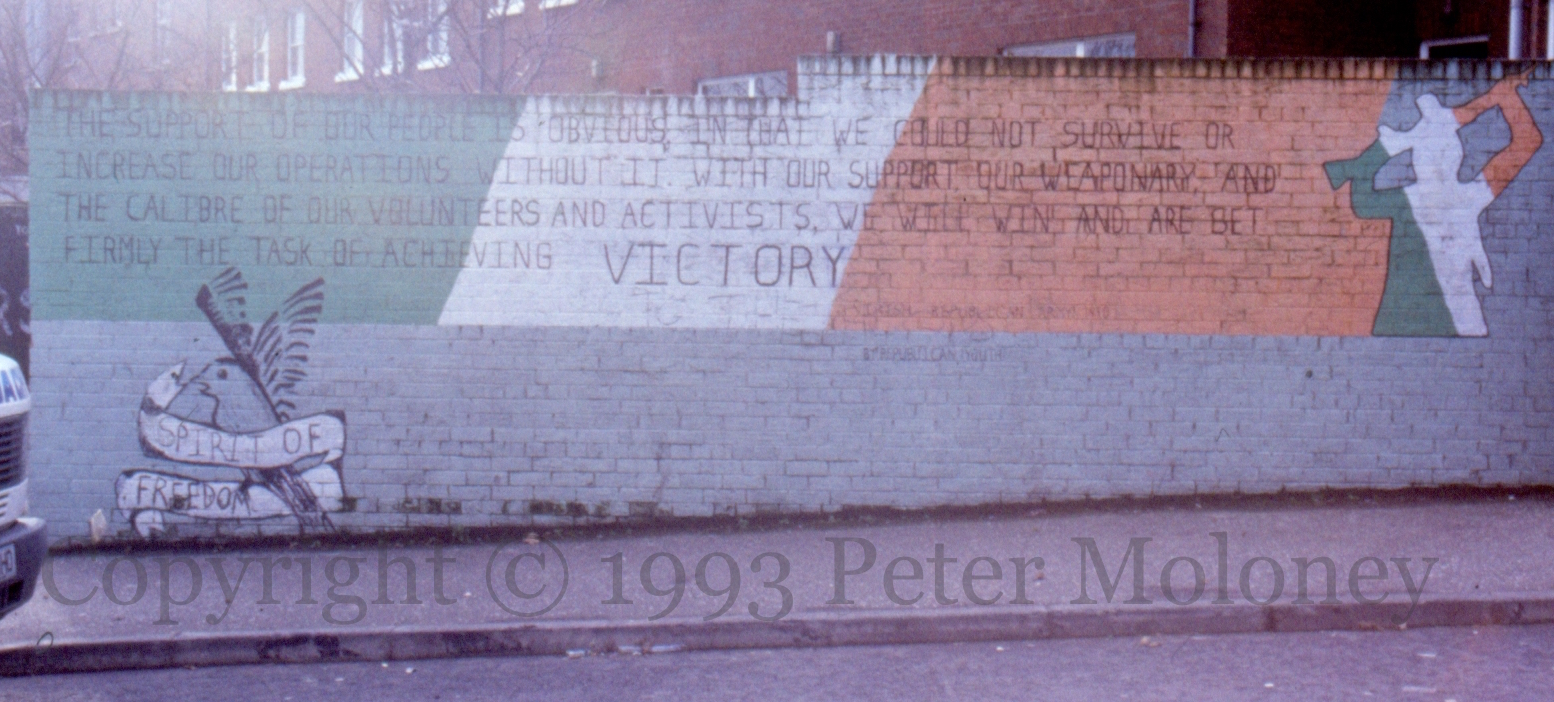
“The support of our people is obvious, in that we could not survive or increase our operations without it. With our support, our weaponry and the calibre of our volunteers and activists, we will win and are set firmly [on] the task of achieving victory.” With the lark as the ‘Spirit of freedom’ and a celebrating volunteer in the tri-colours. New Lodge Road, Belfast.
Cú Chulaınn (Visual History) – the “ancient defender of Ulster from Irish attacks over 2000 years ago” with Ulster banner shield – is made a precursor of the UDA’s East Belfast Brigade – “Ulsters present day defenders”. The volunteer is – unusually – unmasked; it might be Ian Adamson (a civilian, but here given paramilitary gear) the UUP politician and proponent of the hypothesis that north-east Ulster was settled by settlers from Scotland – the Cruthin – who were at war with the Irish Gaels and that the Táın describes part of this conflict, with Cú Chulaınn the hero of Ulster single-handedly holding off the invaders from Connacht (WP).
Newtownards Road, Belfast.
This is the third gable on the so-called “Freedom Corner” (though it is not clear that it bore this name at the time of this image); here is the second gable (which in turn links to the first). A fourth gable was painted in 1993.
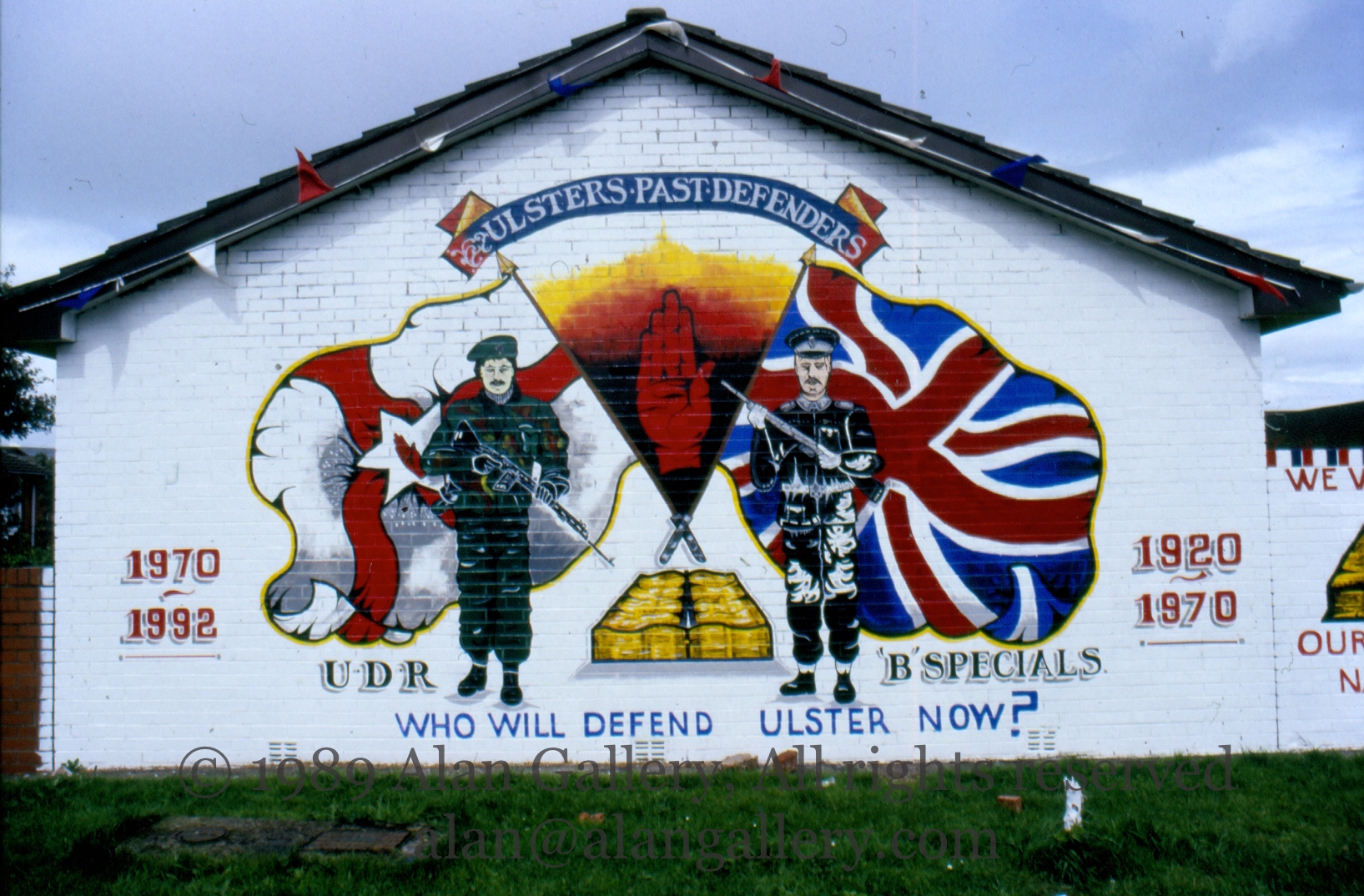
In 1992 the Ulster Defence Regiment (UDR) – which itself replaced the B Specials in 1970 – was amalgamated with the Royal Irish Rangers to become the Royal Irish Regiment. Although seven battalions of the new RIR were permanently based in Northern Ireland, the mural above describes the two organisations as “Ulster’s Past Defenders” and asks “Who will defend Ulster now?”
This is the second gable on the so-called “Freedom Corner” (though it is not clear if it bore this name at the time of this image); here is the first gable | the low wall between the second and third gable can be seen in D00391 | here is the third gable.
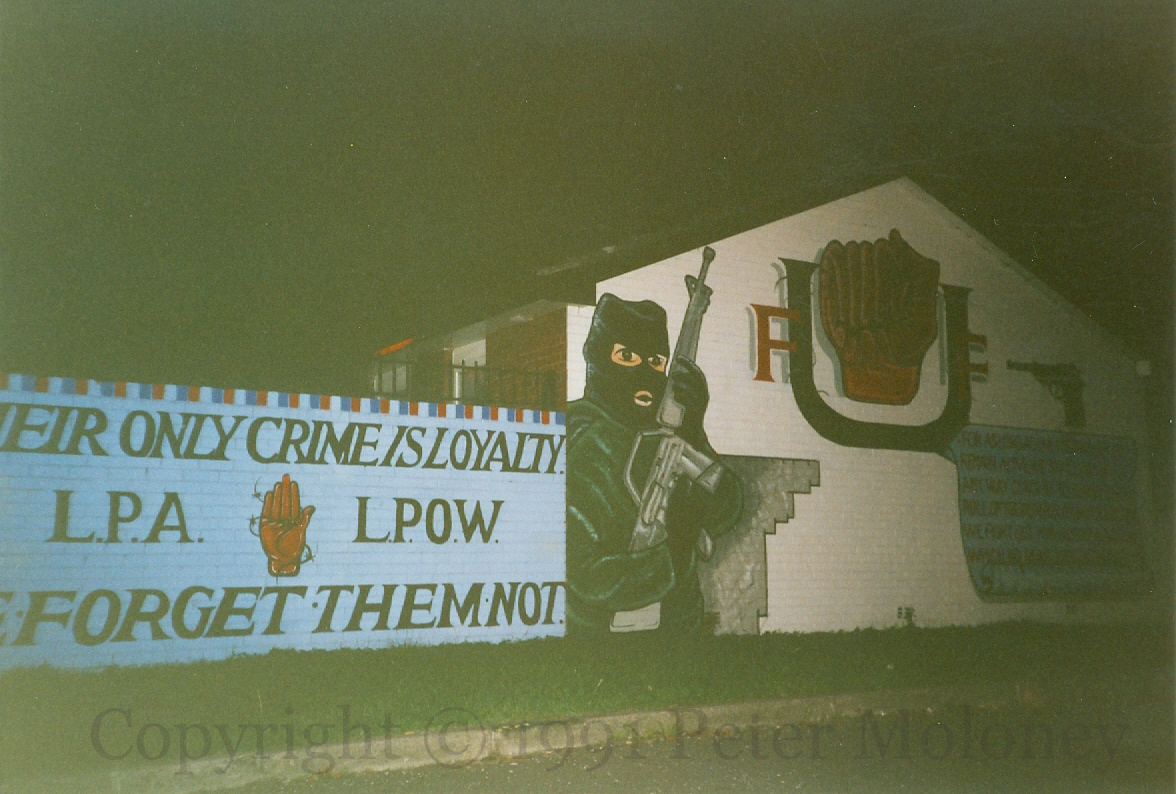
UFF and LPA/LPOW mural on Newtownards Road with masked volunteer and rifle, with the “U” in barbed wire. (The words “East Belfast Brigade” would later be added in the middle.) With a quote modelled on the Declaration of Arbroath: “For as long as one hundred of us remain alive we shall never in any way consent to submit to the rule of the Irish, for it is not for glory we fight but for freedom alone which no man loses but with his life.” (Originally, “for, as long as but a hundred of us remain alive, never will we on any conditions be brought under English rule. It is in truth not for glory, nor riches, nor honours that we are fighting, but for freedom – for that alone, which no honest man gives up but with life itself.”)
This is the first gable on the so-called “Freedom Corner” (though it is not clear if it bore this name at the time of this image); here is the next gable.
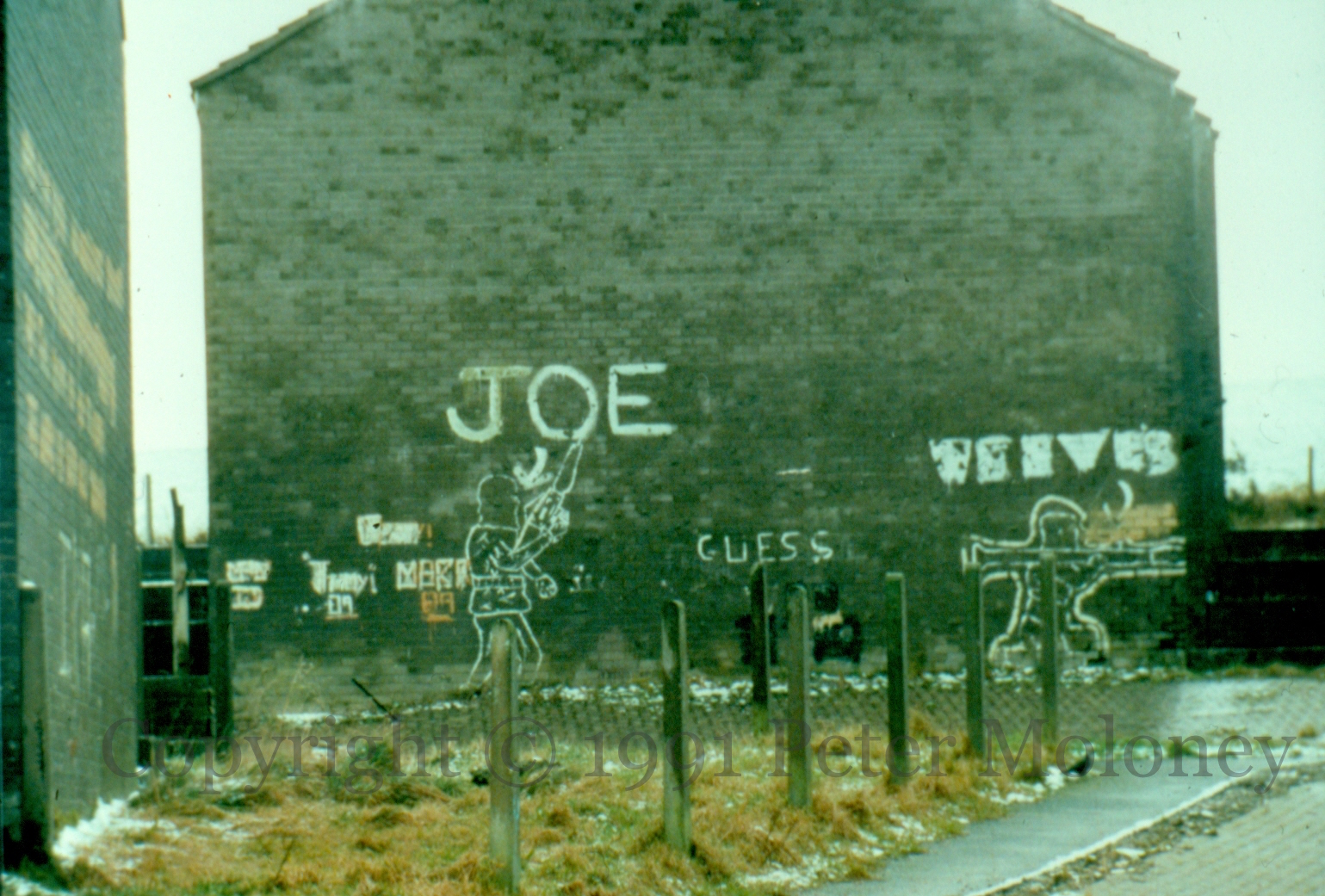
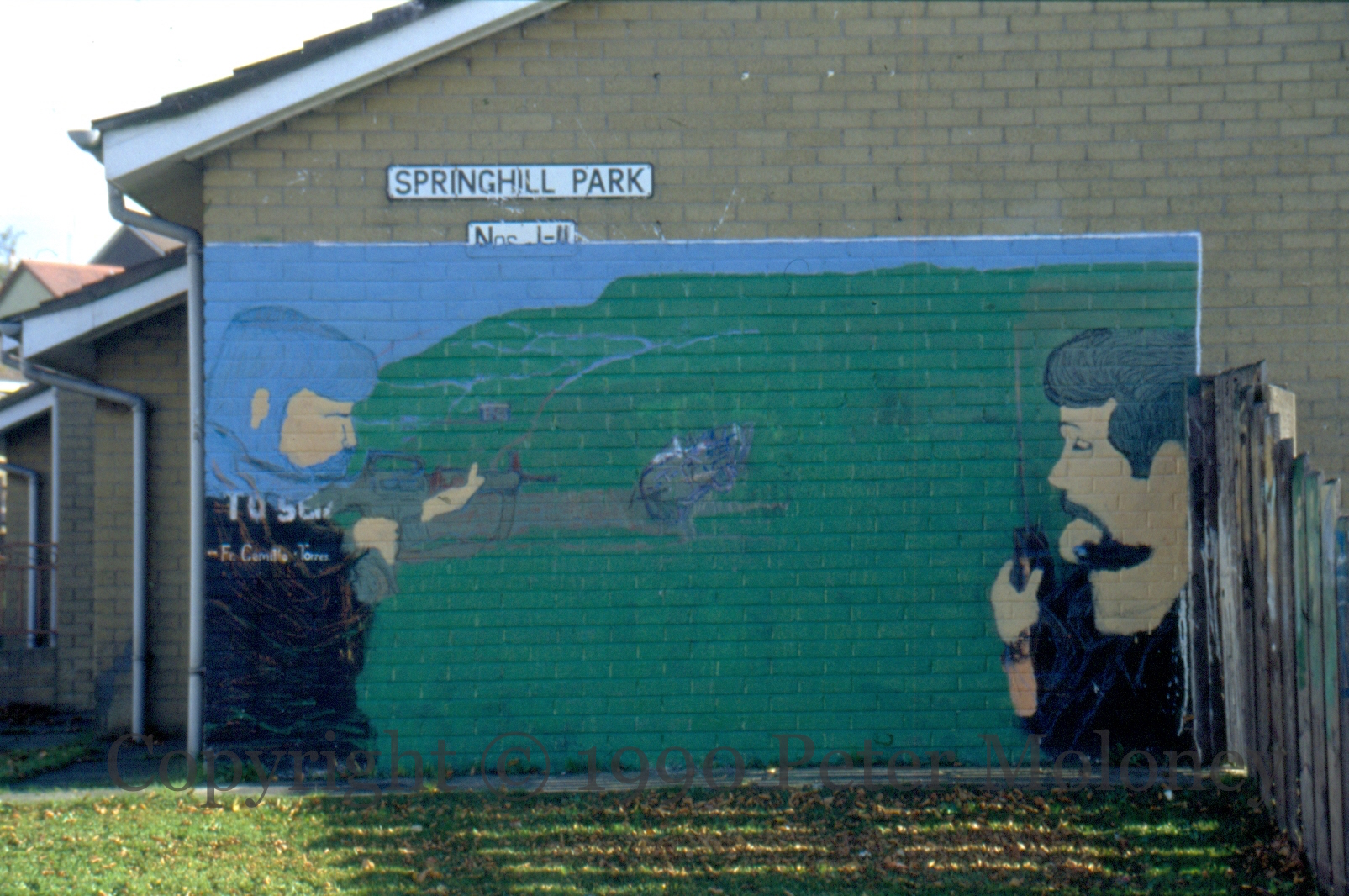
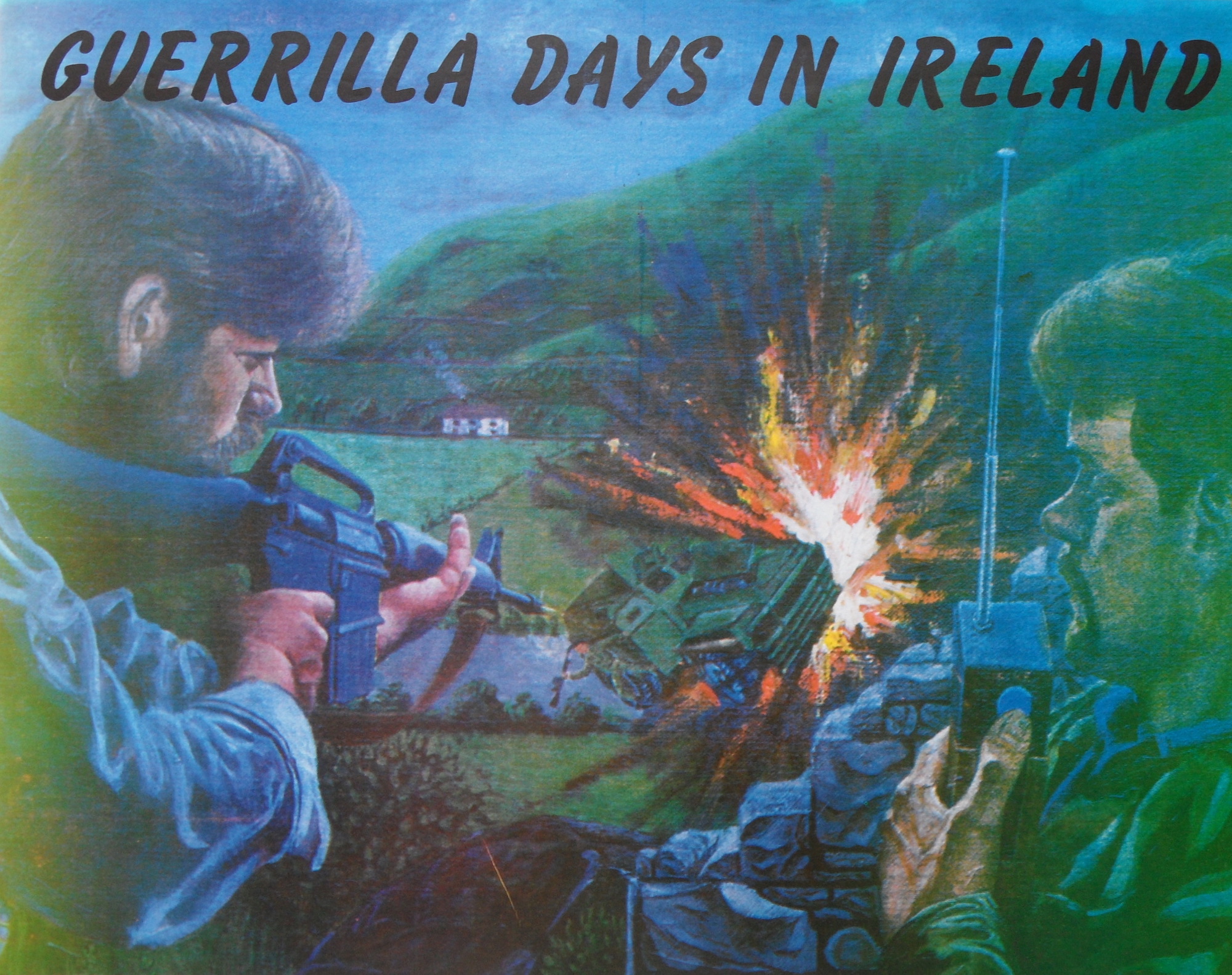
The previous mural (Sieze Power) can still be seen in the lower left-hand corner of this unfinished mural in Springhill Park, Strabane. The volunteer on the right appears to be holding (uniquely in north of Ireland muraling) not a rifle but a walkie-talkie or perhaps a radio control device for an explosive. The mural attempts to recreate a painting by Lucas Quigley from 1989 (below), here given the same title – “Guerilla Days In Ireland” – which was used for Danny D’s earlier poster (muralised in Derry and in Belfast) (and which was also the name of Tom Barry’s account of the War Of Independence).