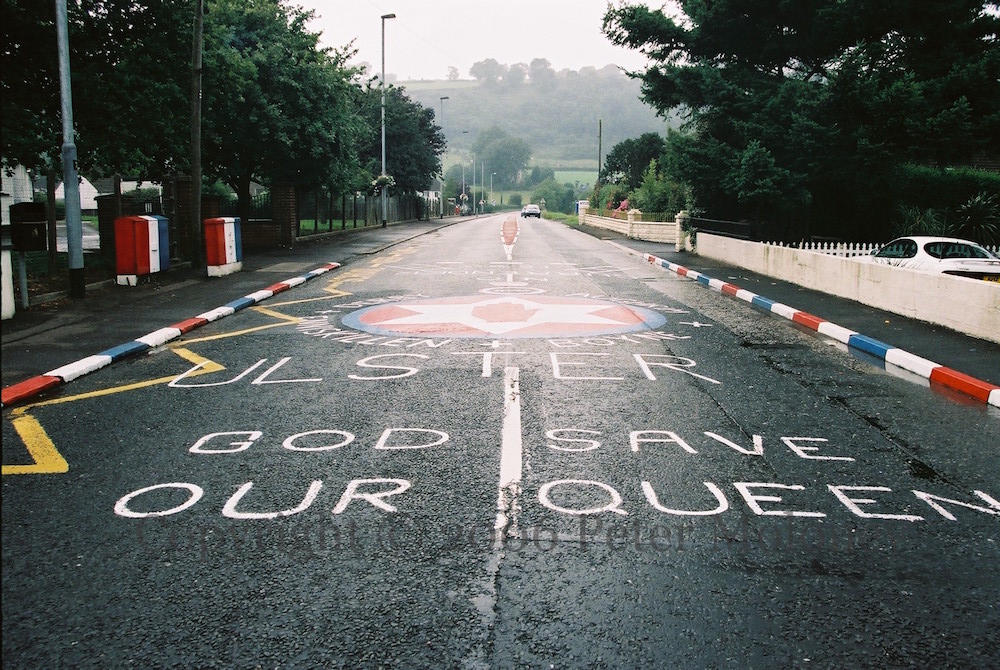
This is a two-sided piece of road-work on Main Road, in Glynn, that can be approached from either direction. Heading north (towards Larne) you see “God save our queen” and going south (towards Magheramorne and Whitehead) “No surrender 1690” with Orange Order symbols crown, key, and ladder, and a list of Williamite battles: Derry, Enniskillen, Boyne, Aughrim.
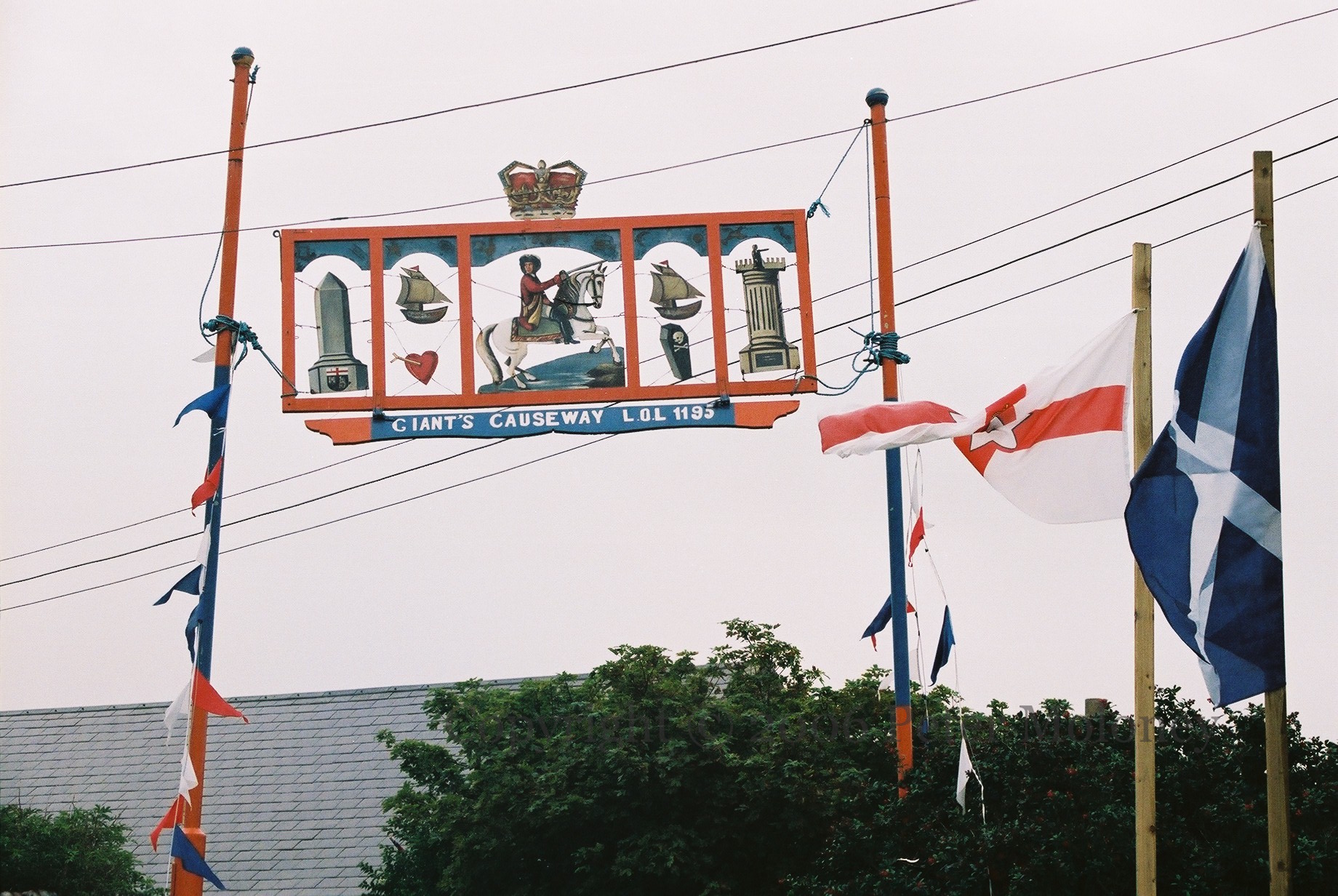
The parts of this Ballintoy Orange Order march are cut-outs suspended within the frame by wire. From left to right can be seen a cenotaph with the crest of Londonderry, a ship and a pierced heart, King Billy on his horse, a ship and a coffin with skull and cross-bones, Walker’s statue.
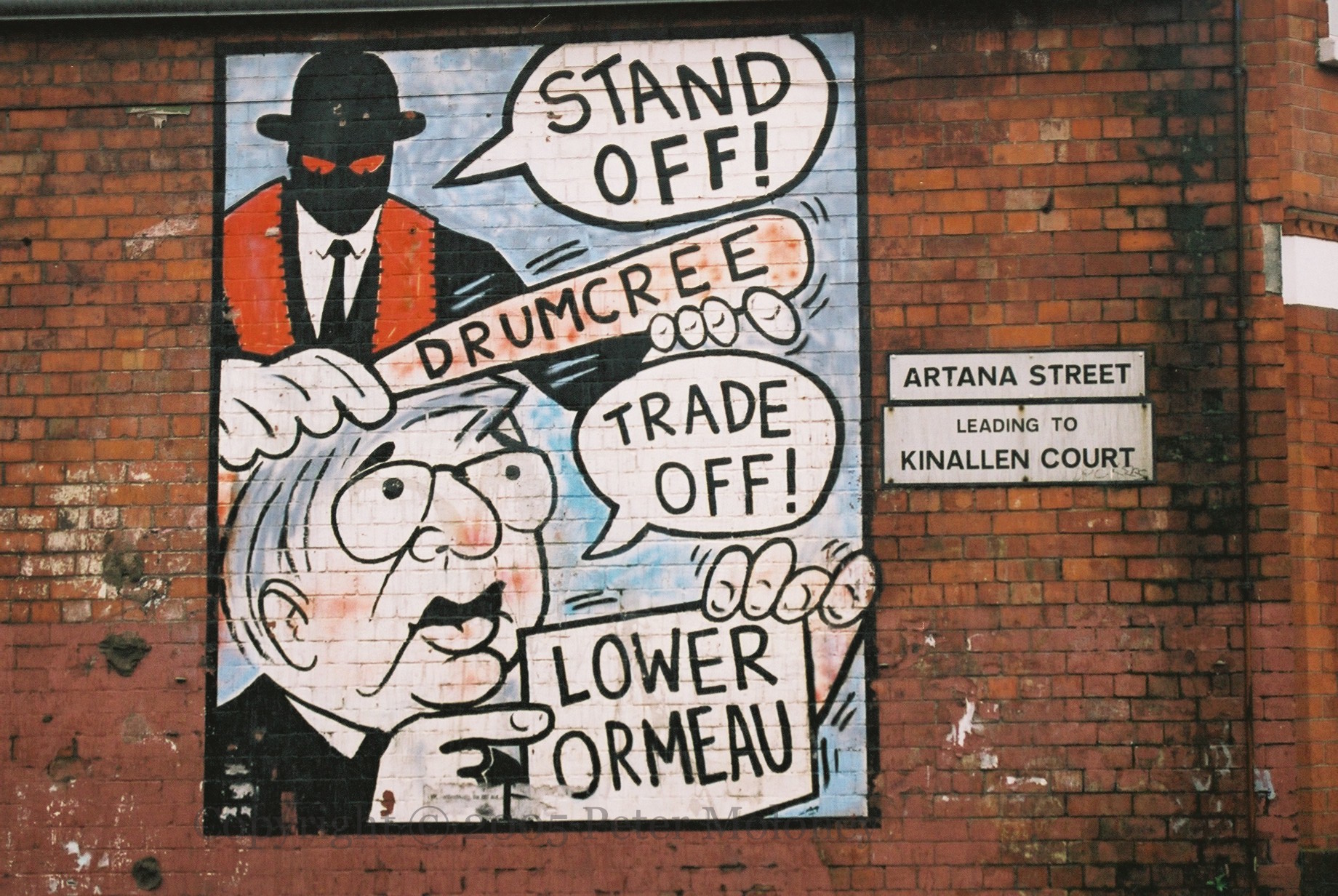
The “stand-off, trade-off” mural reappears in Artana Street, Belfast, previously covered by Stand Firm. The mural dates to 1998, when an Orange Order march was allowed to parade along Ormeau Road. Parades Commission chairman Alistair Graham (pictured in the mural beneath the evil-eyed OO member) “insisted that the Ormeau Road decision “was not a simple trade-off for our earlier decision on Drumcree”” (Irish Times). Painted by Troy Garity, recreating an Ian Knox cartoon (Belfast Media).
“We demand the right to march.” “Portadown District LOL No 1” “Here we stand, we can do no other.” This mural in the lower Shankill is about the disputed Orange Order parade (WP entry, including a map of the route) to Drumcree Church (in Portadown, shown in the mural) part of which goes along the Catholic Garvaghy Road.
“Dan Winter’s cottage, Co Armagh. Dan Winter was one of the founders of the Orange Order.” “For many, perhaps even most, Orangemen the Order is primarily a religious organisation. As as organisation it is not anti-Roman Catholic; it is a Protestant organisation. The Orange Hall, the meeting place for Orangemen has long occupied a central place in the social life of the community. They serve as venues for a much wider range of gatherings than those, which are strictly Orange. The Orange Order is also a cultural organisation, transmitting a culture and heritage – whether it is banner painting, sustaining a great musical tradition or teachings its ritual – from one generation to the next. It also remains the most cohesive force in Ulster Protestant society and the essential expression of the culture and heritage of the Ulster Protestant people.” Fourth panel on Thorndyke Street, Belfast. With emblem of Pride of the Raven (flute band).
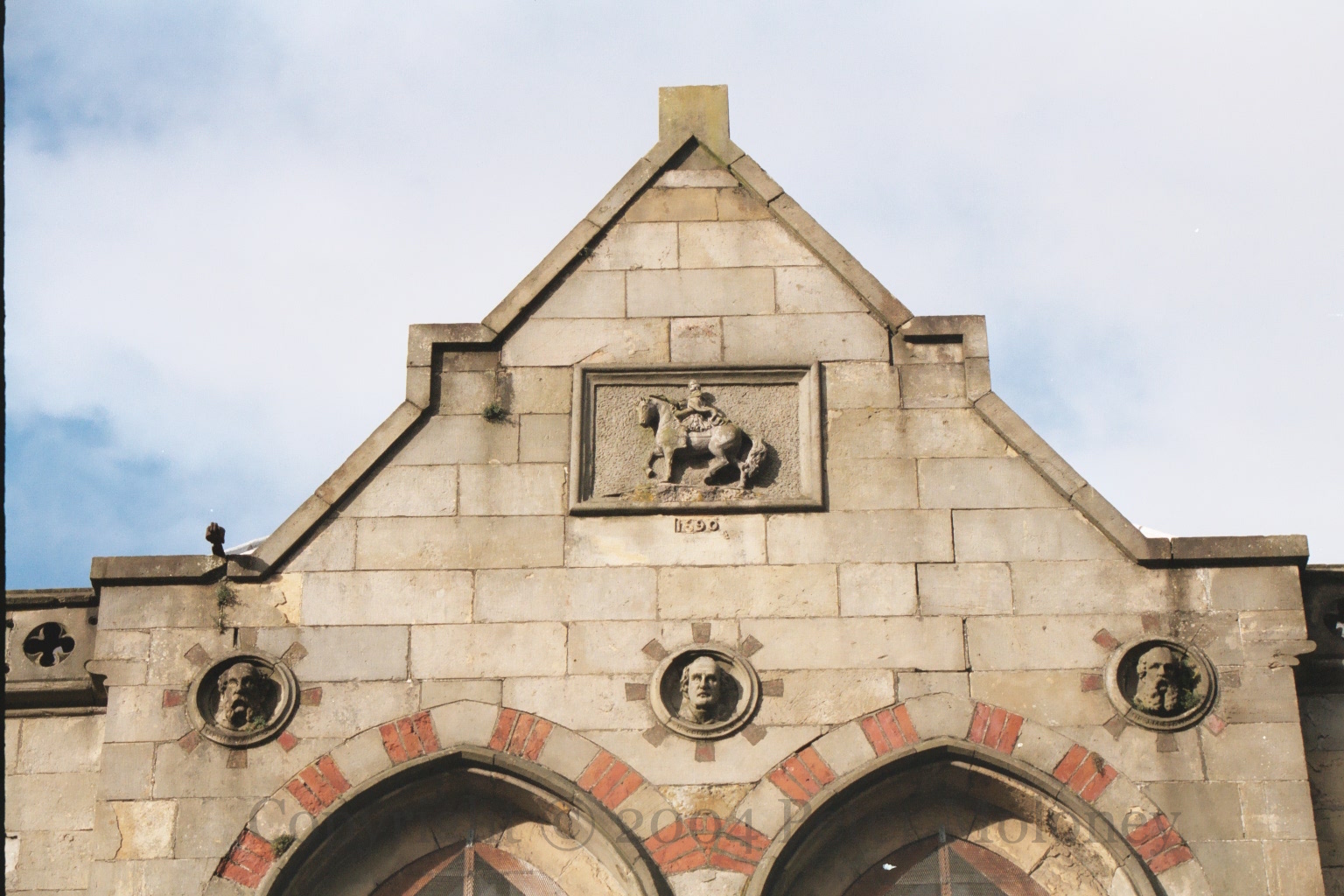
This is the top of the 1869 Orange Hall in Mountjoy Road, Omagh. For architectural information, see Archiseek. The three gentlemen below King Billy are Capt. M. Stewart G.M., H Cooke LLD, and Sir J.M. Stewart.




 Peter Moloney Collection