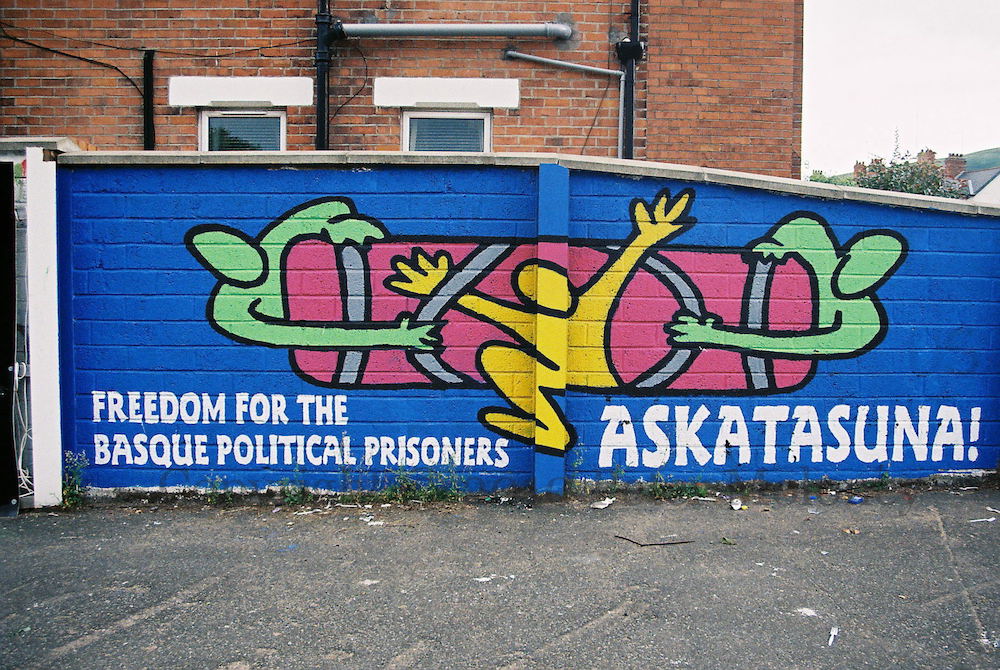
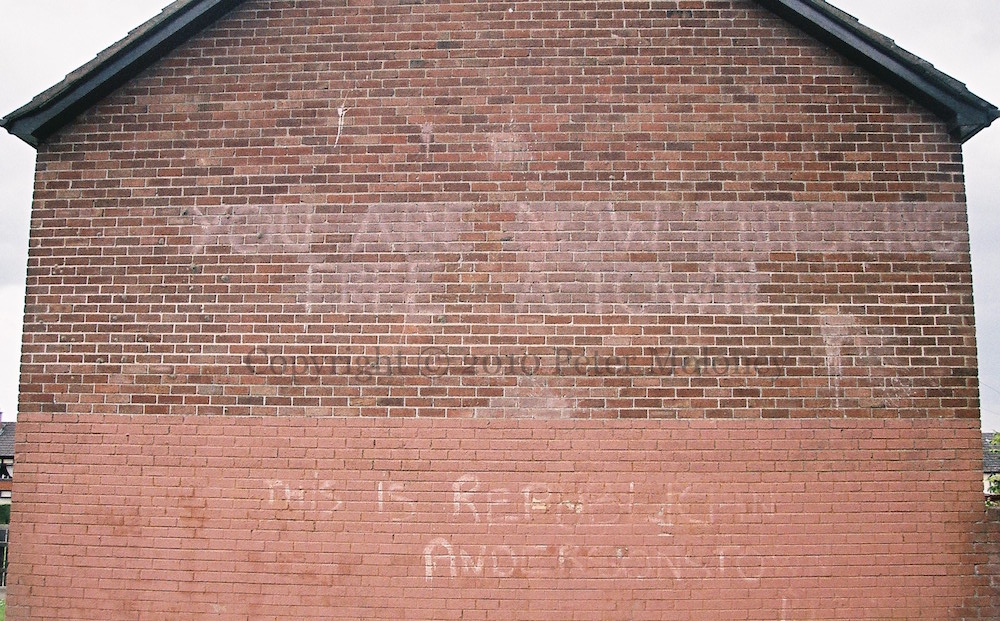
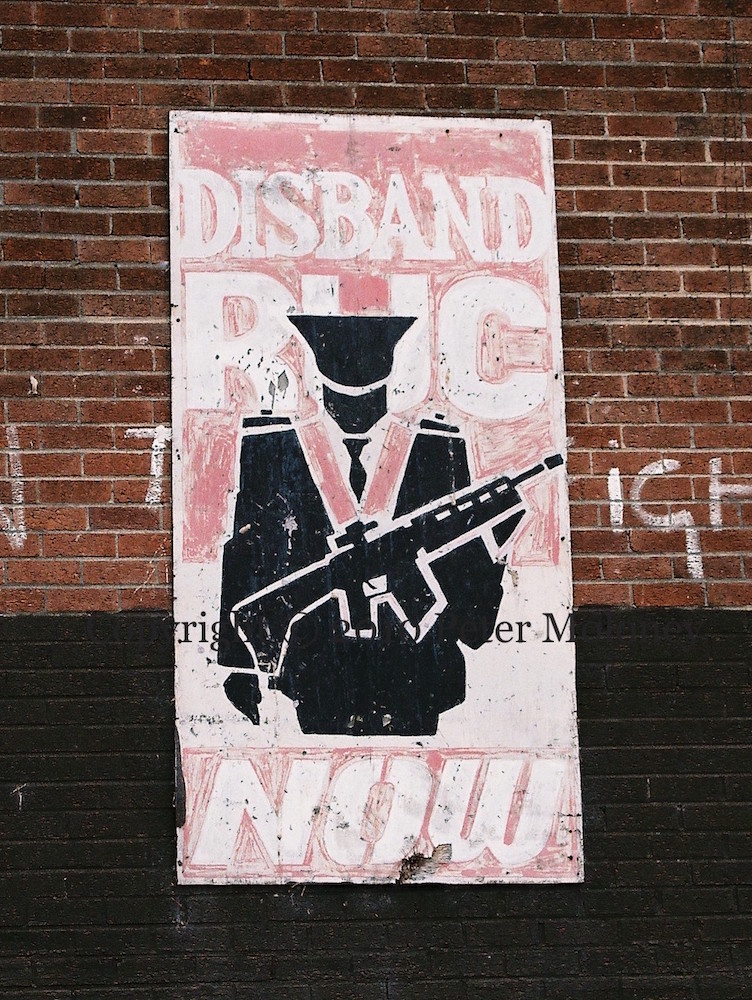
“Freedom for the Basque political prisoners – Askatasuna [Freedom]”. In January 2010, all 742 Basque political prisoners went on hunger strike to protest the policy of dispersing them to prisons all over Spain and France. Glen Road, Belfast.
Tá Ár gCultúr Beo (“Notre culture est vivante/La nostra cultura e viva/Our culture is alive”) was painted by Mo Chara Kelly with help from the local youth. The red parts of the mural use a translucent medium that Kelly had become acquainted with while painting in the United States (An Pobal A Phéınteáıl 10) that allow additional figures from modern Ireland (left) and Celtic Ireland (right) to be seen. The winged figure (repeated four times) is a heron that he found in a book of Celtic designs while serving time in Long Kesh.
The mural was the first of four projects in Springhill facilitated by the Upper Springfield Development Trust as part of a “West Belfast Arts & Heritage Trail” (as per the plaque just out of view to the right) or “Public Arts Trail”.
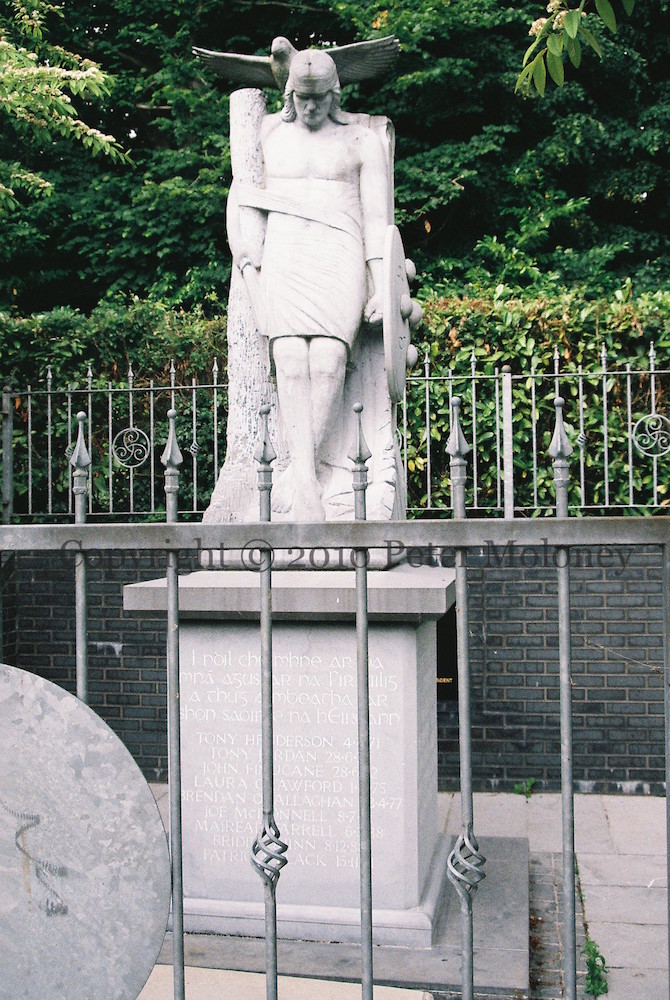
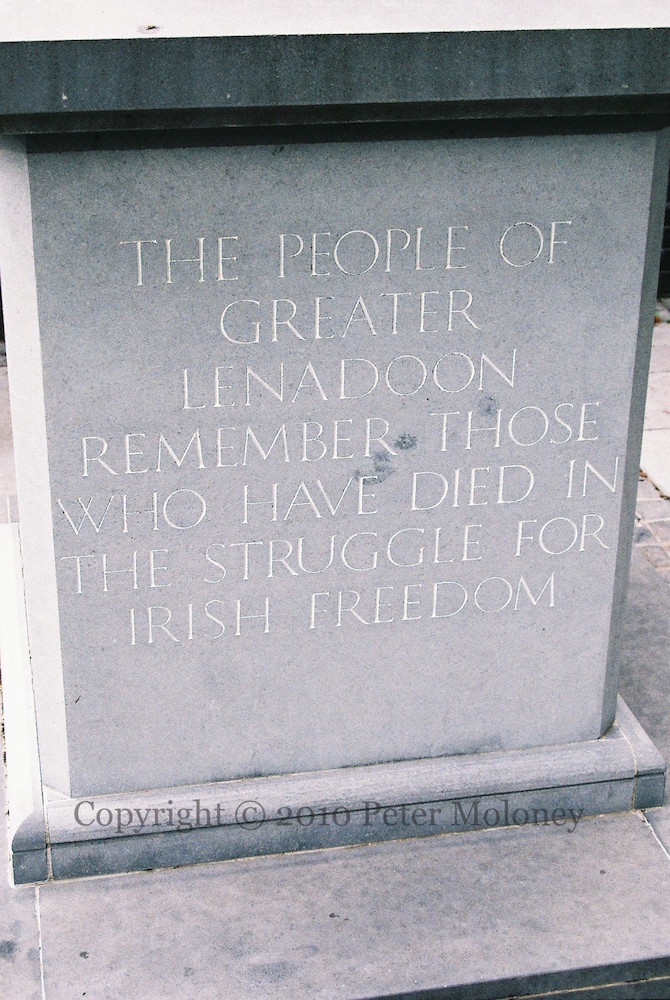
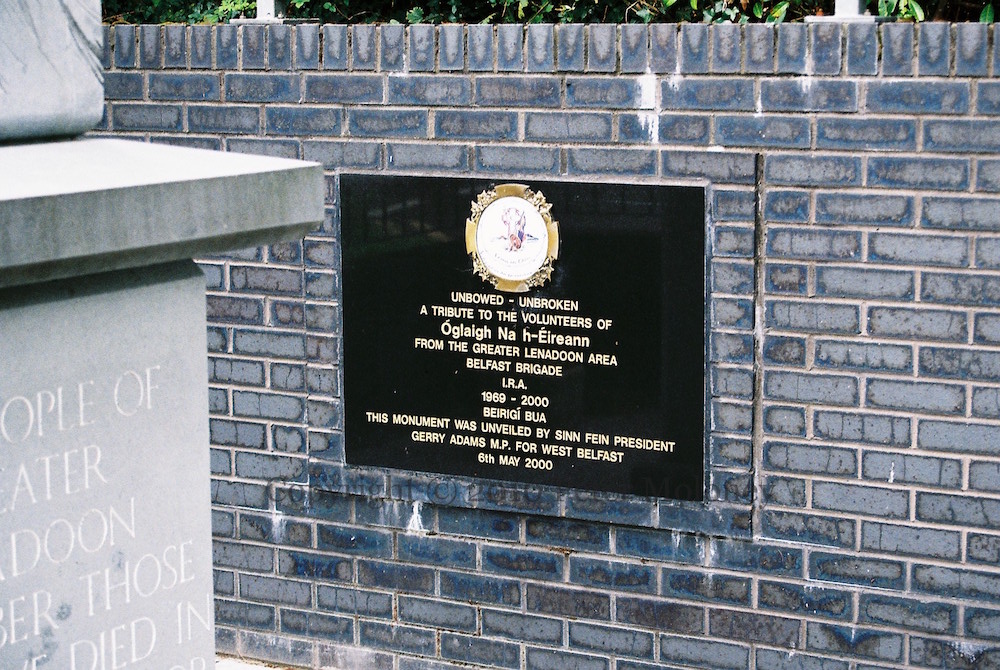
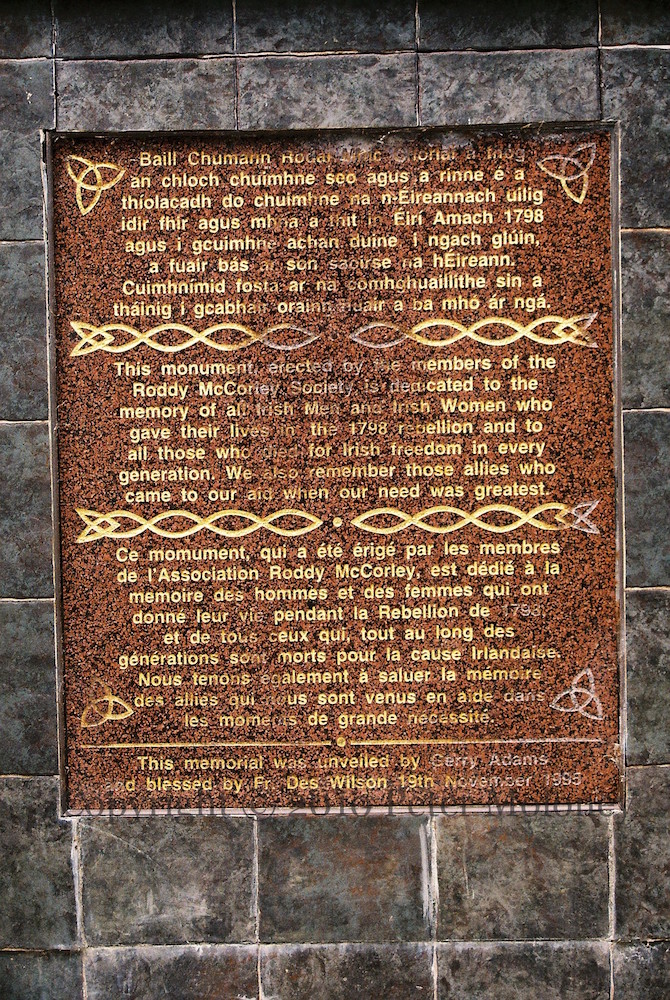
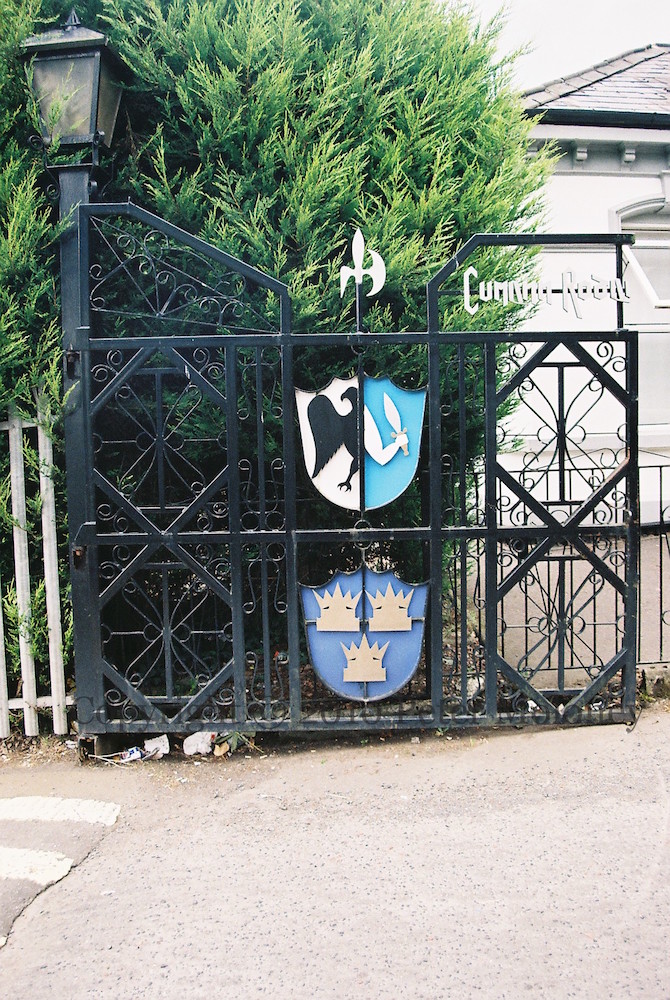
Images from the grounds of The Roddys club, Glen Road, Belfast, with memorials to McCorley (“In memory of Rody McCorley who was hanged here for his part in the rising of 1798 ‘The dead who died for Ireland, let not their memory die””), the deceased 1981 hunger strikers, the earlier 20th century hunger strikers (Thomas Ashe, Michael Fitzgerald, Terence MacSwiney, Joseph Murphy, Joseph Whitty, Denis Bary, Andrew Sullivan, Tony D’Arcy, Jack McNeela, Sean McCaughey, Michael Gaughan, Frank Stagg), Lenadoon deaths (Tony Henderson, Tony Jordan, John Finucane, Laura Crawford, Brendan O’Callaghan, Joe McDonnell, Mairead Farrell, Bridie Quinn, Patricia Black), Billy ‘Red’ Higgins founder member/president of the club, IRA volunteers from Lenadoon, “to the Irish men and Irish women who gave their lives in the rebellion of 1798”. Roddy McCorley, a Protestant member of the United Irishmen, is best known by the song written about his hanging at the bridge of Toome in 1800. (Here’s a version by Tommy Makem.)
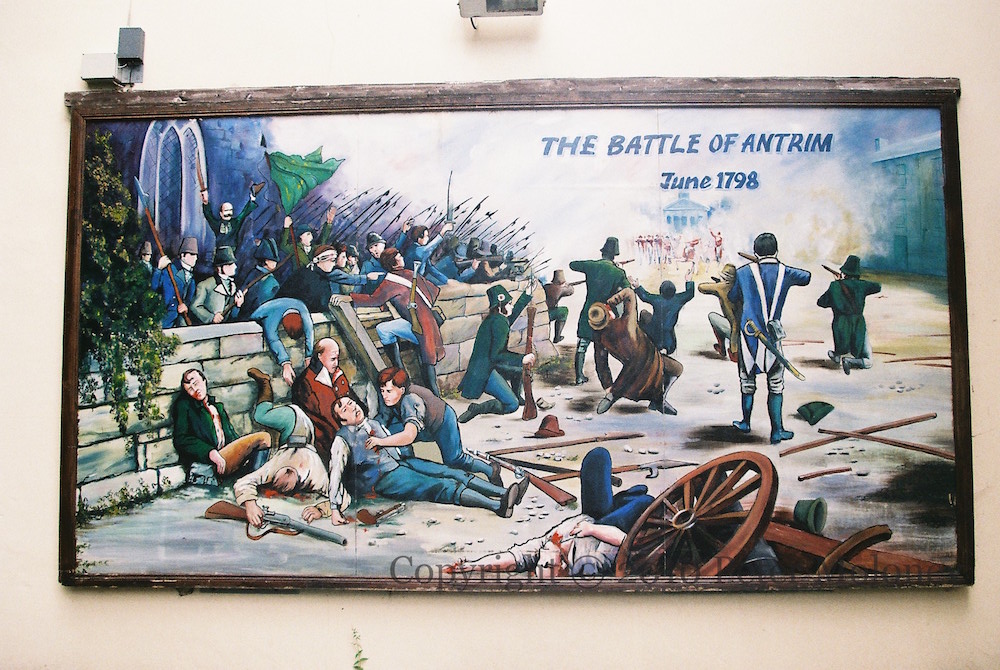
The Battle of Antrim took place on June 7th, 1798, as part of the Irish Rebellion of that summer. Led in the North by the Protestant Henry Joy McCracken, the rebellion met with initial successes in smaller towns, before failing in Antrim. British soldiers can be seen in the distance.
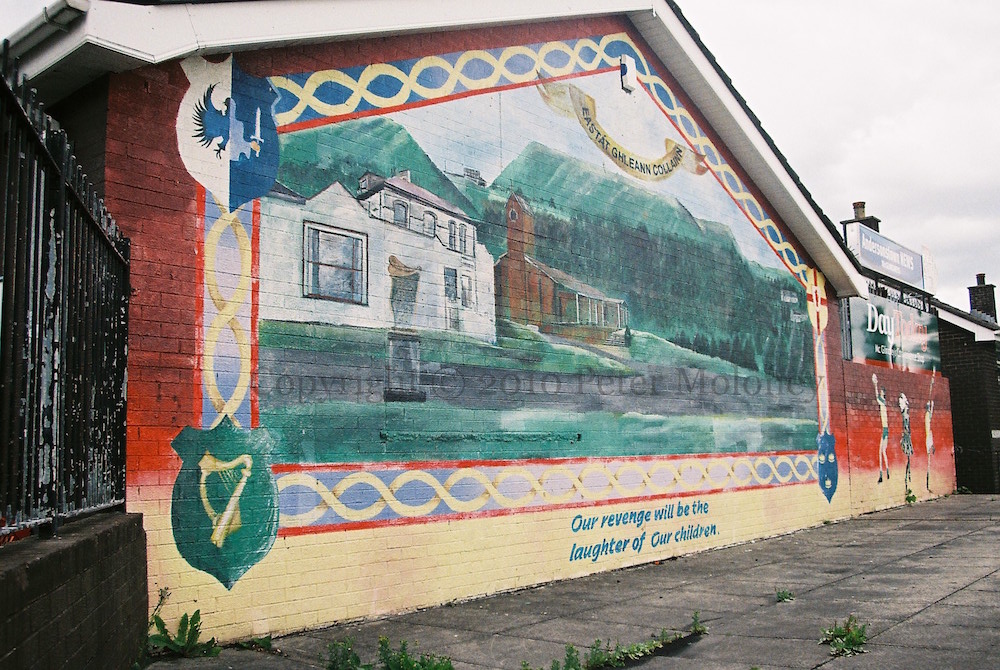
Mural in the Glen Colin estate, just off the Glen Road showing The Roddy’s club (in white) with the hunger striker memorial in the shape of a harp in front and the St. Oliver Plunkett church, which is in fact on the other (southern) side of the Glen Road, with the twin peaks of Divis and Black Mountain in the background. The Bobby Sands quote “Our revenge will be the laughter of our children” is at the bottom and three Gaelic games players on the right.
“Julie Livingstone aged 14 yrs. Murdered by the British Army 13th May 1981.” “The Stolen Child – Come away, O human child/To the waters and the wild/With a faery hand in hand/For the world’s more full of weeping/Than you can understand! – WB Yeats.” Livingstone was killed by a plastic bullet. The mural is in Glenveagh Drive. There is also a stone and plaque near the spot she was struck, on the Stewartstown Road.
“Welcome to the Shankill” in ten languages, home of Norman Whiteside, Baroness May Blood, Jimmy Warnock, William Conor, Col. James Cunningham, Johnny McQuade, Wayne McCullough, and the Rev. Henry Montgomery. The attractions include Crumlin Road gaol, lower Shankill murals, Bayardo victims memorial, Carson mural, Cupar Way peace line, Shankill memorial garden, Spectrum centre, Shankill graveyard, Woodvale park. An ‘Alternatives’ stencil would later be added in the bottom right.
Titanic sails (impossibly) between the Giant’s Causeway (on the left) and one of the Harland & Wolff cranes (and under Napoleon’s Nose), replacing a UDA mural in Downing Street, Belfast.