HMS Caroline’s connection to Belfast is that she served as the headquarters for the Royal Naval Reserve in Alexandra Dock. Originally built in 1914, she served in the Grand Fleet and took part in the battle of Jutland on May 31st, 1916, as shown in the image above. She was decommissioned in 2011; it is hoped to open her as a museum and visitor attraction by the time of the centenary of the battle (WP). The Daily Mail has a gallery of images of the ship in its current state. Also present at the battle of Jutland, as captain of HMS Nestor, was Commander (later Sir) Edward Bingham.
By Jim Russell in St. Aubyn’s Street, north Belfast
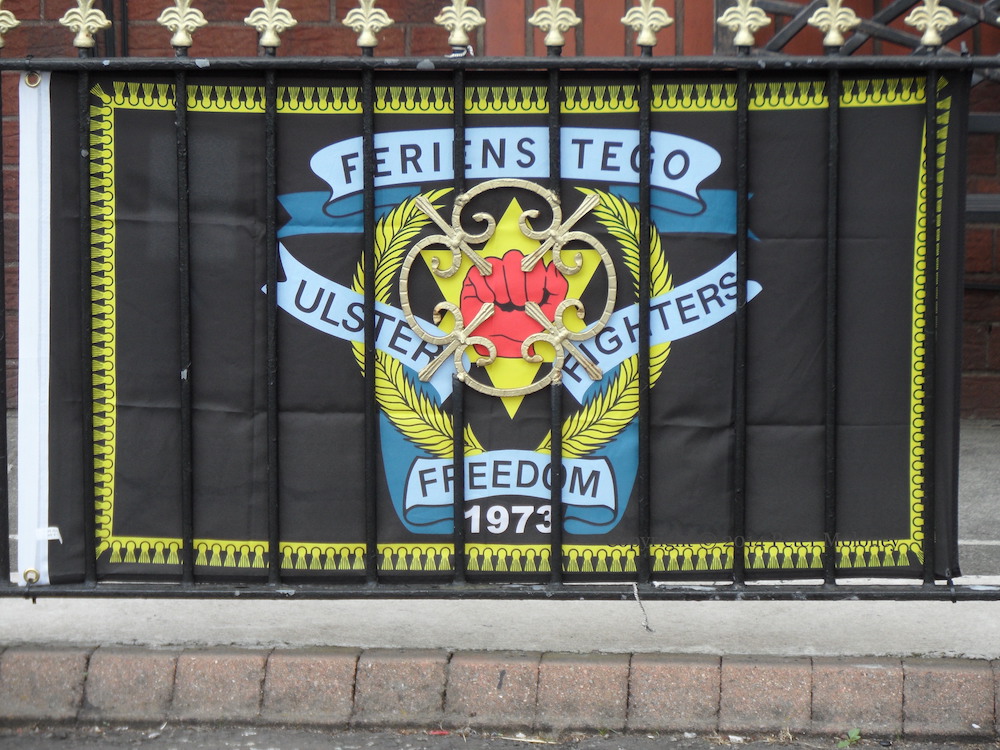
This is the freshly-repainted UFF mural in Ballyduff (former version in purple). As the close-up shows, the figures are quite crudely drawn, with strange lips, elongated fingers, and amorphous limbs.
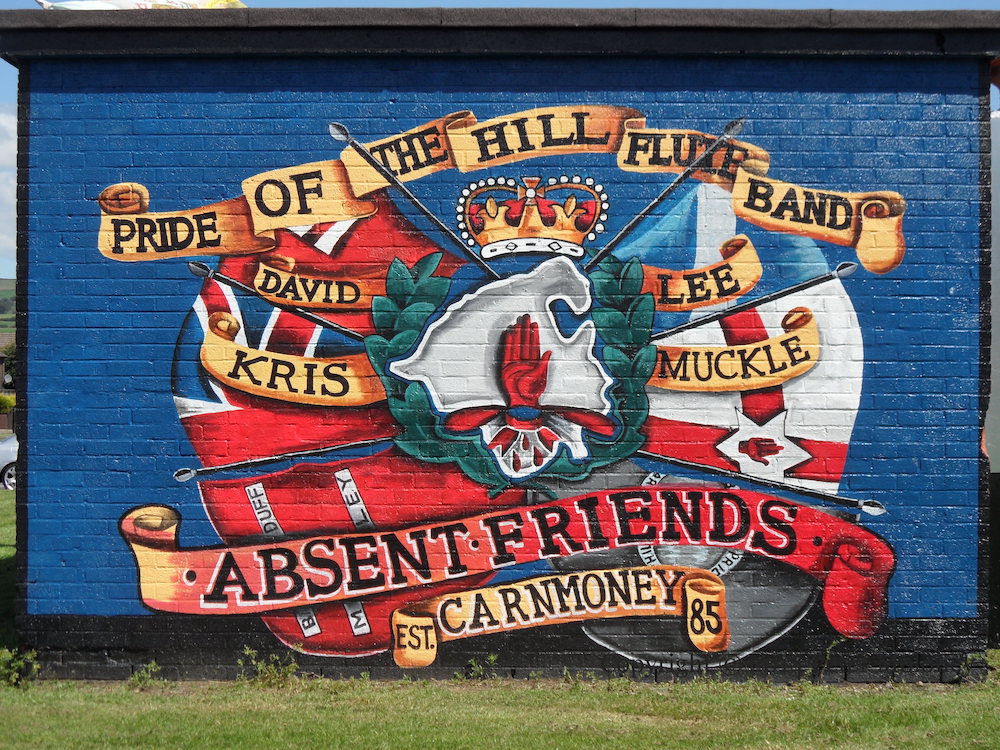
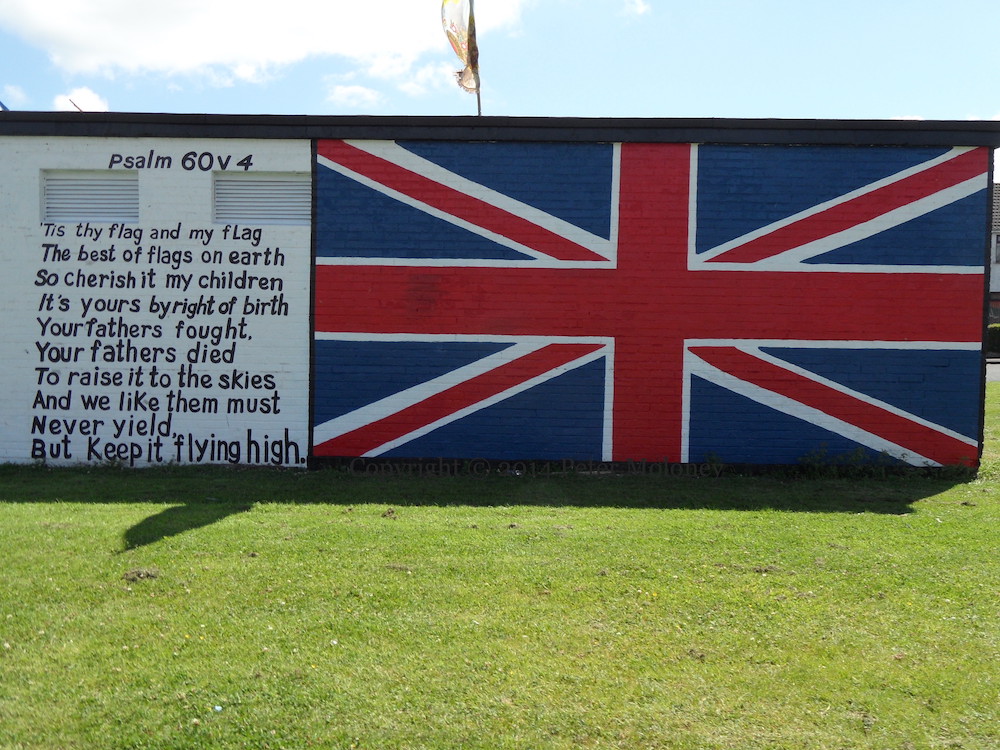
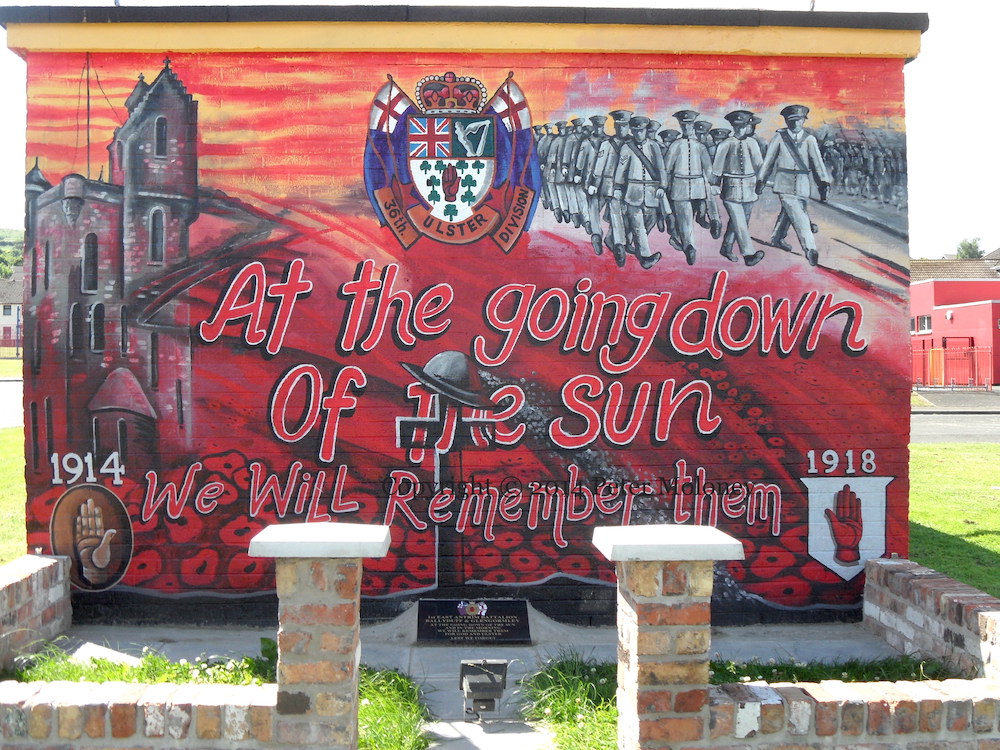
This large electrical sub-station, painted on all four sides, is in Ballyduff, Newtownabbey.
First: David Lee was a founder, in 1985, of Pride Of The Hill Flute Band in Carnmoney/Ballyduff. Kris Muckle – now deceased – was a long-time member. (Fb)
Second: Translations of Psalm 60.4 vary, but it is something like “You (the Lord) have given those who fear you a banner so that they will not flee before your arrows”, which might work quite well alongside a Union jack. But in fact, the lines on the side of the sub-station come do not come from Psalm 60.4; they are rather the first stanza of a 1902 poem (earliest found mention), The UnionJack, by Edward Shirley, in Little Poems For Little People:
‘Tis thy flag and my flag, the best of flags on earth; Oh, cherish it my children, for ’tis yours by right of birth. Your fathers fought, your fathers died, to rear it to the skies; And we like them will never yield, but keep it flying high.
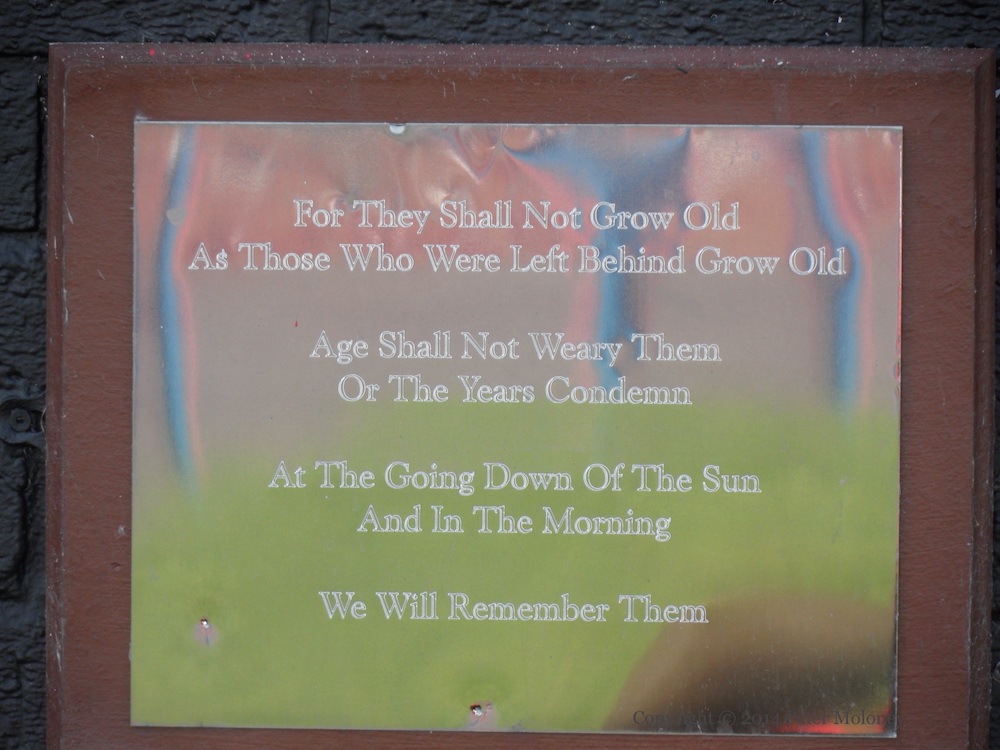
Third and fourth: “They paid the ultimate sacrifice”. WWI soldiers from the 36th (Ulster) Division in relief against an orange sky (perhaps “at the going down of the sun”), picking their way across the battlefields of Flanders. The Ulster Memorial at Thiepval, which commemorates the 5,000 lost lives and more specifically the role of Orange Order members, is shown in the top left corner of the smaller wall. The plaque commemorates members of the modern UVF “1st East Antrim Battalion, Ballyduff & Glengormley”.
This UVF mural shows the flags and insignia of the UVF and YCV (Young Citizen Volunteers), Ballyduff/Glengormley 1st East Antrim Battalion, alongside the flags of Scotland, Northern Ireland and Great Britain. The plaque shows only a verse from Binyon’s For The Fallen.
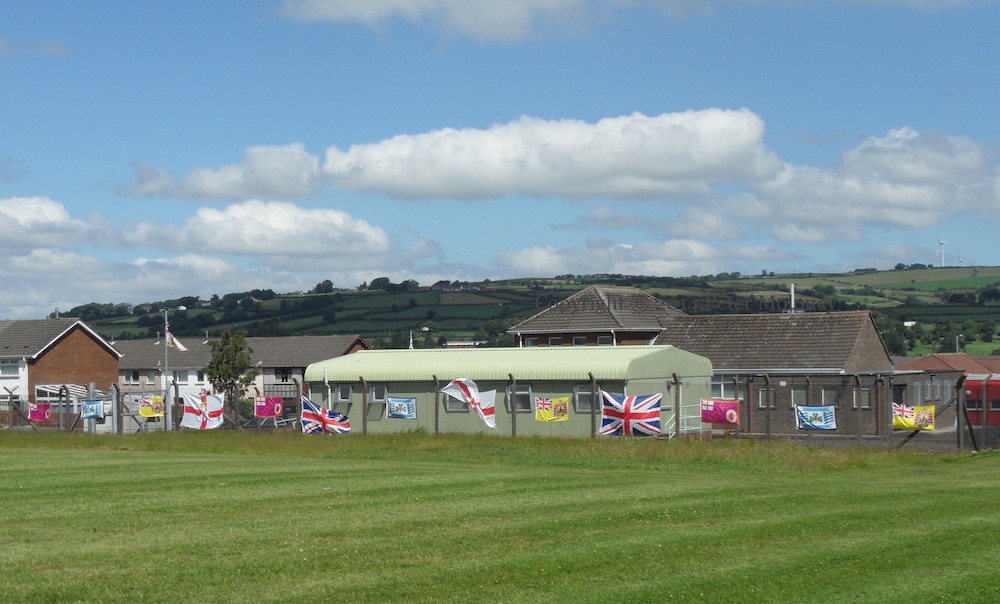
Bonus images of the bonfire and the flags flying around the green.
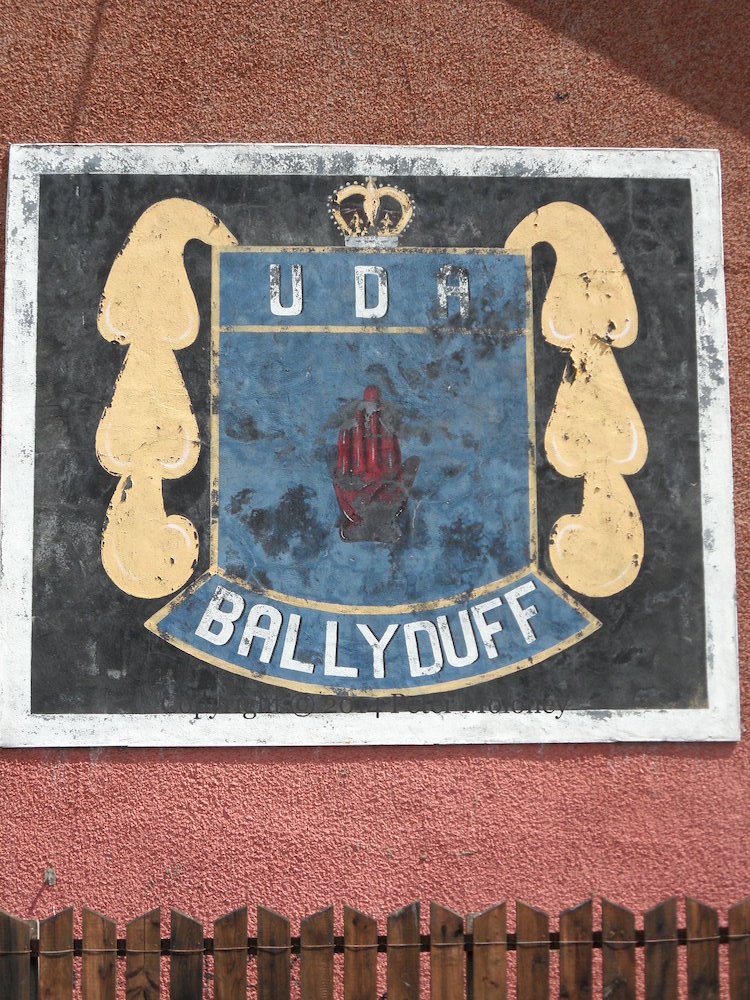
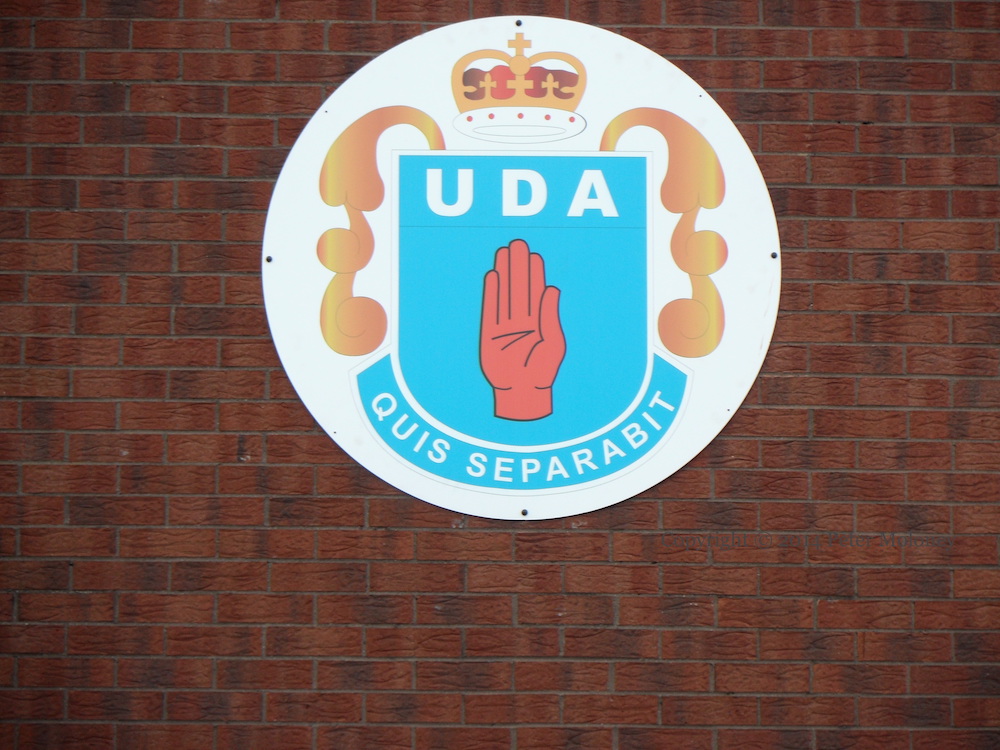
This is an end-of-life shot of the Ballyduff UDA board on Fairview Road – for the same piece in 2009 see M05010. Together with the recently repainted South East Antrim UFF, it sits prominently on the main road through the estate.
Footsteps through the history of Coleraine, from top to bottom: Martin Luther (c. 1521); John Knox, who led the reformation in Scotland (c. 1560); the plan of Coleraine (c. 1611); the relief of Derry (1689); the Williamite campaign (1690); (and then a jump to) WWI (“Christmas truce, western front”); WWII (“War on the home front”).
As its title suggests, this lower Shankill mural was originally painted in 2000, highlighting UDA prisoners specifically, before being repainted in 2008 in orange. But it has been sitting with damaged plaster in the bottom-left corner for two years or more.
The house bedecked with bunting, UFF flags, and a circular UFF board is on Shankill Terrace (on Peter’s Hill); the UDA board is on a gable around the corner, next to California Close; the three individual UFF/UDA/UYM boards are on gables along Hopewell Avenue.
A new (photographic) portrait and large “UFF” and “UDA” side-walls have been added to the 2011 version (which contains links to prior versions) of the Stevie McKeag mural in the lower Shankill estate.
Here are two new boards in the courtyard of the Rex Bar on the Shankill Road, describing the formation of the Ulster Volunteers (‘A Force For Ulster’) and commemorating the losses suffered by the 36th (Ulster) Division of the British Army, which the Volunteers became, at the Somme and in other battles, mowed down by “the Hun machine guns” (‘The Great War’).
‘A Force For Ulster’ includes photographs of the recent centenary re-enactments of the Balmoral Review, the Ulster Covenant, the formation of the Volunteers (“east” and “west”) and “Operation Lion” – more commonly known as the Larne Gun-Running.
According to the ‘The Great War’ board, 32,186 men from west Belfast were killed, wounded, or missing in the effort to “restore peace in Europe”. “To them bravery was without limit, to us memory is without end”. The board shows the Thiepval Memorial To The Missing Of The Somme against a background of portraits.









 Peter Moloney Collection