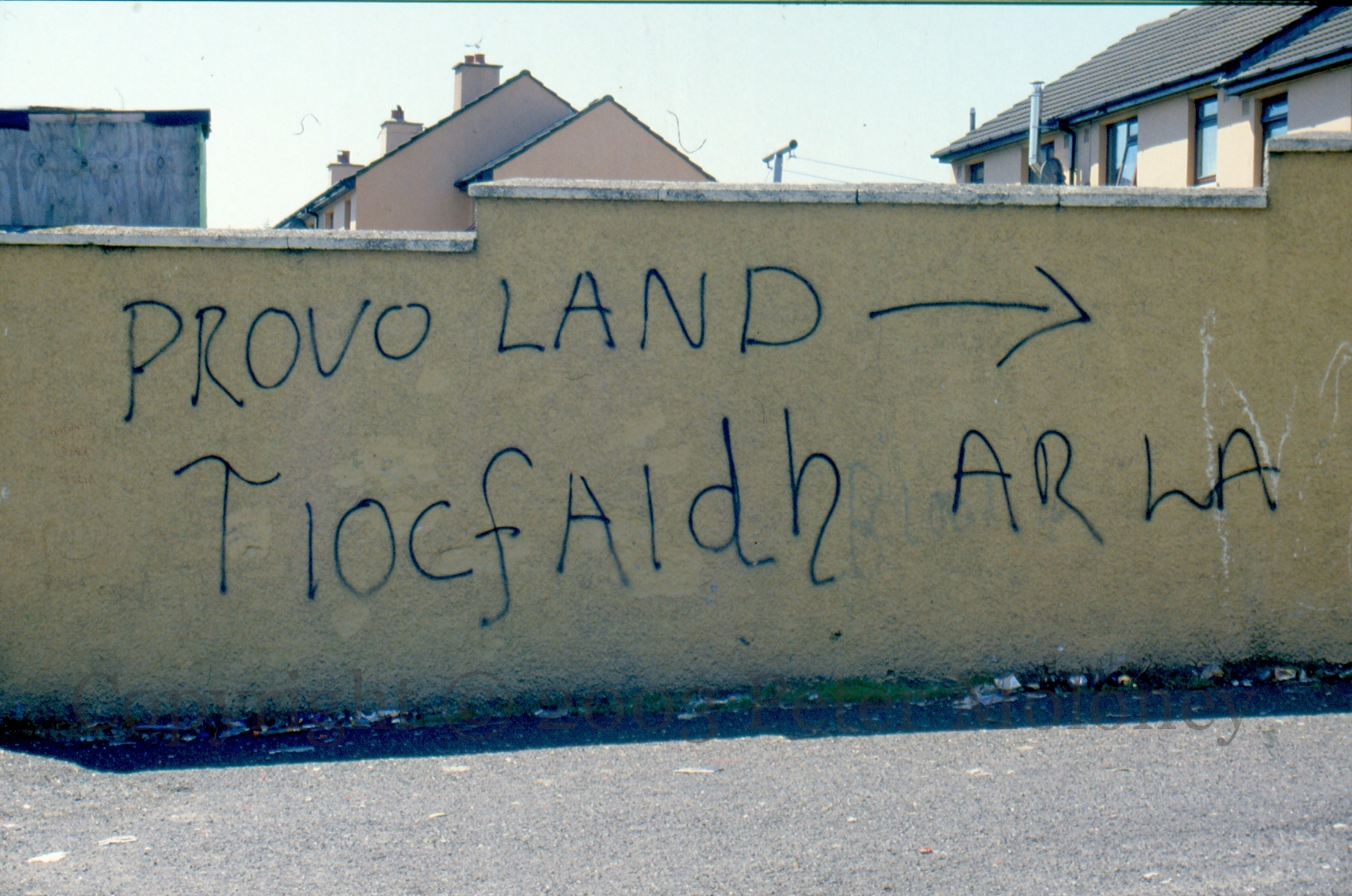
“Tıocfaidh ár lá” [“our day will come”] – This Provo land is in Creggan, Derry, behind Central Drive. Previous Provo lands: Clonard | Beechmount.
Click image to enlarge
Copyright © 2003 Peter Moloney
M02040
“Tıocfaidh ár lá” [“our day will come”] – This Provo land is in Creggan, Derry, behind Central Drive. Previous Provo lands: Clonard | Beechmount.
Click image to enlarge
Copyright © 2003 Peter Moloney
M02040
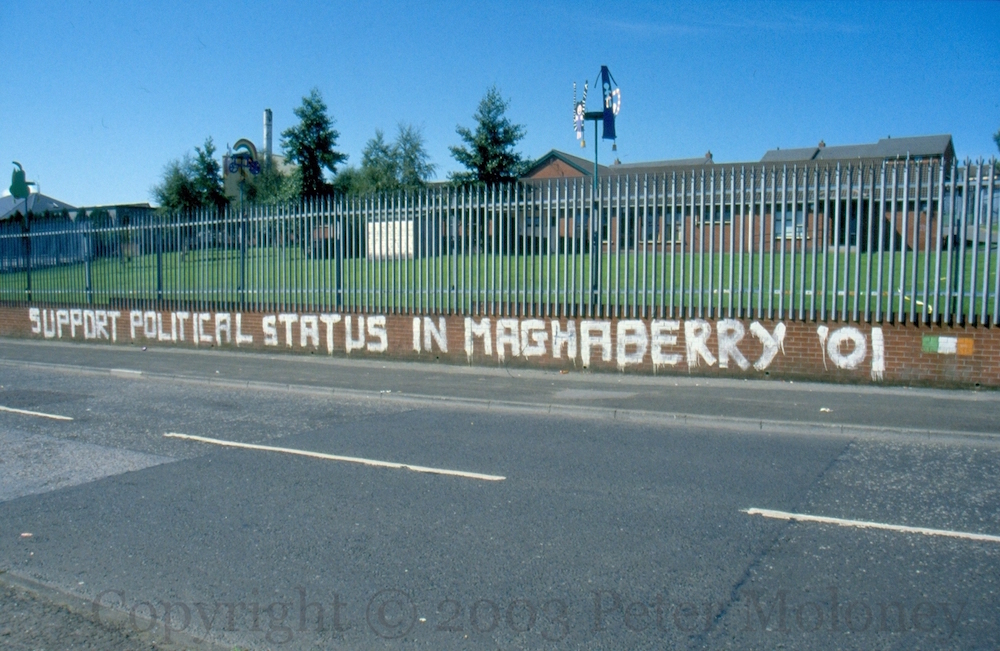
Republican graffiti in Central Drive, Derry, demanding political status for prisoners in Maghaberry. Previously seen in 2001.
Click image to enlarge
Copyright © 2003 Peter Moloney
M02038
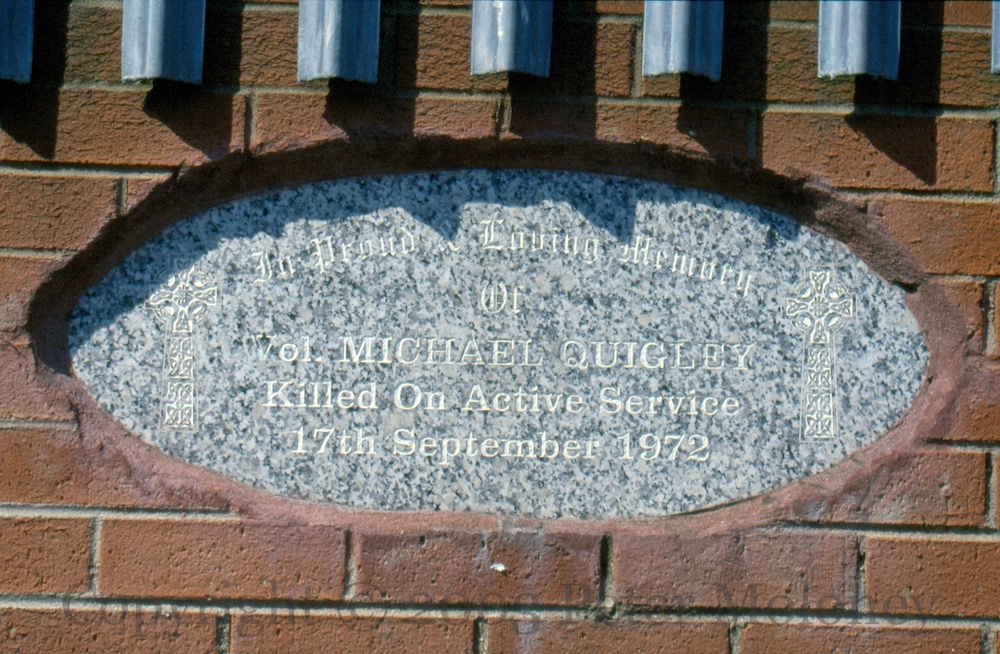
Michael Quigley, IRA, was shot dead at age 19 by the British Army during a riot in Creggan, Derry, in 1972, near the spot of this memorial plaque in Central Drive.
Click image to enlarge
Copyright © 2003 Peter Moloney
M02037
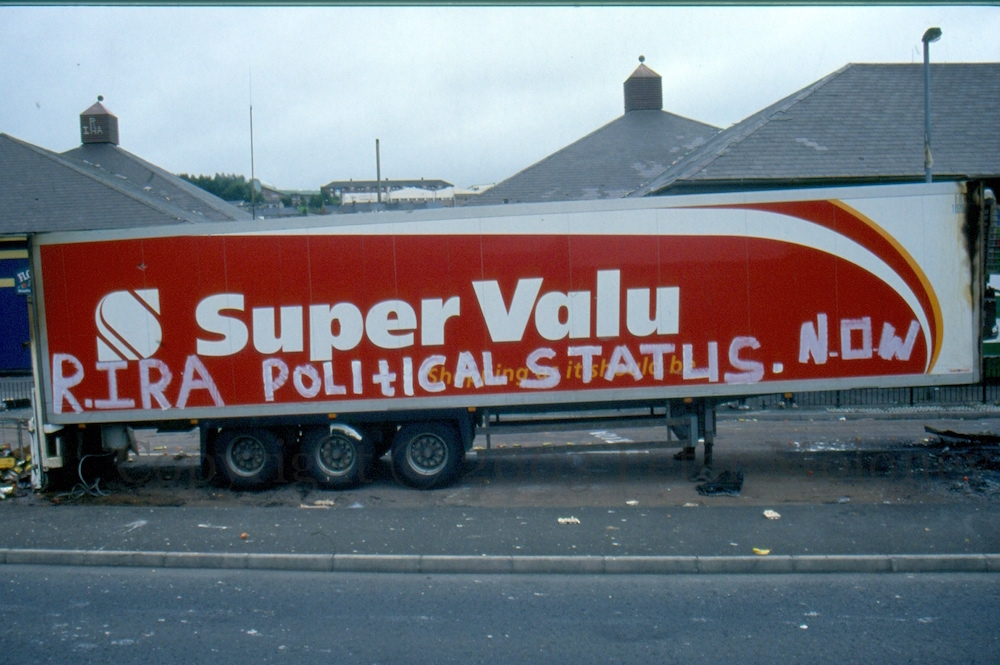
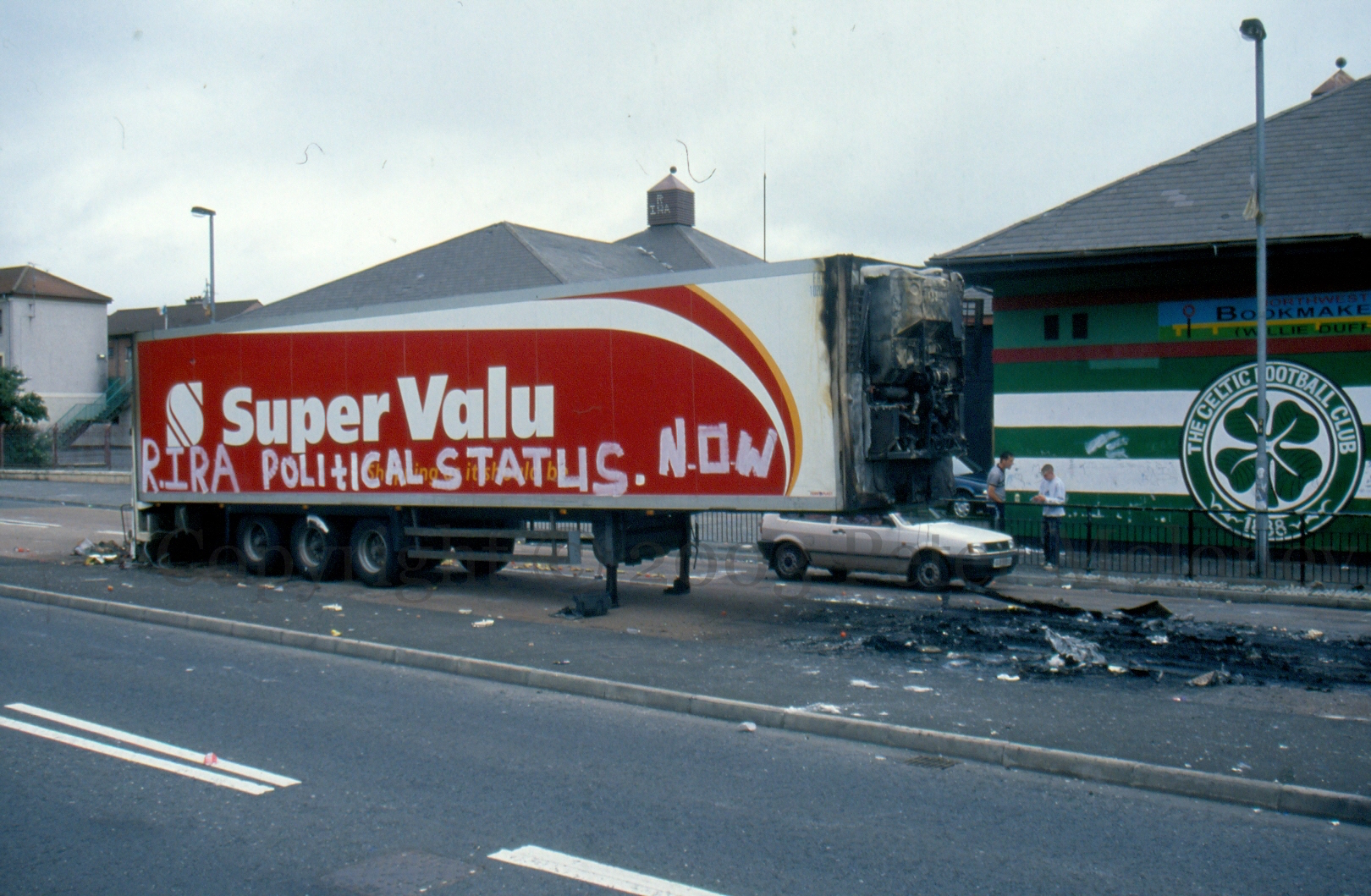
Republican graffiti on the side of a burnt-out Super Valu lorry container.
Lecky Road, Bogside, Derry
Click image to enlarge
Copyright © 2003 Peter Moloney
M02036 M02035
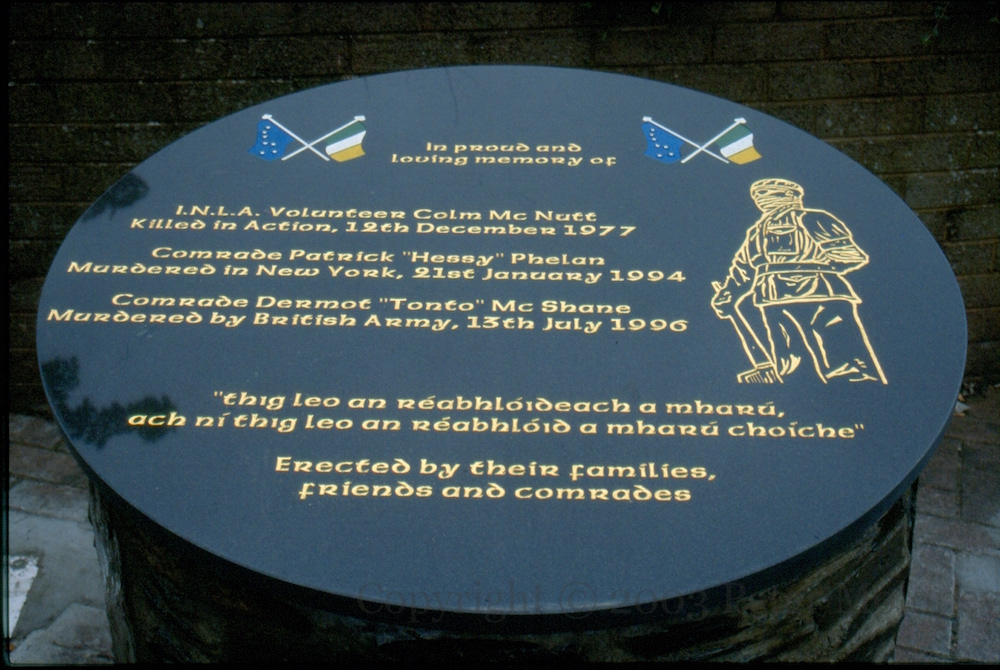
Three INLA volunteers are commemorated on this Rossville Street, Derry, plaque. 18 year-old Colm McNutt was shot by an undercover SAS officer during a botched hijacking, tipped off by best friend and informer Raymond Gilmour (Irish News). A drunken Phelan was shot by an off-duty NYPD officer in New York, nine years after leaving the country (LA Times | NY Times). McShane was run over and crushed by a British APC during riots against the treatment of Catholics during the Drumcree standoff (RN). “Thıg leo an réabhlóıdeach a mharú, ach ní thıg leo an réabhlóıd a mharú choíche.” [They can kill the revolutionary but they can never kill the revolution.]
Click image to enlarge
Copyright © 2003 Peter Moloney
M02034 [M03405]
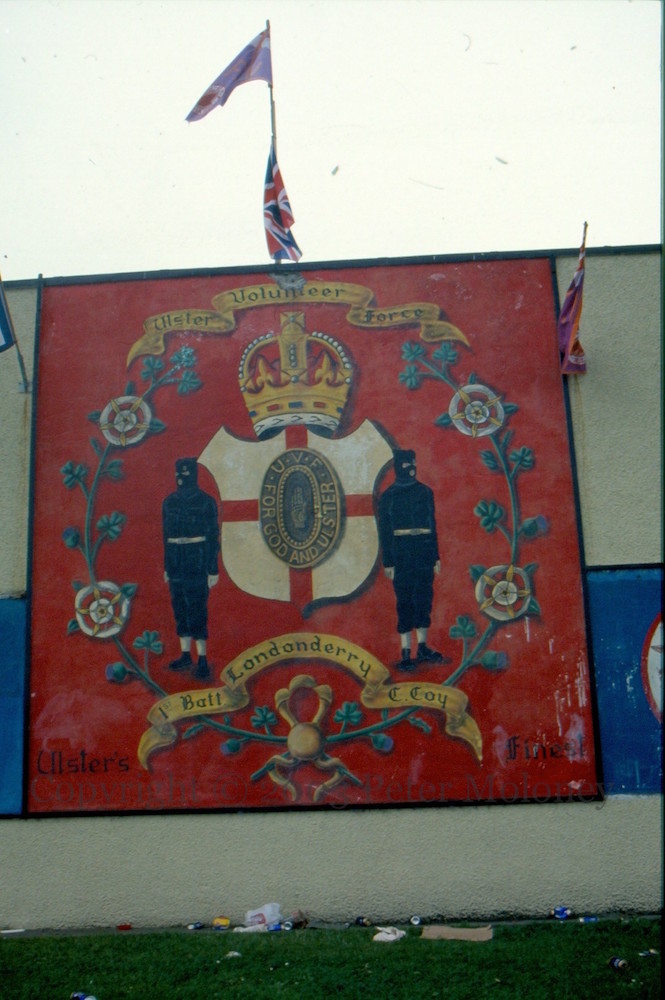
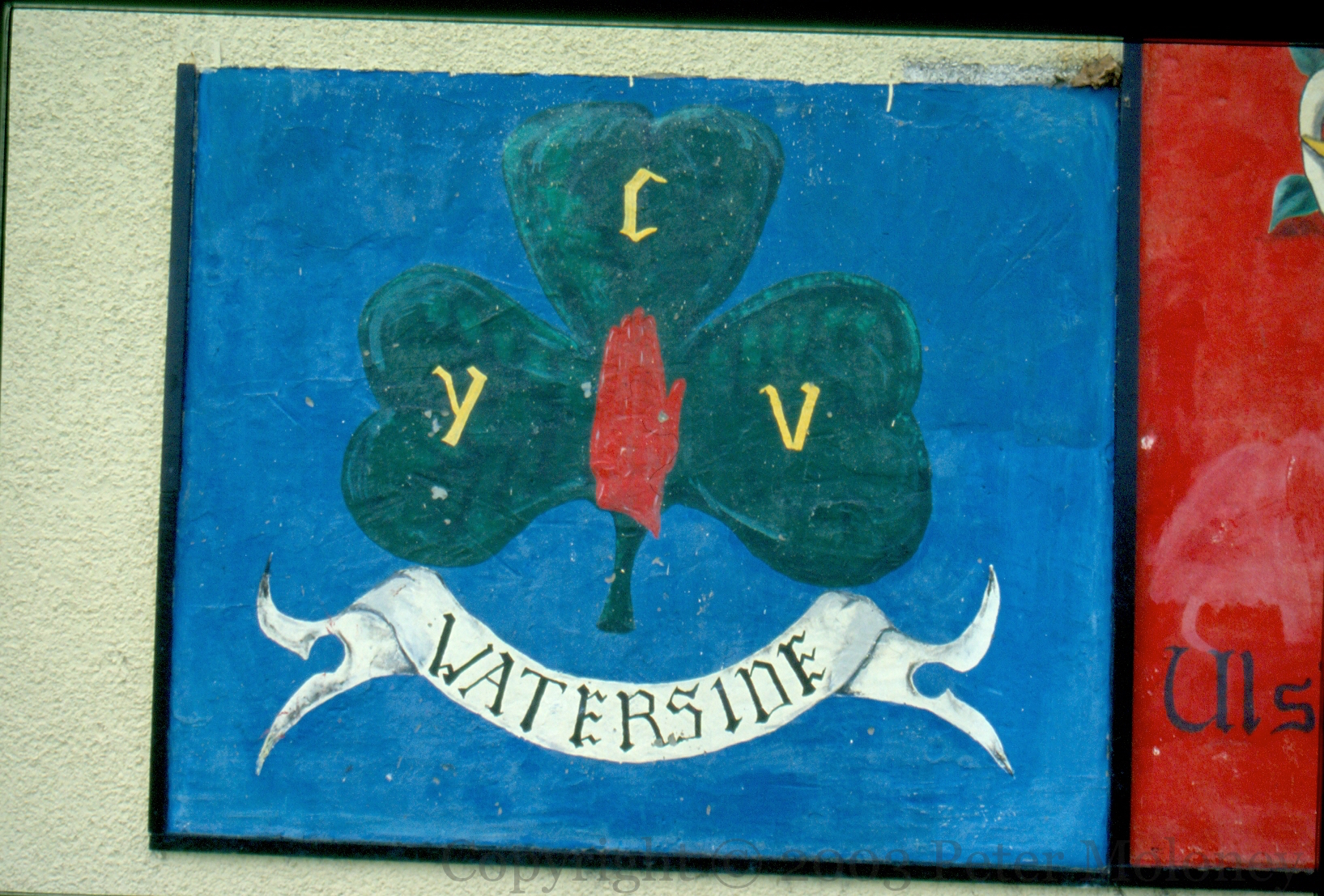
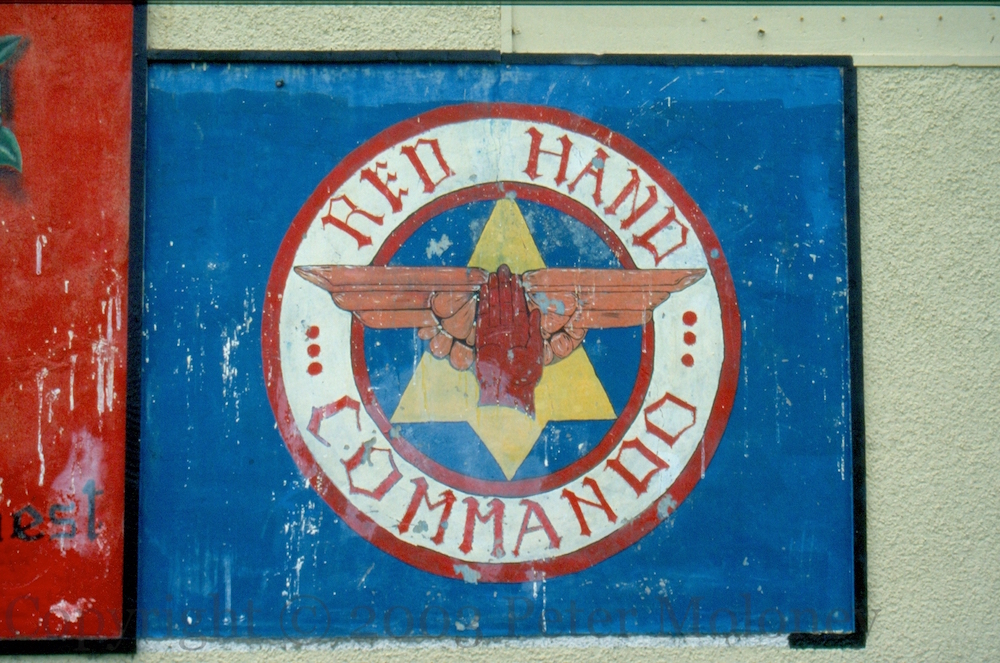
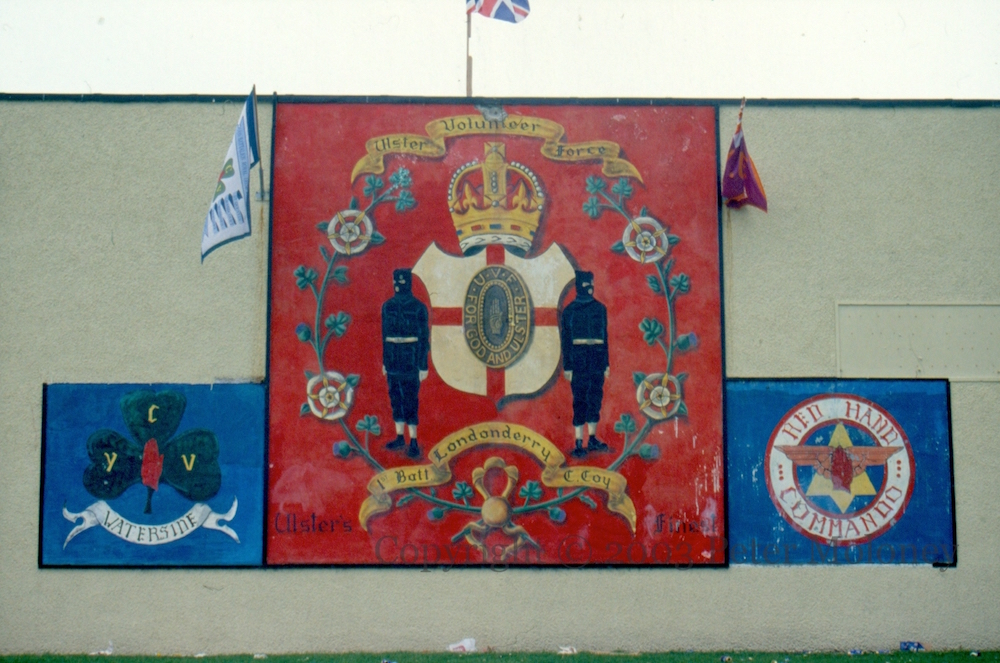
Here are 2003 images, including close-ups, of the YCV-UVF-RHC board in Dennet Gardens, Londonderry, previously seen in 1998.
Click image to enlarge
Copyright © 2003 Peter Moloney
M02031 M02030 M02033 M02032

December 2017 saw the 45th anniversary of the attack by loyalist gunmen on Annie’s Bar in the Top Of The Hill area of the Waterside (Derry Journal). Four Catholics and a Protestant were killed. “In memory of Charles Moore, Frank McCarron, Michael McGinley, Bernard Kelly, Charles McCafferty who were killed in Annie’s Bar on the 20th December 1972.”
Strabane Old Road, Gobnascale, Derry
Click image to enlarge
Copyright © 2003 Peter Moloney
M02029
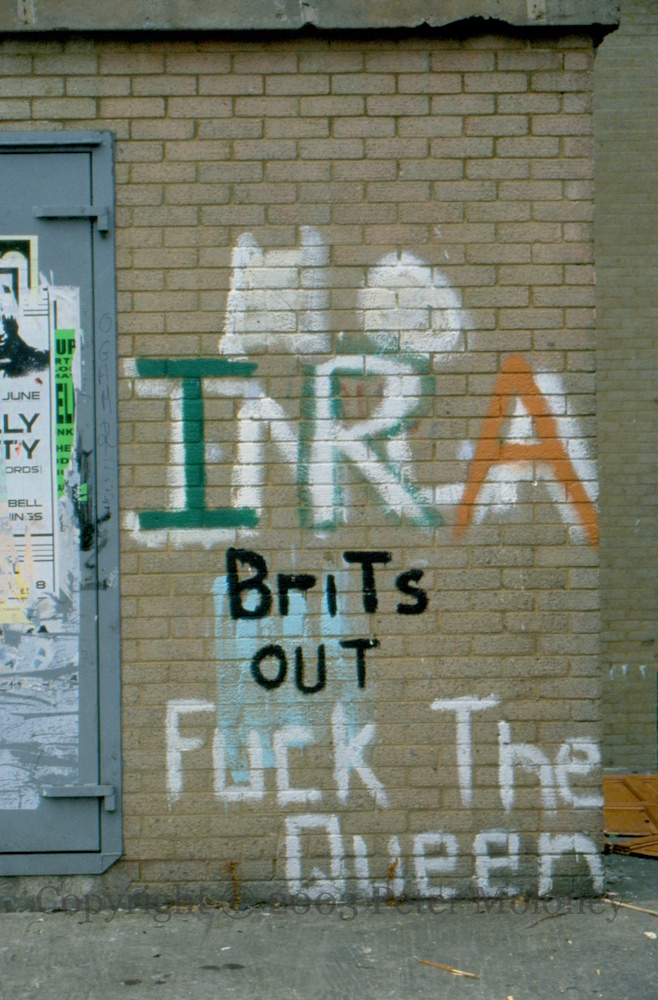
This image has “Brits out” and “Fuck the queen” graffiti but more interesting is “No INLA”, which was then replaced by “IRA” in tricolours.
Fountain Hill, Derry
Click image to enlarge
Copyright © 2003 Peter Moloney
M02028
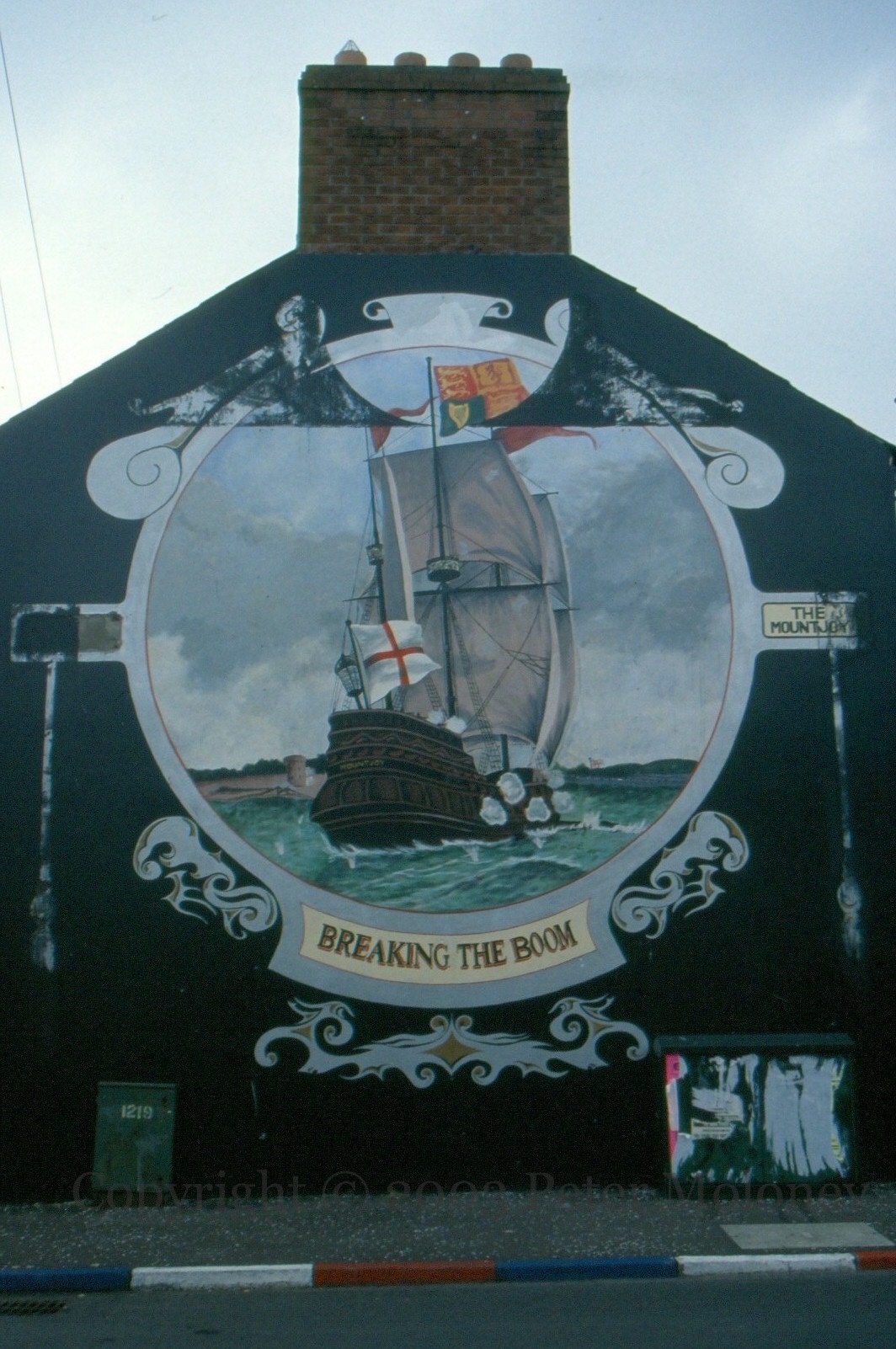
After three and a half months, from April 18th to July 30th, 1689, the Siege of Derry ended when two ships, the Mountjoy (shown here) and the Phoenix, broke through a timber boom that had been placed across the Foyle. Approximately half of the population of the city had died.
Roulston Avenue, Waterside, Londonderry
Click image to enlarge
Copyright © 2003 Peter Moloney
M02027

The siege of Derry began on December 7th, 1688 when thirteen apprentice boys – without official instruction – shut the gates of the city against the approaching Jacobite army of redshanks.
Emerson Street, Waterside, Londonderry
Click image to enlarge
Copyright © 2003 Peter Moloney
M02026

