
Large UVF emblem off Blenheim Drive, Newtownards.
Click image to enlarge
Copyright © 2007 Peter Moloney
M03682 [M03683]
Large UVF emblem off Blenheim Drive, Newtownards.
Click image to enlarge
Copyright © 2007 Peter Moloney
M03682 [M03683]
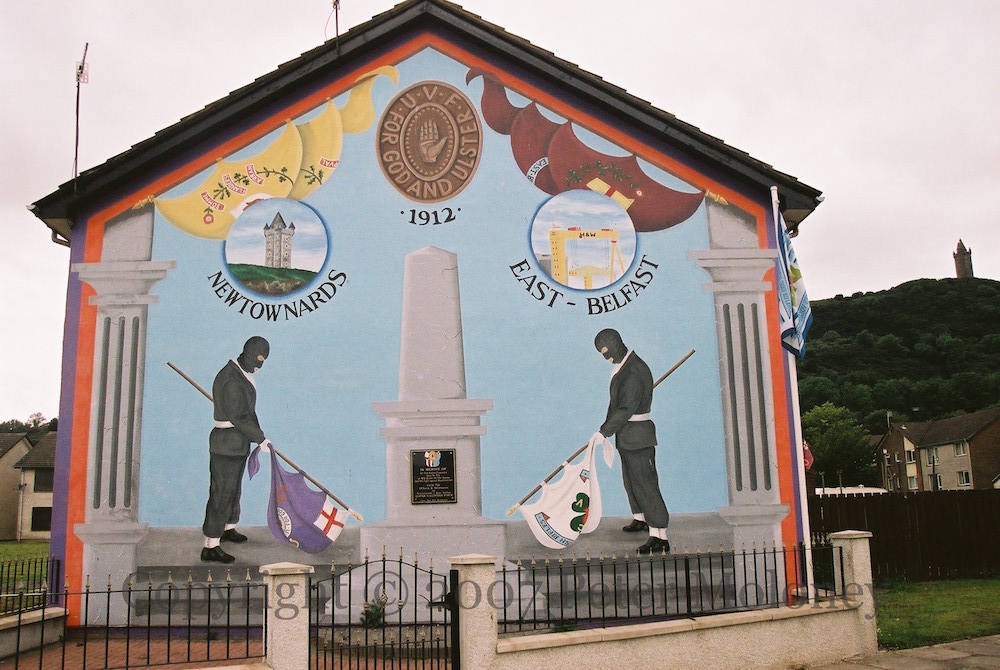
“In memory of all our fallen comrades both in the 1st WW Battle Of The Somme and the fight against republicanism from the officers and volunteers of Newtownards – East Belfast Ulster Volunteer Force. Gone but not forgotten.” WWI regimental flags are suspended above the memorial. The actual Scrabo tower, depicted in the left medallion, is visible to the right of frame.
Click image to enlarge
Copyright © 2007 Peter Moloney
[M03680] M03681
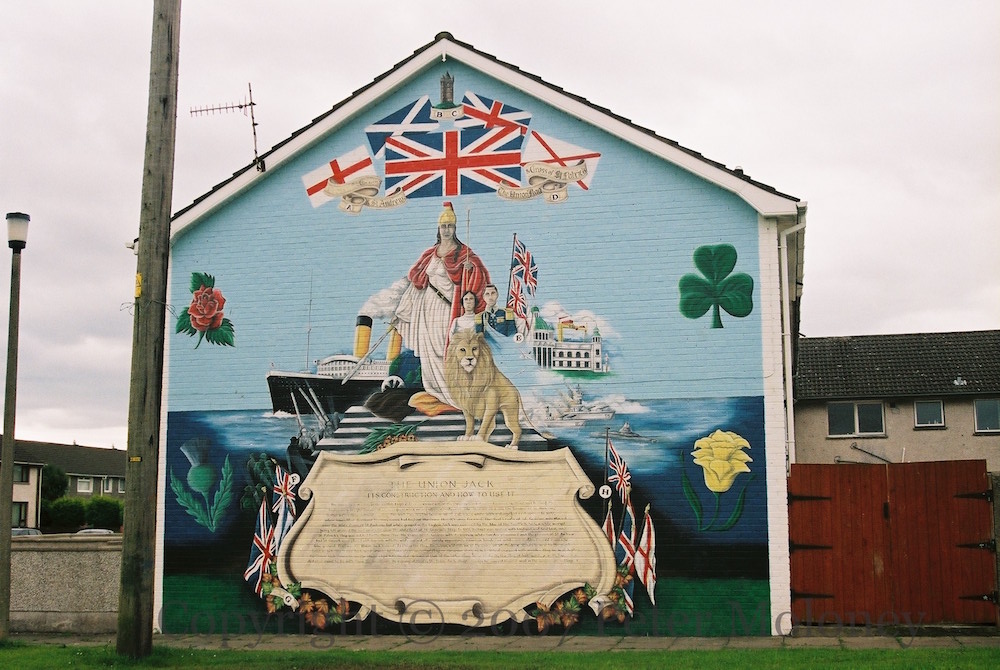
“The Union Jack – its construction and how to use it. ” The text describes the composition of the Union Flag from the St George’s Cross, St Andrew’s Saltire, and St Patrick’s Cross, and how to fly it properly: “In flying the flag, the broad white stripe of the cross of St Andrew should be next to the mast.” Also shown are Britannia astride the globe, a king and queen, a lion, naval boats and a sub, the flowers of the “home nations”, Titanic, and Belfast city hall with a H&W crane in the background.
Blenheim Drive, Newtownards
Click image to enlarge
Copyright © 2007 Peter Moloney
[M03678] M03679

Simple UVF board with bleeding red hand in Blenheim Drive, Newtownards.
Click image to enlarge
Copyright © 2007 Peter Moloney
M03677
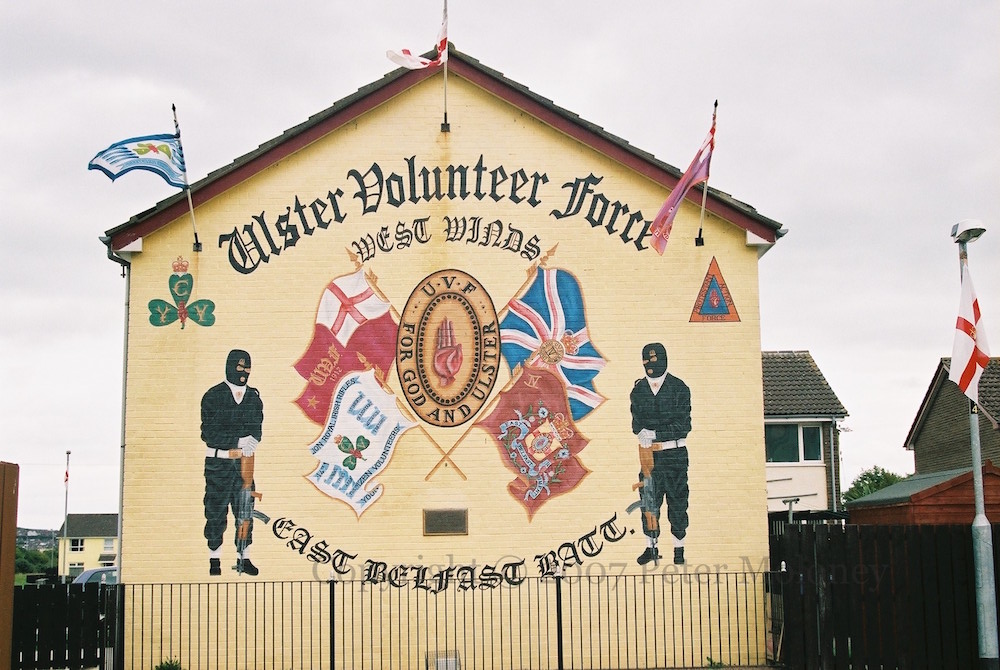
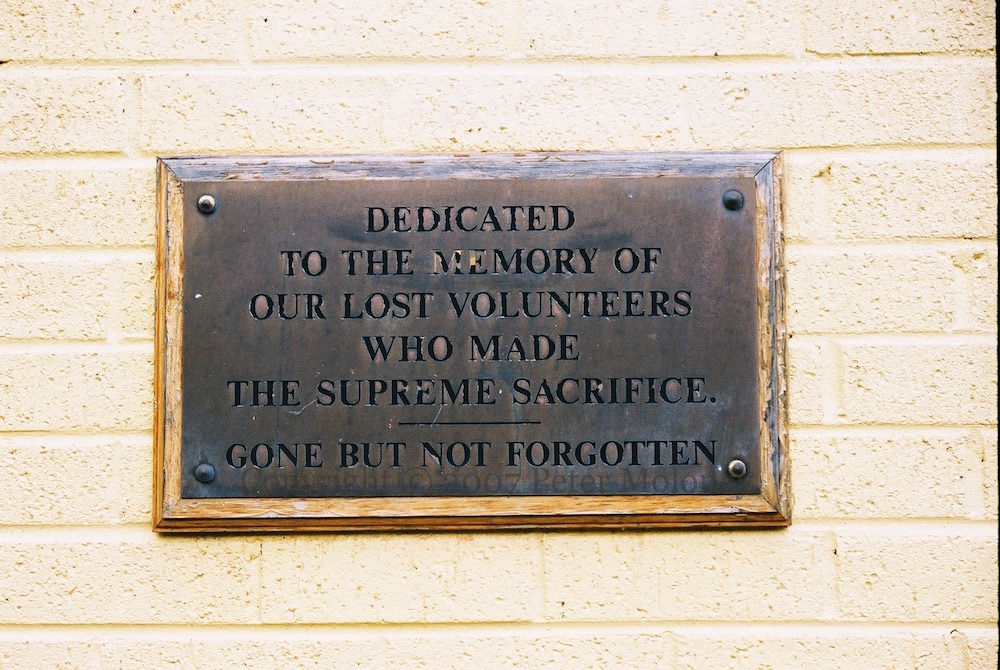
“Dedicated to the memory of our lost volunteers who made the supreme sacrifice. Gone but not forgotten.” The inclusion of the PAF [Protestant Action Force] in this UVF/YCV mural in the Westwinds estate, Newtownards, makes it refer to the modern paramilitary force, but the flags on the right of the UVF emblem are WWI regimental flags, making it refer to the Ulster Volunteers. For a similar mix, see YCV-UVF-RHC.
Anson Gardens, Newtownards
Click image to enlarge
Copyright © 2007 Peter Moloney
M03676 M03675

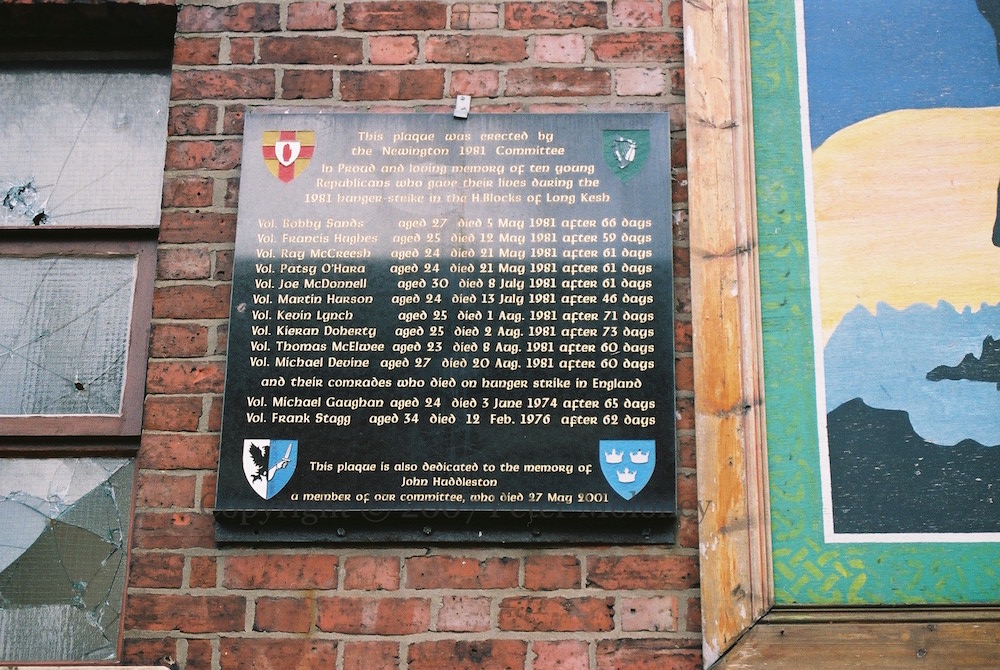
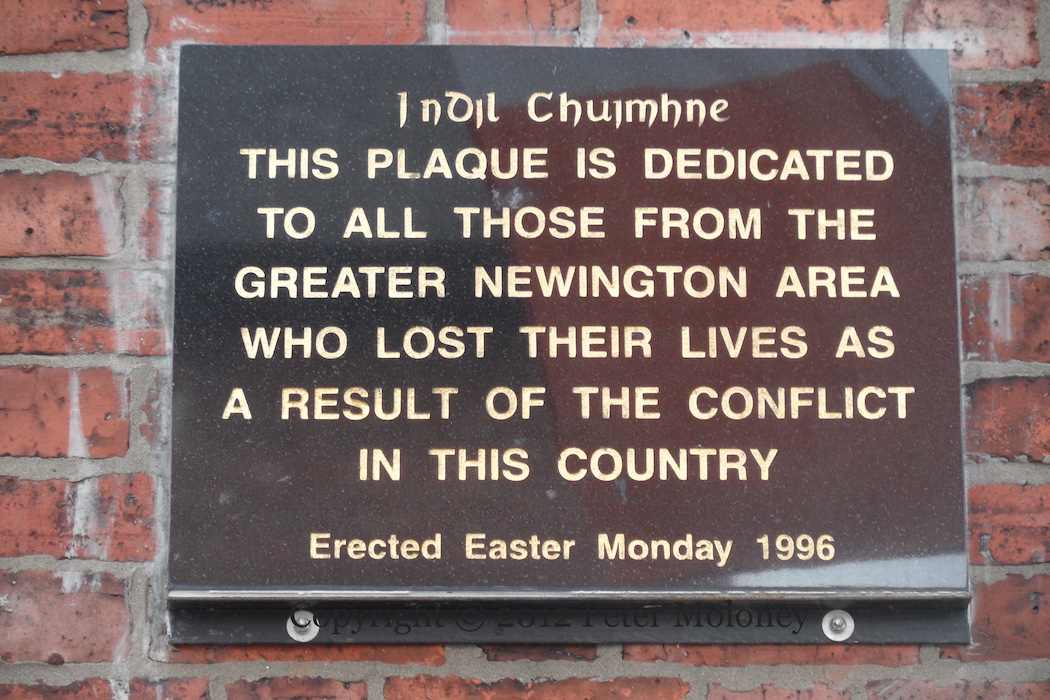
“I ndıl chuımhne – this plaque is dedicated to all those from the greater Newington area who lost their lives as a result of the conflict in this country.” Pikemen from the 1798 uprising flank a phoenix, with portraits above of Wolfe Tone, James Connolly, Henry Joy McCracken, and Mary Ann McCracken.
Click image to enlarge
Copyright © 2007 Peter Moloney
M03673 M03672 [M03674] M03671
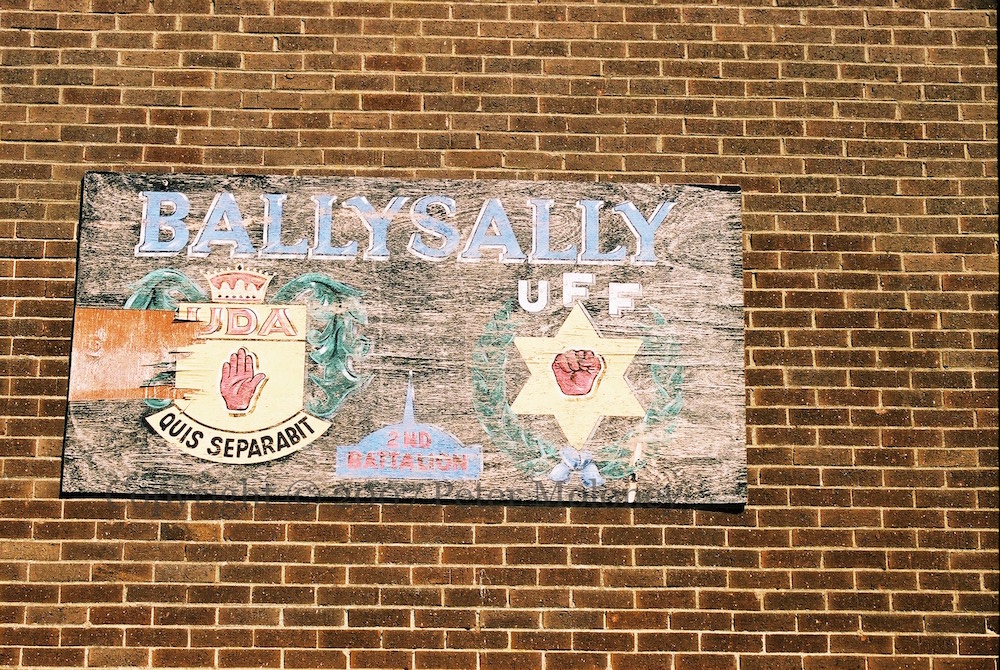

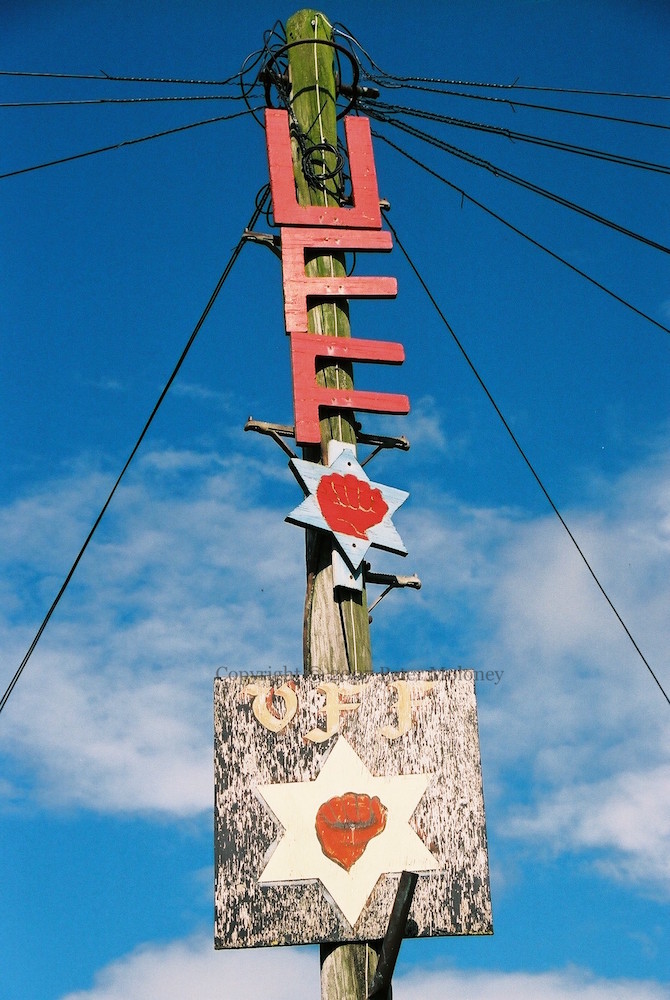
UFF emblems at the entrance to the Ballysally estate.
Click image to enlarge
Copyright © 2007 Peter Moloney
M03668 M03669 M03670

A UFF prisoner behind bars backed with silhouetted gunmen – the UFF would not stand down until November, 2007.
Danes Hill, Coleraine
Click image to enlarge
Copyright © 2007 Peter Moloney
[M03665] [M03666] M03667
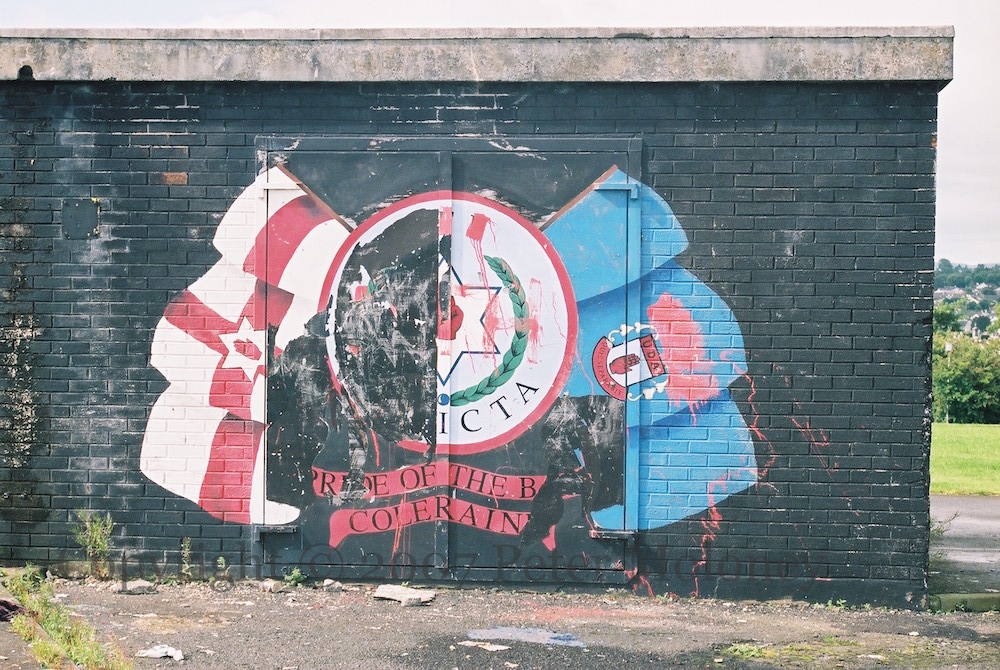

Two sides of the sub-station in Ballysally are painted, one with UDA “invicta” and Pride Of The Bann (flute band), the other with UYM [Ulster Young Militants, UDA youth].
Click image to enlarge
Copyright © 2007 Peter Moloney
M03664 M03663

The Confederate flag, along with the more typical St Andrew’s Saltire, Ulster Banner, and Union Flag, fly in Ballysally, Coleraine.
Click image to enlarge
Copyright © 2007 Peter Moloney
M03662

