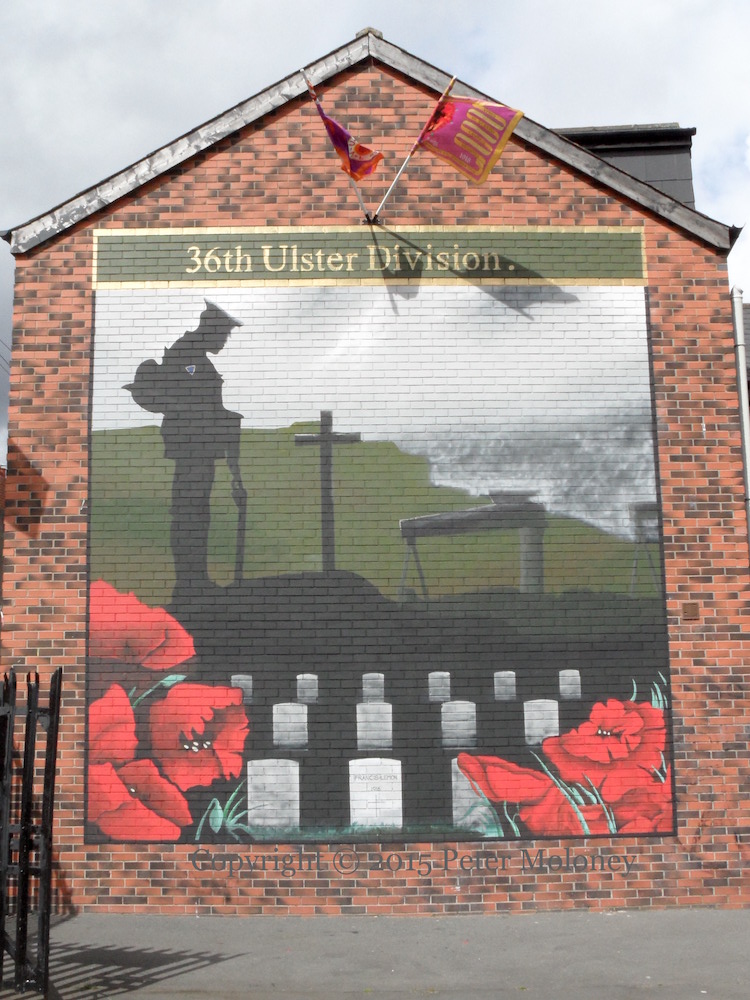
Samson and Goliath, the cranes of the Harland & Wolff shipyard in east Belfast, stand alongside crosses on the burial grounds of the 36th (Ulster) Division in Flanders (though Cave Hill might be in the background) in this Flora Street mural in east Belfast. UVF flags fly overhead.
On the headstone in the front-middle is written “Francis Lemon 1916”, perhaps this Francis Lemon, from Ballymacarrett, who died on July 2nd: FindAGrave | IWM.
This is a new (2015-05) mural in Flora Street, east Belfast.
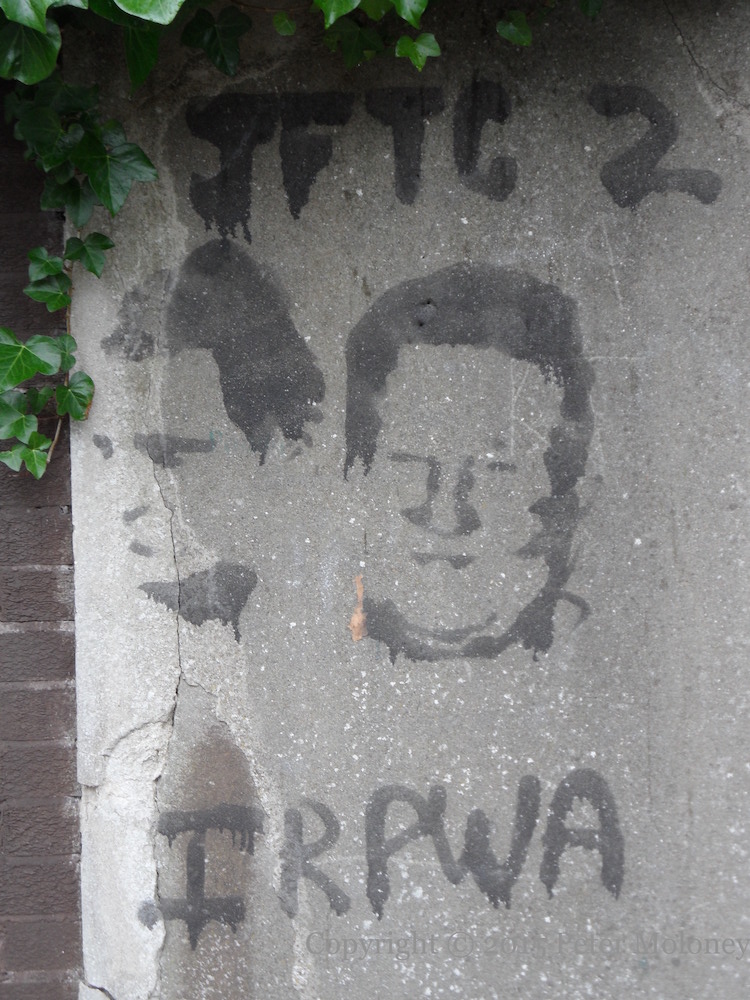
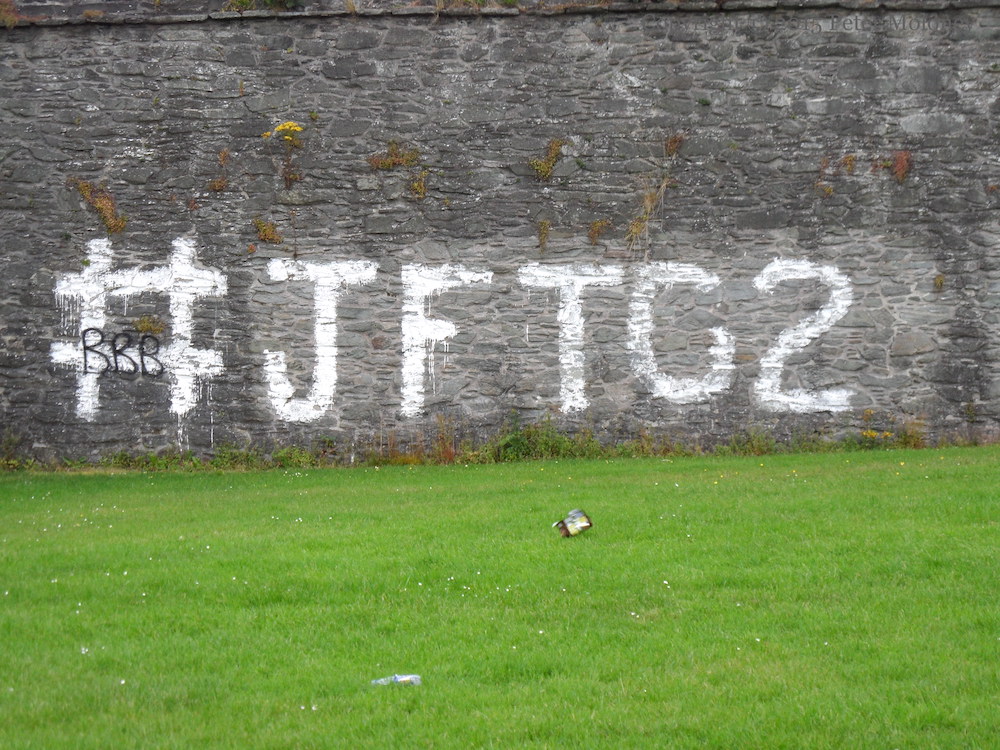
The Craigavon Two – John-Paul Wootton and Brendan McConville – were convicted in 2012 of the 2009 murder of PSNI Constable Steven Carroll (BBC) and sentenced to 18- and 25-year minimums, respectively. The case is under review (Guardian) and a campaign for their release – using the hashtag “#JFTC2” – is under way (Fb).
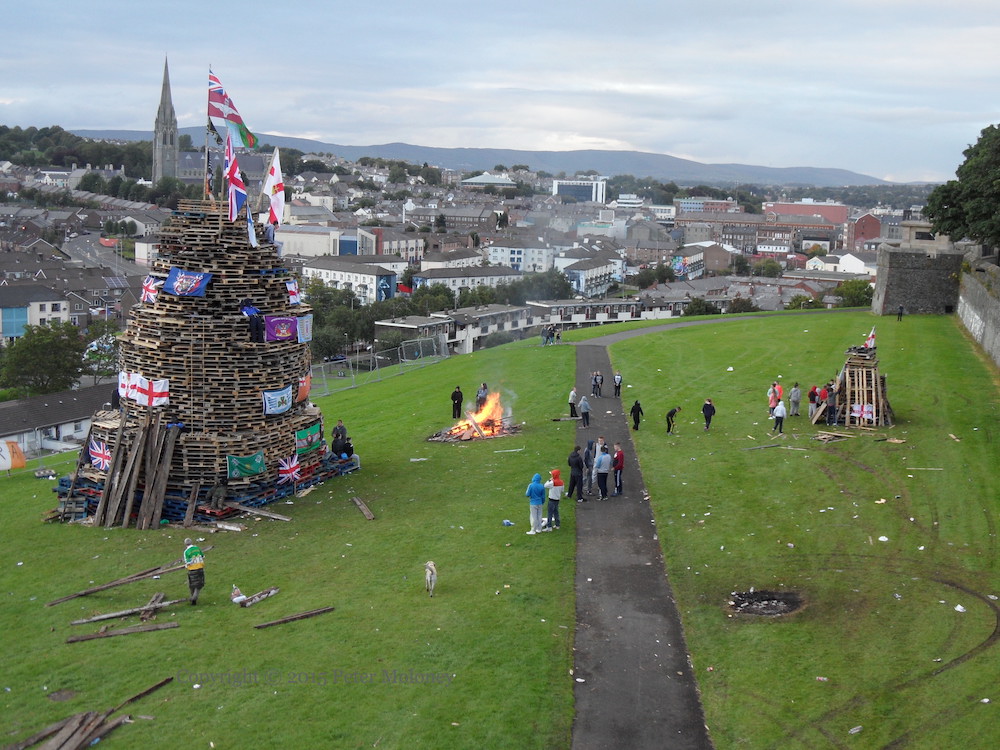
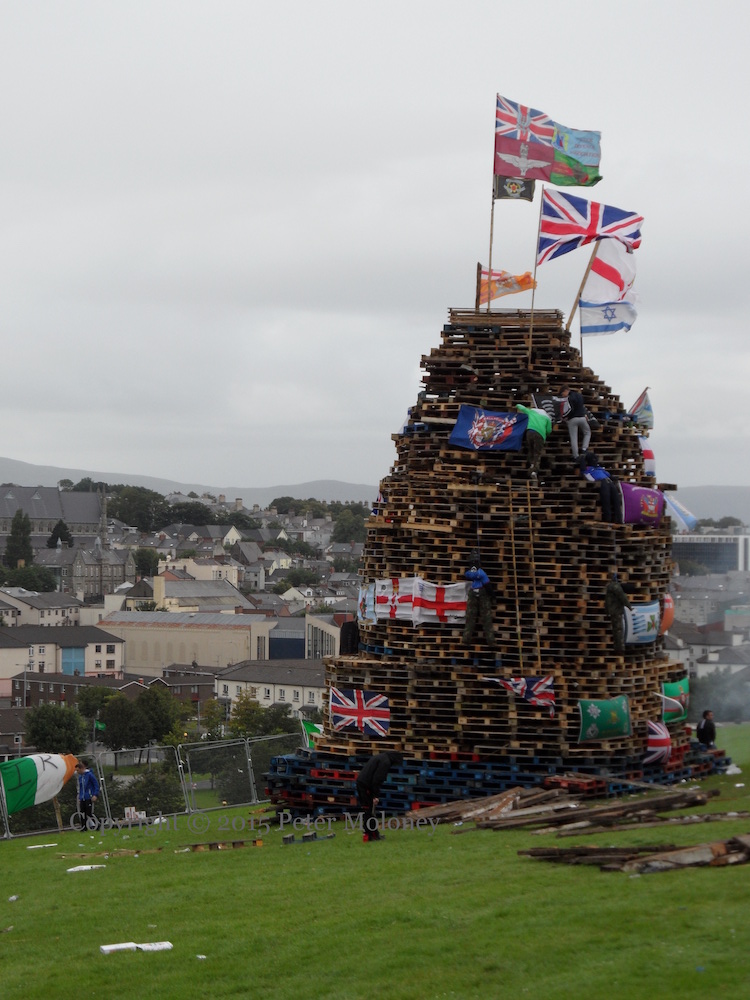
This is the internment (or “assumption”) bonfire (and mini-bonfire) in the Bogside decked with a range of flags — UVF/YCV, UDA, Orange Order, the Paras, Israel, Ulster Banner, Union Flag – and an “RUC” land-rover.
Last year (2014) it was in the Meenan Square waste-ground but this year it is at the city walls/Nailor’s Row.
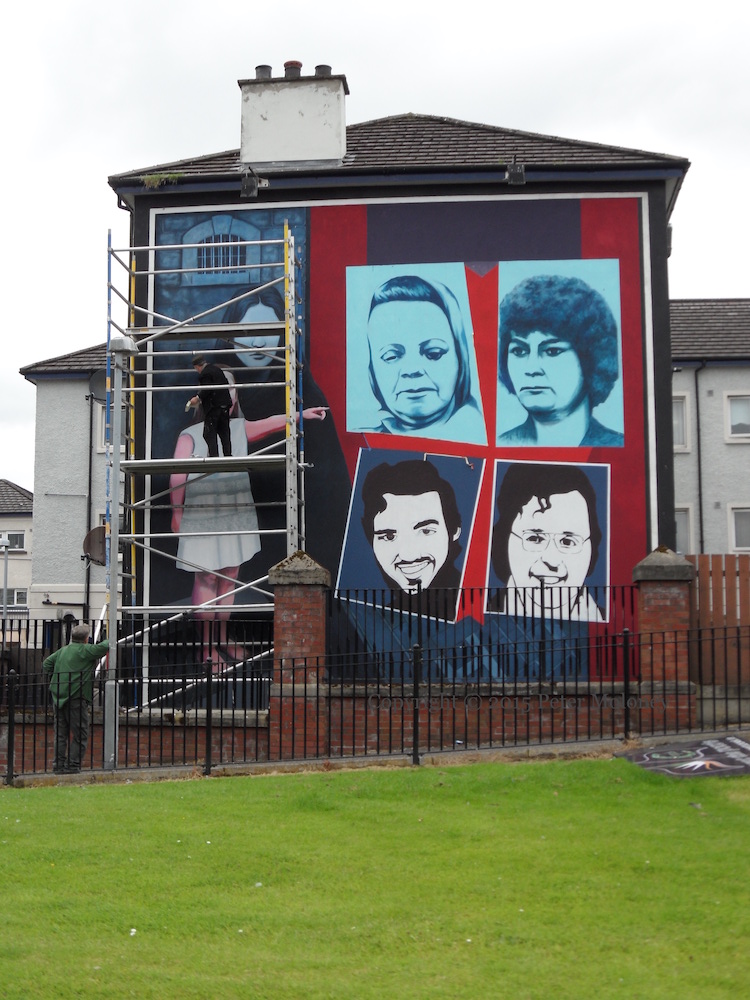
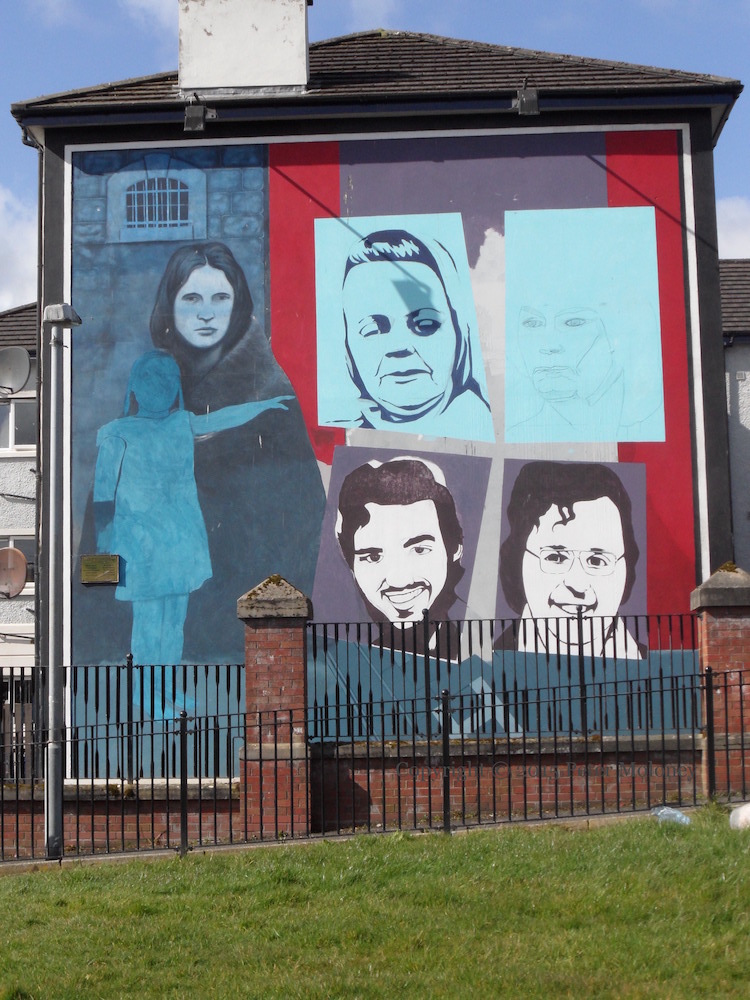
The figure in the centre of the mural above is Peggy O’Hara, mother of INLA hunger striker Patsy O’Hara, who remained active in socialist and republican circles and stood in the assembly elections in 2007 as an independent. She died in 2015 and was given a paramilitary funeral, including a volley of shots fired over the coffin (BBC | Irish Times | An Phoblacht).
The female figure above Mickey Devine (in the bottom right) is his sister Margaret, from whose house his coffin processed after his death in 1981. (See the plaque in Breaking The Chains.) The girl on the left is pointing towards another mural, a dove of peace.
The standing figure, and the plaque, are retained from the previous mural.
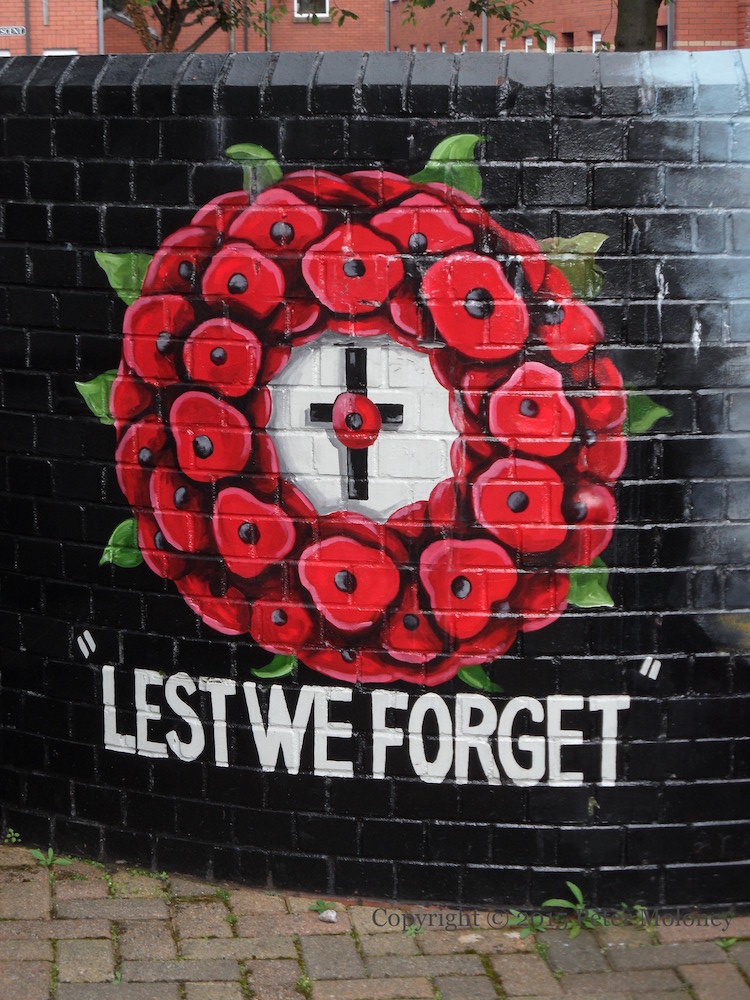
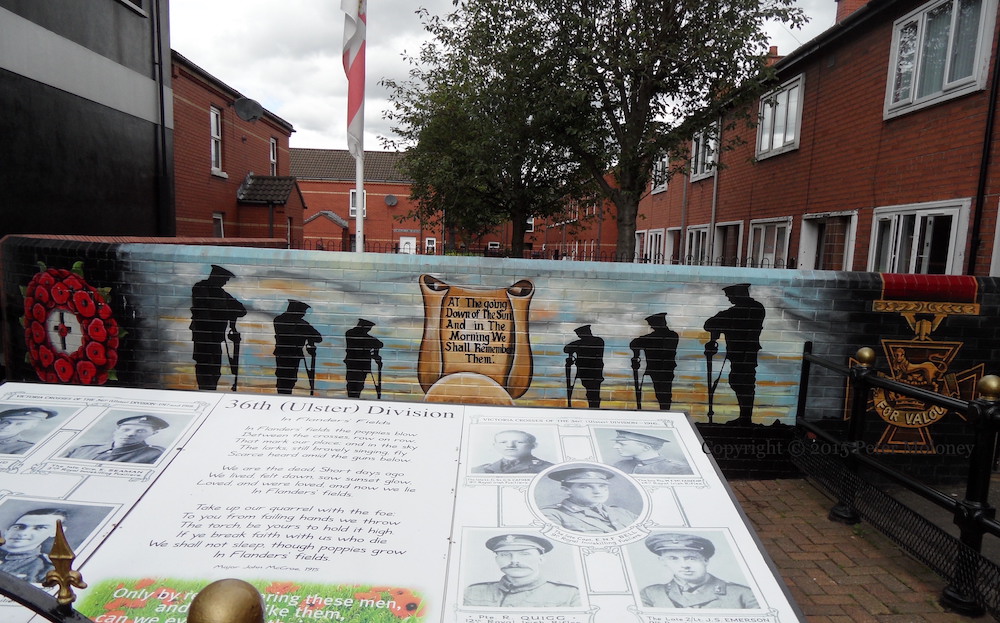
“At the going down of the sun and in the morning, we shall remember them.” The fence at the back of the Belvoir Somme Association’s Victoria Cross memorial garden on along the Newtownards (at the old Newcastle Street) has been replaced with a wall and the poppy wreath on the left (above) has been joined by a mural in memory of the Somme dead and the Victoria Crosses awarded to the 36th Division “For Valour”.
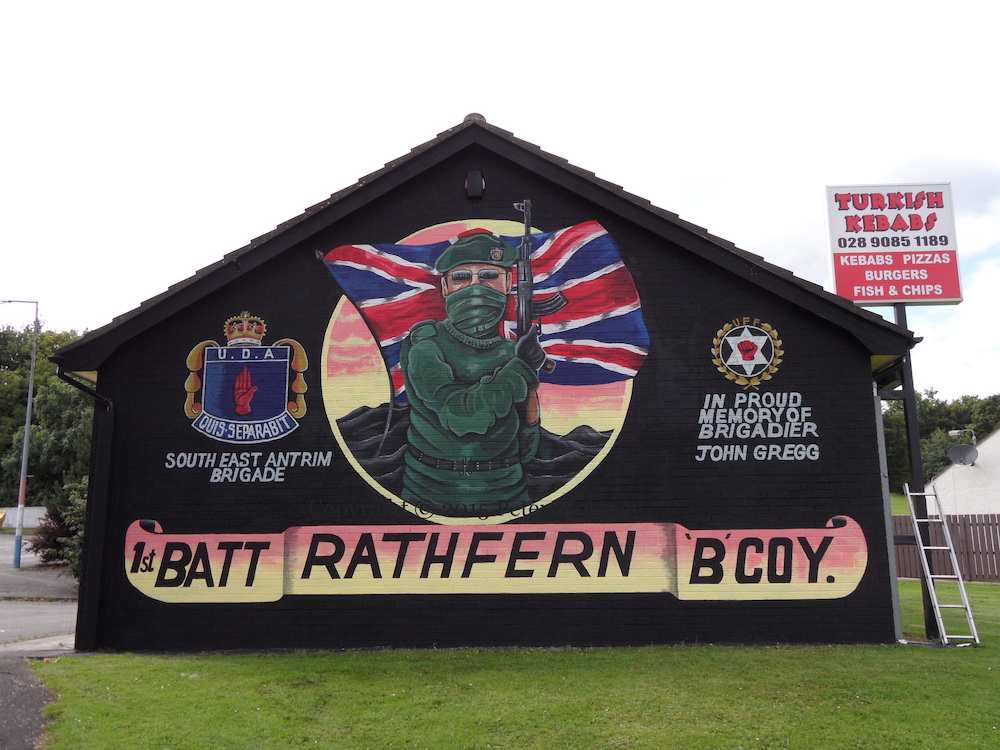
This is a new UDA mural in memory of John Gregg, “The Reaper”, who waged a campaign of terror against Catholics in south-east Antrim and was reputedly associated with British neo-Nazi groups. Gregg was gunned down in 2003, while returning from a Rangers match, as part of the power struggle with Johnny Adair.
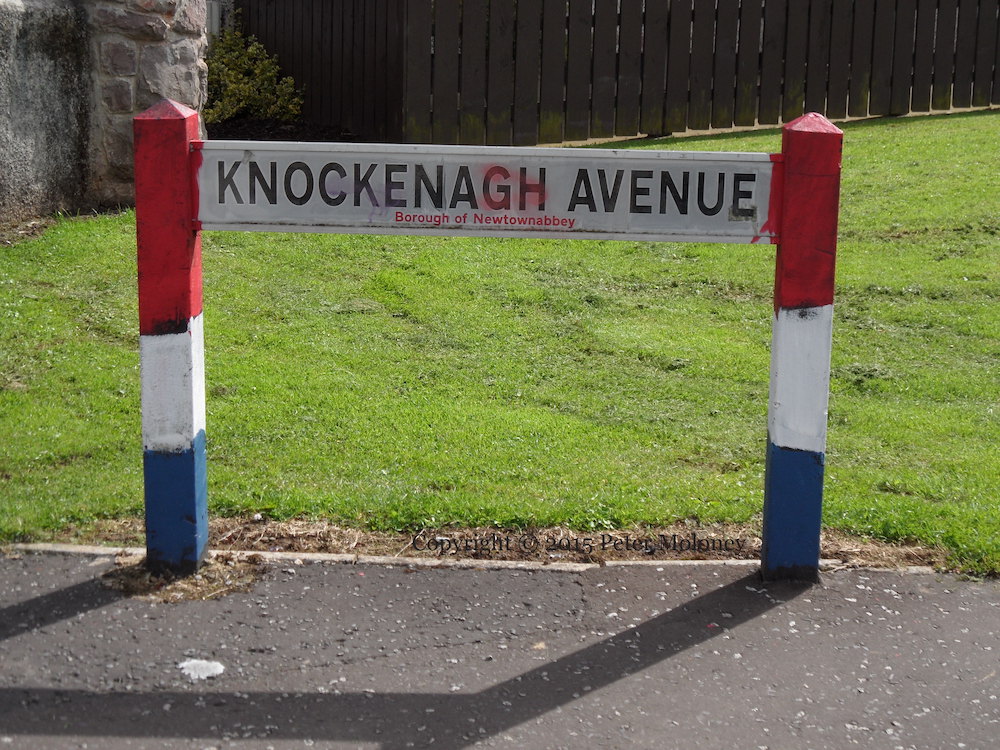
Nearby red-white-and-blue poles on Knockenagh Ave, Newtownabbey, are also shown.
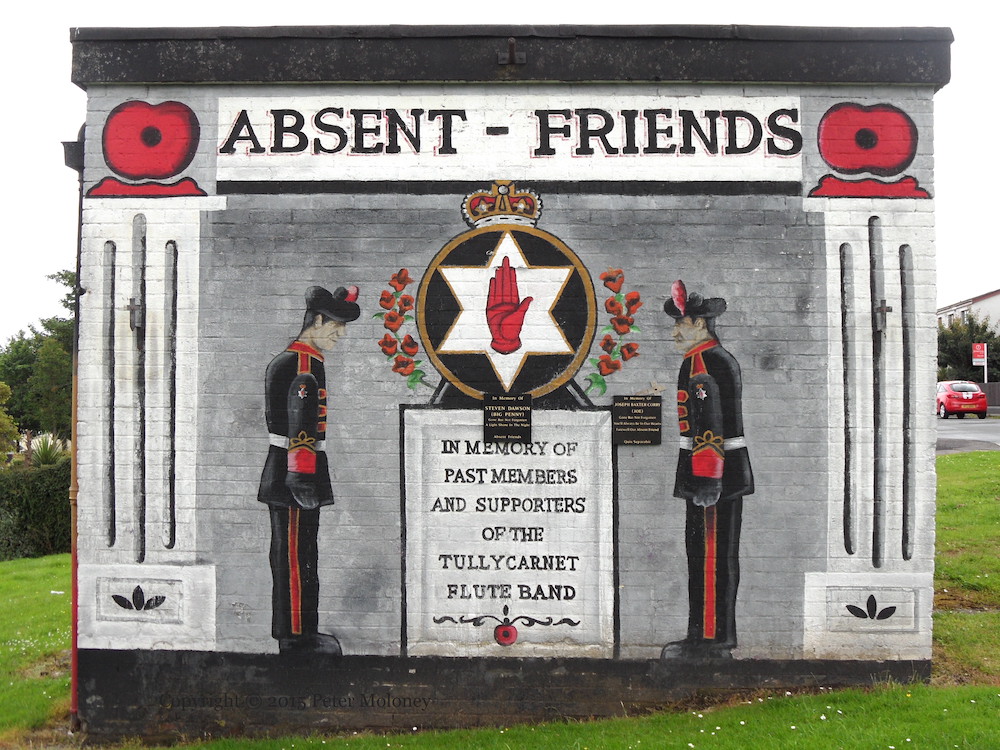
The Tullycarnet Flute Band mural on the electrical sub-station in Lochinver Drive, Tullycarnet, as been repainted/touched up (compare to 2013).
The plaques read: “In memory of Steven Dawson (Big Penny). Gone but not forgotten. A light shone in the night”, and “In memory of Joseph Baxter Corry (Joe). Gone but not forgotten. You’ll always be in our hearts. Farewell our absent friend.”
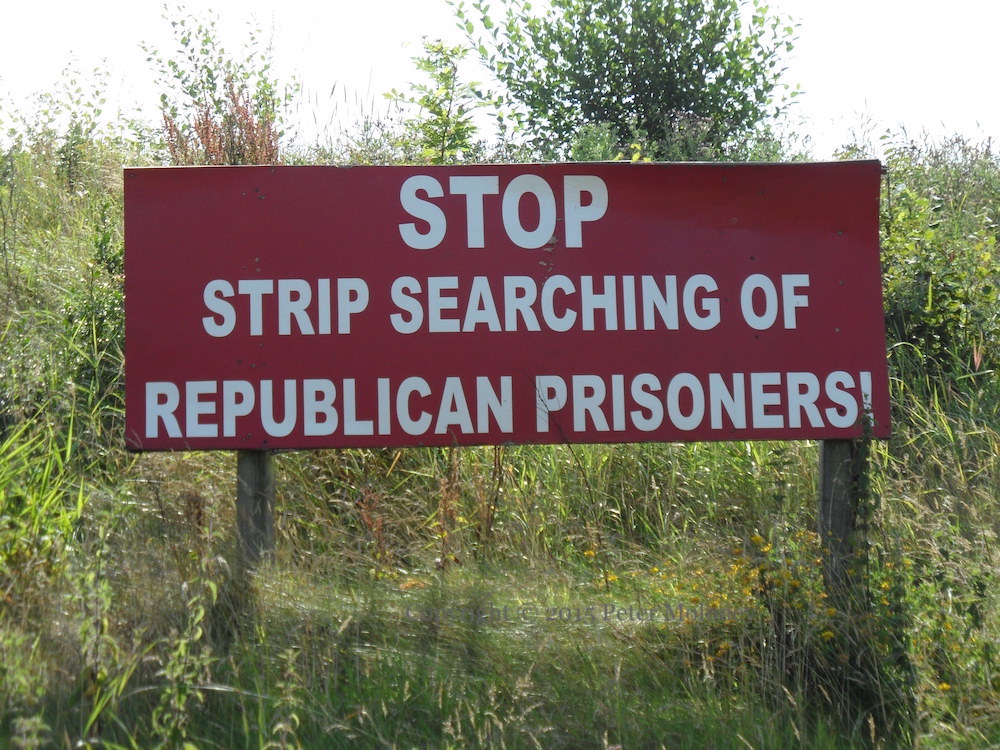
Here is a selection of stencils and small boards from anti-Agreement groups in Newry. “Stop strip searching of republican prisoners!”, “#JFTC2“, “Smash Stormont – Join RNU”, “End internment 1971-2013”, “Stop the Maghaberry strip searches”.
Camlough Road, Main Avenue, and Railway Avenue, Newry
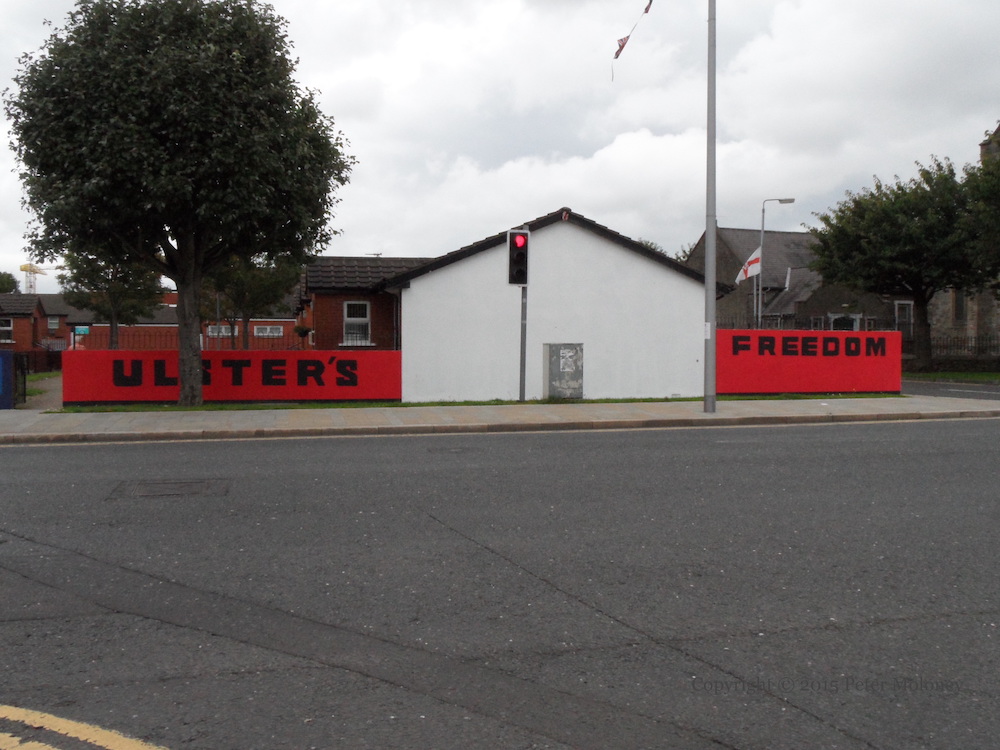
The murals along east Belfast’s “Freedom Corner” (on the Newtownards Road) were repainted over the course of several months in 2015. These images are from a variety of dates in July and August; the ‘red hand’ piece is incomplete – for the finished work, see The Strangest Victory In All History.
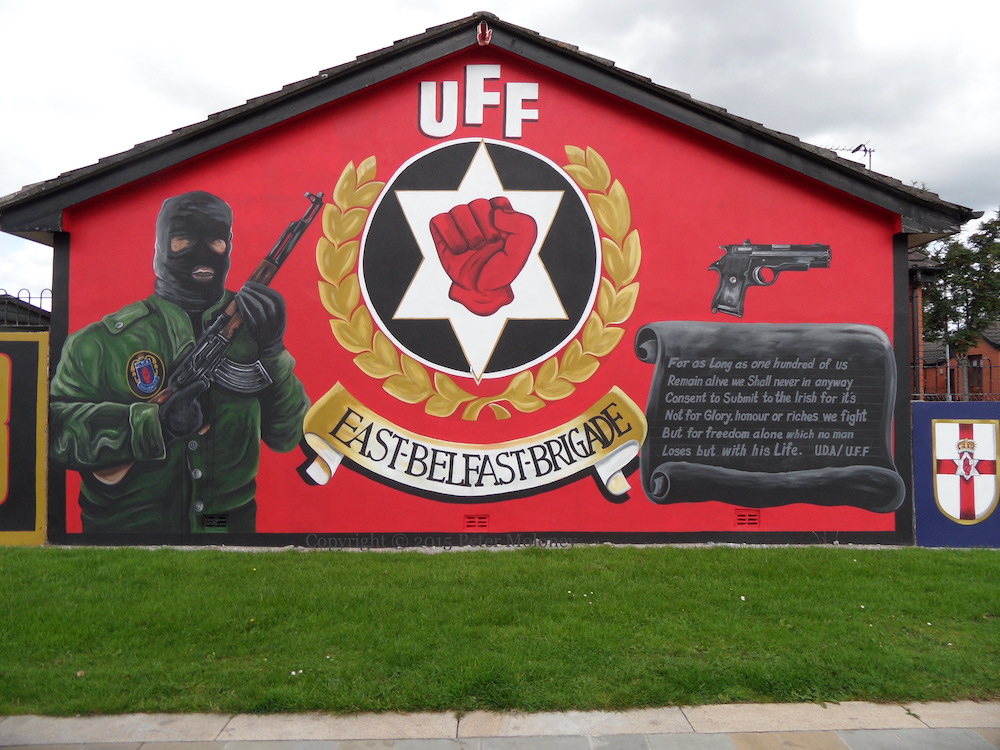
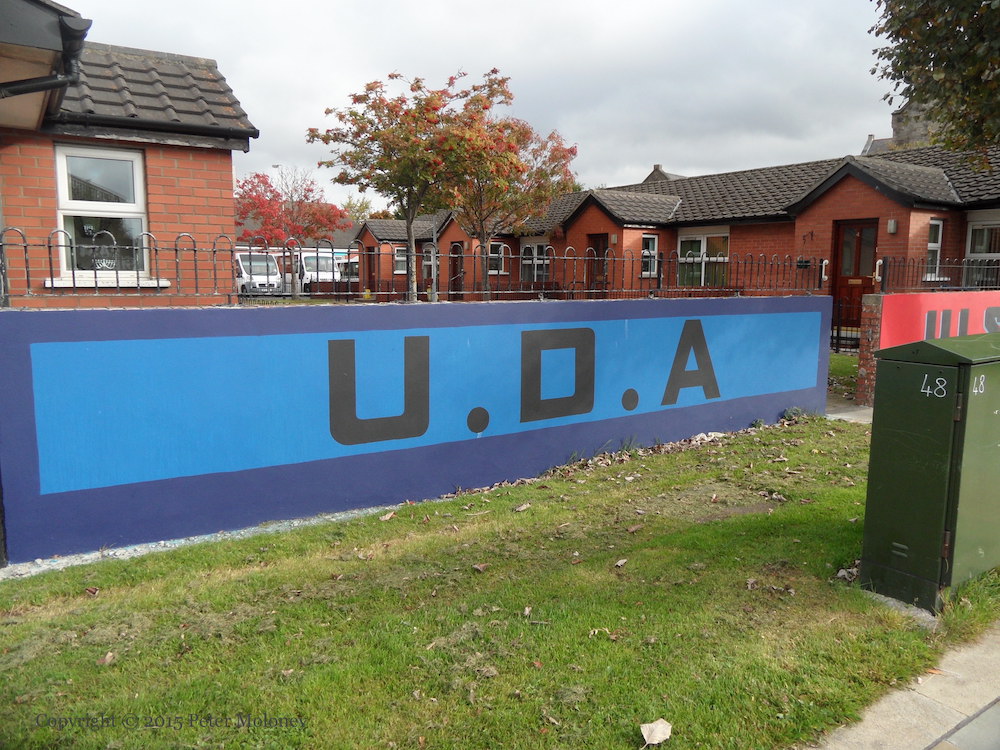
The new pieces reproduce the previous ones in terms of theme: UFF/Young Newton at the ends, with the Past (Specials and UDR) and Present Defenders (UDA) in the middle – compare with the 2009 entries Freedom Corner | Ulster’s Present Day Defenders | Young Newton.
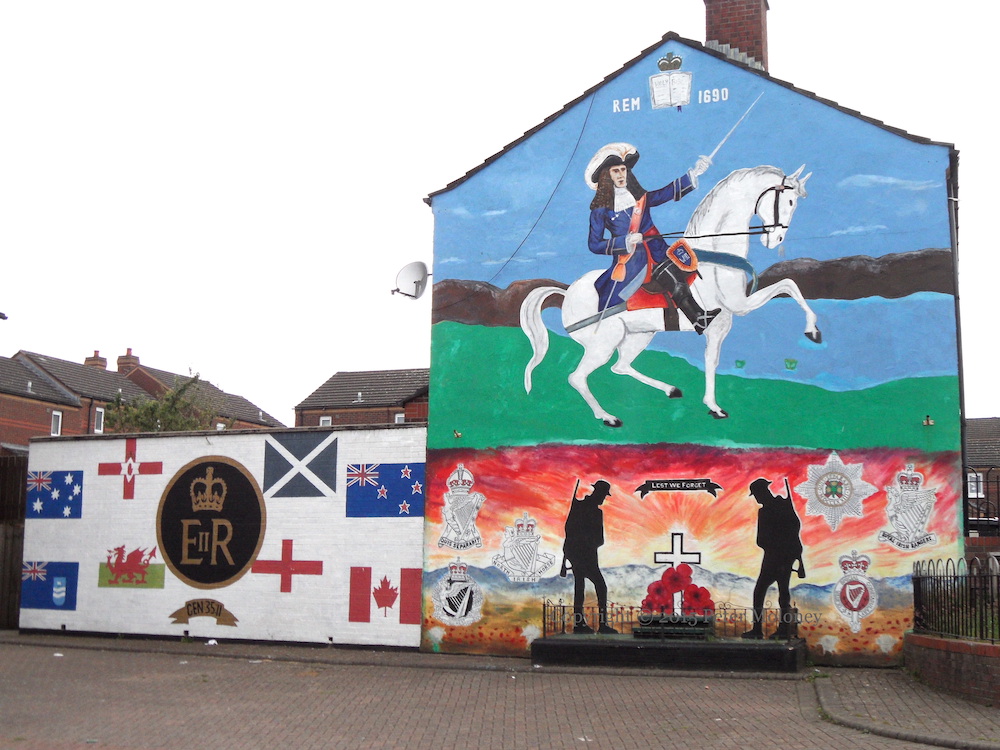
Genesis 35:11 reads (NIV) “And God said to him, “I am God Almighty; be fruitful and increase in number. A nation and a community of nations will come from you, and kings will be among your descendants.” The flags of Northern Ireland, Scotland, Wales, and England are joined in the mural above by those of Australia and (a simplified version of) the Falkland Islands (on the left) and New Zealand and Canada (on the right). The flag flying in the centre is the Royal Standard, flown on the building or vehicle where the monarch is.
The adjacent mural of army badges around a burial scene from the first world war features some lesser-seen items. On the left, alongside the Royal Irish Rifles (top left) and the (modern-day) Royal Irish Regiment (at the time of WWI the harp was plain and there was no garland), we see the emblem of the North Irish Horse, a cavalry unit in the Territorial Army. On the right, the emblem of the Royal Irish Rangers (which was folded into the Royal Irish Regiment in 1992) is joined by the star of the Irish Guards (above) and the emblem of the Ulster Special Constabulary or B-Specials (below). Only the Royal Irish Regiment and the Irish Guards remain as regiments of the British Army; “The Horse” now forms squadrons of other units. Of the six, four served in WWI; the B-Specials were formed in 1920 and the Rangers in 1968.
Above is King William III at the Battle of the Boyne in 1690.




















 Peter Moloney Collection