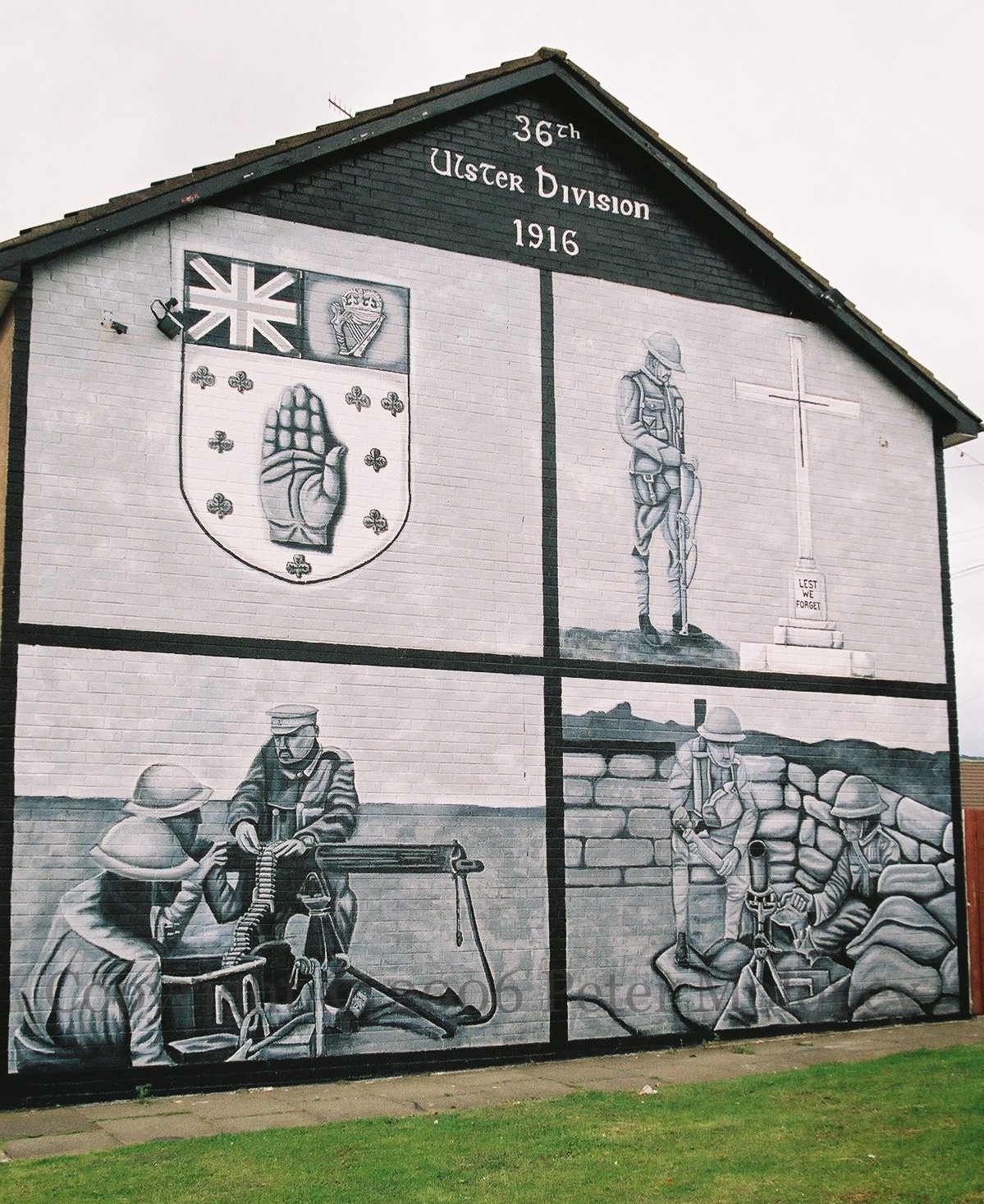
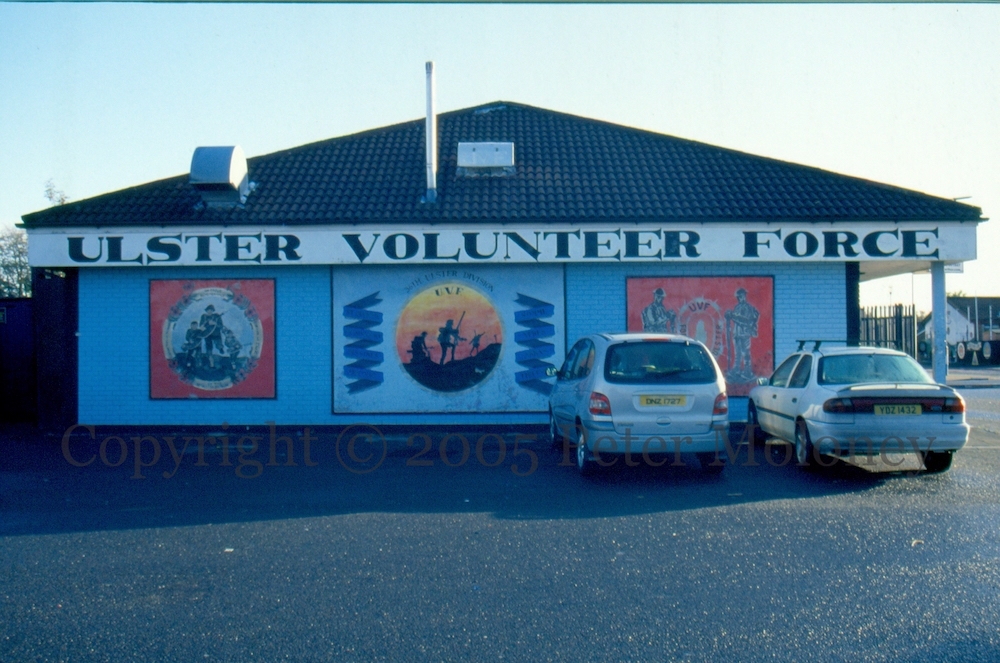
This is a Monkstown WWI mural in four quadrants, showing the emblem of the 36th (Ulster) Division, a soldier at the cross in the Thiepval Cemetery, soldiers feeding a belt of ammunition into a Vicker’s machine gun, and others loading a Stokes mortar.
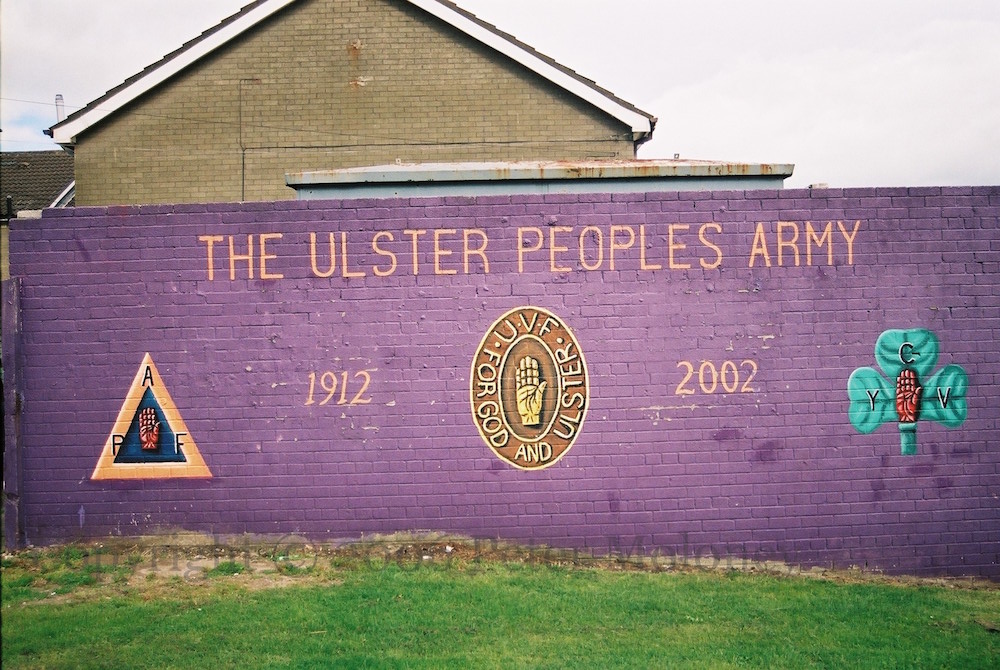
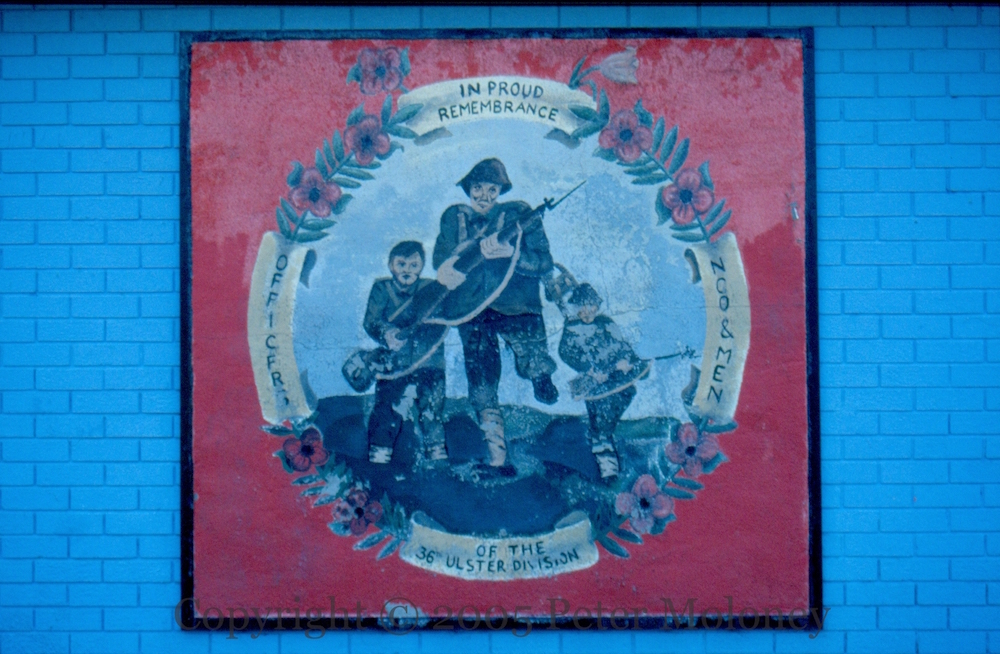
“In remembrance of the 36th (Ulster) Division – For God and Ulster”. “1912” refers to the founding of the Ulster Volunteers, who went on to form the 36th Division of the British Army, fighting at “Albert, Beaucourt, Thiepval, Grand Court, Passchendaele, Somme, Courtrai, Ypres, Cambreai [Cambrai], Rossieres [Rosières], Flanders, Baitleul [Bailleul], St Quentin, Beaumont[-]Hamel, Sch waden [Schwaben] Redoubt, Fricourt, Messines”. “At the going down of the sun and in the morning we will remember them.”
UVF volunteer Colin Caldwell died of injuries sustained in an IRA bombing inside the Crumlin Road jail in November 1991. A Rathcoole flute band was named in his honour (later merging with Sons Of KAI?).
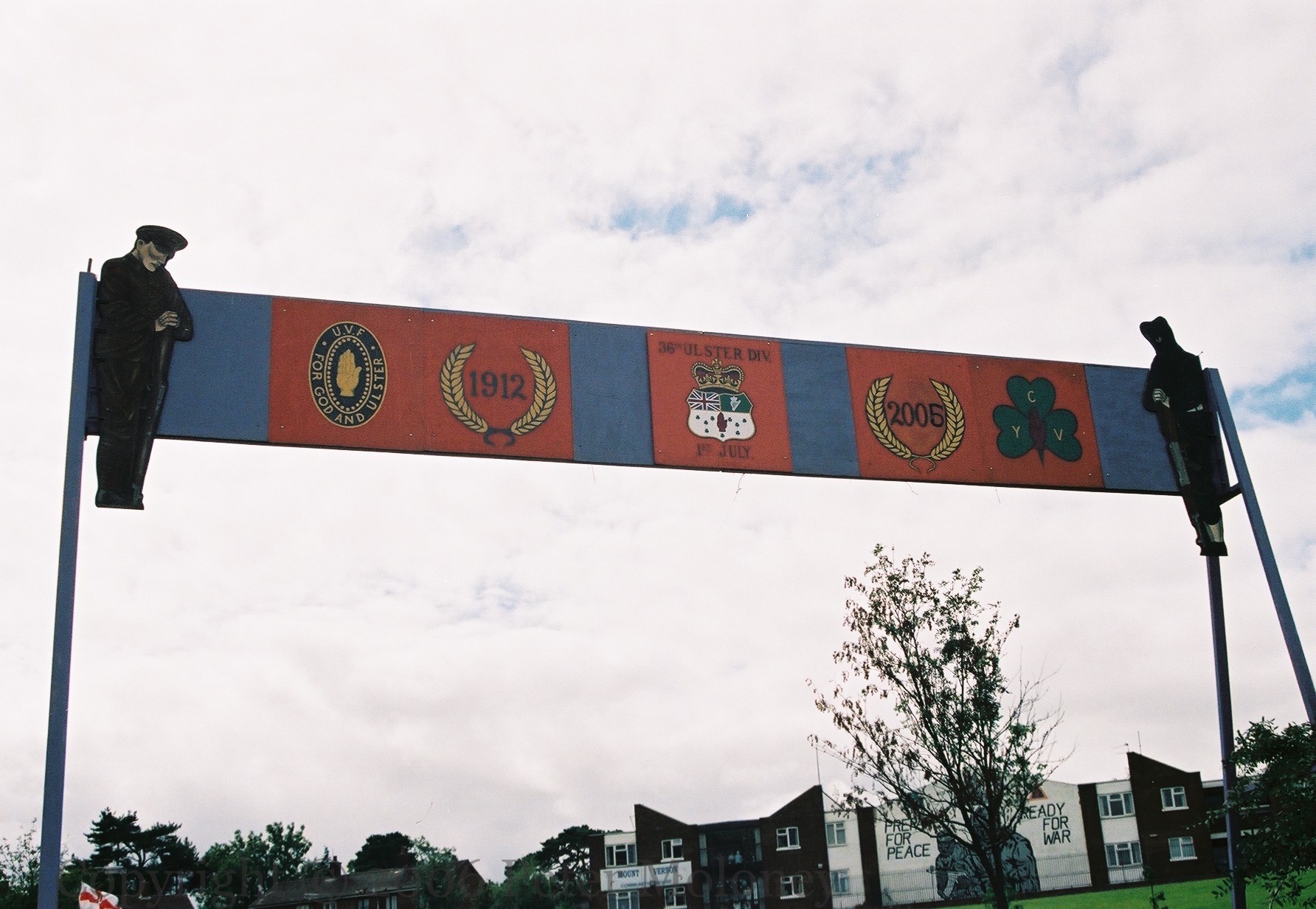
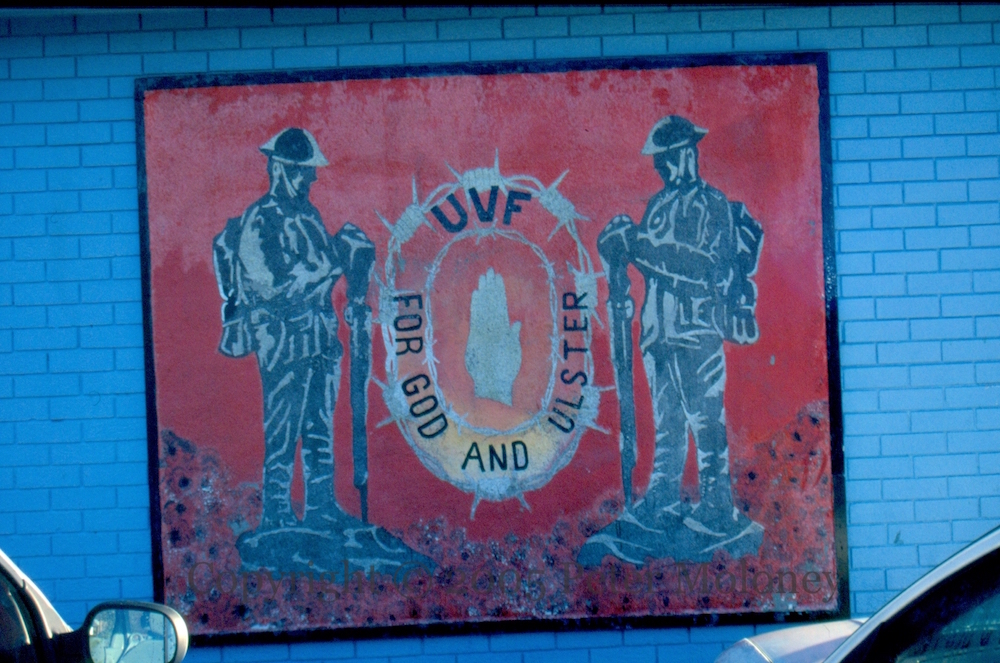
The 36th (Ulster) Division, formed from the Ulster Volunteers, went “over the top” at the Battle of the Somme on July 1st, 1916, losing about 5,500 men. They are mourned in this Mount Vernon arch by a soldier from the period. The “2005” date on the right, and the graveside mourner in modern UVF fatigues are intended to link the Ulster Volunteers with the UVF.
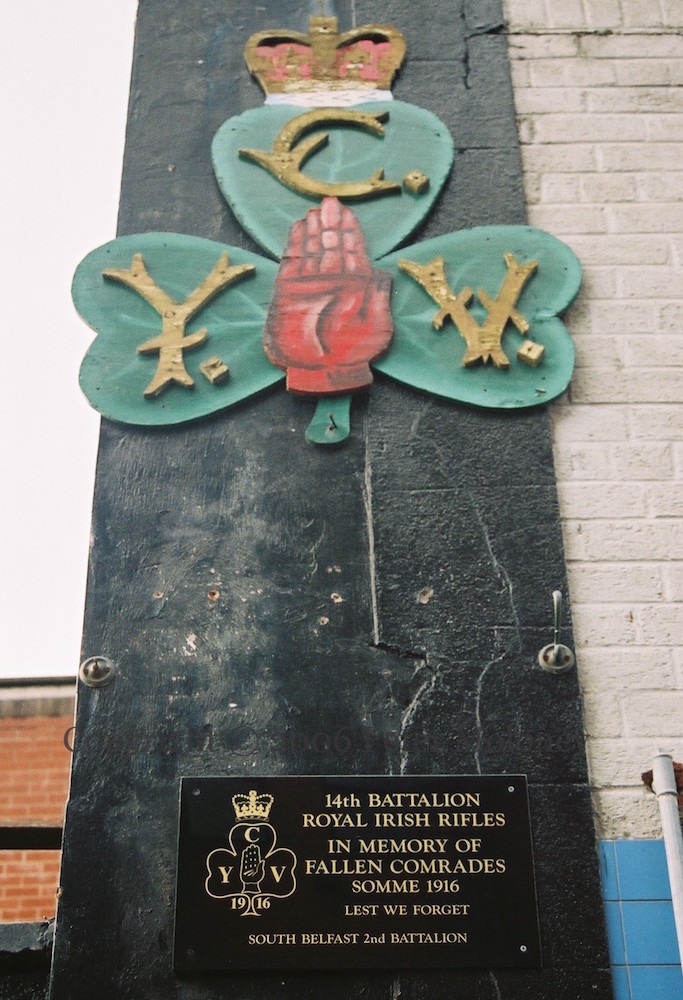
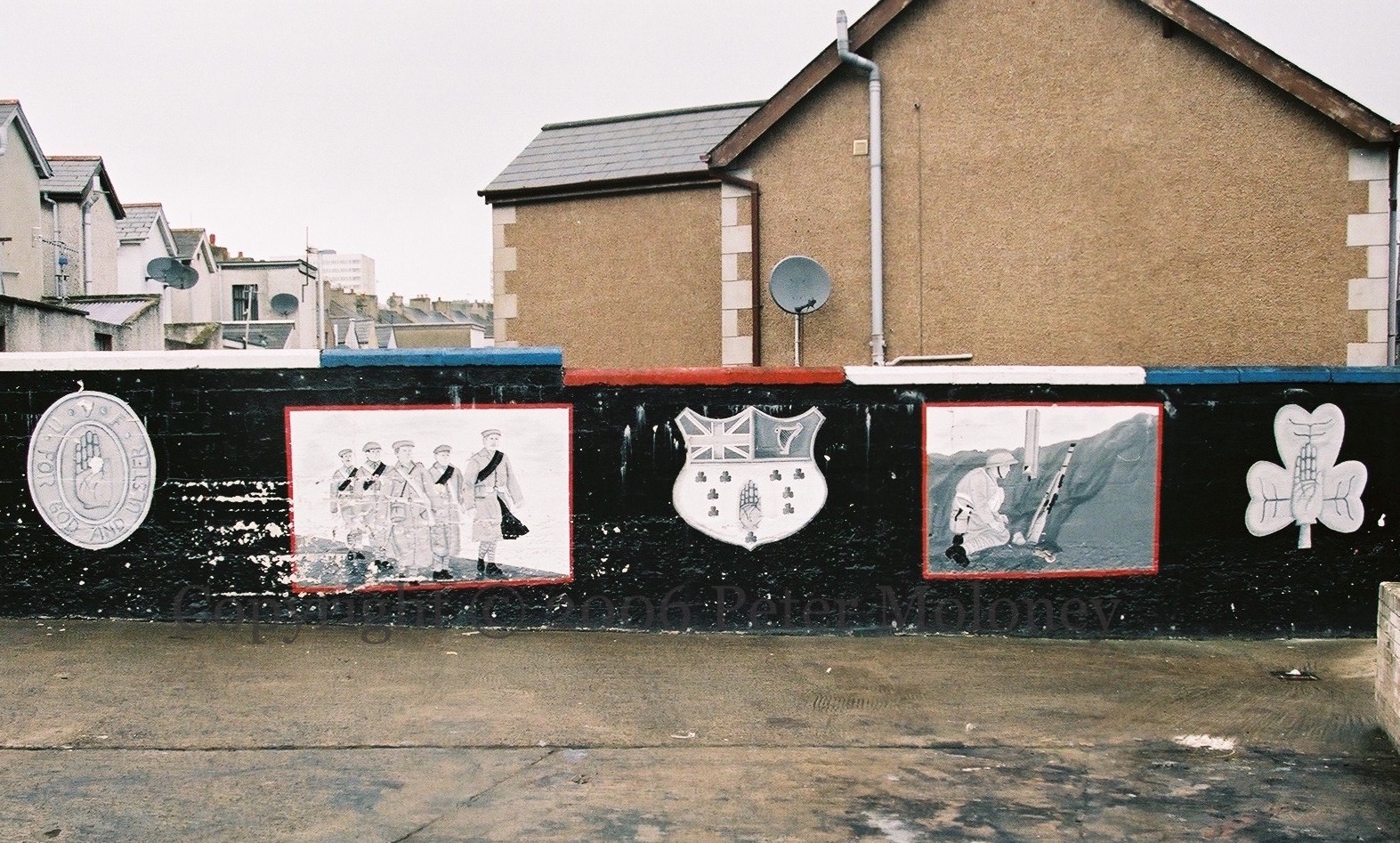
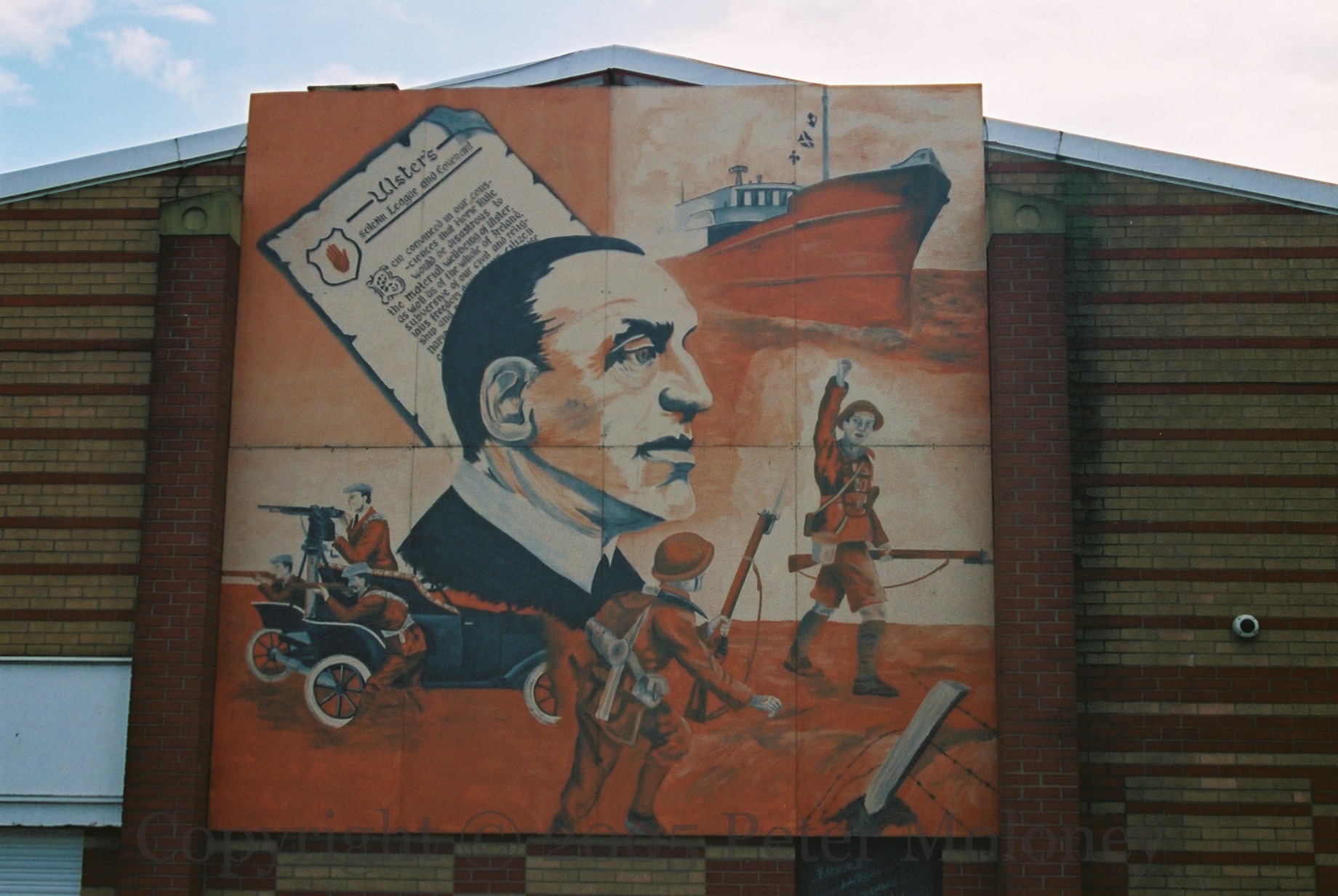
Five panel Ulster Volunteer/36th (Ulster) Division mural in Bank Road/Glynn Road, Larne: volunteers training at Fernhill (see 90 Years Of Resistance) and in the trenches of WWI, punctuated by the emblems of the UVF, Ulster Division, and YCV.
The Ulster Volunteers were formed in 1912 as a response to the threat of Home Rule. When WWI broke out they became the 36th (Ulster) Division and went over the top at the Somme.



 Peter Moloney Collection