“Progression requires inclusion” of UVF paramilitary gangs.
The painting of King Billy is by John Darren Sutton and was produced on a grand scale in Tavanagh Street, Village, south Belfast – see Hang Out Our Banners.
“It’s dangerous to be right when the government is wrong.” “Loyal Carrickfergus – then, now and always!”
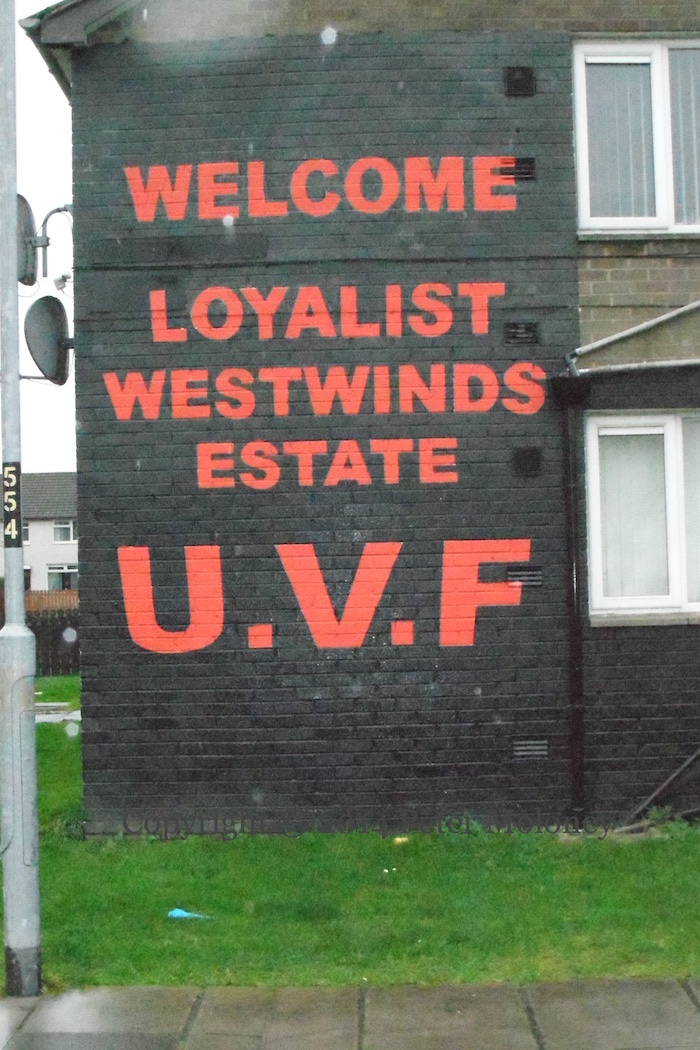
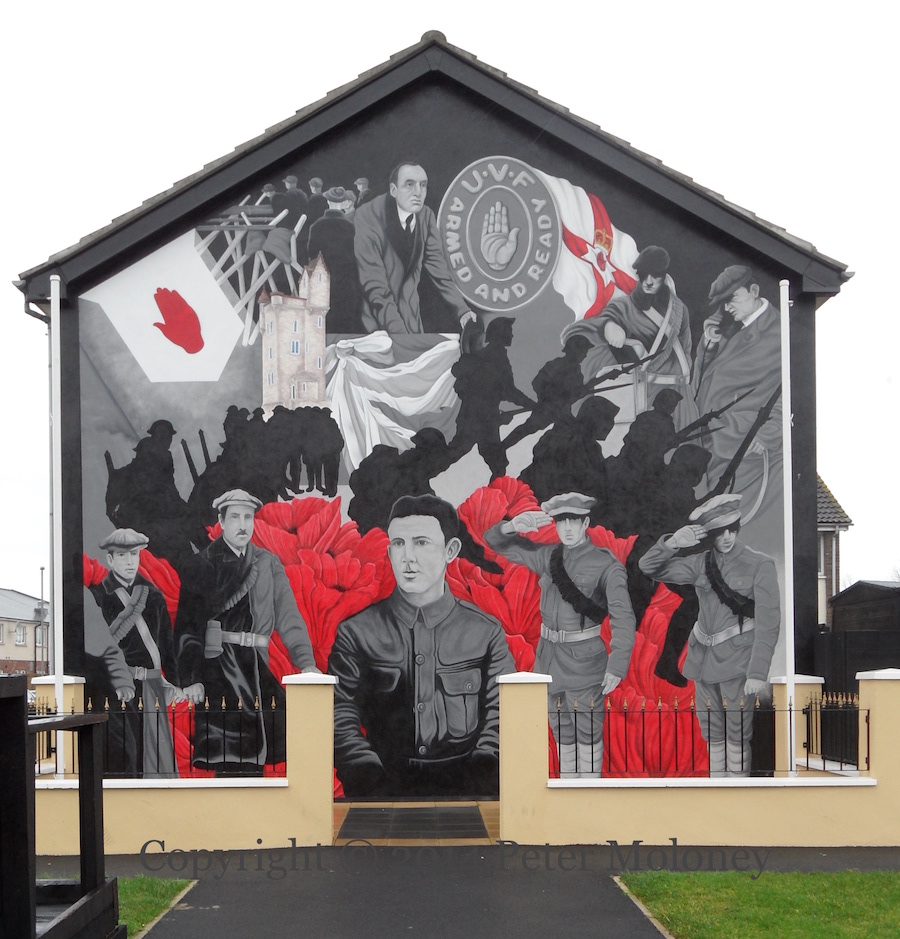
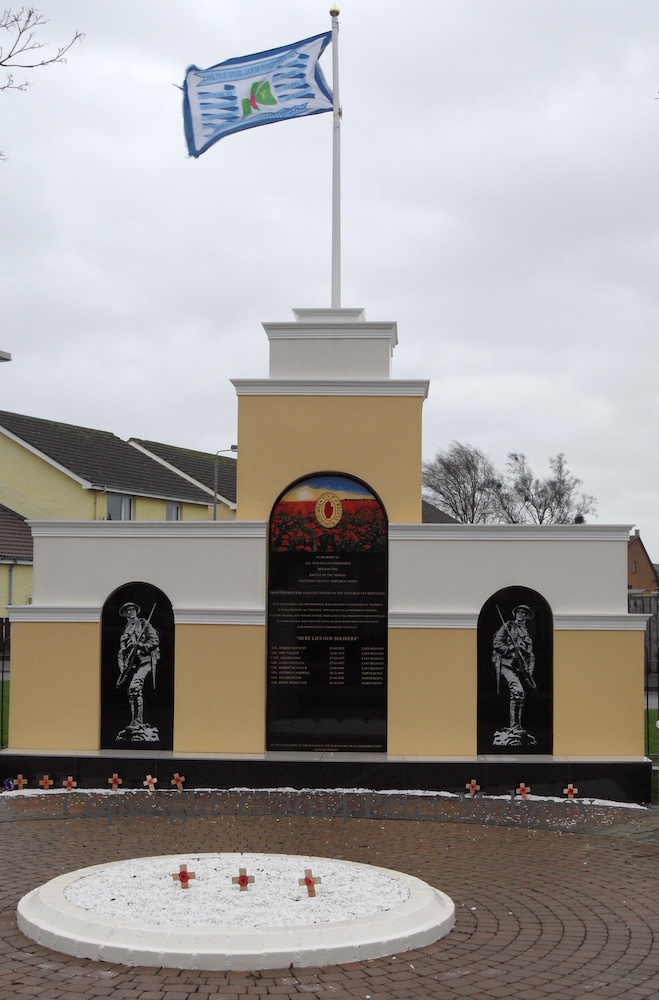
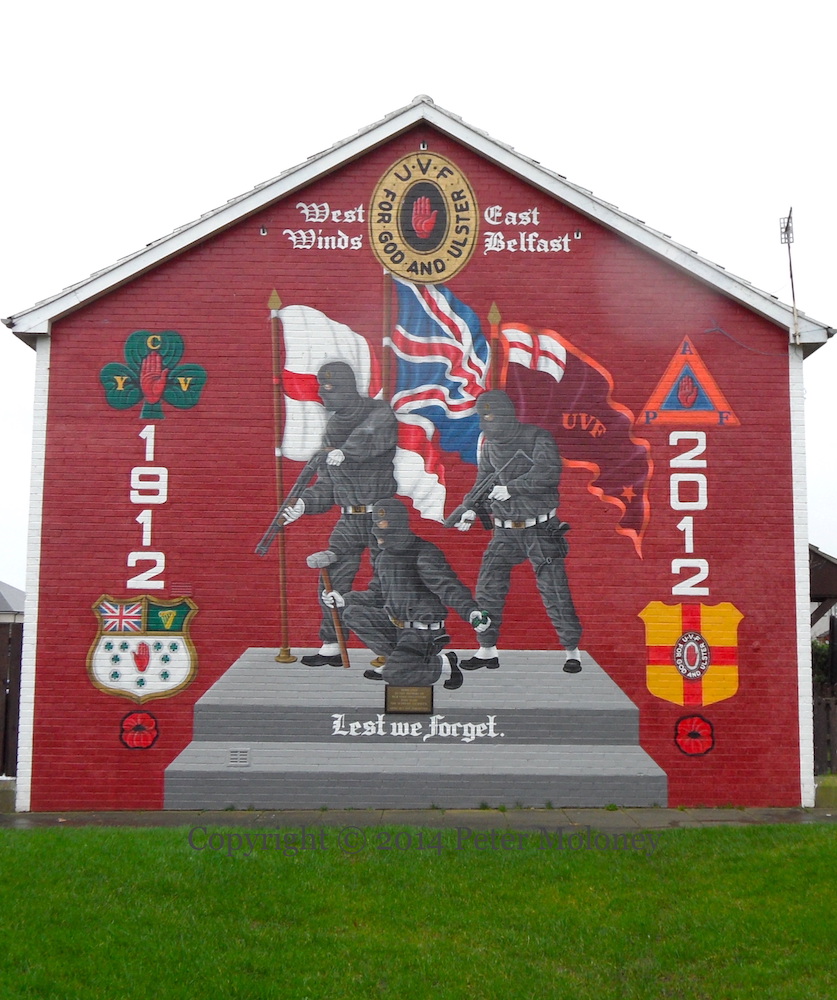
Here is a gallery of images from Westwinds estate in Newtownards, featuring (East Belfast) UVF murals and memorial gardens.
The newest one shows Carson signing the 1912 Covenant beneath a UVF emblem reading “Armed and ready”.
The one with some damage reads, “Our only crime was to serve you, the community and protect ‘our country’. Now times have changed. As a force, our belief is not only ‘for God and Ulster’ but to you, the community, ‘help us to help you’.”
The central stone in the memorial garden is dedicated to “all our fallen comrades both in the Battle Of The Somme and fight against republicanism”.
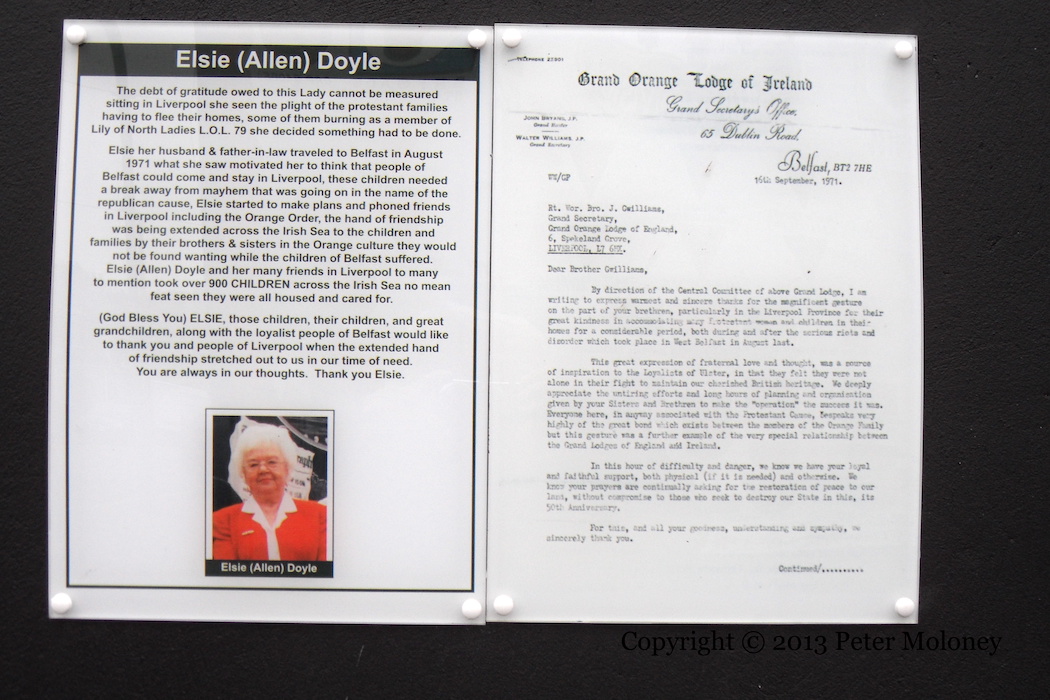
This is a repainted version of the Canada Street mural about Protestant refugees to Liverpool in 1971. The text on the right of the previous version began “In August 1971 many Protestants fled their homes as the IRA launched a bitter sectarian attack on Protestant communities throughout Belfast” but now does not mention the IRA.
To the mural has been added a laminated letter of thanks to Elsie (Allen) Doyle, one of the organisers in Liverpool
This is a refreshed Eddie The Trooper in Ebrington Terrace, Waterside, Londonderry, with solid black border and UFF red fist in yellow six-pointed star above. Here is the previous version.
These three pairs of UK shields (Ulster Banner, St Andrew’s Saltire, Union Flag) are in Lindsay Street, south Belfast. There was also a fourth one, with the shield of the 36th Division. The were mounted in the four spaces (and in two cases, on the backing boards) used for a set of older boards, and the old title strip is still visible in the first two images: “Relief Of Londonderry” can be seen in the first image, while “Williamite cavalry charge, Aughrim” is visible in the second.
(The other two were “Jacobites fleeing at Enniskillen” and “Battle Of The Boyne”. For the four previous pieces, from left to right, see D00353, D00355, D00354, and D00356.)
“Donegall Pass UVF 1913-2013” Visible from the Ormeau Road, this large union flag greets visitors to Donegall Pass in the south of the city. It asserts the presence of the UVF and connects the original Ulster Volunteers of 1913 to the present-day Ulster Volunteer Force one hundred years later: the aim of the original Ulster Volunteers was to resist the impending rule by Catholics under Home Rule.
“The Ulster conflict is about nationality. This we shall maintain” with the red hand for “Ulster”, the thistle for Scotland, the Union Flag for the UK, the rose for England, and – new to this version of the mural – the daffodil for Wales. For the previous version of the mural, which uses the dragon for Wales, see M02376.
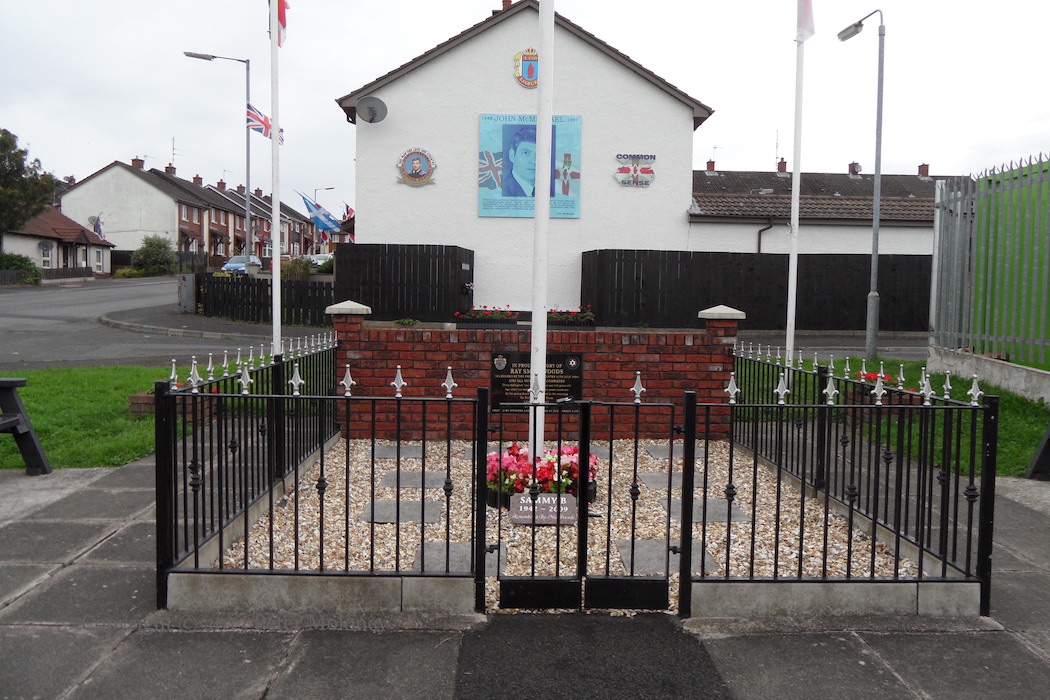
The South Belfast UDA/UFF commander John McMichael (1948-1987) was killed by an IRA car bomb. In addition to organising a team of assassins in the 70s and 80s, he founded a Political Research Group and wrote two documents proposing an independent Northern Ireland, 1979’s Beyond the Religious Divide and 1987’s Common Sense (available at CAIN), promoting the philosophy of ‘Ulster nationalism’. The quote on the board comes from the end of the Introduction to Common Sense:
“There is no section of this divided Ulster community which is totally innocent or indeed totally guilty, totally right or totally wrong. We all share the responsibility for creating the situation, either by deed or by acquiescence. Therefore we must share the responsibility for finding a settlement and then share the responsibility of maintaining good government.”
“One man, one love, one country. Commonsense. In loving memory. Quis separabit.” “A Coy” “Old Warren”
The Smallwoods plaque is the same but the trio of boards is new, as compared to 2010.
This small board is not far from the upper entrance to Old Warren in Lisburn. There’s no trace on-line of a ‘Moira Road Young Loyalists’. So, it might have been painted by an individual or family along the road. Neither the old UDA A Coy or B Coy boards mention a youth division.