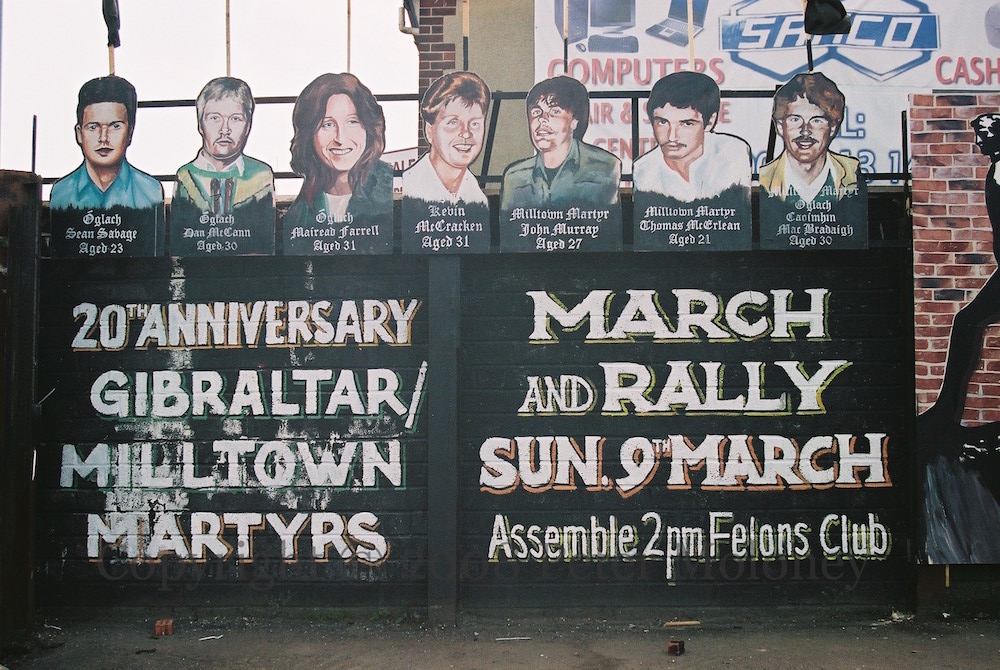
Óglach Caoımhín Mac Brádaıgh was killed in pursuit of Michael Stone as he attacked the burials of the Gibraltar Three in Milltown Cemetery on March 16th, 1988.
2008 was the twentieth anniversary of the killing of IRA members Seán Savage, Danny McCann, and Maıréad Farrell in Gibraltar on March 6th, and the subsequent deaths related to their funerals: IRA volunteer Kevin McCracken was shot on the 14th near the Savage family home on the night the coffins arrived in Belfast and, at the funeral, Thomas McErlean, John Murray, and IRA volunteer Caoımhín Mac Bradaıgh were killed by the UDA’s Michael Stone. The Ballyseedy Memorial was used in the mural painted at the time.
This “blue plaque” from the Ulster History Circle is on the wall of Kelly’s Cellars (established 1720) in Bank Street: “Society of United Irishmen met here 1791-1798.” Henry Joy McCracken was hanged in the nearby Corn Market.
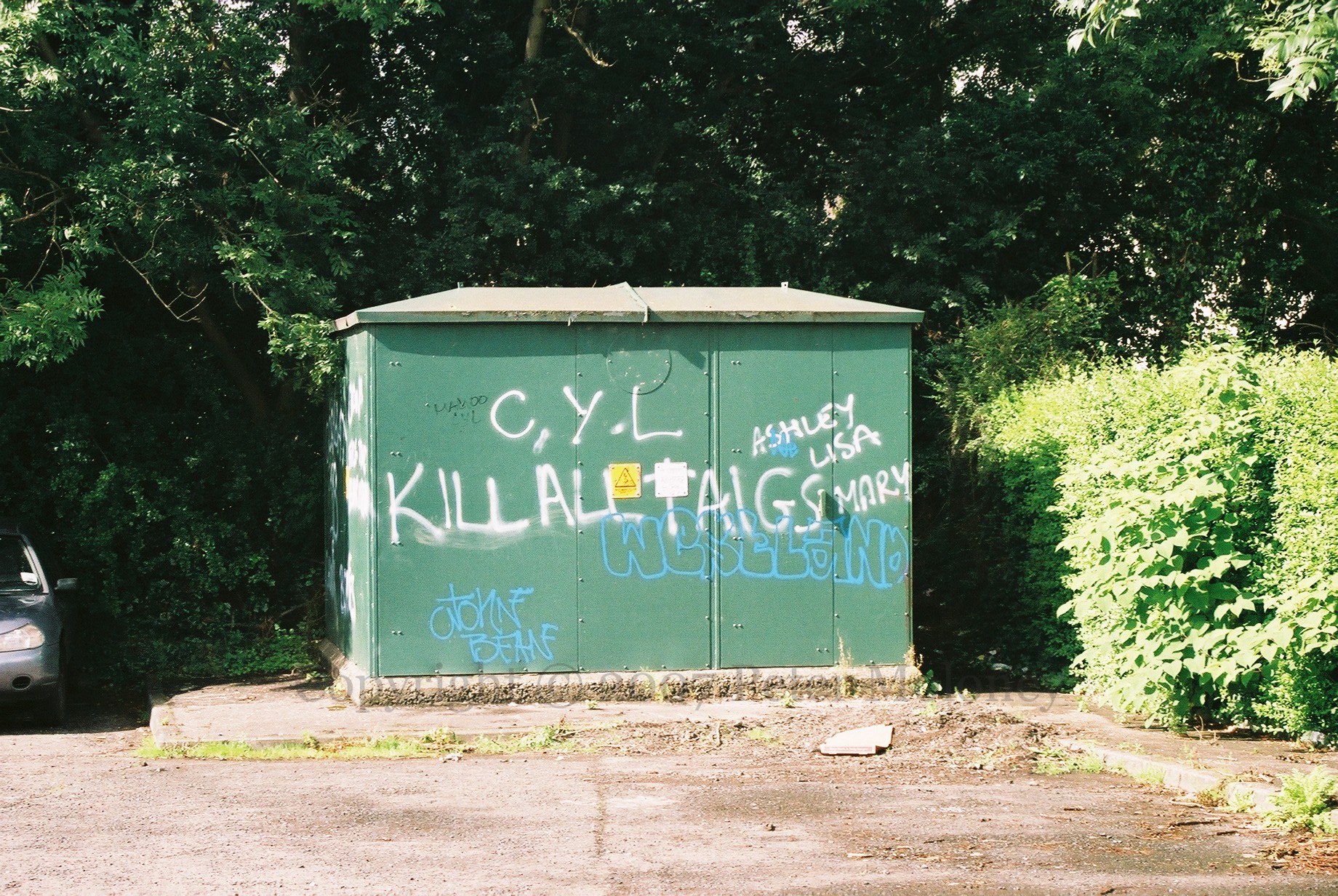
Graffiti in the Westland Road estate, off Cavehill Road, and from Ballysillan Road: “CYL [Cavehill Young Loyalists] – kill all taigs”. For the CYL, see previously Fearless. And, second, “KAT”, “UVF” on the shutters of Fryer Chuck’s, on the Ballysillan Road.
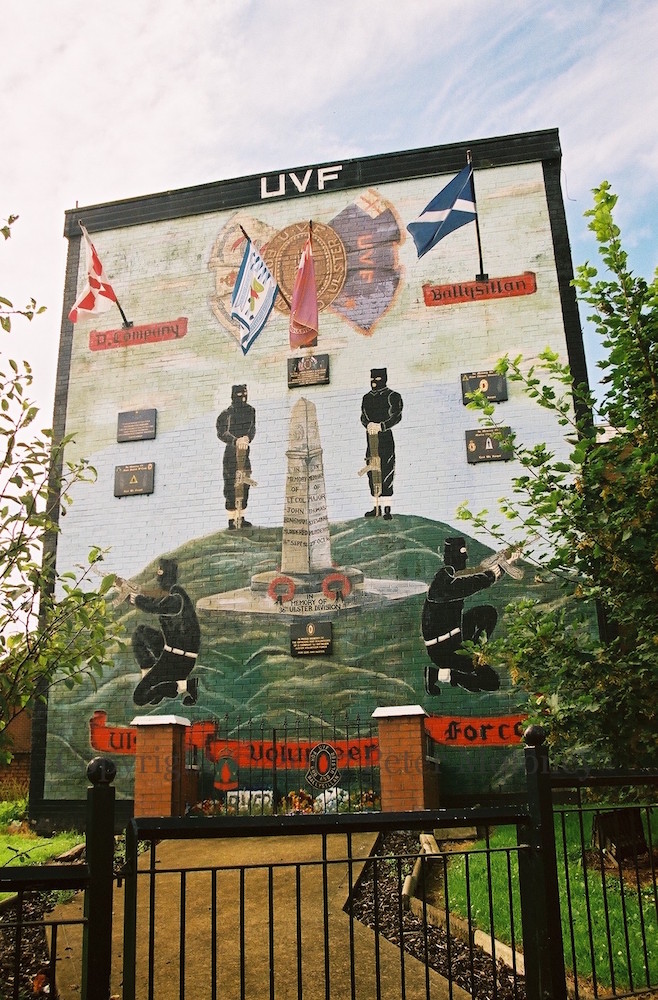
The memorial in the middle has now (compared to the original mural) been labelled (on a plinth) “In memory of 36th (Ulster) Division” but the names on the stone remain those of UVF volunteers John Bingham and Thomas Stewart.
The plaques are to (left) Davey Phillips, Patrick McEvoy, (top middle) John Bingham, (right) Thomas Stewart, Chin Taylor. The plaque in the middle is to “the officers and volunteers of of D Company 1st Battalion Ulster Volunteer Force”.
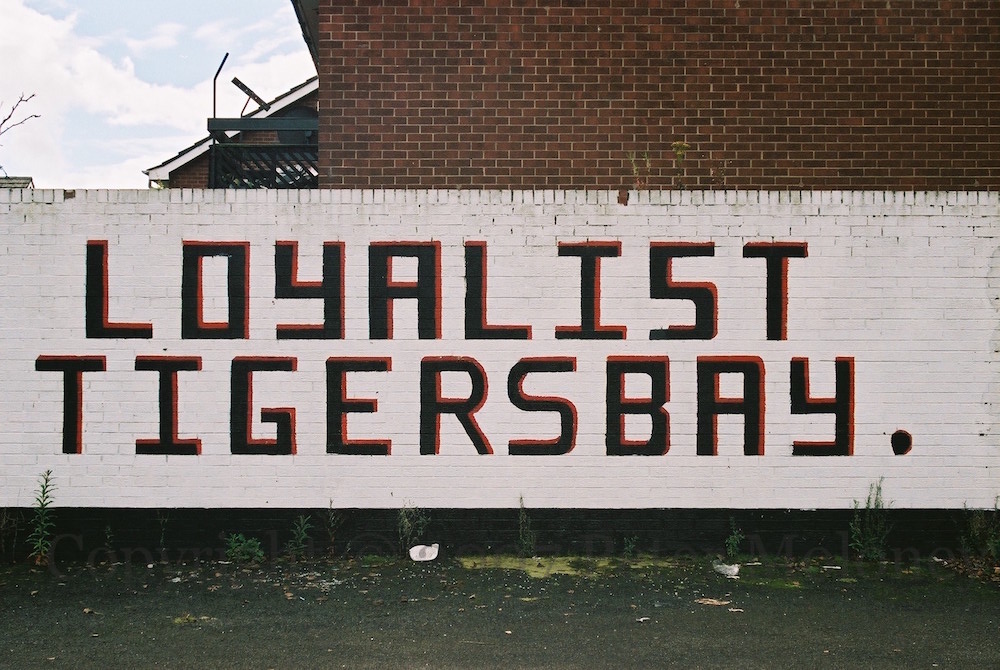
There were originally UFF and UDA emblems to the left and right of the “Loyalist Tiger’s Bay” which – by omission from this image – we can assume had been painted out by 2007.
Sixteen year-old Glen “Spacer” Branagh was killed by a premature blast bomb during a riot on Remembrance Sunday (Nov. 11), 2001. His portrait is on a board at the centre of UDA flags and guns (and the tiger of Tiger’s Bay). “Ulster Young Militants – Terrae filius.” The background was previously yellow.
“If the Provos and the pan nationalist front and the British and Irish governments keep trying to succeed in a united Ireland then they may prepare themselves for another 30 bloody years for the battle will have just begun.”
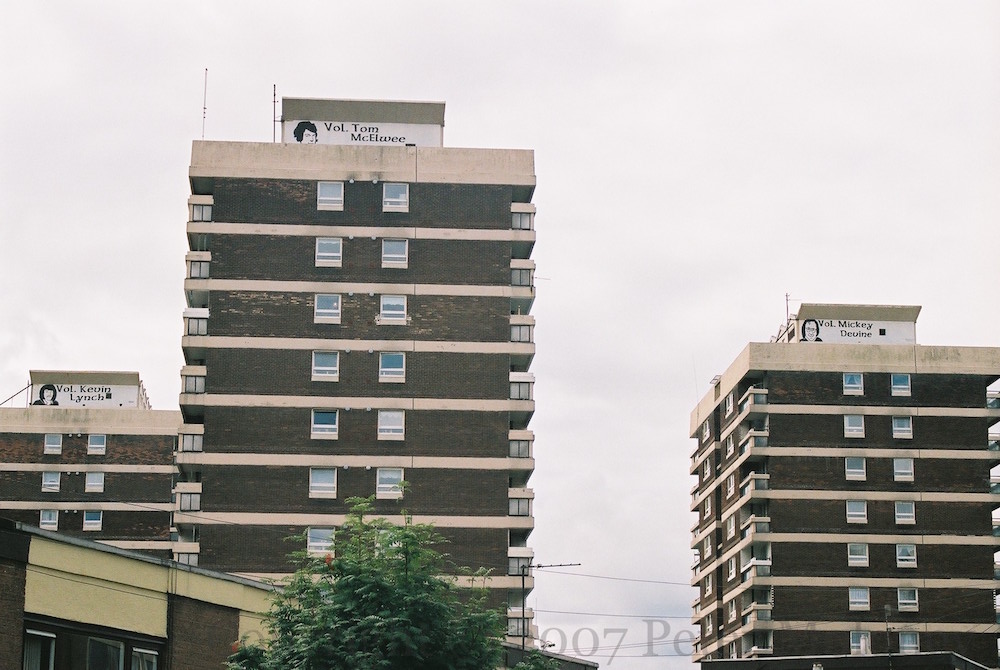
Three hunger strikers (all three from 1981) – Kevin Lynch, Tom McElwee, Mickey Devine – on the tops of three ‘houses’ in the New Lodge. For a complete list of strikers and houses, see New Lodge Flats.
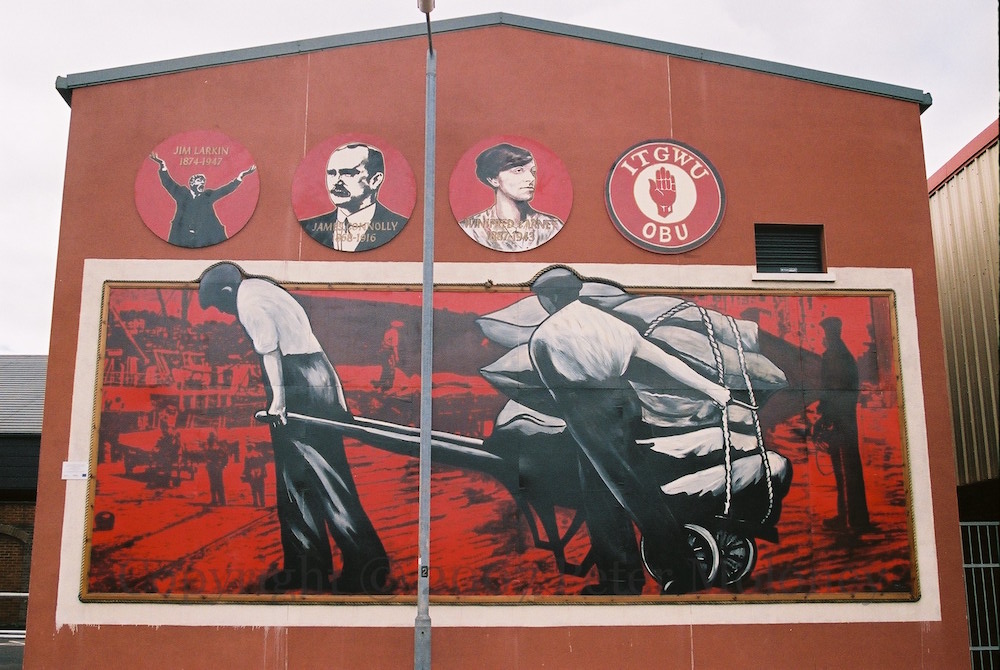
“Remembered with pride and affection our friends and fellow-dockers who were killed at work or suffered pain and premature death from unsafe and unhealthy working conditions in the port of Belfast. ‘On a ship’s dark deck a man is dead/wives, sisters, brothers, parents, shake heads and cry/as they knew not who to blame./An injustice has arrived/pain and anguish begins.’ Memories are everlasting. Ar dheıs Dé go raıbh siad. Erected by the Dockers Club and SHIP [Shared Heritage Interpretive Project] on International Workers Day, April 2007.” The plaque is on an exterior wall of the Dockers Club, adjacent to the mural. Above are portraits of Jim Larkin, James Connolly, Winifred Carney, with the emblem of the IGWU/OBU [One Big Union]. Larkin founded the ITGWU in 1909. It was led by Connolly from 1914 to 1916. Carney, from Bangor, founded the Irish Textile Workers’ Union in Belfast in 1912
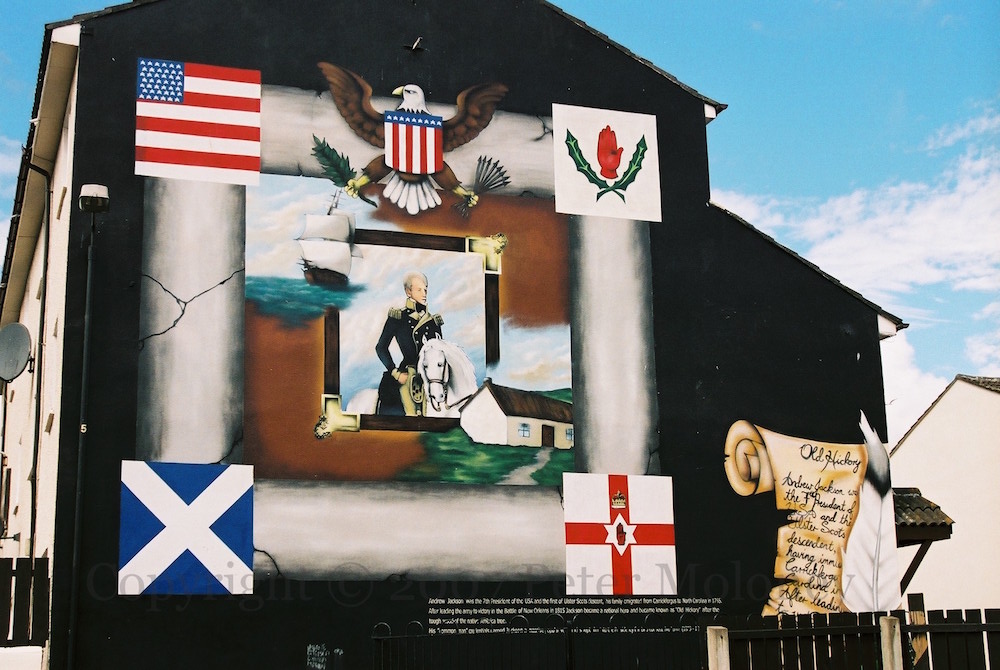
The information along the bottom reads: “Andrew Jackson was the 7th President of the USA and the first of Ulster-Scots descent, his family emigrated from Carrickfergus to North Carolina in 1765. After leading the army to victory in the Battle Of New Orleans in 1815 Jackson became a national hero and became known as “Old Hickory” after the tough wood of the native American tree. His “common man” credentials earned Jackson a massive popular vote and swept him into the Presidency for two consecutive terms (1829-1837).” He also hated the British, owned slaves, and signed the Indian Removal Act of 1830, which led to the infamous “Trail of Tears” (Irish Times).







 Peter Moloney Collection