“Their sacrifice is our reward”. With the names of locals who served in the Great War 1914-1918, World War II 1939-1945, Korea 1950-1953, and Northern Ireland.
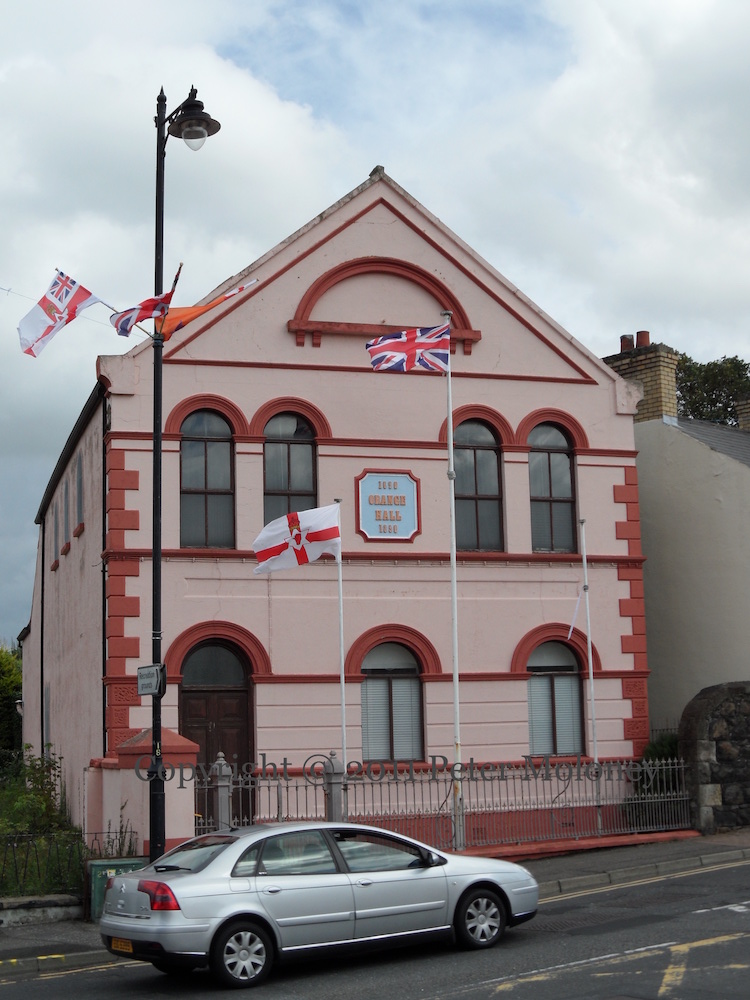
Limavady District Lodge 6 (Fb) in Catherine Street, Limavady. The central panel reads 1690-1890, the latter perhaps being the date the hall was constructed.
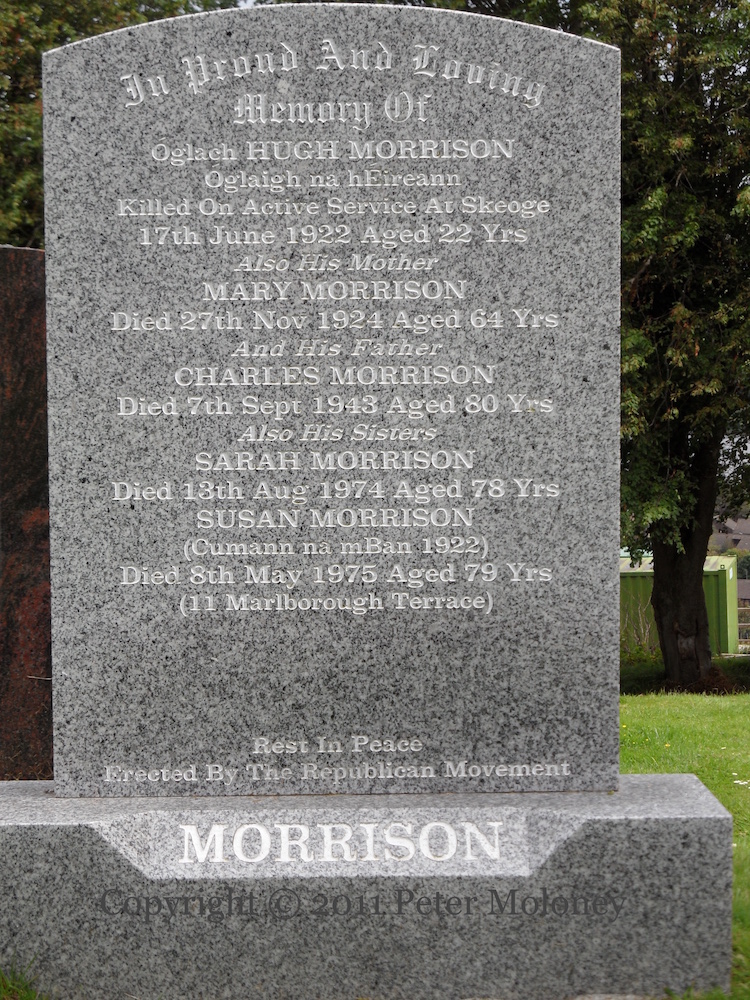
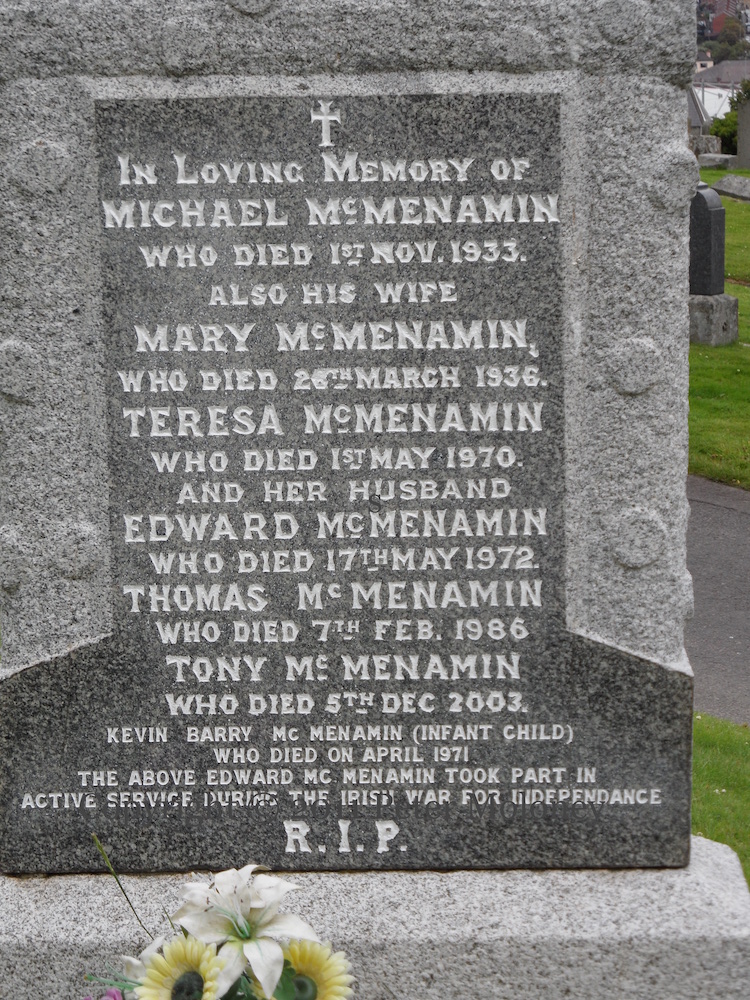
These are four headstones from City Cemetery, Derry, to Irish nationalists who served and/or were killed in the 1920s. In order, they are to “James McGlinchey was founder and commander of Irish National Volunteers in Derry c. 1912-1922”; “Óglach Hugh Morrison, killed on active service at Skeoge 17th June, 1922 [and] Susan Morrison, Cumann na mBan”; “John Gallagher died 21-6-1920 killed in June riots, Derry [and] Hugh Gallagher died 12-12-1922 shot by Free State soldiers at Drumboe Castle”; and, “Edward McMenamin active service during the Irish war for independence.”
A boy — Dylan Wilson from east Belfast, grandson of loyalist community worker Jim Wilson —shakes hands with a girl – Dearbhla Ward, granddaughter of Short Strand Sinn Fein councillor Joe O’Donnell (sources: Al Jazeera | NewsLetter | The Scotsman). The centre was left for locals to make their mark on.
A gable-wall version of this image — without the word “síocháın” (peace), with the girl in green, and with Wilson’s poem ‘No More’ — can be found about half a mile away in Wolfe Close/Kenilworth Place, just across the Newtownards Road. See No More. This mural was part of the re-imaging effort of 2010.
No more bombing, no more murder No more killing of our sons No more standing at the grave side Having to bury our loved onesNo more waking up every hour Hoping our children, they come home No more maimed or wounded people Who have suffered all aloneNo more minutes to leave a building No more fear of just parked cars No more looking over our shoulders No more killing in our barsNo more hatred from our children No more. No more. No more!
By Dee Craig in Edgar Street, Short Strand, east Belfast
This is a two-part electoral mural from Sınn Féın: on the left, the mural is for the specific candidacy of local man Nıall Ó Donghaılle – he was successfully elected to Belfast City Council and served as Lord Mayor; on the right, for Sınn Féın generally, using words from (the song) On The One Road (here’s a Wolfe Tones rendition): “Dublin, Belfast, Cork and Donegal” … and Short Strand too!
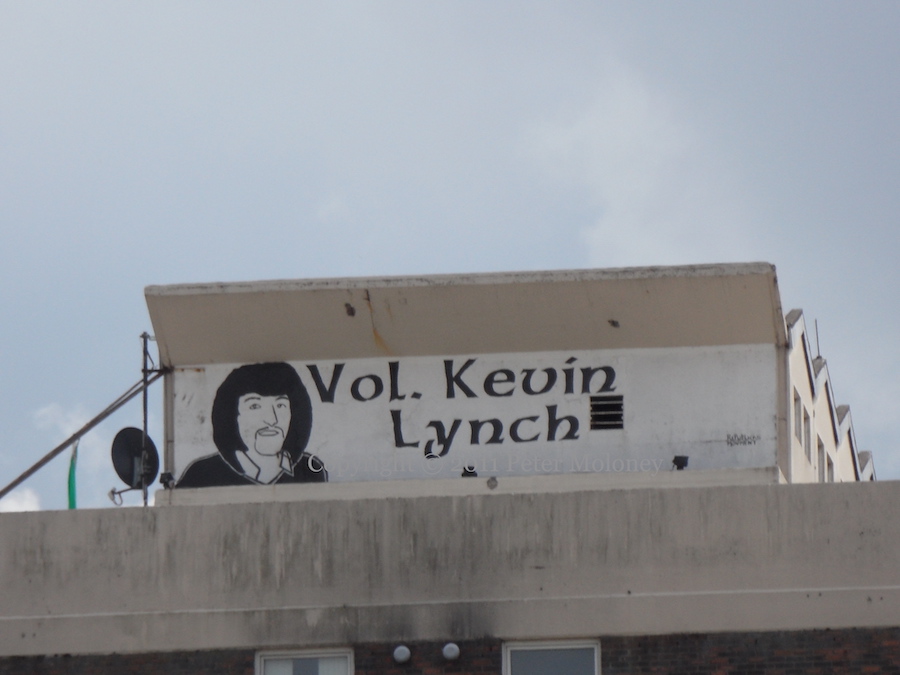
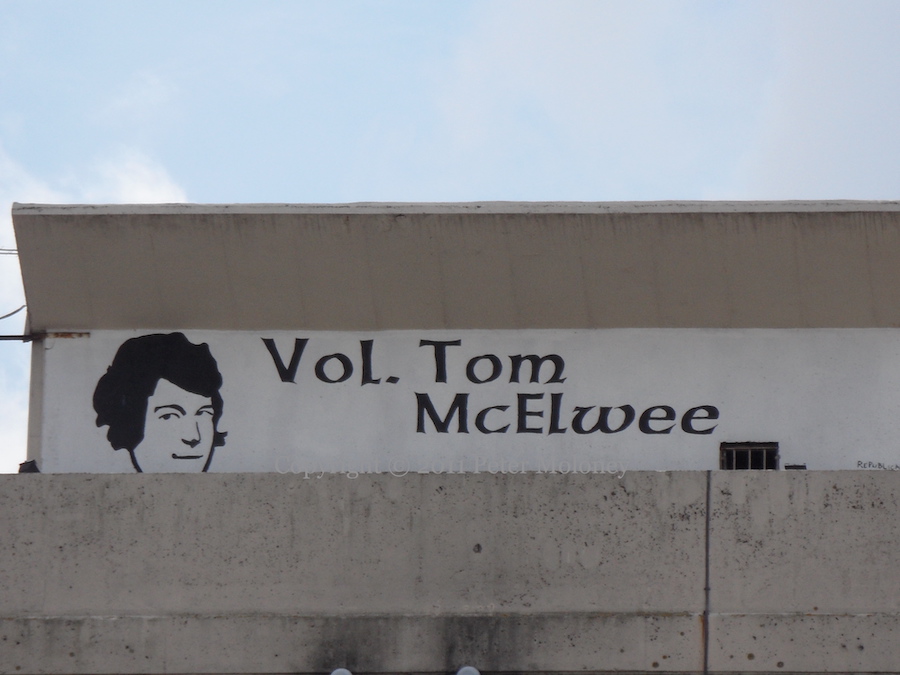
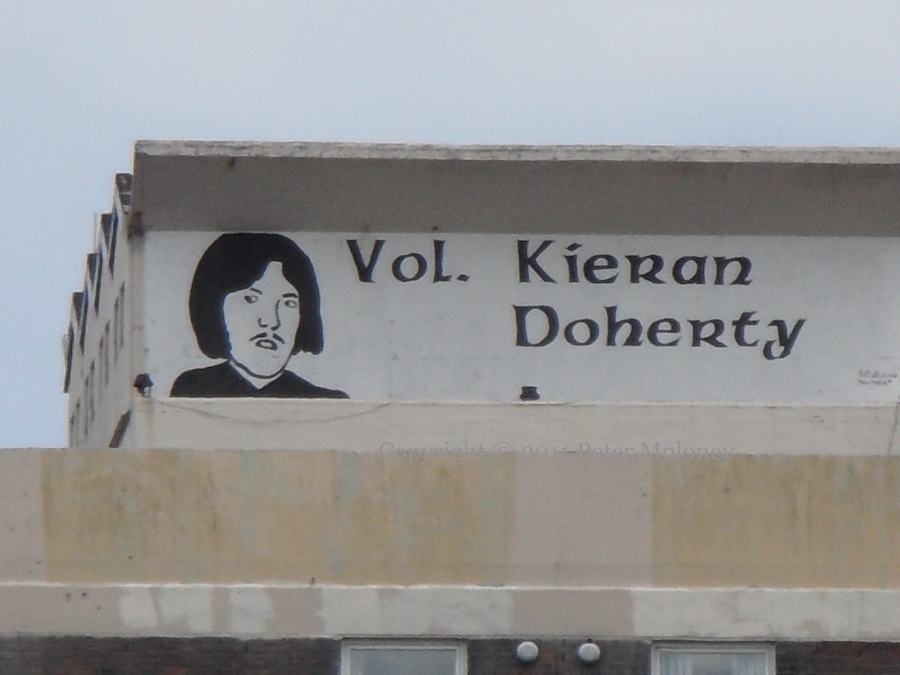
Here is a complete set of all 12 murals to the Troubles-era hunger strikers, two each on six of the New Lodge “houses” (tower blocks) from June and July of 2011. Some were shown in this 2002 post.
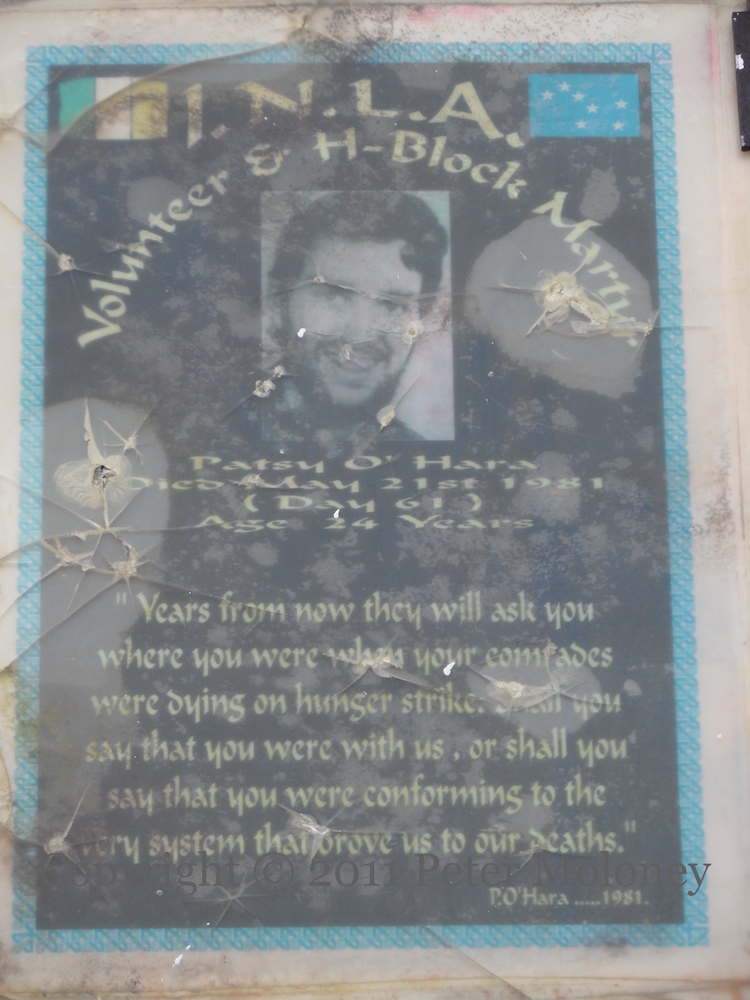
“Years from now they will ask you where you were when your comrades were dying on hunger strike. Shall you say that you were with us, or shall you say that you were conforming to very system that drove us to our deaths.” The mural is to Mickey Devine, with a smaller (and much older) plaque to Patsy O’Hara (the plaque was previously information about Devine). Both were INLA volunteers and both died in the 1981 hunger strike, along with Kevin Lynch; Liam McCloskey was taken off the strike by his family after 55 days.
This is the completed version of the mural earlier shown in-progress. The four main panels show the men of the 36th (Ulster) Division going over the top on the first day of the Somme (1st July 1916), the “angel of Mons” (WP), Ulster Tower (“This tower was dedicated to the glory of God. In grateful memory of the officers, non commissioned officers and men of the 36th (Ulster) Division, and of the sons of Ulster in other forces who laid down their lives in the great war, and of all their comrades in arms who, by divine grace, were spared to testify to their glorious deeds. ‘Throughout the long years of struggle …. the men of Ulster have proved how nobly they fight and die’ – 16th November 1918 King George V”), and Thiepval Memorial (“Dear men and brothers, going out/to fight for Ulster’s need/we hail you with a mighty shout/brave friends, and true in deed.//Your country holds you in renown/your names will never be dead/and some sweet angel has a crown/for each dear, manly head.”)
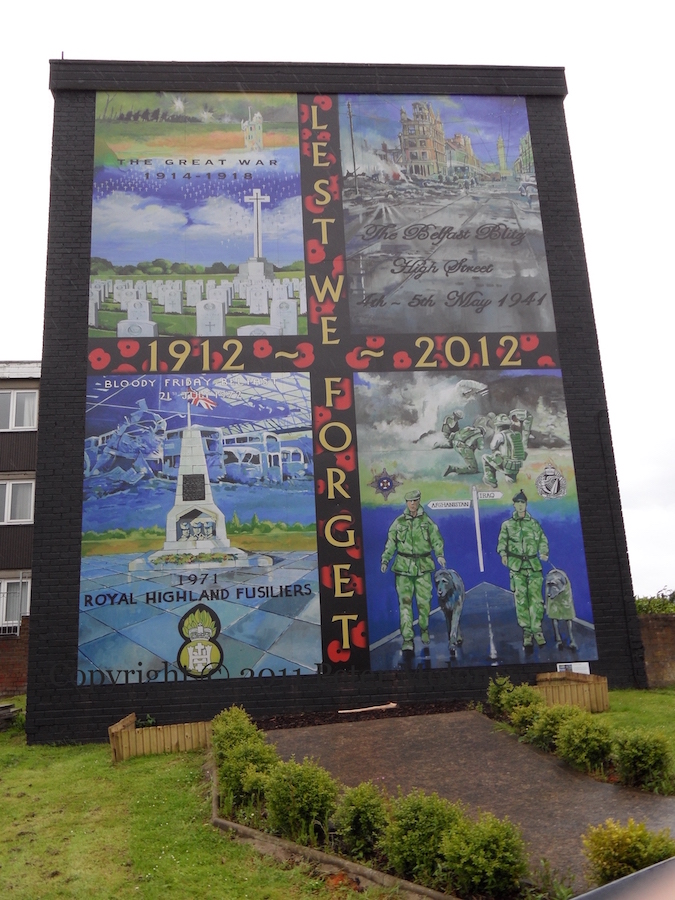
“Lest we forget – 1912-2012”: “The four panels of the mural represent images from conflict over the past 100 years … the Great War … Luftwaffe raids during the early years of the Second World War … the dark period in our history known as the Troubles … more recent conflicts in Iraq and Afghanistan. Part of the Arts Council for Northern Ireland’s Re-imaging Communities Programme – thiis project placed artist Jim Russell in the heart of the Sunningdale community to work with local people to create a more welcoming environment for everyone.”












 Peter Moloney Collection