
There were originally three boards underneath this “Join SFY [Sinn Féin Youth]” writing in Berwick Road, Belfast – see C01373.
Click image to enlarge
Copyright © 2008 Peter Moloney
M04333
There were originally three boards underneath this “Join SFY [Sinn Féin Youth]” writing in Berwick Road, Belfast – see C01373.
Click image to enlarge
Copyright © 2008 Peter Moloney
M04333

2008 image of 2002’s Easter Rising mural in Berwick Road, Belfast.
Click image to enlarge
Copyright © 2008 Peter Moloney
M04331 [M04332]
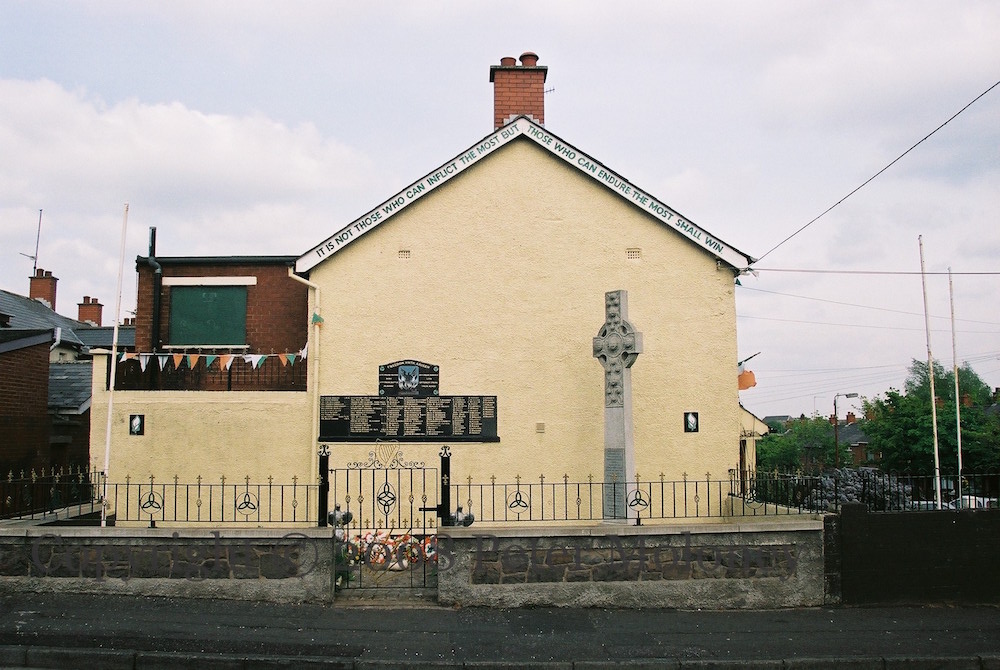
2008 view of the IRA/Fıanna memorial garden in Berwick Road, Belfast. The pieces remain as before (see 2002).
Click image to enlarge
Copyright © 2008 Peter Moloney
M04327 [M04325] [M04326] [M04327] [M04328]
2011 [M06725]
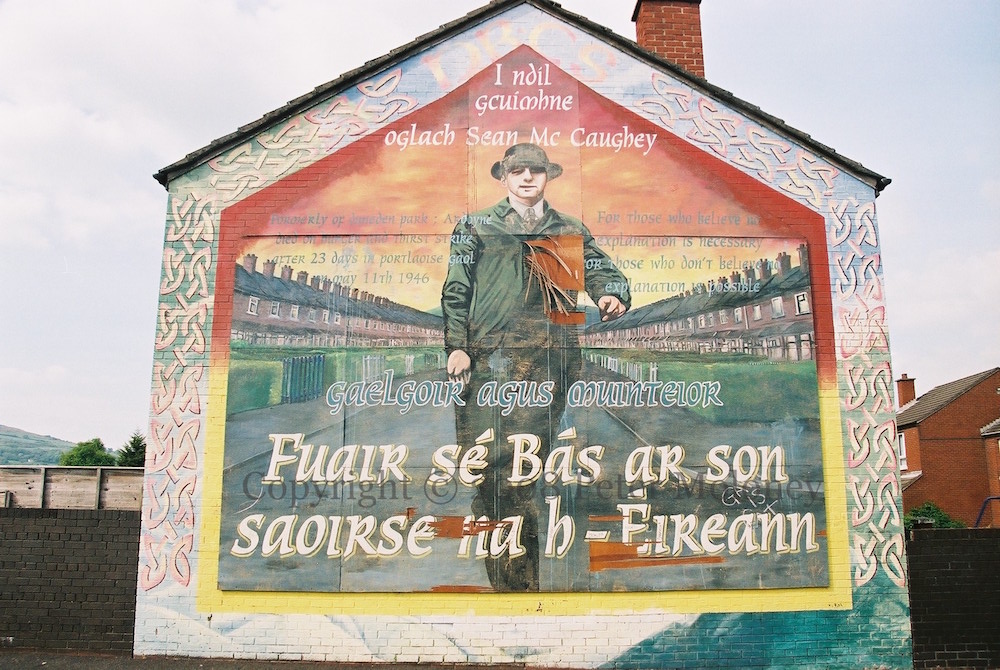
The Sean McCaughey board, previously seen in 2006 (though dating to 2005), is showing its age.
Click image to enlarge
Copyright © 2008 Peter Moloney
M04324
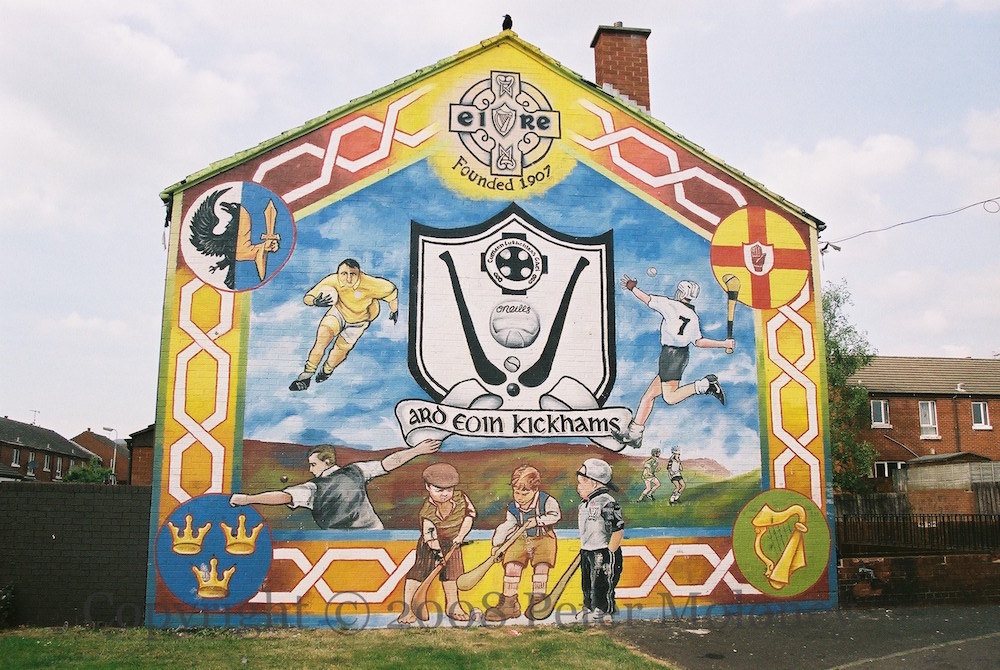
Kickhams is the local Cumann Luthchleas Gael (GAA club) (Fb | tw), founded 1907, named for republican writer Charles Kickham. The mural shows football, hurling, and handball. At the bottom there are three generations of toddler hurlers, from barefoot and cloth-cap to boots and braces to baseball cap and tracksuit.
Click image to enlarge
Copyright © 2008 Peter Moloney
M04317
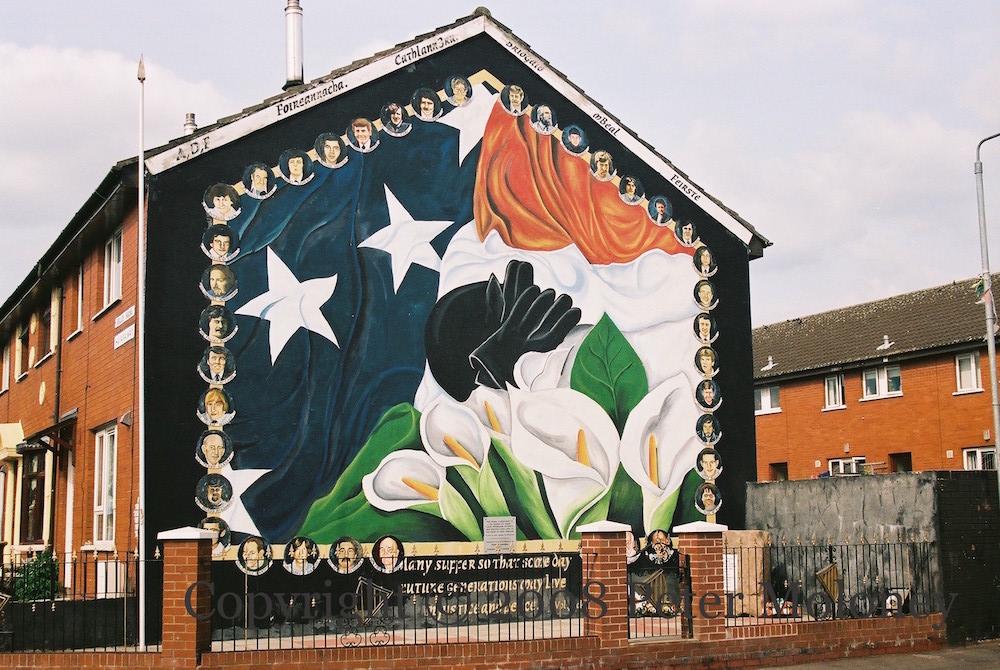
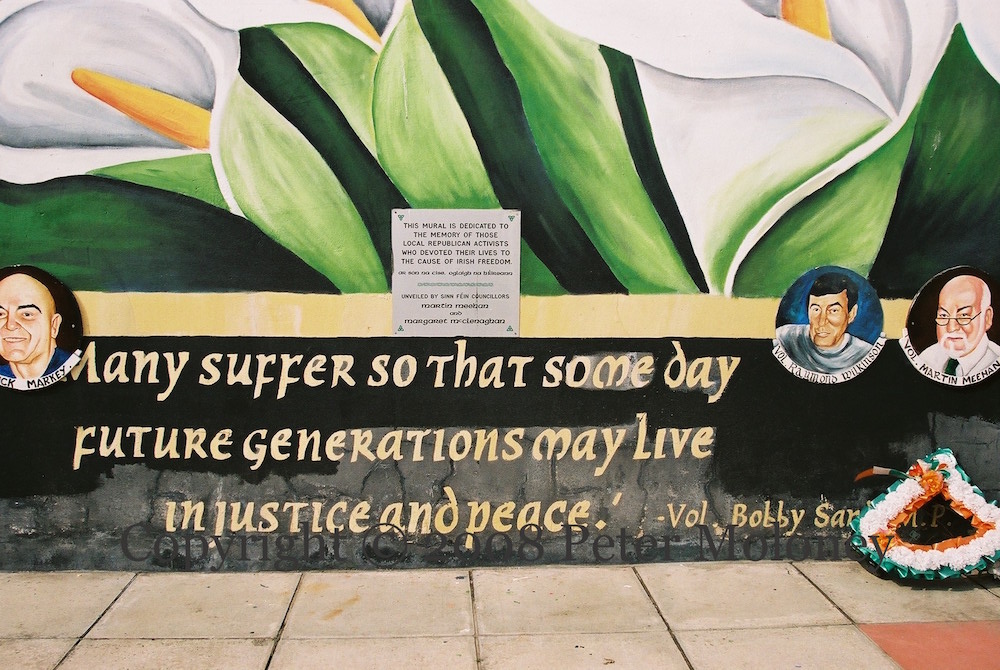
“This mural is dedicated to the memory of those local republican activists who devoted their lives to the cause of Irish freedom. Ar son na cıse [sic]. Oglaıgh [sic] na hÉıreann. Unveiled by Sınn Féın councillors Martin Meehan and Margaret McClenaghan.”
“A, D, F foıreannacha, cathlann 3ru [sic], brıogaıd [sic] mBeal [sic] Feırste.
“‘Many suffer so that some day future generations may live in justice and peace’ – Vol Bobby Sands.”
Click image to enlarge
Copyright © 2008 Peter Moloney
M04307 [M04308][M04309] [M04310] [M04311] [M04312] [M04313] [M04314] [M04315] M04316
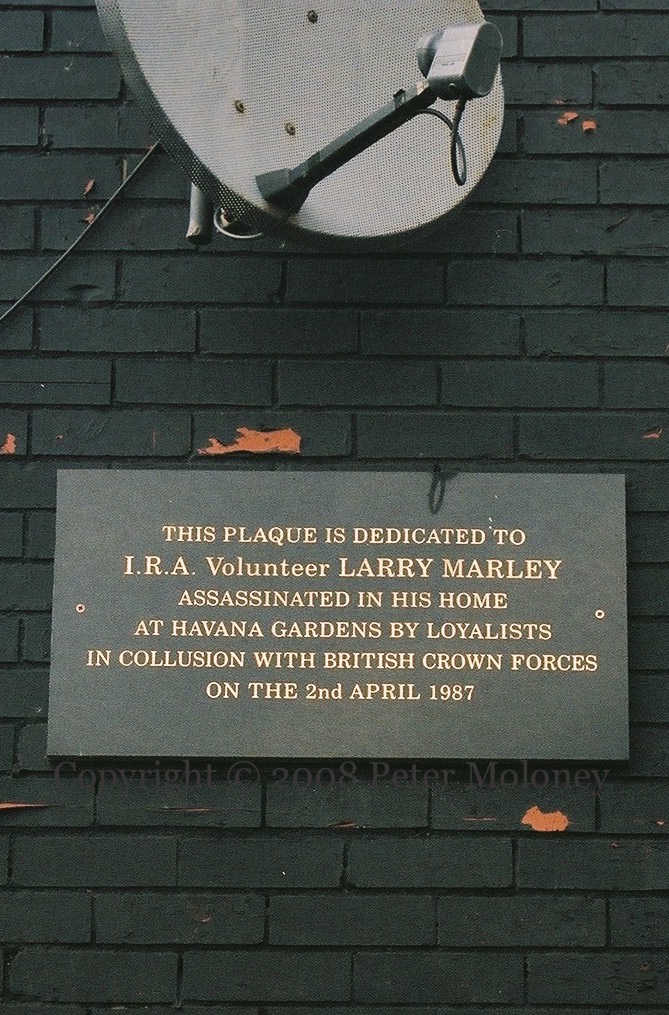
“This plaque is dedicate to IRA Volunteer Larry Marley, assassinated in his home at Havana Gardens by loyalists in collusion with British crown forces on the 2nd April 1987.” Marley’s funeral was obstructed by security forces for several days, with scenes from Ardoyne being broadcast worldwide.
Click image to enlarge
Copyright © 2008 Peter Moloney
M04306

“LVF scum Stuarty Hill deals drug’s and gun’s we Ardoyne INLA.” Graffiti in (loyalist) Rathlin Street, Belfast. The matter is discussed in this BelTel article
[See also M09019 “Stuarty Hill LVF scum who wr u meating. Drug dealer’s from the INLA” in Hopewell]
Click image to enlarge
Copyright © 2008 Peter Moloney
M04303

The Woodvale Defence Association merged with other ‘defence association’ to form the UDA in 1971. In the drawing above, “UDA” (which appears at the bottom anyway) has been scored out and replaced with “UDU”, which refers to the UDU of 1893, and which is being used by (some) anti-Agreement members of the (pre-Agreement) UDA as a new name for the organisation (beginning in 2007: Newsletter | Remembrance Day Statement at CAIN). Cf. UDU-WDA-UDA-UFF | Daffodil Days.
With “No surrender” and “Kill all taigs”.
Disraeli Street, Woodvale, west Belfast
Click image to enlarge
Copyright © 2008 Peter Moloney
M04300
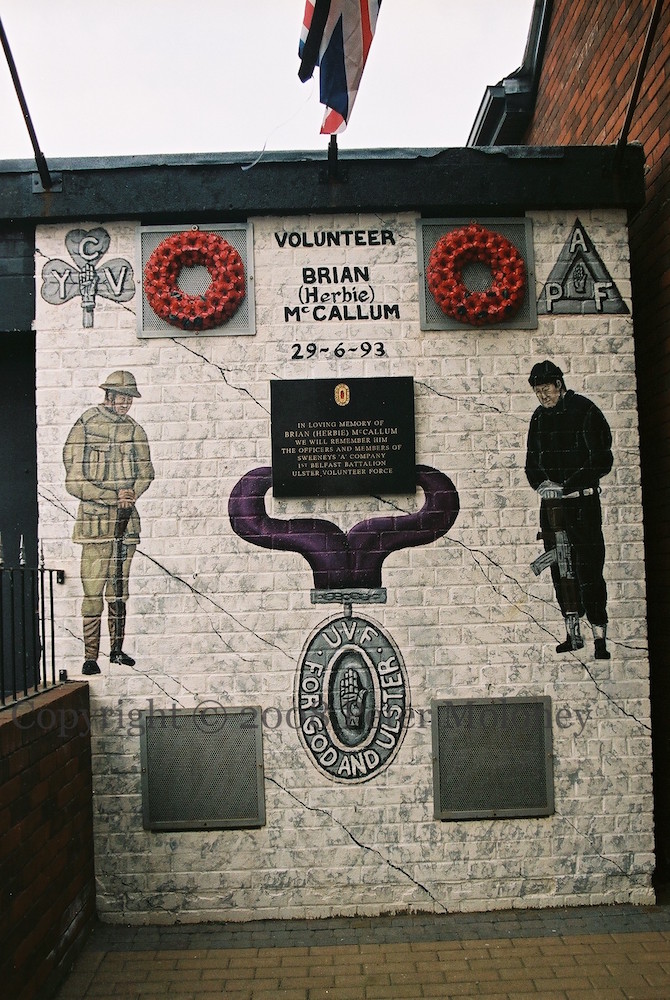
“In loving memory of Brian (Herbie) McCallum. We will remember him. The officers and members of Sweeneys ‘A’ company, 1st Belfast battalion, Ulster Volunteer Force.” Brian “Herbie” McCallum was a 29 year-old attending a contentious loyalist parade to Whiterock Orange Hall, being re-routed by the RUC, when the grenade he was carrying exploded prematurely, killing him instantly. The mural and memorial shown above is at the top of Ainsworth Avenue, close to the spot of the incident. He died in hospital three days later (CAIN | Border & Border Politics | Irish News article at Nuzhound | Independent).
Ainsworth Avenue, Belfast
Click image to enlarge
Copyright © 2008 Peter Moloney
M04299 [M04298] [M04297] [M04296]

