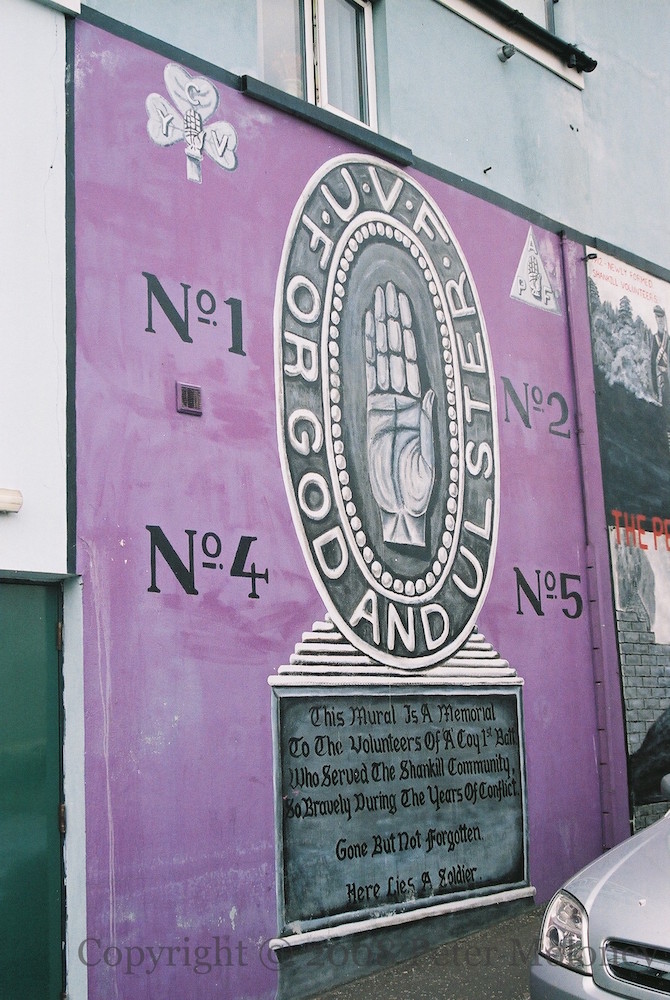
“This mural is a memorial to the volunteers of A Coy 1st Batt [platoon No 1, 2, 4, and 5] who served the Shankill community so bravely during the years of conflict. Gone but not forgotten. Here lies a soldier.”
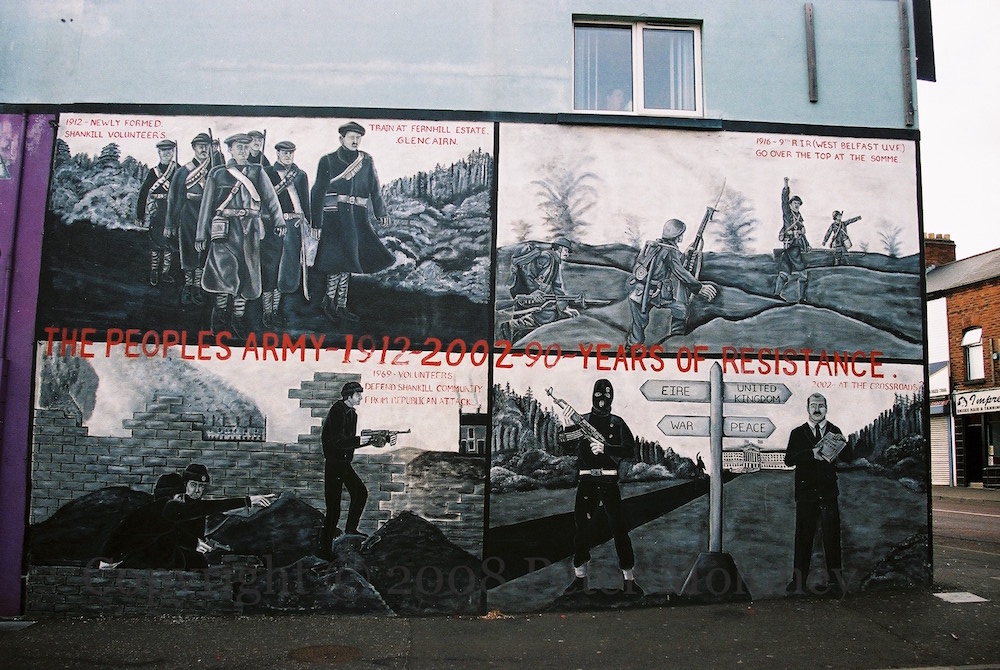
“The People’s Army 1912-2002 – 90 years of resistance.” The top two panels show the “newly-formed Shankill Volunteers” “train[ing] at Fernhill estate, Glencairn” and then in 1916 the “9th RIR (West Belfast UVF) go over the top at the Somme.” Below, “volunteers defend the Shankill community from republican attack” in the 1969 riots in Bombay Street and environs, leading to the “crossroads” of 2002, with David Ervine holding a copy of the “Good Friday Agreement” on the road to “peace”.
“A UVF roadblock at Donaghadee, April 24/25th 1914, during gunrunning.” “Preparing to bear arms 1914; prepared to bear arms 2004.” The main landing was at Larne, but two small boats transported arms from the Clyde Valley in Larne to Donaghadee.
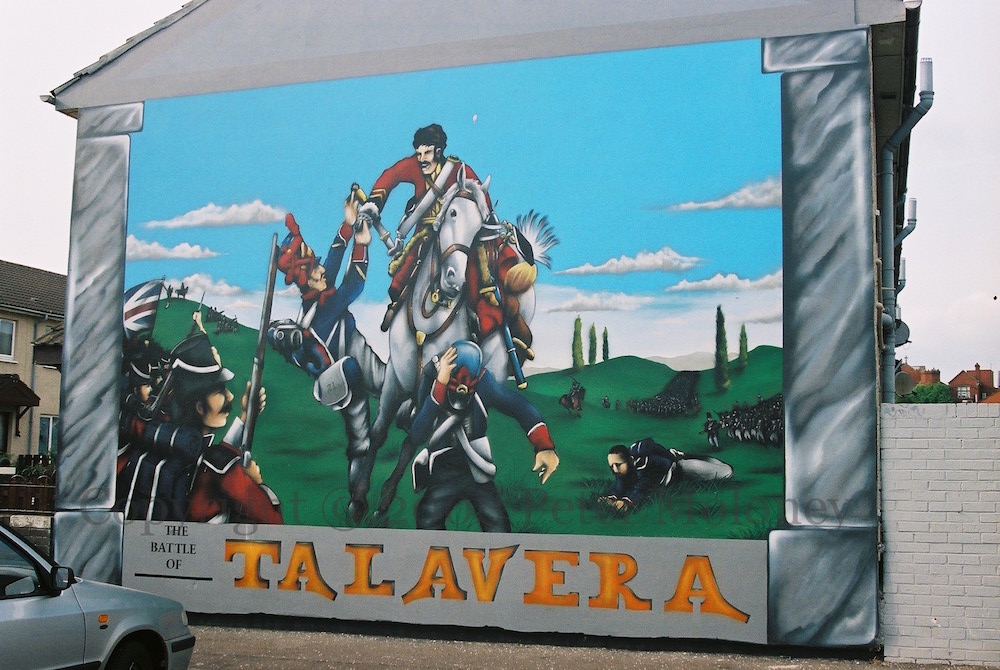
Talavera de la Reina is southwest of Madrid, Spain. The French, who had invaded Portugal but been driven out by British forces under Wellesley, fought the combined forces of the Spanish (previously allies of the French in the Peninsular War) and British armies. Writing on the side-wall will later be added (see X00327).
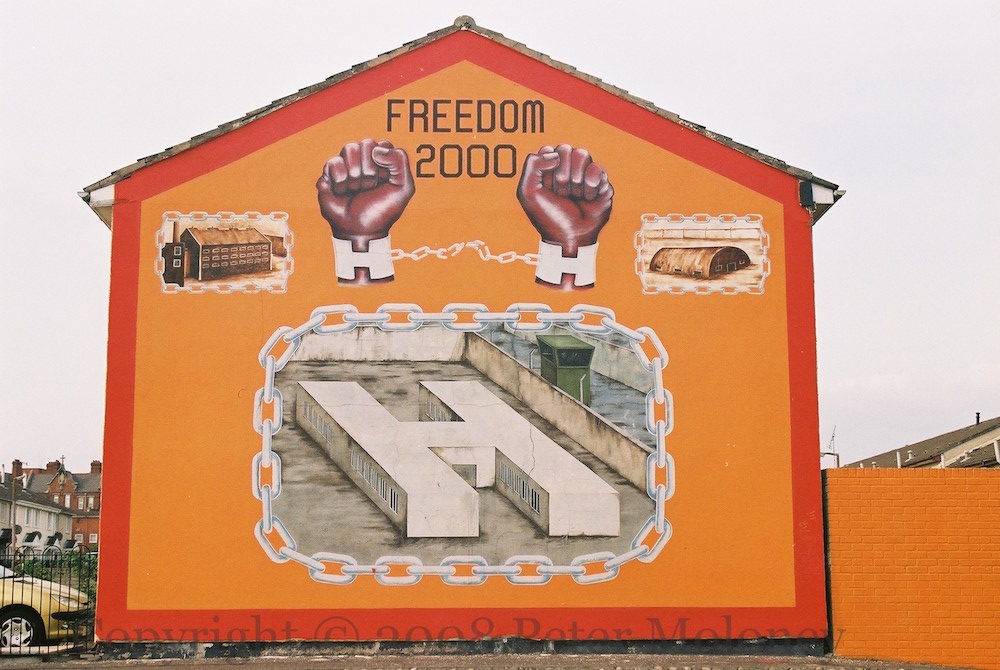
The ‘Freedom 2000’ Long Kesh/H-Blocks mural in the lower Shankill is repainted in orange, with “UDA”, “UFF” and “LPOW” from the previous version painted out.
This is a mostly-complete version of the Summer Of 69 mural in the lower Shankill, depicting the beginning of the Troubles in Belfast. The title is still to be added, and the boy on the left will be given a tricoloured drum.
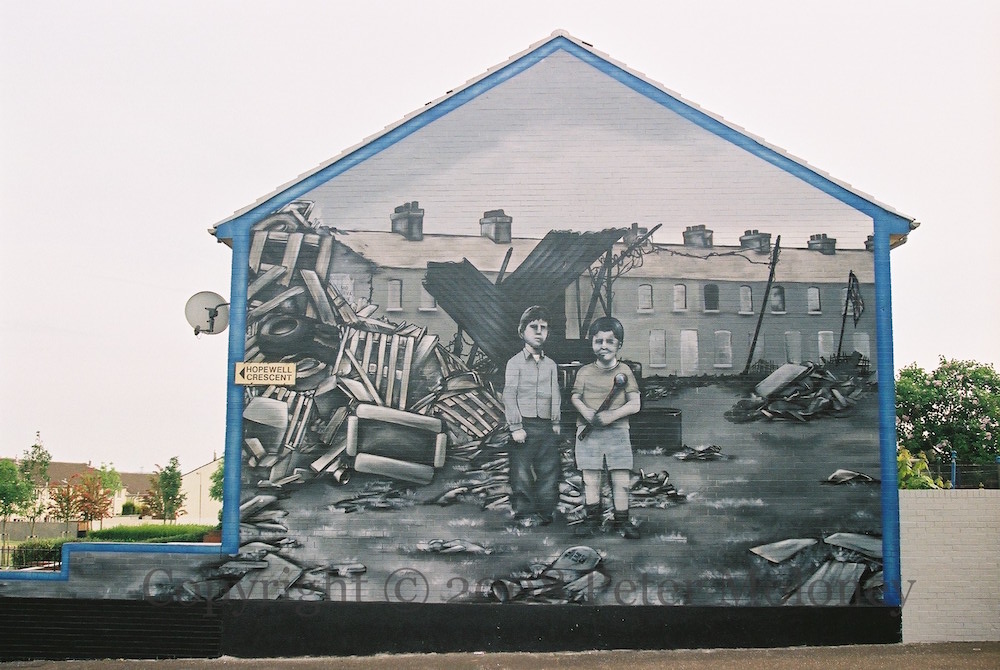
The mural is based on a Frankie Quinn photograph “Belfast 1984” (BBC).
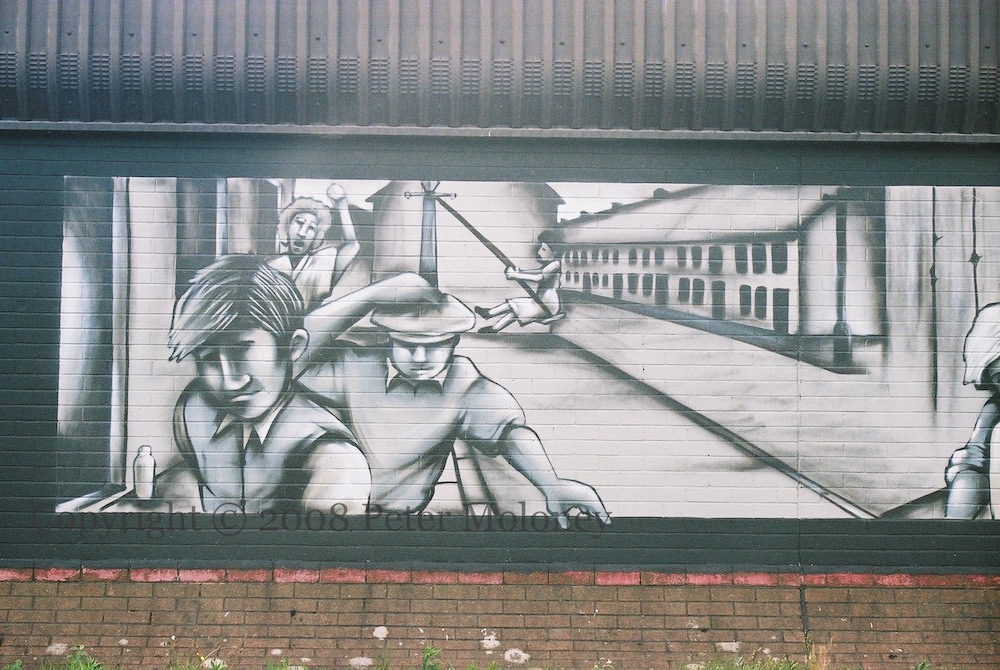
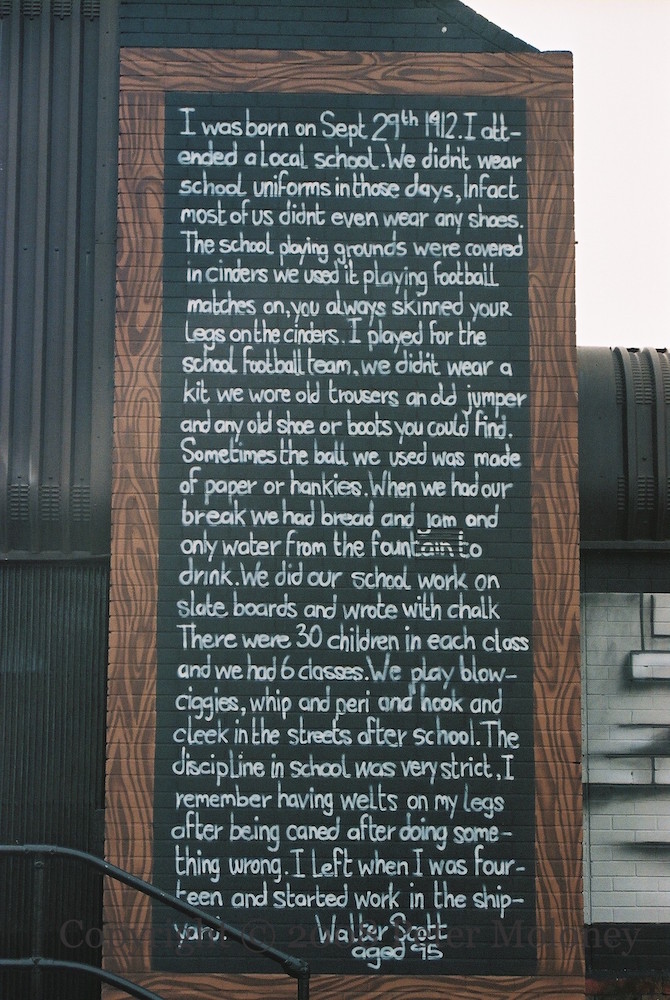
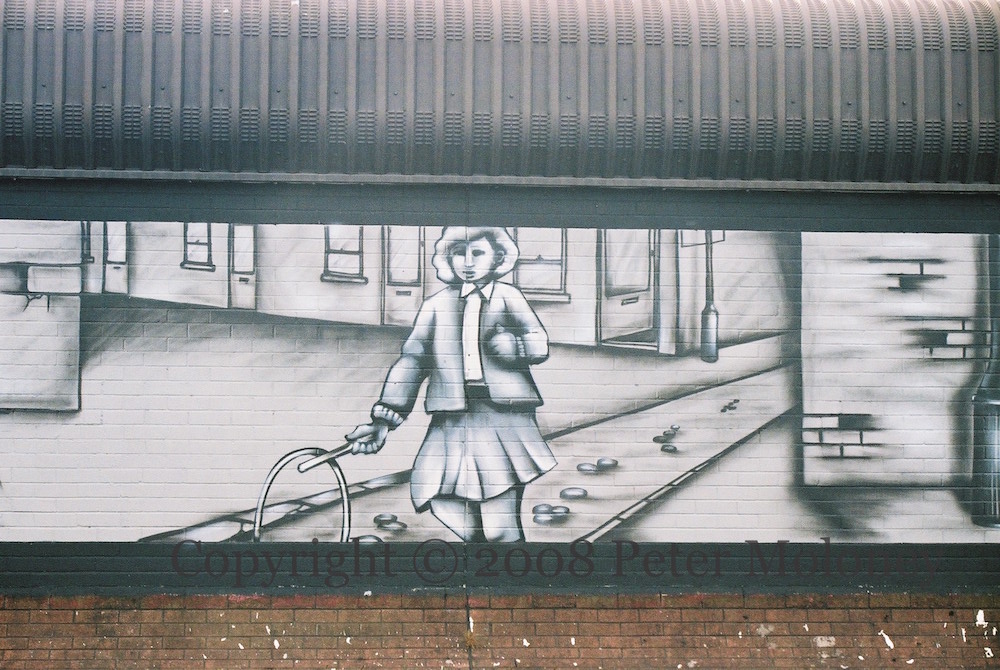
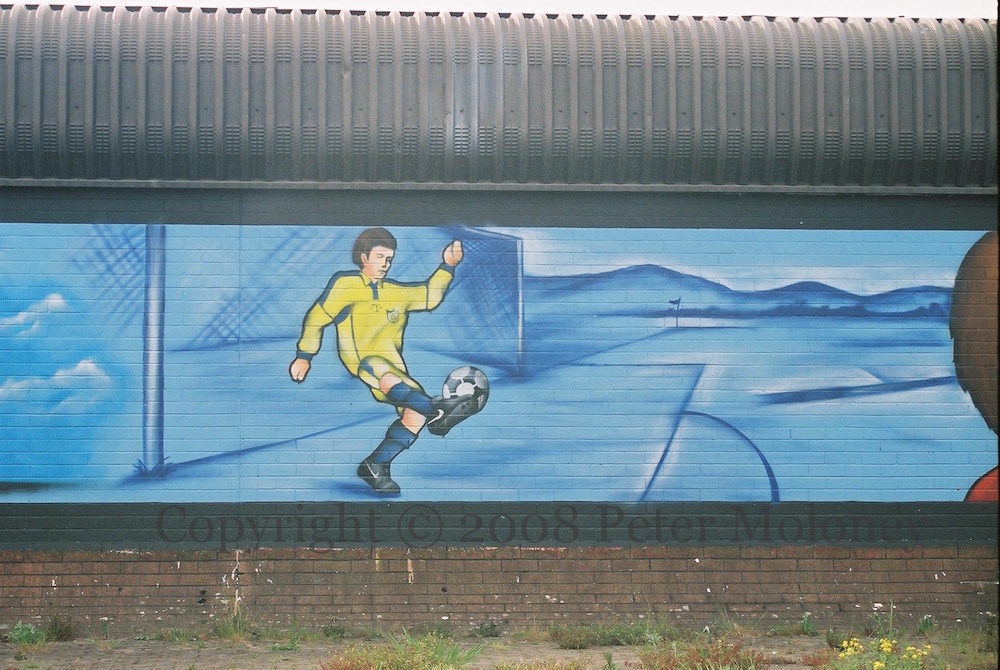
“… The school playing grounds were covered in cinders we used it playing football matches on, you always skinned your legs on the cinders. I played for the school football team, we didn’t wear a kit we wore old trousers an old jumper and any old shoe or boots you could find. Sometimes the ball we used was made of paper or hankies. … – Water Scott aged 95”
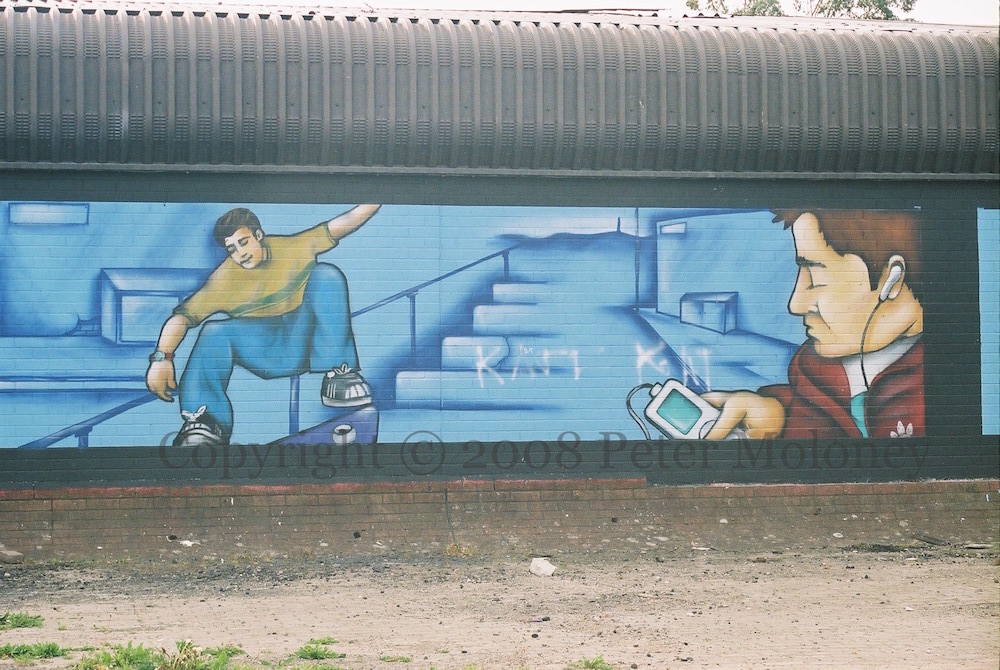
“Schools at Malvern are different to schools in older times. Many things have changed such as discipline. Discipline in the older days was if you spoke back you got hit with a cane, at Malvern if we speak back we get warned and then sent to the Principles office. … – Curtis Nesbitt P6”
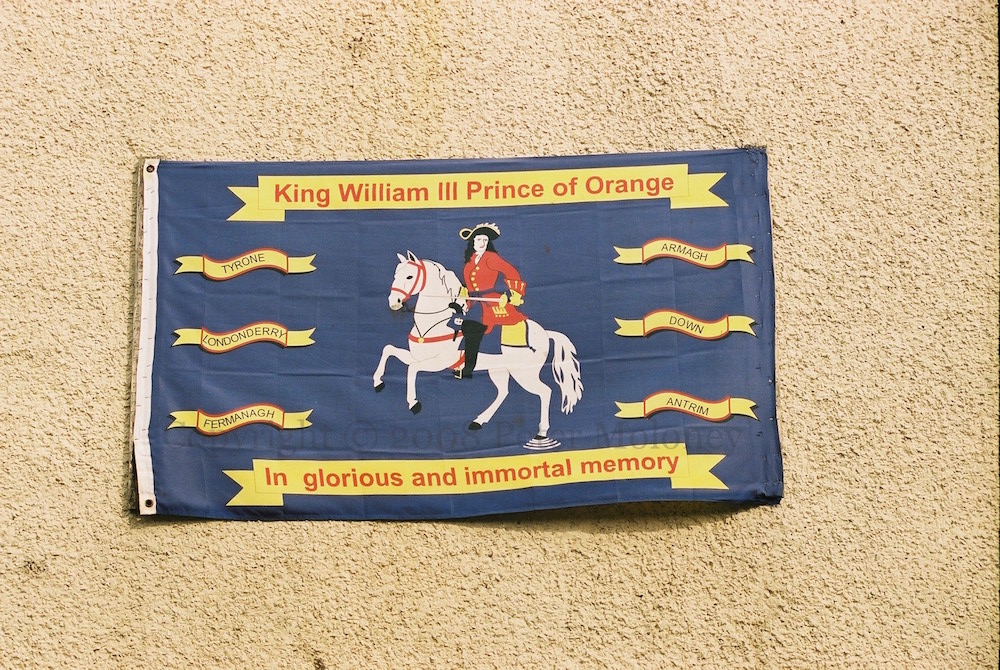
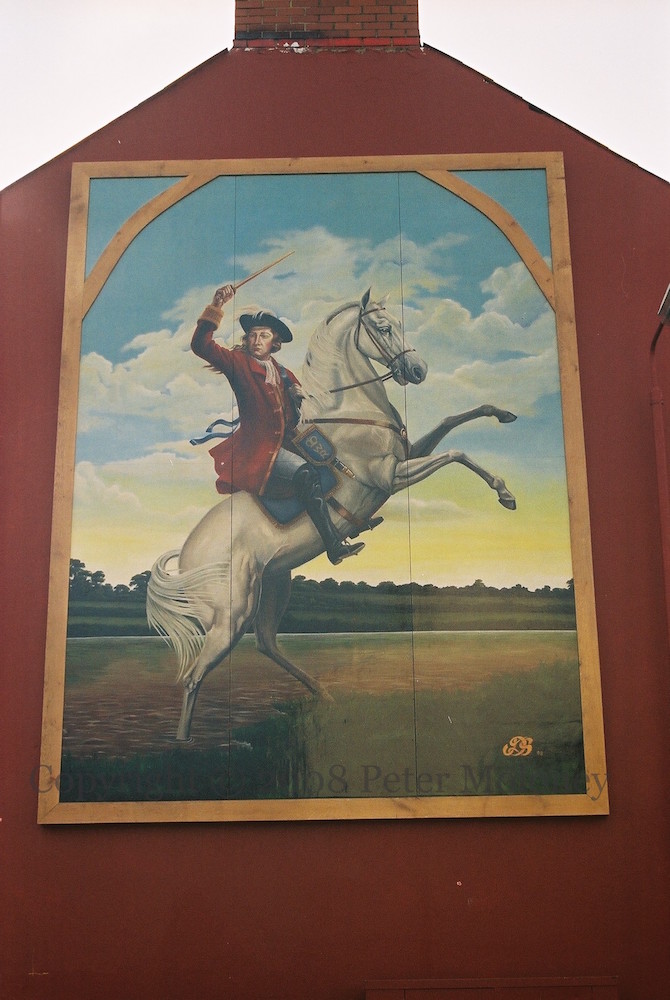
“King William III Prince Of Orange”. King Billy on his horse, with a list of the six counties. A flag is used as a mural in Hopewell ?Avenue?, Belfast.
The Village Eddie is re-imaged with a painting of King Billy at the Boyne by John Darren Sutton in Tavanagh Street, Belfast.
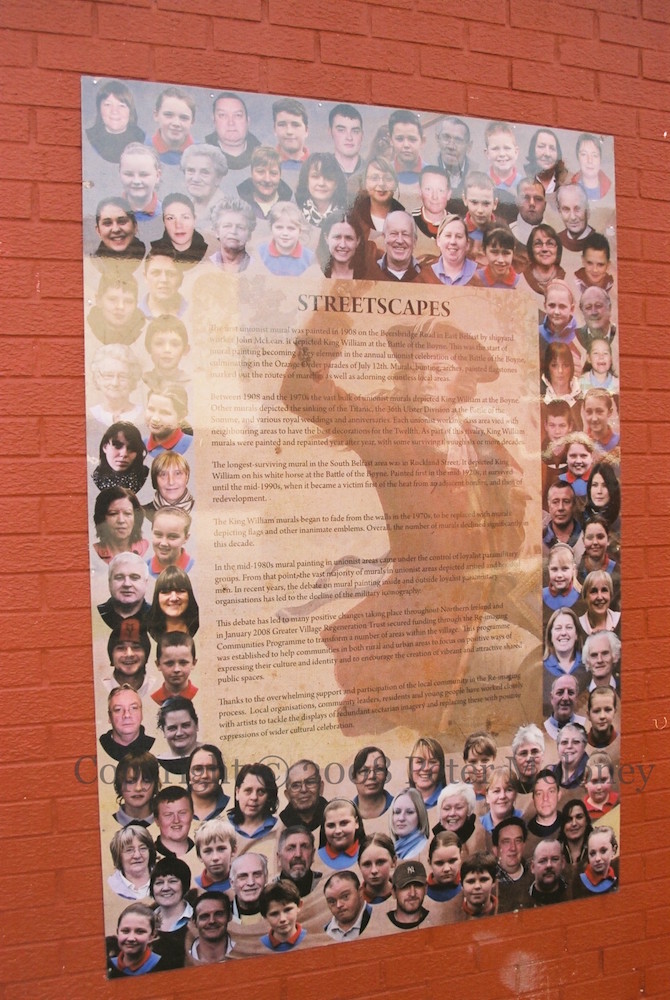
“The first unionist mural was painted in 1908 on the Beersbridge Road in East Belfast by shipyard worker John McLean. It depicted King William at the Battle of the Boyne. This was the start of mural painting becoming a key element in the annual unionist celebration of the Battle of the Boyne, culminating in the Orange Order parades of July 12th. Murals, bunting, arches, painted flagstones, marked out the route of marches as well as adorning countless local areas. Between 1908 and the 1970s the vast bulk of unionist murals depicted King William at the Boyne. Other murals depicted the sinking of the Titanic, the 36th Ulster [sic] Division at the Battle of the Somme, and various royal weddings and anniversaries. Each unionist working class area vied with the neighbouring areas to have the best decorations for the Twelfth. As part of this rivalry, King William murals were painted and repainted year after year, with some surviving through six or more decades. The longest-surviving mural in the South Belfast area was in Rockland Street. It depicted King William on his white horse at the Battle of the Boyne. Painted first in the mid-1920s, it survived until the mid-1990s, when it became a victim first of the heat from an adjacent bonfire, and then of redevelopment. The King William murals began to fade from the walls in the 1970s, to be replaced with murals depicting flags and other inanimate emblems. Overall, the number of murals declined significantly in this decade. In the mid-1980s mural painting in unionist areas came under the control of loyalist paramilitary groups. From that point, the vast majority of murals in unionist areas depicted armed and hooded men. In recent years, the debate on mural painting inside and outside loyalist paramilitary organisations has led to the decline of the military iconography. This debate has led to many positive changes taking place throughout Northern Ireland and in January 2008 Greater Village Regeneration Trust secured funding through the Re-imaging Communities Programme to transform a number of areas within the village. This programme was established to help communities in both rural and urban areas to focus on positive ways of expressing their culture and identity and to encourage the creation of vibrant and attractive shared spaces. Thanks to the overwhelming support and participation of the local community in the Re-imaging process. Local organisations, community leaders, residents and young people have worked closely with artists to tackle the displays of redundant sectarian imagery and replacing these with positive expressions of wider cultural celebration.
Elizabeth Windsor became queen of the United Kingdom in February, 1952, fifty-five years before this mural was painted in Rockview Street, south Belfast.









 Peter Moloney Collection