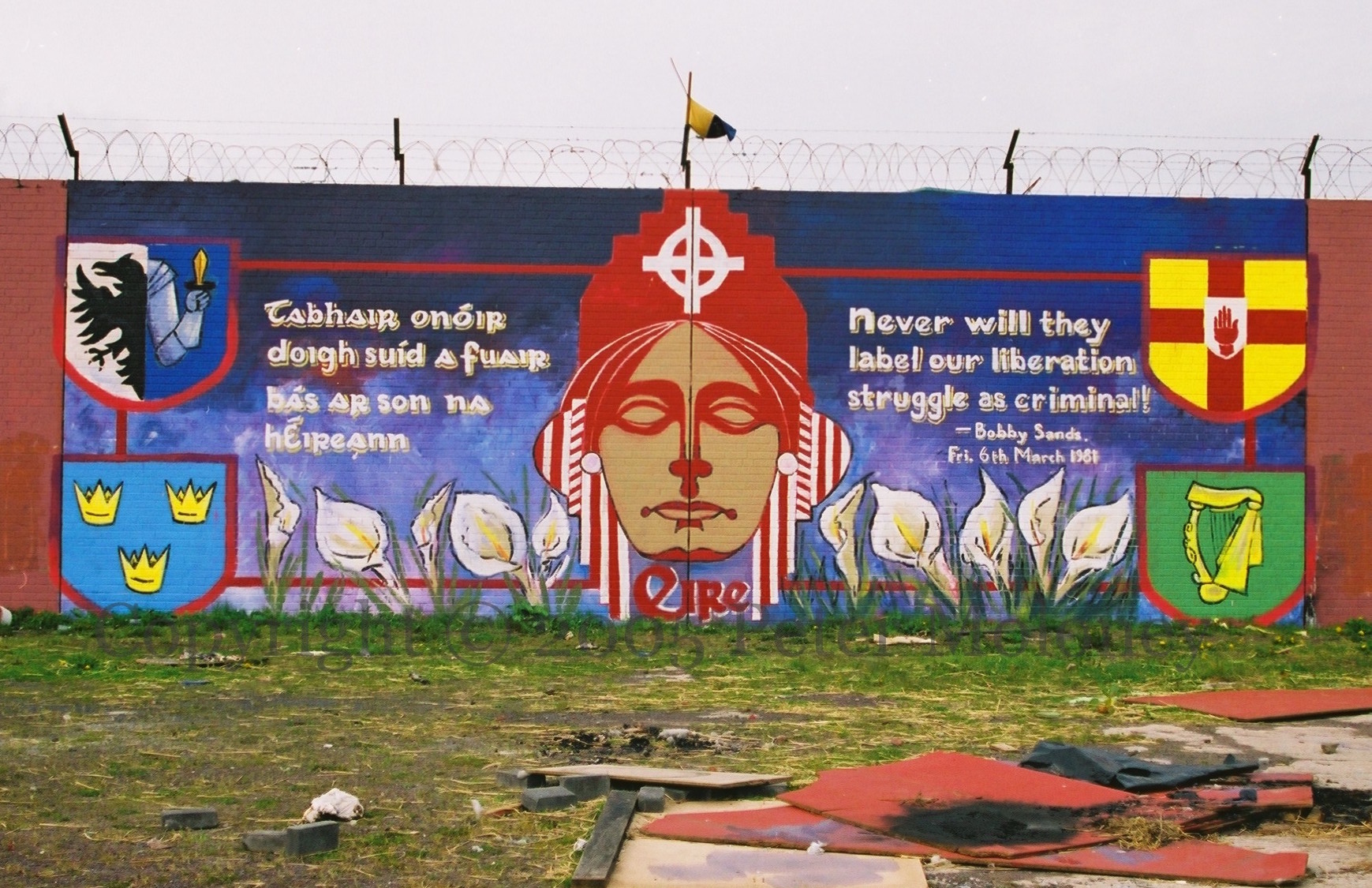
“Tabhaır onóır doıgh suíd a fuaır bás ar son na hÉıreann” [corrupted Irish with the general meaning “Honor … who died for Ireland”]. “Never will they label our liberation struggle as criminal! – Bobby Sands Fri. 6th March 1981”. Another Éıre mural was previously further down the wall on Mountpottinger Road, Belfast.
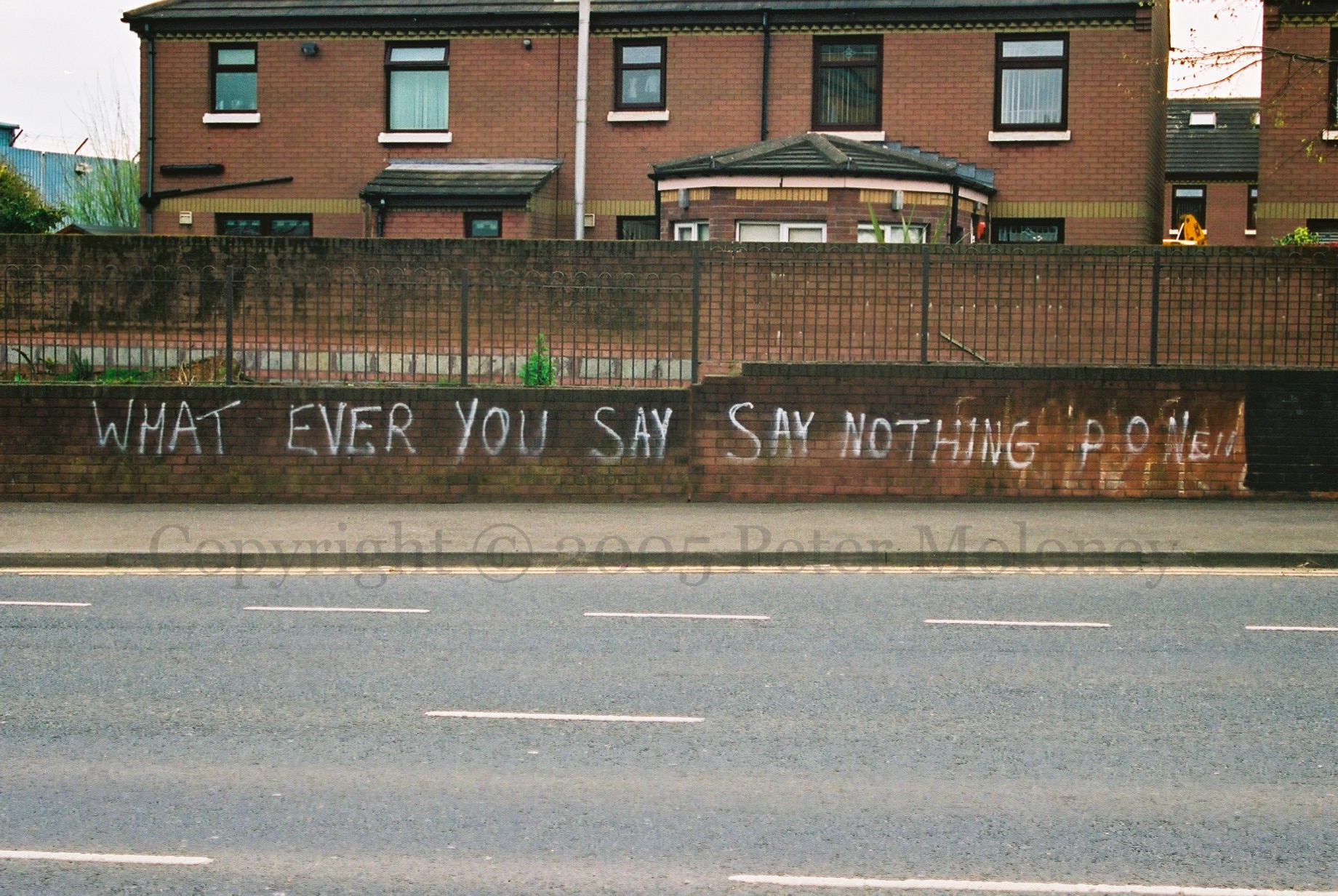
“Whatever You Say, Say Nothing” is the name of a 1975 Seamus Heaney poem from the collection North, and of a 1981 Colum Sands song. “P O’Neill” was the name used by the IRA on its public statements.
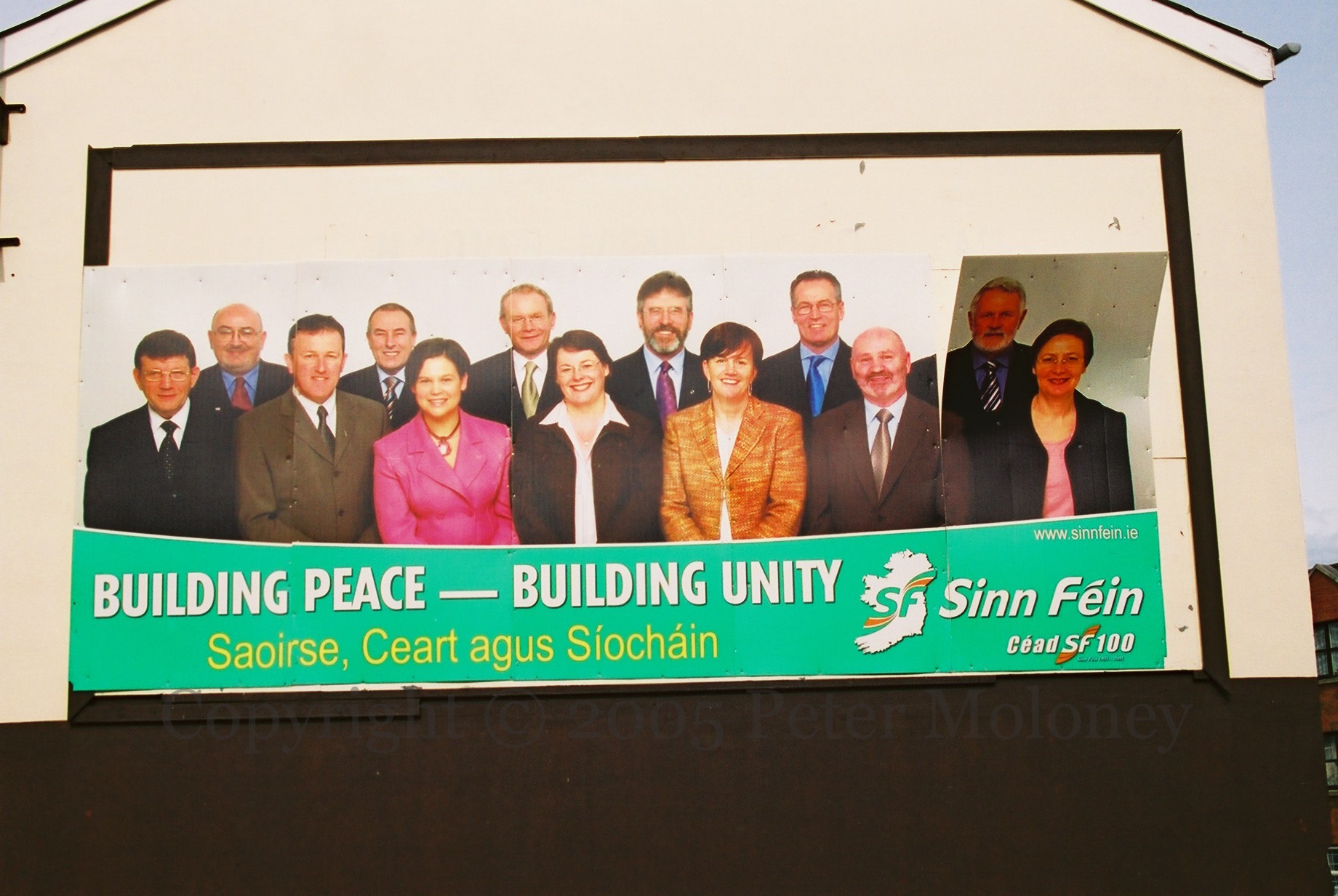
“Saoırse, ceart, agus síocháın” (“Freedom, justice, and peace”). Sınn Féın electoral board on Falls Road/Linden Street. 2005 was the 100th anniversary of the founding of the party.
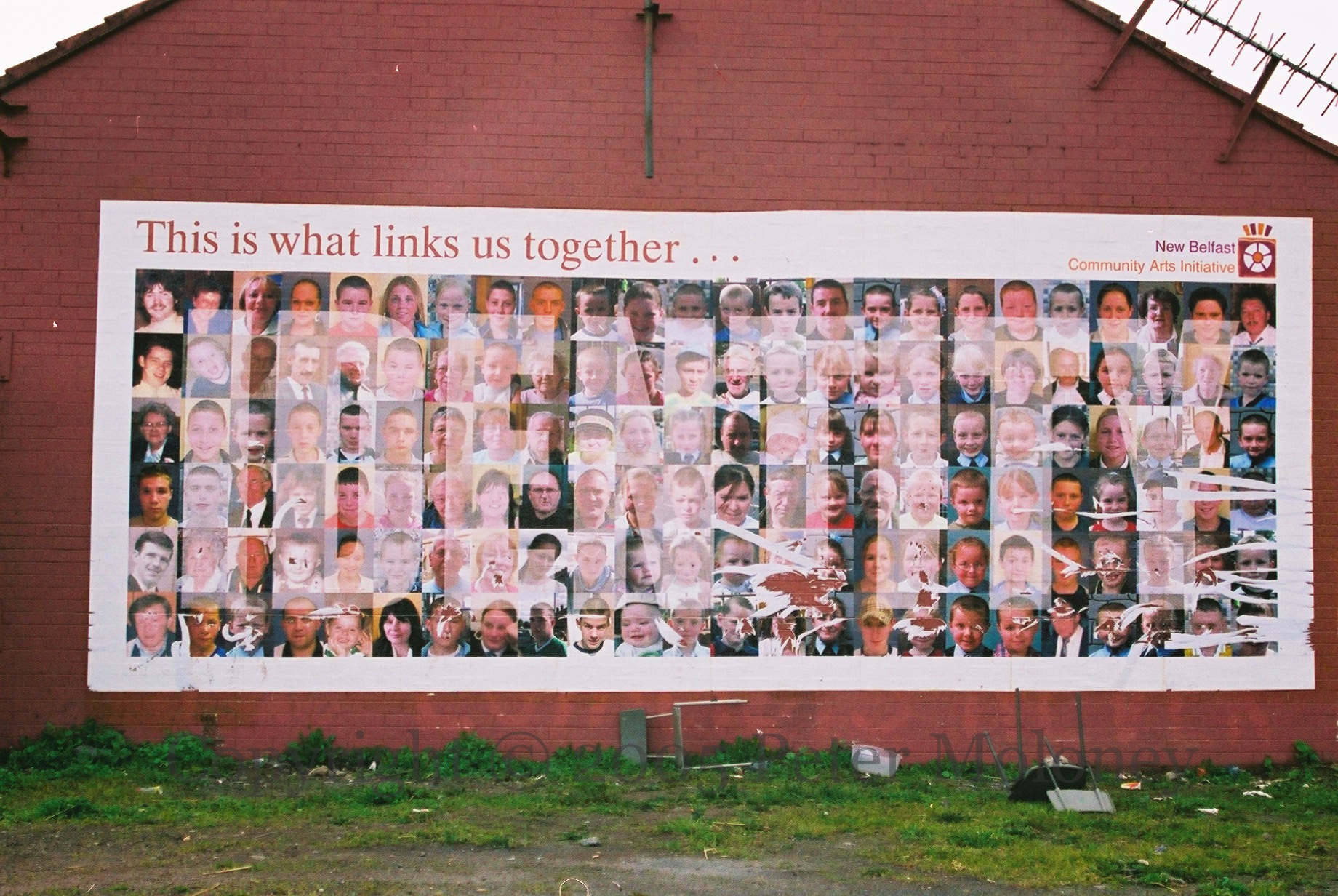
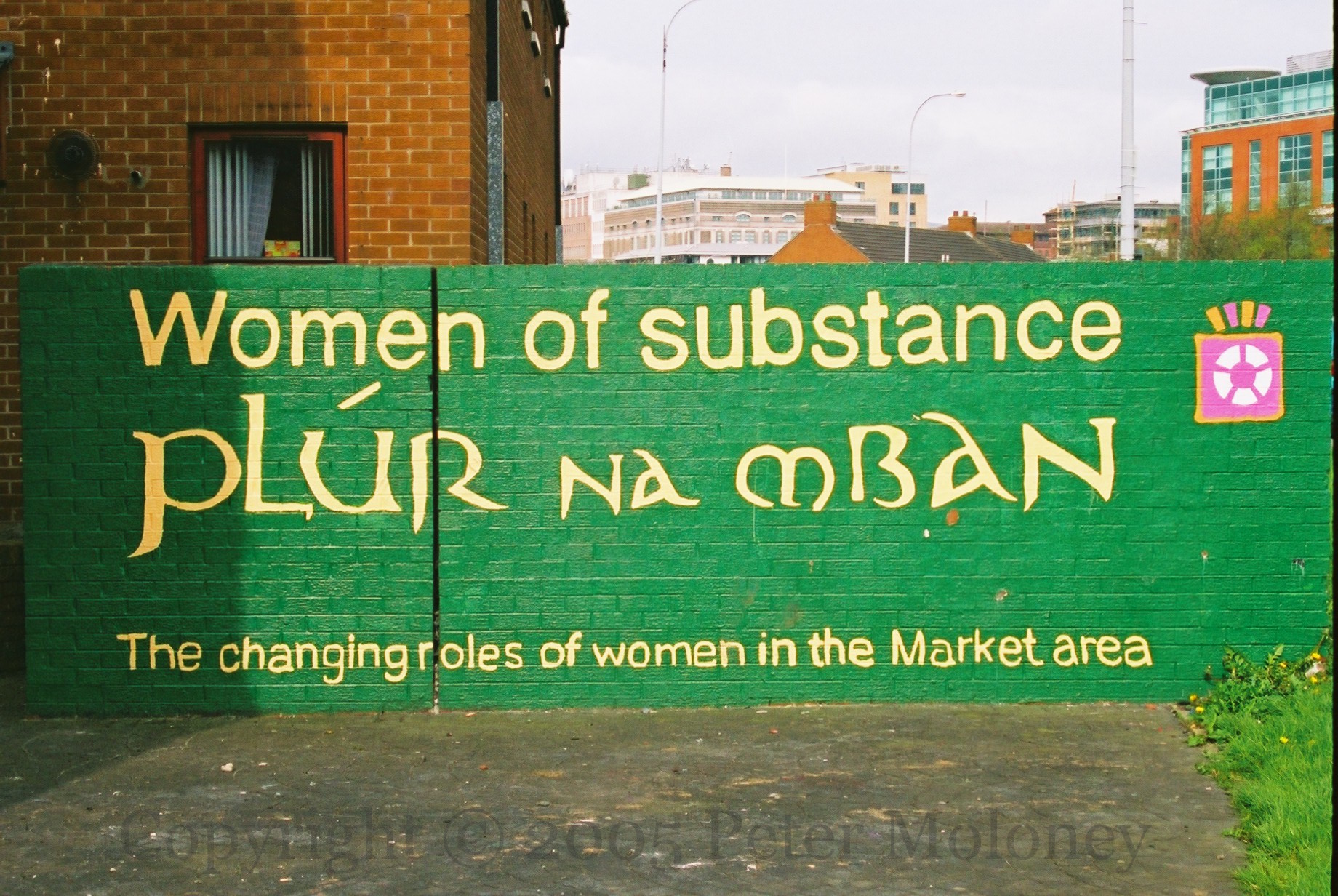
“Women of substance – plúr na mban. The changing role of women the in Market area.” A century of women’s work, from cooking, child-care, and hand-wringing the washing in 1904 to using computers, reading books, and graduating from university in 2004. The pink symbol in the corner is the emblem of the New Belfast Community Arts Initiative.
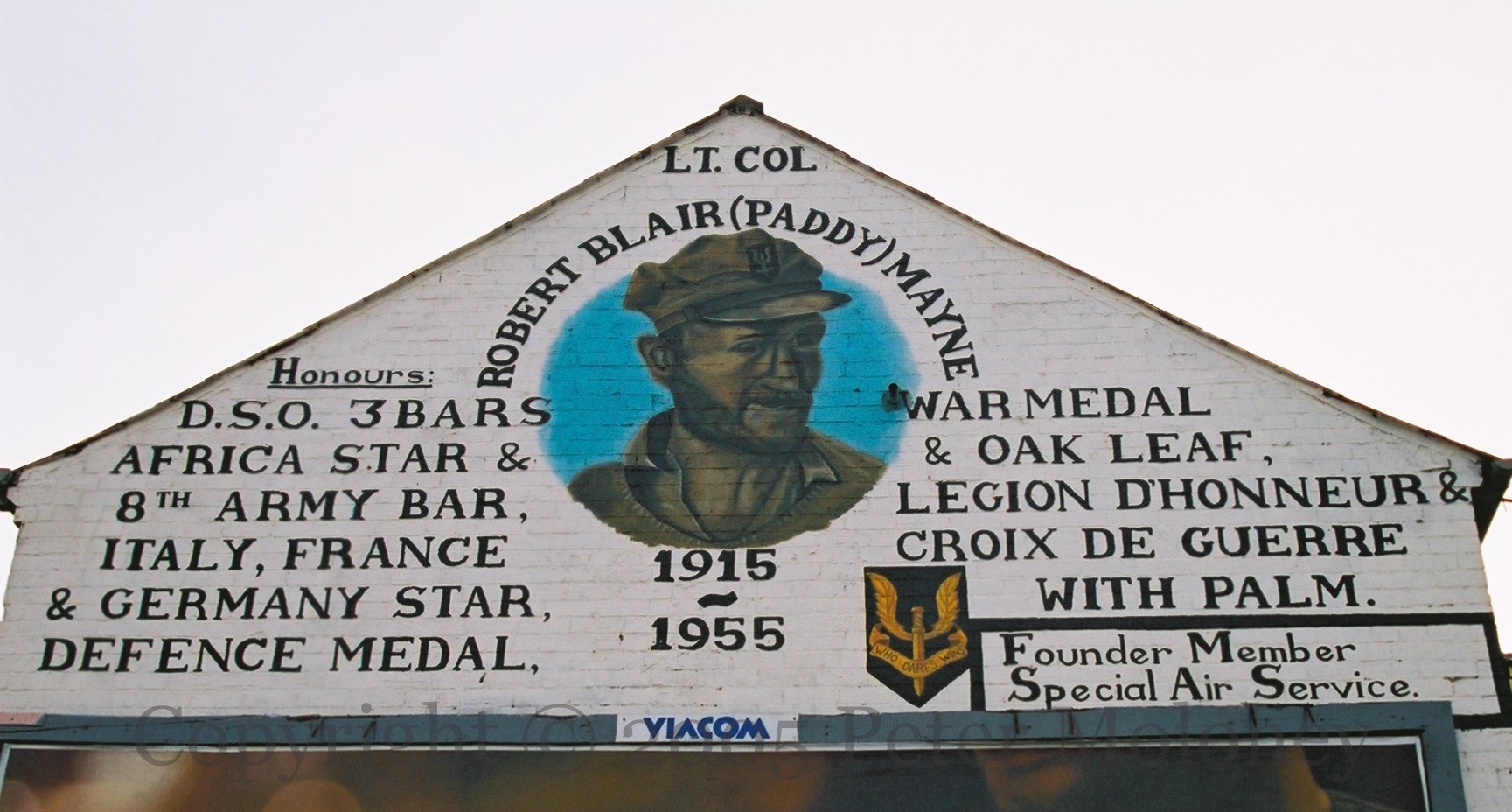
Blair Mayne (1916-1955) was a WWII commando and one of the first members of the SAS (Special Air Service), participating in raids behind enemy lines in Egypt and Libya, and later, as SAS commander, in France, Belgium and other countries. His many decorations include the DSO (four times) and French Croix De Guerre and Legion D’Honneur. There is a mural (and a statue) to Mayne in his home town of Newtownards.
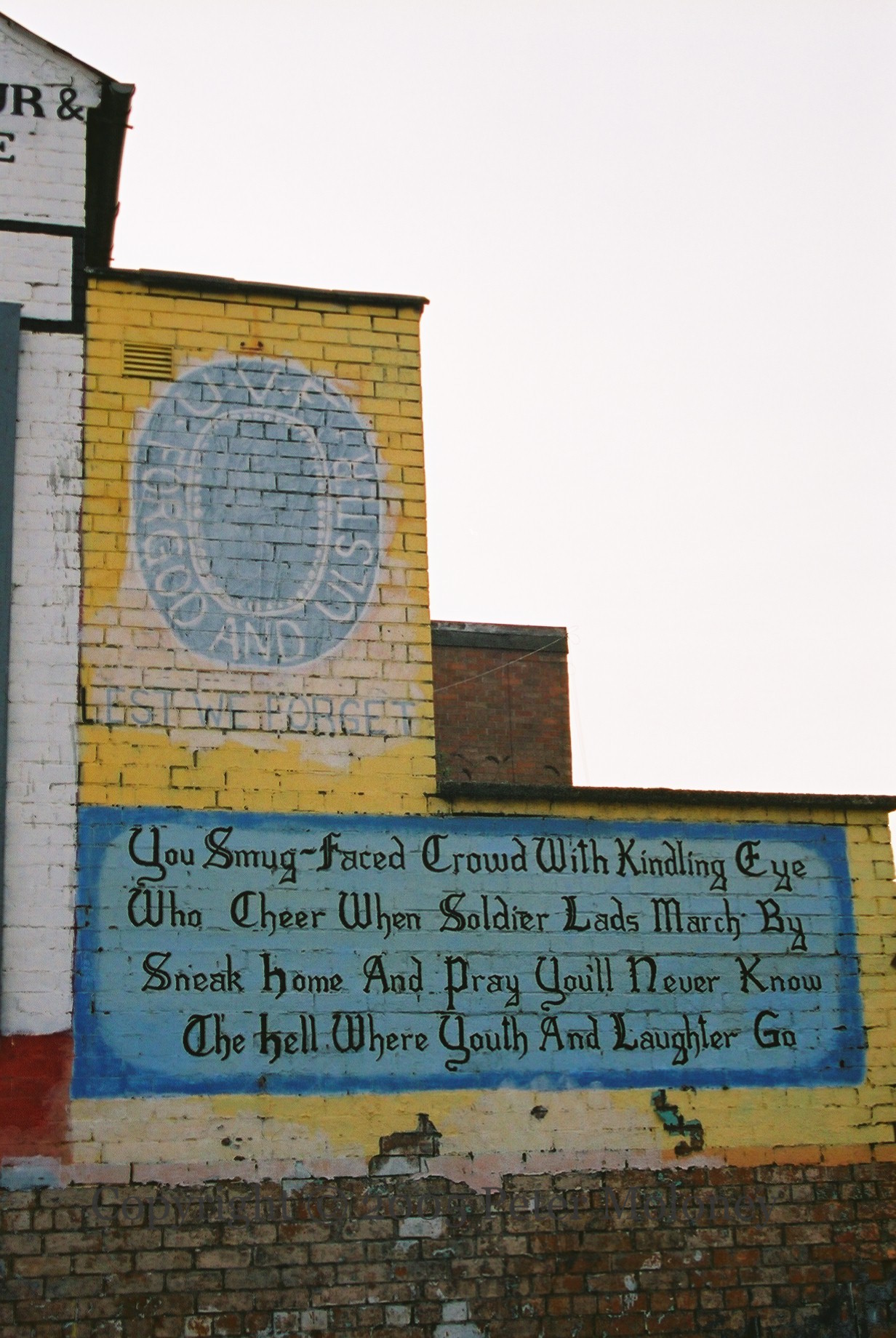
The UVF emblem and verse on the right are from the previous (Red Hand Commando/UVF) mural (see D00982). The verse is from Sassoon’s Suicide In The Trenches. “You smug-faced crowd[s] with kindling eye/Who cheer when soldier lads march by,/Sneak home and pray you’ll never know/The hell where youth and laughter go.”
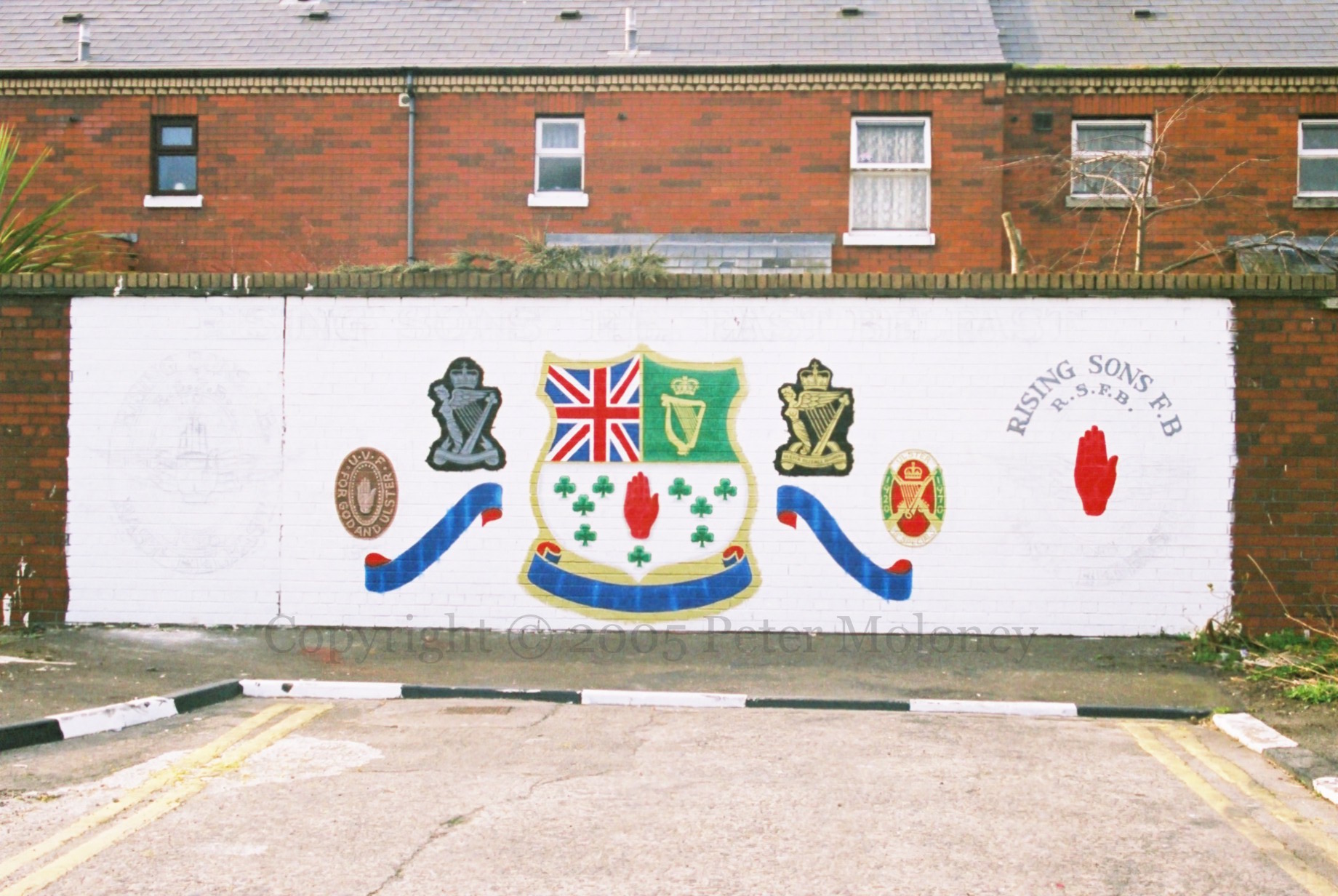
In-progress image of the Rising Sons (Fb) mural in Bright St/Newtownards Road, Belfast, with Ulster Volunteers, Royal Irish Rifles, UDR, B-Specials, and (in the centre) 36th (Ulster) Division insignia. For the finished product see X00759.