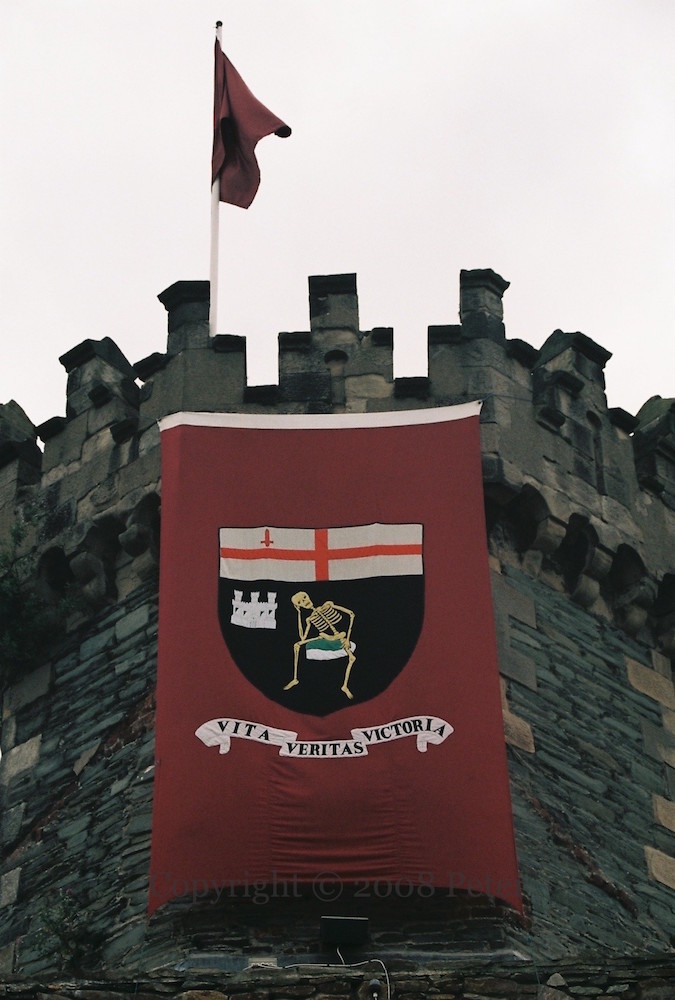
“Life, Truth, Victory.” Londonderry city’s coat of arms is displayed on (what is now) Heritage Tower Museum (previously Derry Gaol), including a skeleton (WP). In the top part is the flag of the city of London.
“New Lodge community supports our public services” with “thank you” in many languages, endorsed by Unison, New Lodge Arts, Tar Isteach, New Lodge Youth Centre, and Greater New Lodge CEP [Community Empowerment Partnership].
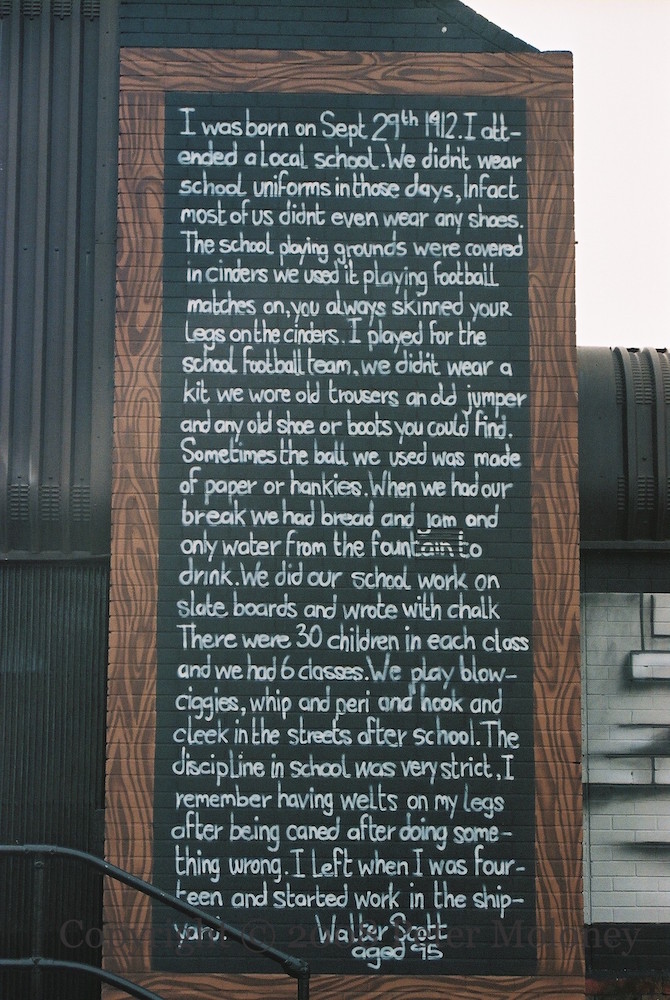
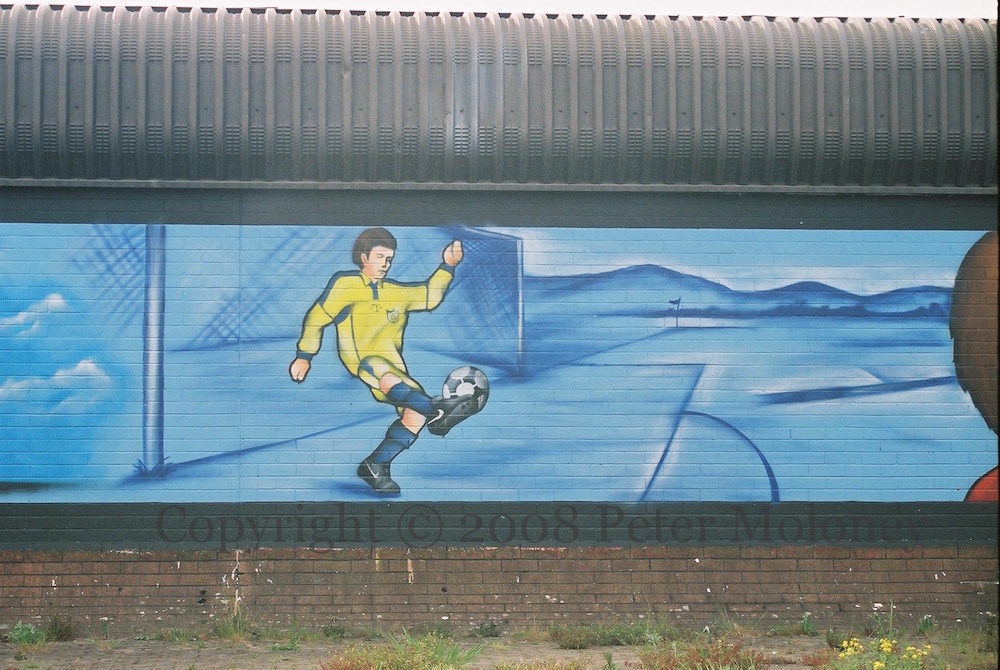
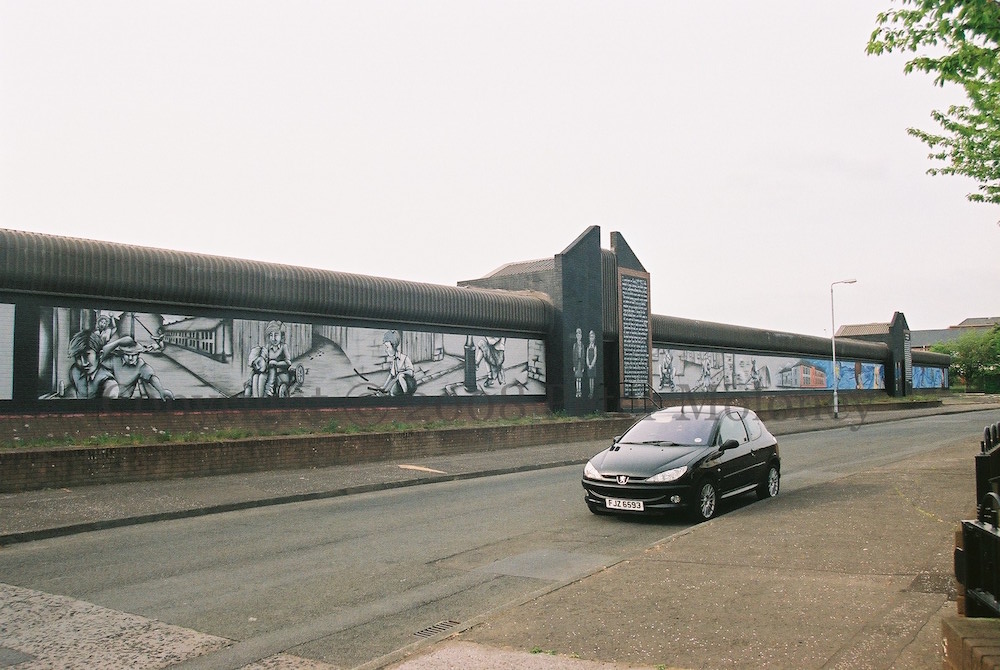
“… The school playing grounds were covered in cinders we used it playing football matches on, you always skinned your legs on the cinders. I played for the school football team, we didn’t wear a kit we wore old trousers an old jumper and any old shoe or boots you could find. Sometimes the ball we used was made of paper or hankies. … – Water Scott aged 95”
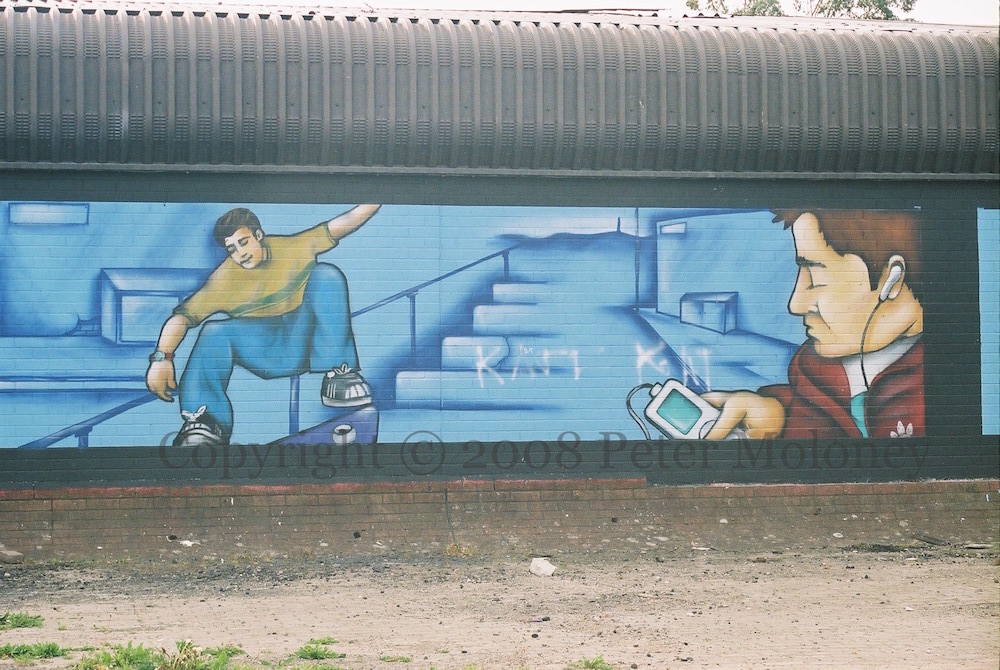
“Schools at Malvern are different to schools in older times. Many things have changed such as discipline. Discipline in the older days was if you spoke back you got hit with a cane, at Malvern if we speak back we get warned and then sent to the Principles office. … – Curtis Nesbitt P6”
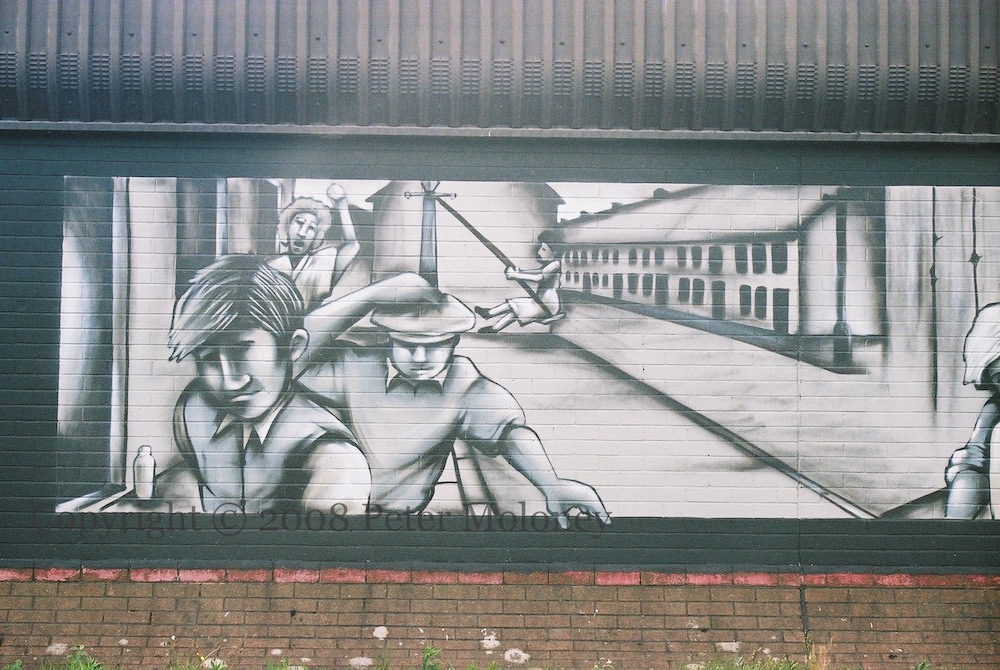
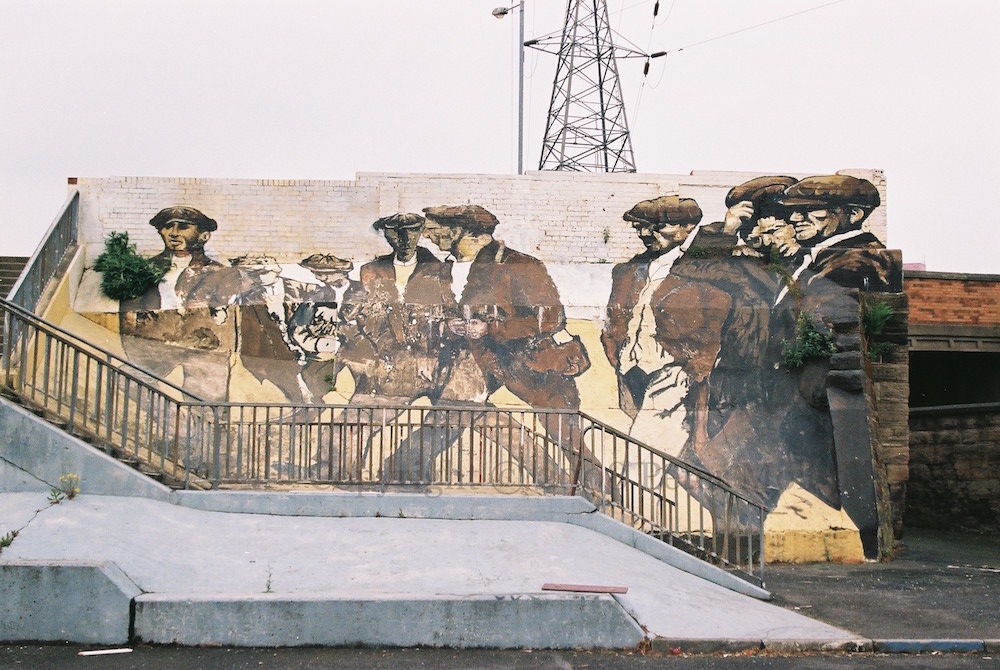
Cloth-capped men from Lord Street head to work at local mills and across to Queen’s Island (originally Dargan’s Island) to work at Harland & Wolff shipyard, with Cave Hill (in north Belfast) looming behind.
Glentoran Community Trust (web) is a supporters trust (i.e. an outreach organisation from the club to the community) formalised in 2006. This mural celebrates the 125th anniversary of the club and highlights from its past, starting with the 1914 Vienna Cup (GFC). On the right of the mural, the Detroit Cougars were a locally-branded Glentoran team participating in a short-lived USA league playing during the summer (BelTel). The “proudest moment” (centre bottom) is the 1973-1974 Cup Winners’ Cup, in which Glentoran got through two rounds to reach the quarter finals (where they lost to Borussia Mönchengladbach). Famous players from the past are featured below the advertising hoarding, including Danny Blanchflower who began his career at Glentoran (WP).
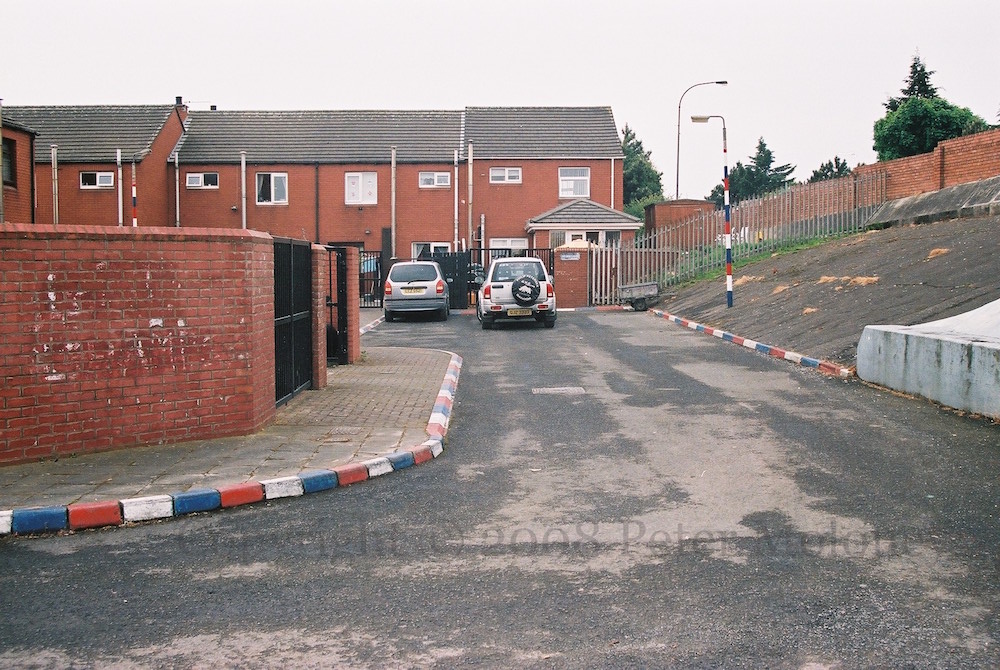
The Harland & Wolff shipyard is on Queen’s Island, a piece of land formed when the channel into Belfast was expanded. Workers would walk from east Belfast to the shipyard. This is the scene in (modern-day) Armitage Close/Harkness Parade in east Belfast, with a mural of turn-of-the-century shipyard workers by John Johnston, drawing inspiration from William Conor’s Shipyard Workers Crossing Queen’s Bridge and Over The Bridge.
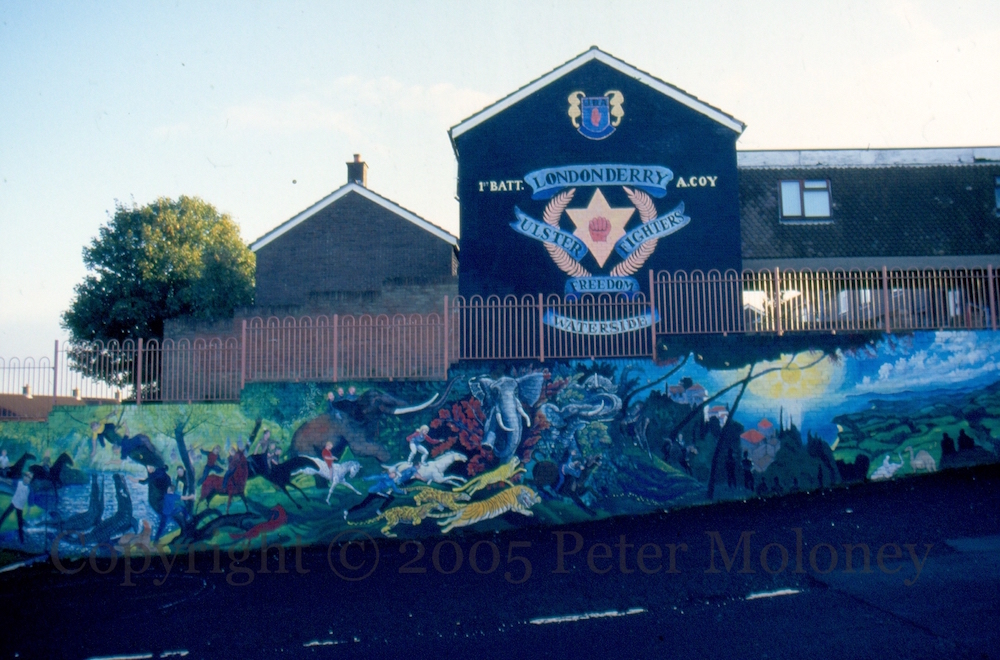
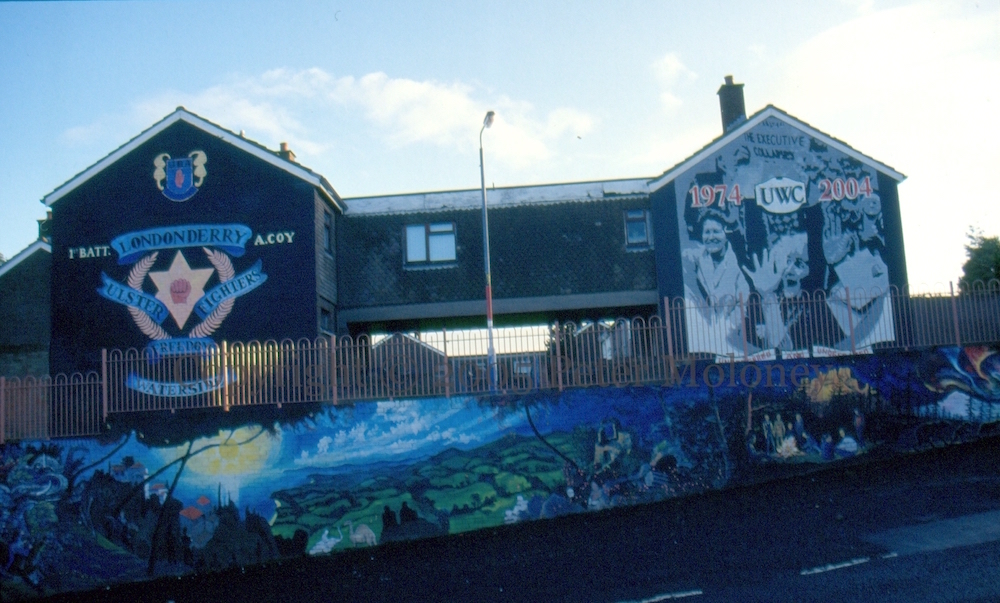
The 40m-long mural below the UFF and UWC murals in Lincoln Court, Londonderry, took three years to complete. It includes 36 animals and 57 people, and portraits of young people from the area. The official title of the piece is “I’m a local celebrity; get me out of here.” (Julius Guzy)
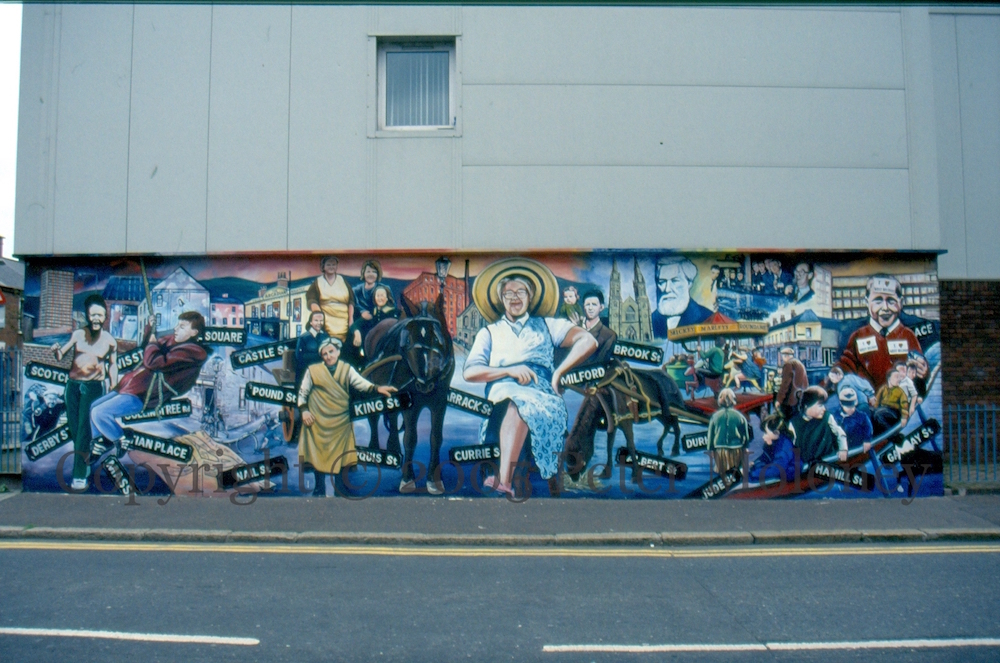
The area known as the Pound Loney (Pound Lane; the area north and west of Inst, modern-day Divis and lower Millfield areas) is featured in a long mural in Durham Street, Belfast. It features many of the place-names, landmarks, and personalities of yesteryear, including the Arcadian cinema on Albert Street – left of centre. Also featured are the Divis tower block, the Blessed Virgin mural, Barney’s mill, McGahan’s pub, Saint Peter’s, and the mural on the Morning Star hostel. The streets include Barrack St, Galway St, Cullingtree Rd, Scotch St, Christian Place, Derby St, Castle St, Pound St, Nail St, Currie St, Albert St, Brook St, Jude St, Hamill St, Divis St, Milford St and Massereene (Row or Path or Walk) in Divis flats. If you can identify any of the characters in the mural, please leave a comment.