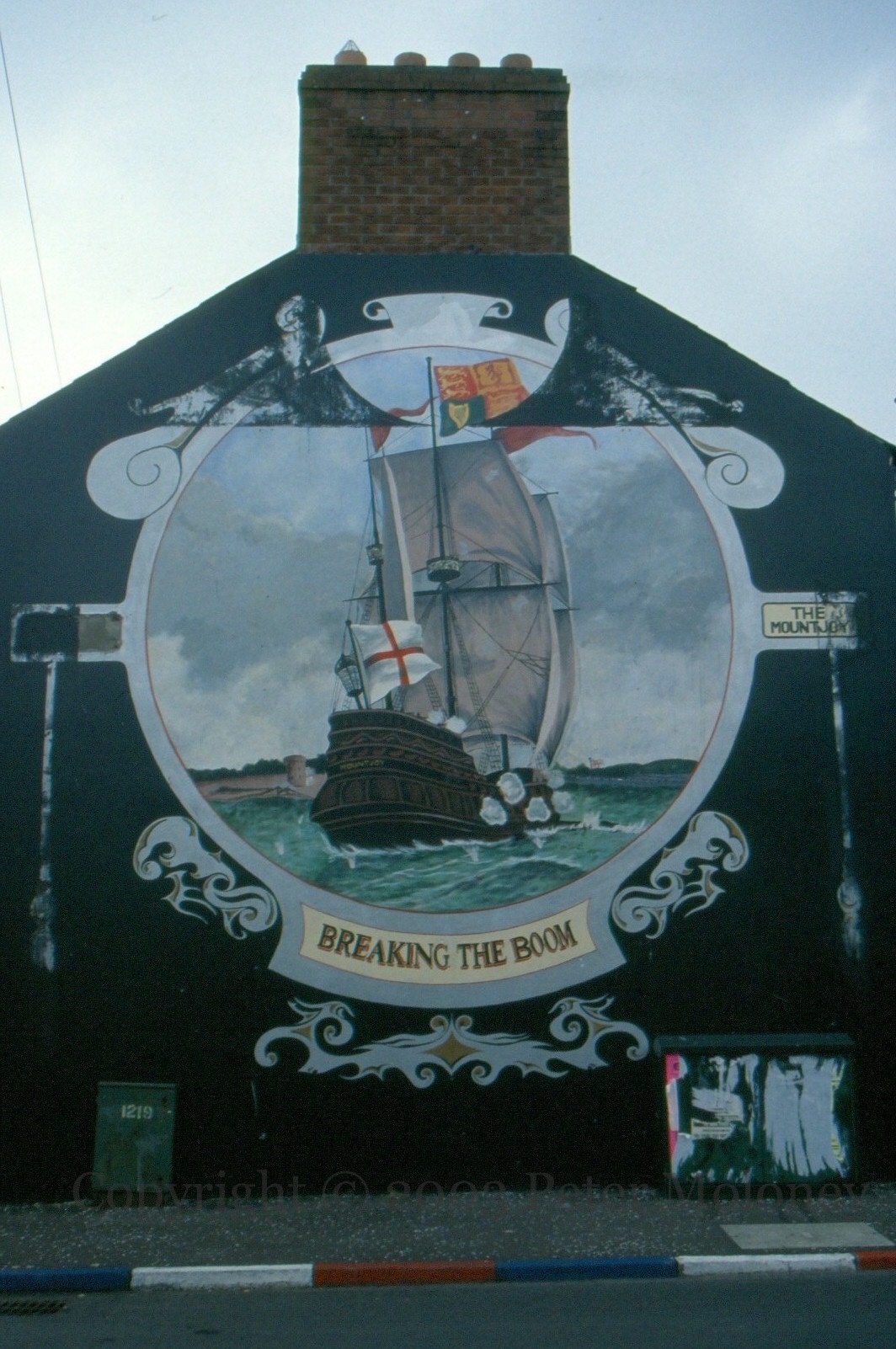
After three and a half months, from April 18th to July 30th, 1689, the Siege of Derry ended when two ships, the Mountjoy (shown here) and the Phoenix, broke through a timber boom that had been placed across the Foyle. Approximately half of the population of the city had died.
The siege of Derry began on December 7th, 1688 when thirteen apprentice boys – without official instruction – shut the gates of the city against the approaching Jacobite army of redshanks.
“If defeated everywhere else I will make my final stand for liberty with the Scotch-Irish (Ulster-Scots) of my native Virginia.” George Washington commanded the Continental Army during the revolution and served as the first president of the United States beginning in 1789. His ancestry was English and the quote is undocumented, the closest being this statement from McKinley. The note in the corner reads “History records that almost half of Washington’s army were Ulster-Scots”; the basis for this claim might be General (Charles?) Lee’s report that “half the rebel Continental Army were from Ireland.” (See Chapter 2 of Bagenal, The American Irish and their Influence on Irish Politics.)
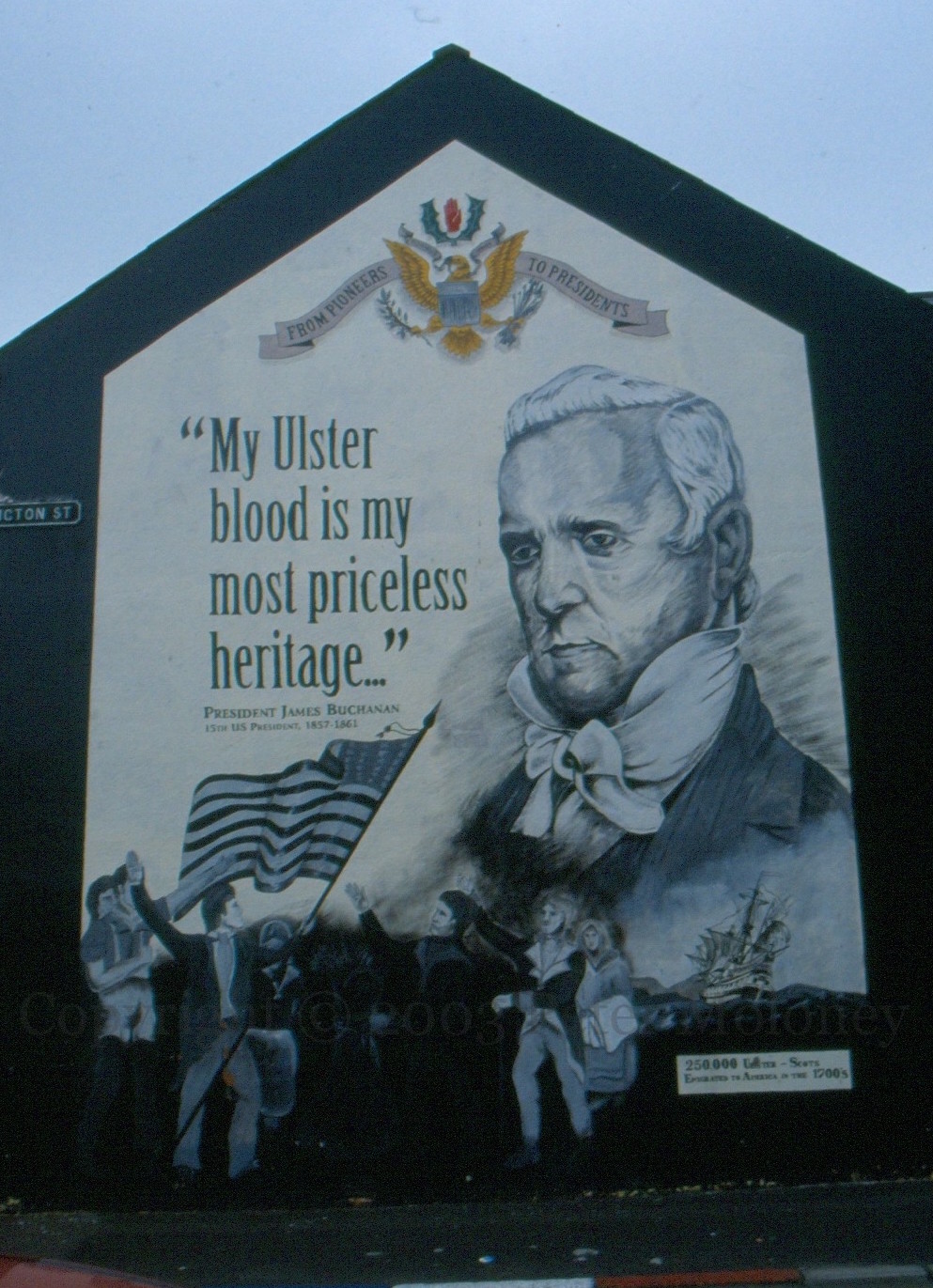
James Buchanan was “15th US president 1857-1861.” Buchanan’s father, also called James, was born in Ramelton, Co Donegal, and was living in Co Tyrone when he emigrated to the United States from Derry in 1783, (one of the “250,000 Ulster-Scots [who] emigrated to America in the 1700s”). James junior was born in 1791, the second of eleven children.
The confusion over the wording of the quote – “My Ulster blood is my most priceless [or simply: a priceless] heritage … [and I can never be too grateful to my grandparents from whom I derived it.]” – is matched by confusion over who said it (Buchanan junior or senior?); the source of the quote is unknown. Likewise we do not know where in Scotland the grandparents might have come from and perhaps the move to Ireland happened much earlier.
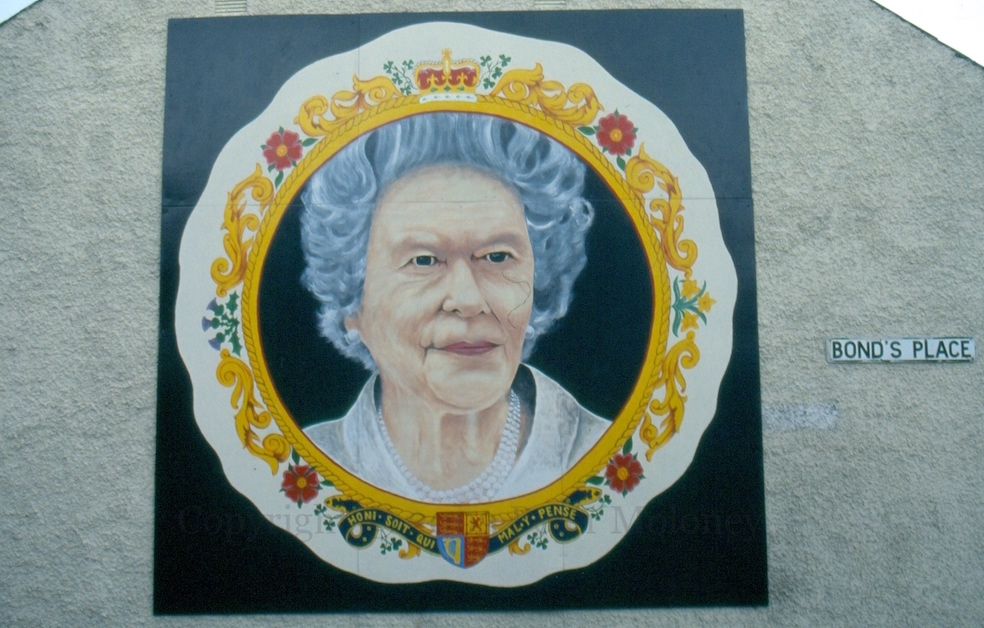
For the fiftieth anniversary of her coronation in 1953, a portrait of Elizabeth the second, Queen of the United Kingdom, Canada, Australia, and New Zealand. She is surrounded by the flowers of Ireland (shamrock), England (rose), Wales (daffodil), Scotland (thistle). “Shame to he who thinks bad of it” is in Anglo-Norman French.
The Battle of the Somme began on July 1st, 1916, which was also the date (in the Julian calendar) of the Battle of the Boyne. The 36th (Ulster) Division of the British Army lost more than 5,000 men in the initial attack and counter-attack. The battle lasted until November 18th.
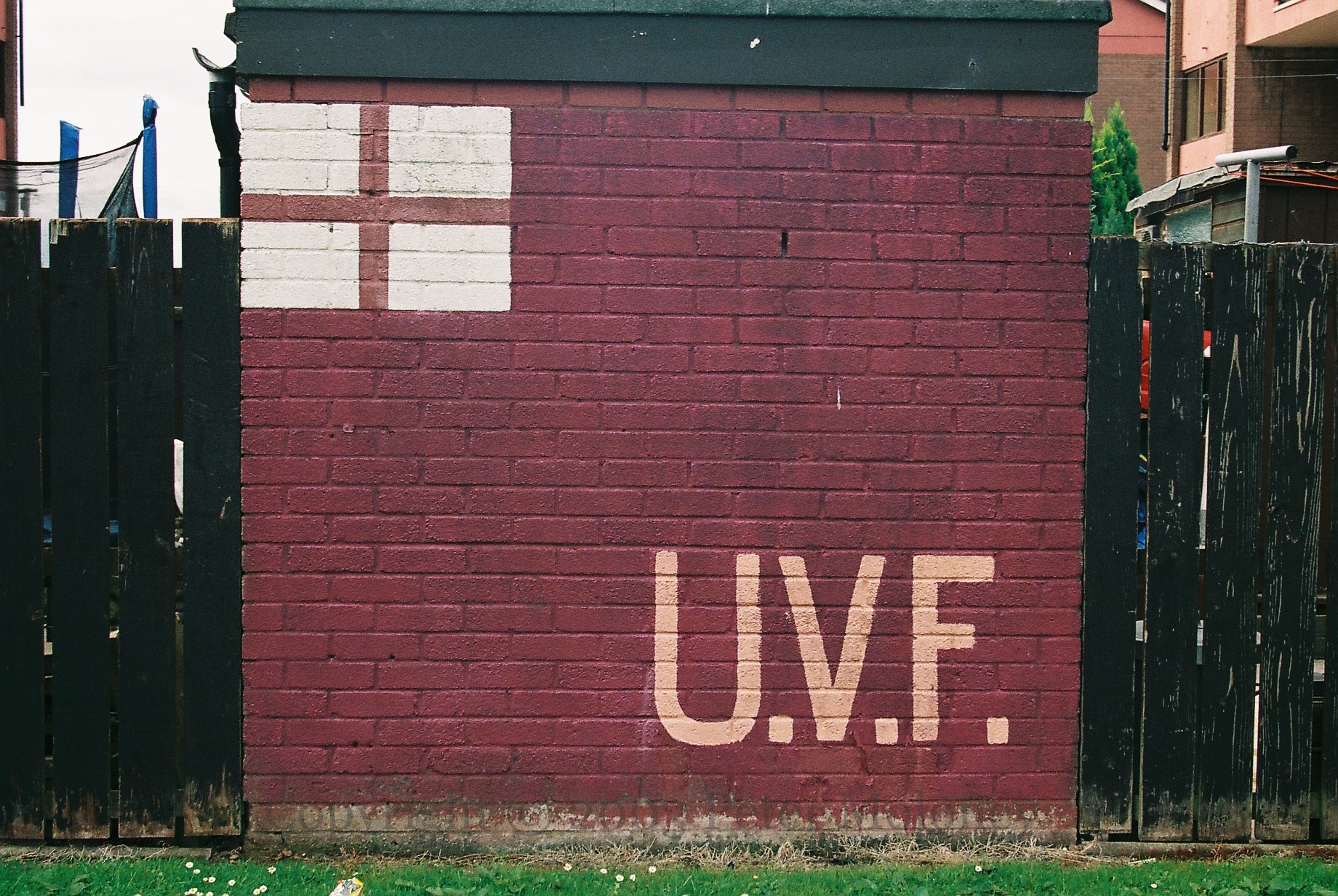
The flag of the UVF includes the St George’s Cross in the top left, with the red hand of Ulster in the bottom right (replaced here by the letters “UVF”), on a field of purple.
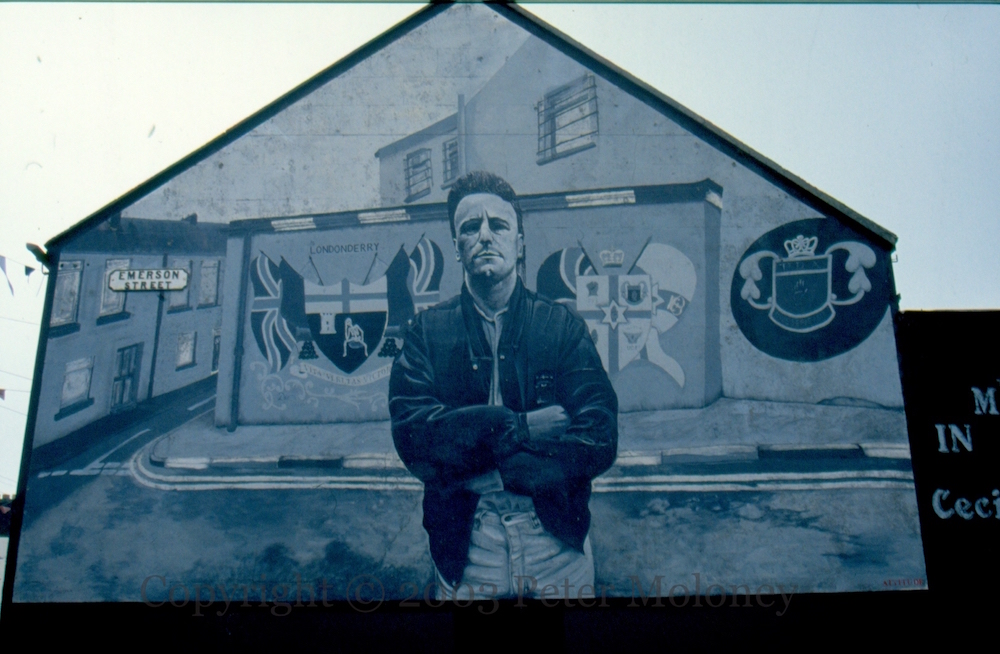
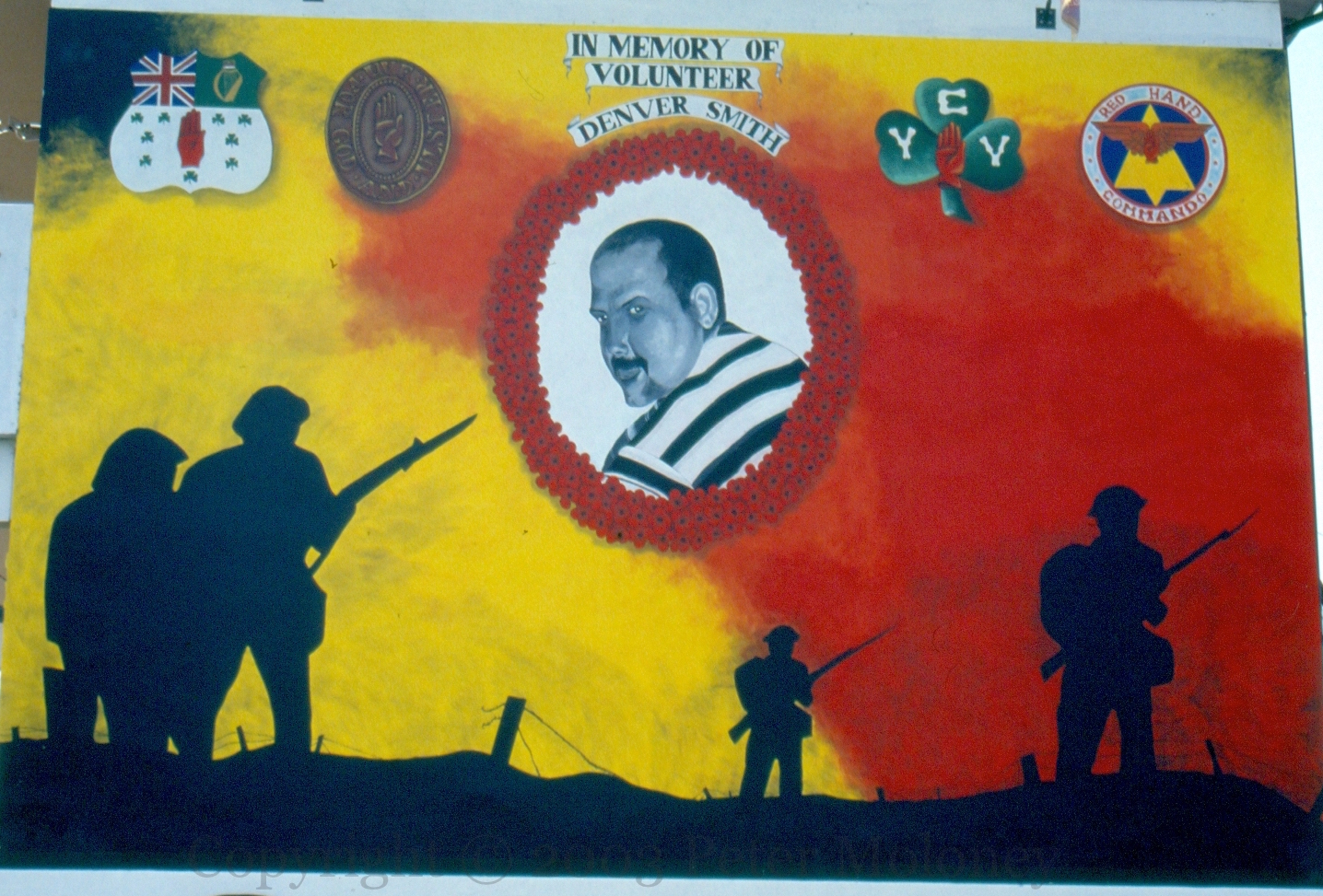
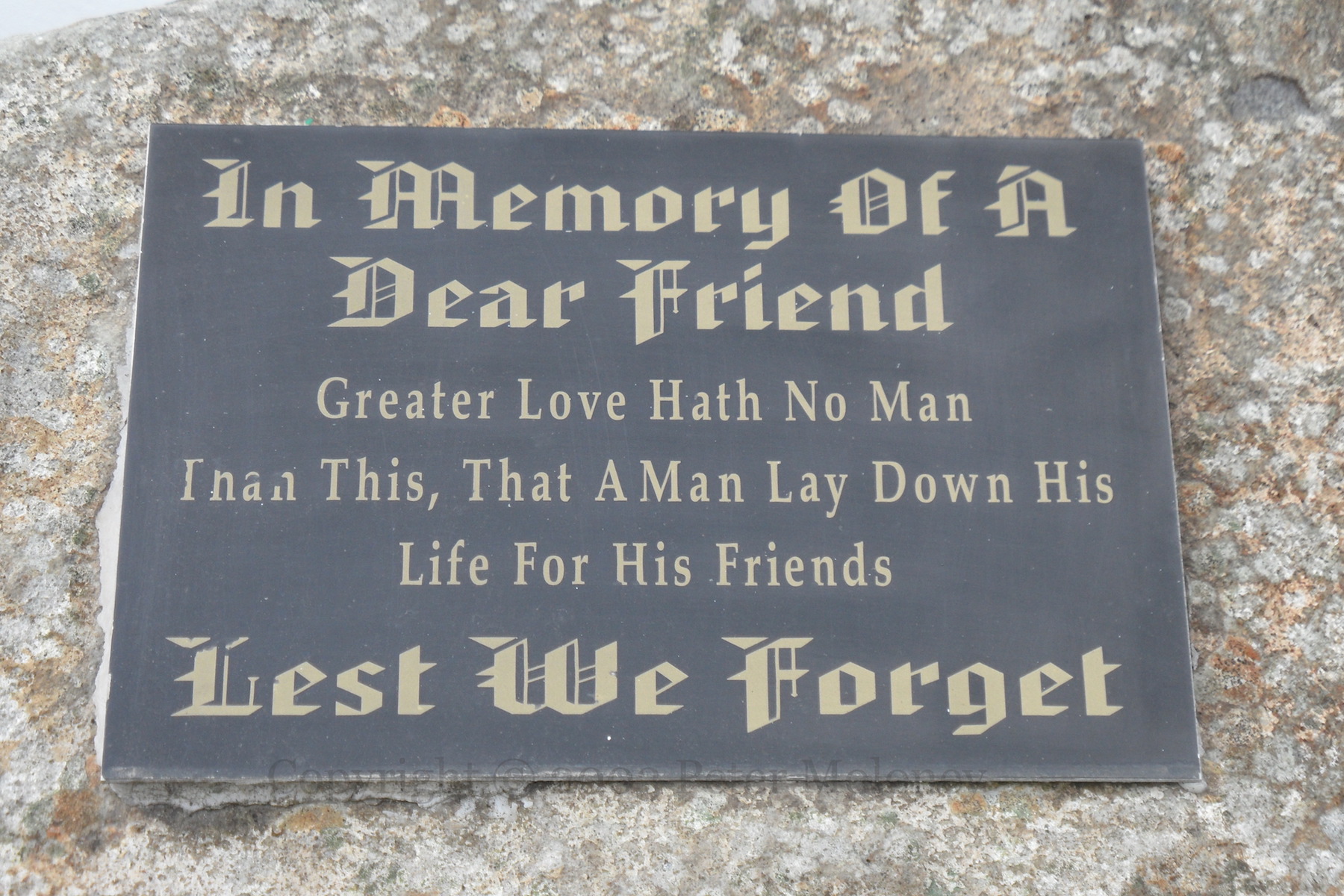
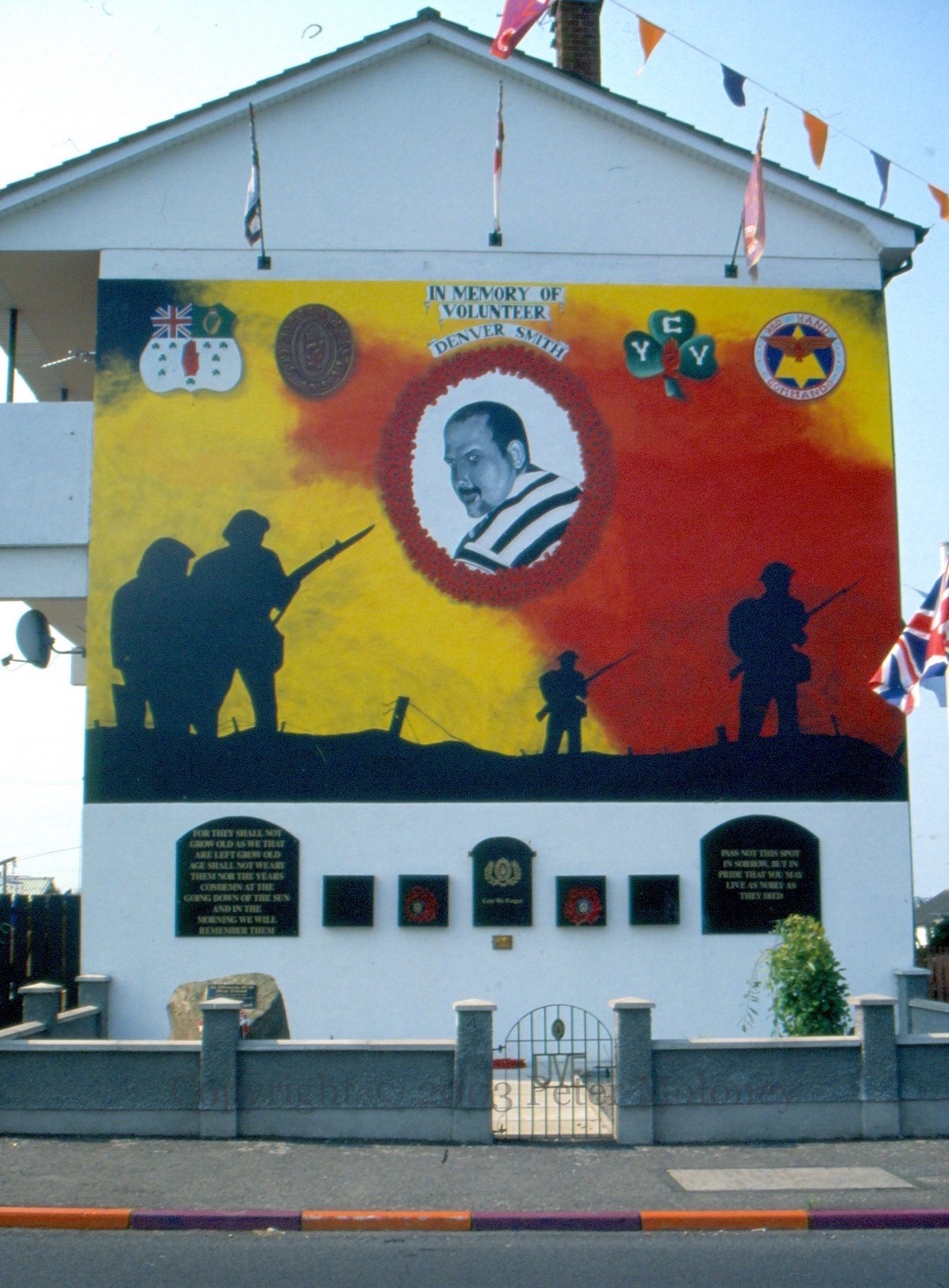
“In memory of a dear friend.” UVF volunteer Denver Smith was killed in the early morning of January 1st, 2000 by a gang of six men with machetes and pikes; the incident was perhaps drugs-related (Guardian | BBC-NI. For the wider picture An Phoblacht | Irish Times).
Parkhall Road, Antrim with kerbstones in the colours of the UVF.





 Peter Moloney Collection